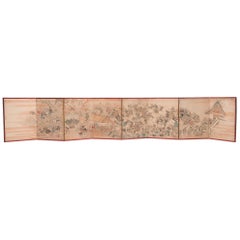
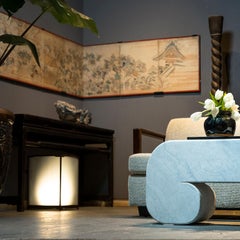
Japanese Edo Period Festival Screen, c. 1750
Located in Chicago, IL
This 18th century folding screen is a stunning example of Japanese artistry. Beautifully painted
Category
Antique Mid-18th Century Japanese Edo Paintings and Screens
Materials
Paper
Japanese Edo Period Festival Screen, c. 1750
Located in Chicago, IL
This 18th century folding screen is a stunning example of Japanese artistry. Beautifully painted
Paper
$3,600
H 23.63 in W 1.97 in D 31.5 in
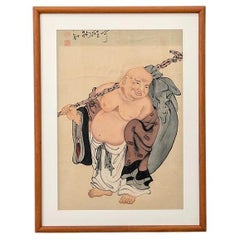
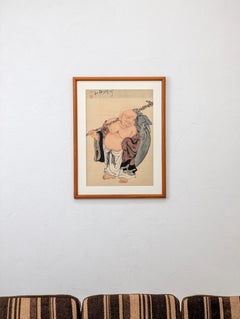
Antique Japanese Ink Painting of Hotei by Kita Busei, Edo Period, c. 1820-1850
Located in TORQUAY, AU
A superb and authentic Japanese ink and light colour painting on silk, executed by a masterful hand
Silk, Teak
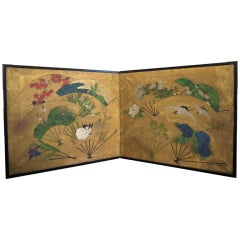
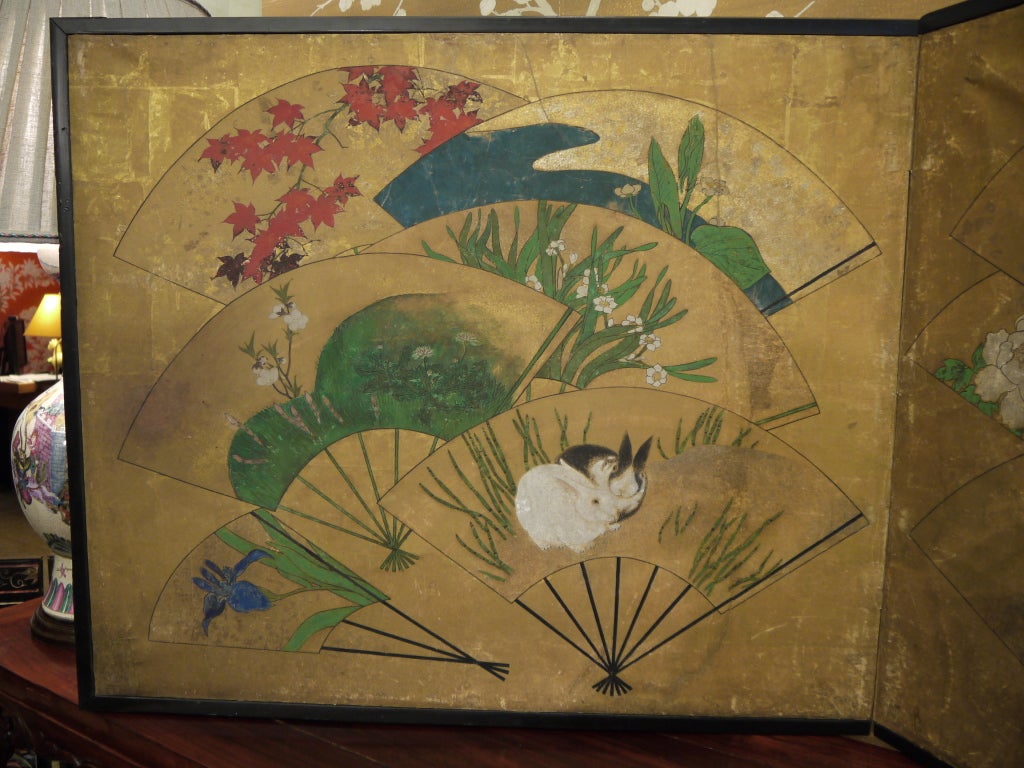
18th c. Japanese Screen with Fans
Located in New York, NY
Beautiful and interesting 18th century Japanese two panel screen with design of scattered fans on a
Wood
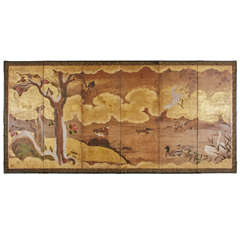
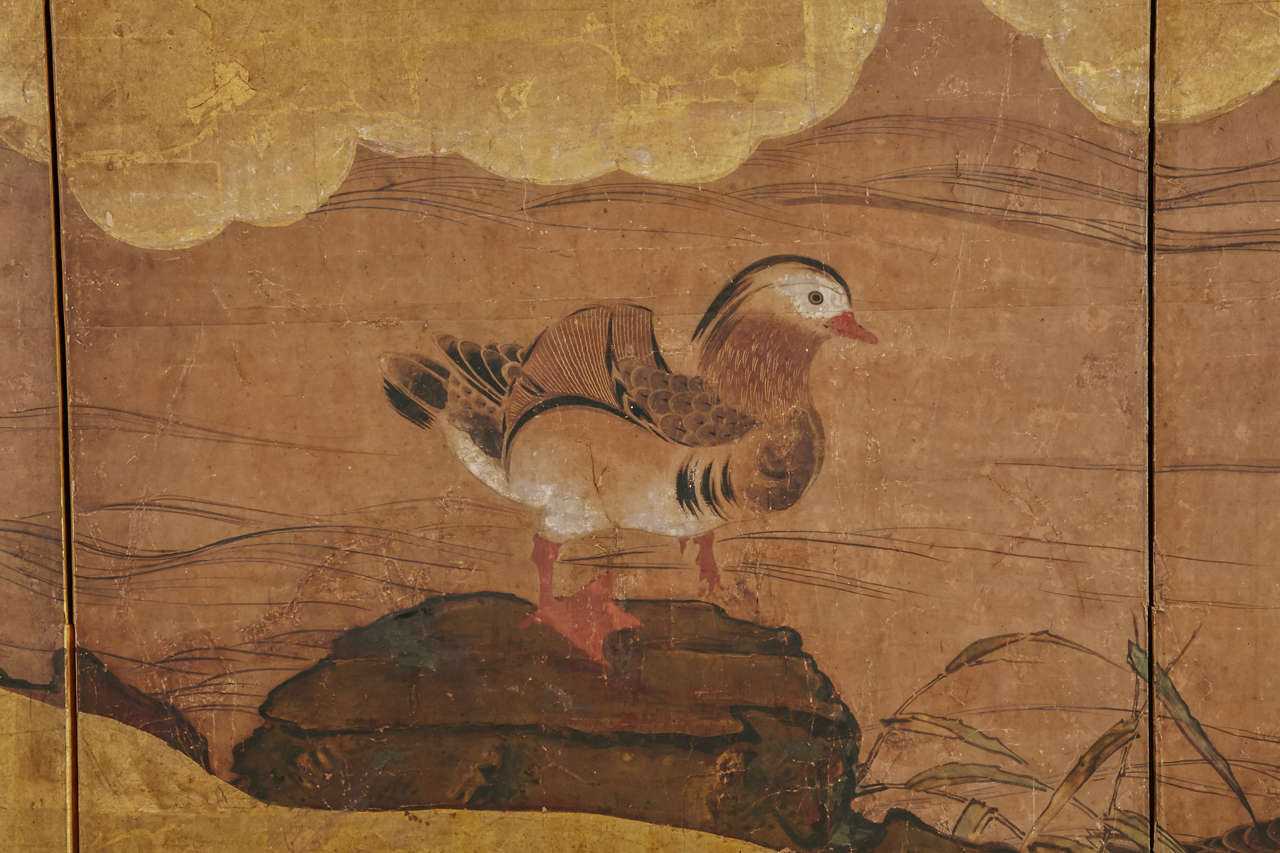
18th c. Six Panels Japanese Screen With Red Camellia , Birds And Snowy Tree
Located in Paris, FR
The screen depicts the beginning of spring with red camellia associated amongst golden clouds with
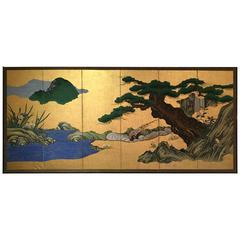
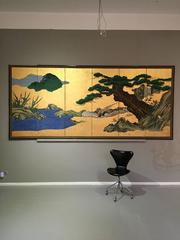
Japanese Gold Byobu Folding Screen FLOWERS & BIRDS 18th c.
Located in Bavaria, Munich, DE
Japanese Gold Byobu Folding Screen FLOWERS & BIRDS ca. 1790 Size 385cm x 168cm
Gold Leaf
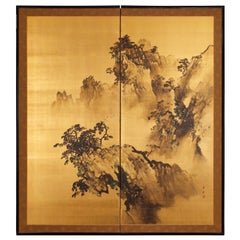
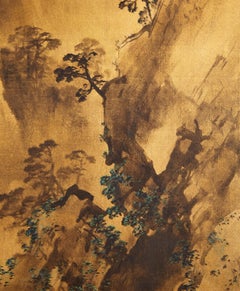
Japanese Two Panel Screen: Craggy Landscape on Gold Sil
Located in Hudson, NY
Dramatic Mountain landscape with gnarled pines. Signature reads: Shunsen. Ink painting on gold silk with silk brocade border.
Brocade, Silk
$63,250
H 47.5 in W 109 in D 0.75 in
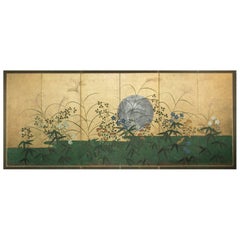
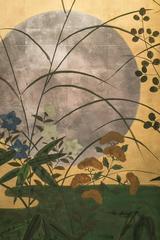
19th Century Japanese Six Panel Screen: Silver Moon Rising Over Summer Field
Located in Hudson, NY
Japanese Six Panel Screen: Silver Moon Rising Over Summer Field. Rimpa Style painting of a moon rising over summer flowers and grasses, including cockscomb and blue bellflowers. Pa...
Gold Leaf
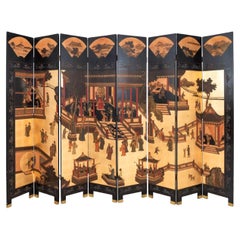
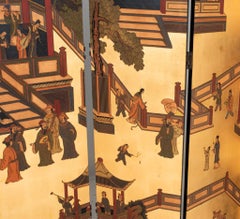
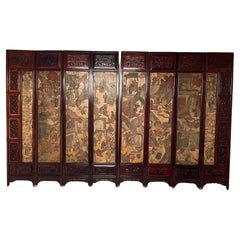
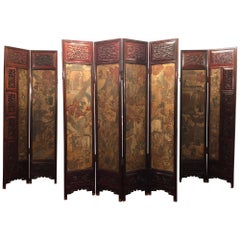
Chinese Export Eight-Panel Lacquered Coromandel Screen
Located in Tarry Town, NY
Beautifully hand painted and decorated grand scale Chinese export Eight-panel Coromandel screen featuring different hand painted Chinese scene on each side. One side depicting an han...
Brass
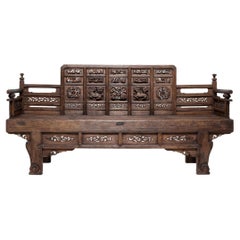
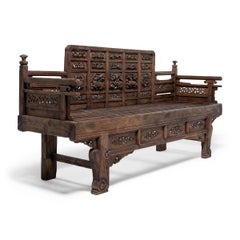
Ornately Carved Chinese Luohan Bed, circa 1550
Located in Chicago, IL
This gorgeous luohan daybed anchors its surroundings with its monumental scale and incredible carved decoration. Known as a luohan chuang, or couch bed, this form of low-backed daybe...
Elm
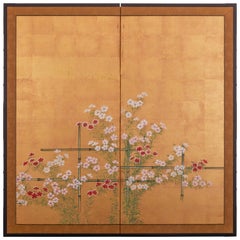
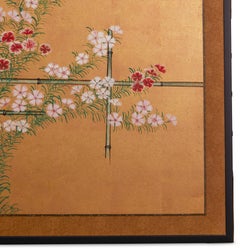
Japanese Two Panel Screen: Nadeshiko on Bamboo Trellis
Located in Hudson, NY
Nadeshiko, also known as fringed pinks is a flowering plant native to Japan. Ink, mineral pigments and 18th century gold leaf, with good veining, on mulberry paper. Silk brocade bo...
Gold, Bronze, Gold Leaf
$4,800
H 51.5 in W 21.5 in D 0.75 in
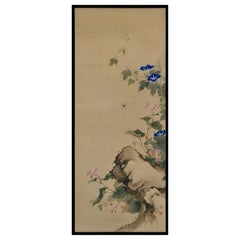
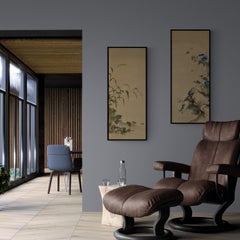
Mid 19th Century Framed Japanese Painting. Spider & Morning Glory.
Located in Kyoto, JP
Obata Tosho (1812-1886) Spider & Morning Glory Late Edo period, mid 19th Century Framed Japanese Painting. Ink and color on paper. Individually framed 19th century bird and f...
Paper
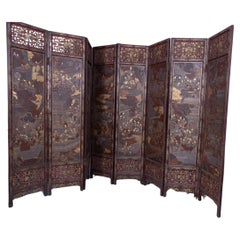
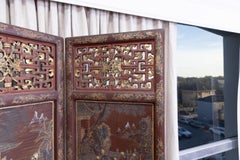
18th Century Chinese Heavily Detailed 8-Panel Coromandel Screen
Located in New Orleans, LA
18th century Chinese heavily detailed 8-panel Coromandel screen, decorated on either side, with carved open work at top and bottom of each panel, heavily gold-leafed. On the front ar...
Giltwood
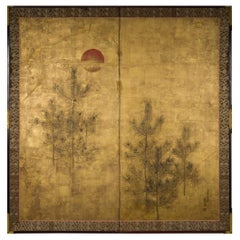
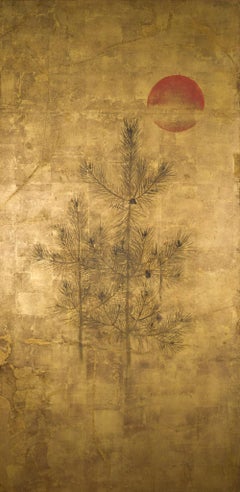
Japanese Two Panel Screen Pine and Red Sun on Gold
Located in Hudson, NY
Mineral pigments on gold leaf. Signature and seal read: Anei H-eishin Boshun ga, dated: late spring 1766 with a dedication to Okyo (Maruyama).
Gold Leaf
$25,000
H 63.5 in W 145.5 in D 1 in
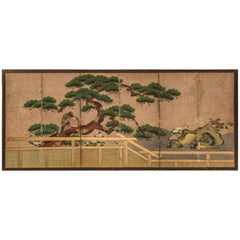
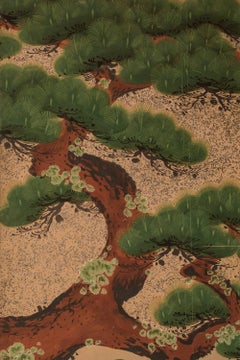
Japanese Six Panel Screen, "Amorous Pheasants in Venerable Garden Pine"
Located in Hudson, NY
In a garden landscape with vibrant red camellias on a natural garden stone sculpture, mineral pigments and silver dust on mulberry paper.
$8,500
H 68 in W 150 in D 1 in
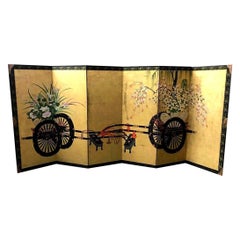
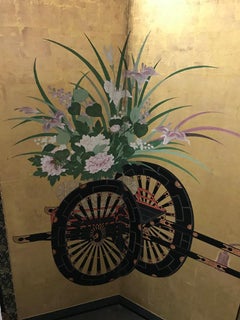
Japanese Asian Large Six-Panel Folding Byobu Flower Cart Screen, 19th Century
Located in Studio City, CA
A gorgeous six-panel Japanese Byobu folding screen. Listing as Meiji period but could very possibly Edo period. Decorated with peonies, irises and wisteria and two traditional flower...
Gold Leaf
$60,000
H 96 in W 156 in D 1.5 in
Unusual Eight Panel Chinese Coromandel Screen circa 1700-1800 with Carved Frame
Located in Manhasset, NY
Chinese Coromandel Screen, 18th Century, Rosewood, 8 Panel, Painted, Figural, Depicting Flying Geese One of a kind. Chinese Coromandel screen from the late 1700s with a fabulous ros...
Rosewood
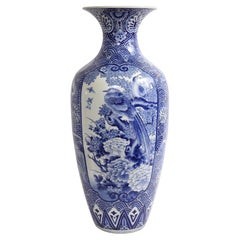
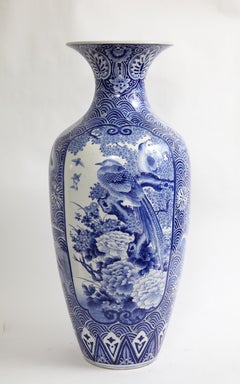
Japanese Meiji Period, Blue and White Vase with Phoenix Decoration
Located in New York, NY
A Palace Size Japanese Meiji Period (1868-1912) Blue and White Vase with Phoenix Decoration. This vase is absolutely beautiful with an incredible array of hand-painted blue decoratio...
Porcelain
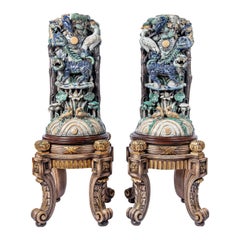
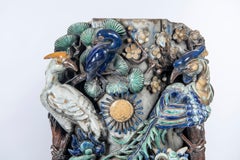
Pair of Glazed Ceramic Chinese Tiles, China, Early 20th Century
Located in Buenos Aires, Buenos Aires
Pair of glazed ceramic Chinese tiles. China, early 20th century. With pair of marble, wood and gold leaf bases. France, early 20th century. Dimensions: Tiles: 70 cm high x 34 c...
Marble, Gold Leaf

$86,250
H 68.5 in W 145 in D 0.75 in
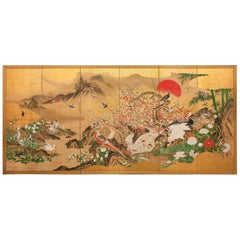
Japanese Screen: Animals and Flowers in a Landscape with Rising Sun
Located in Hudson, NY
Edo period (c. 1800) screen, beautifully painted with excellent details. Kano School painting at its best. An exuberant Audobon landscape being observed by a cat and her kitten. A...
Gold Leaf
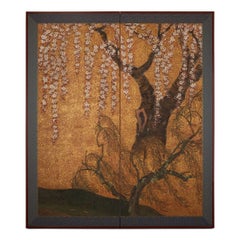
Japanese Two Panel Screen, Cherry Blossoms in Willow Landscape
Located in Hudson, NY
Dramatic and beautifully executed cherry blossoms trickle down the two panels with natural willows calmly coexisting with luminous gold dust fading to the ground. Mineral pigments an...
Gold
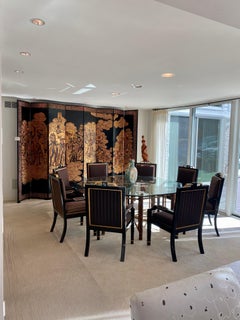
$10,000
H 96 in W 150 in D 0.75 in
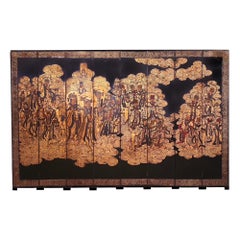
20th Century Chinese Coromandel Black Gilt Eight-Panel Screen Immortals Sky Gods
Located in Farmington Hills, MI
We are very pleased to offer a monumental 8ft, eight panel room divider, circa the 20th century. This beautiful double-sided hardwood screen showcases a rich, black lacquer finish an...
Hardwood, Lacquer
Traditional Asian paintings were often created on scrolls and folding screens. Artisans made screens that could be folded up or spread out by connecting several panels using hinges. Today, antique Asian folding screens and paintings are sophisticated decorative accents that can serve as makeshift partitions to ensure privacy.
The original folding screens were created by Chinese artists. The earliest record of screens comes from the 2nd century B.C., and surviving examples date back to the Ming dynasty. Chinese painting utilizes many of the same tools as calligraphy — these screens were crafted from wood with painted panels featuring striking art or calligraphy that told cultural stories or represented nature and life in the area.
The practice was introduced to Japan, where paintings for screens were made on paper and silk, in the 8th century. These paintings frequently feature subjects such as landscapes, animals, flowers and Buddhist religious themes. Along with screens for tea ceremonies and dance backgrounds, there were screens for use in Shinto and Buddhist temples.
In the 17th century, screens began to be imported to Europe where their popularity grew. Coco Chanel famously collected Coromandel folding screens.
Traditional Asian paintings can make a tasteful addition to any wall, and screens can be used as decoration or, in the case of larger iterations, as an aesthetic way to divide a large room. Browse the selection of antique Asian paintings and screens from a variety of styles and eras on 1stDibs.
Decorated with white cranes and the sought-after thousand-butterflies motif, the Meiji-period vessel offers both a celebration of traditional aesthetics and a clear reflection of the era’s appetite for exquisite export pieces.
For 25 years, gallerist Betsy Nathan has leveraged her keen eye and key connections to bring a unique selection of rare finds to the market.
Now working alongside his daughter Bianca, dealer Joel Chen has presented a most covetable array of antiques, art and contemporary creations for more than 40 years.
From cherry-blossom-adorned walls paired with glamorous lighting to wood-paneled ceilings above checkerboard-patterned chairs, these 12 spaces seamlessly blend Eastern and Western aesthetics.
The dealer and curator has spent the past 50 years amassing a collection of exceptional art, furniture and architectural elements that trace the cultural influence of the Spanish empire from Europe to the Americas and beyond.
These spaces exemplify how Eastern elements elevate a home's decor.