Jean Dobre

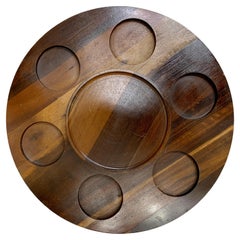
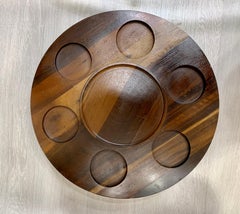
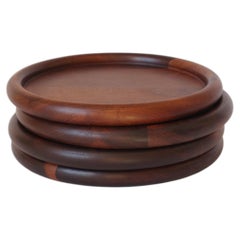
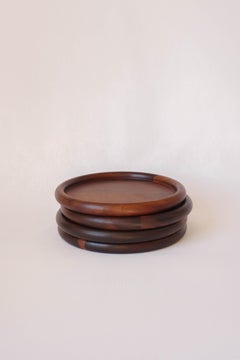
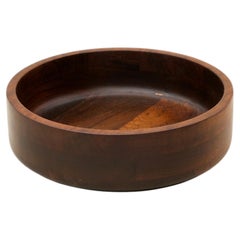
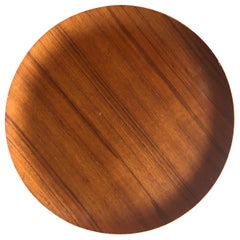
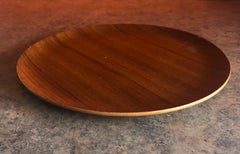
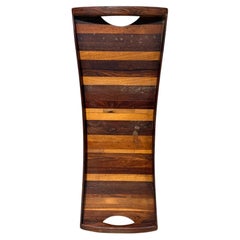
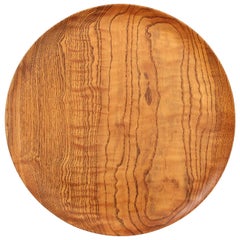
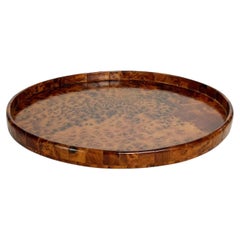
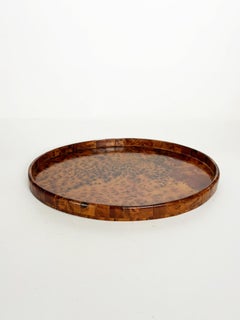
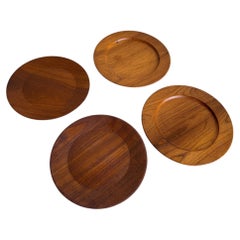
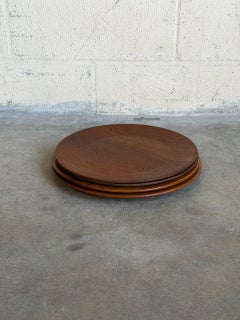
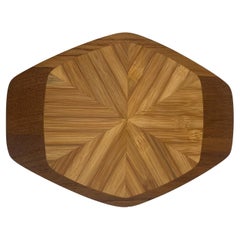
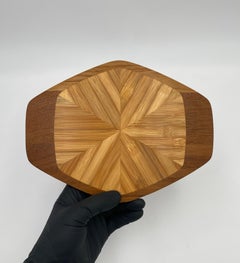
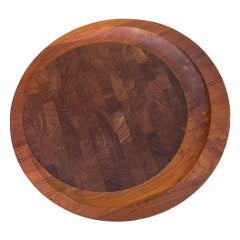
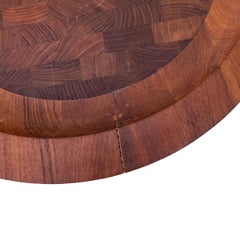
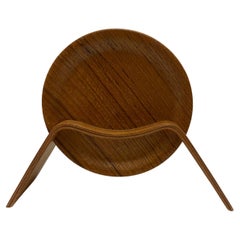
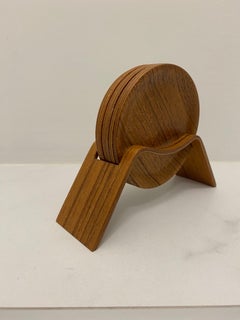
Jean Dobré/ Tropicart. Rotating wooden platter, c. 1960

Jean Dobré/ Tropicart. Rotating wooden platter, c. 1960

Located in PARIS, FR

Jean Dobré/ Tropicart. Rotating wooden platter c. 1960 Signed at the fire Solid wood 10 x 46 x 46 cm

Category

Mid-20th Century Brazilian Mid-Century Modern Serving Pieces

Materials

Hardwood

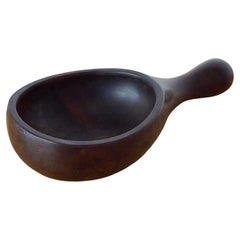
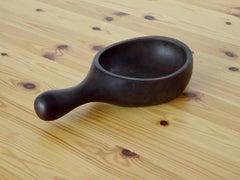
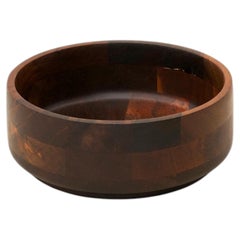
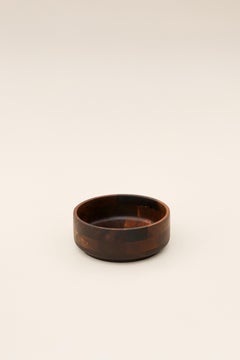
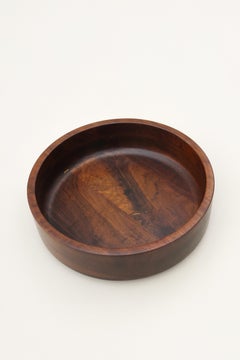
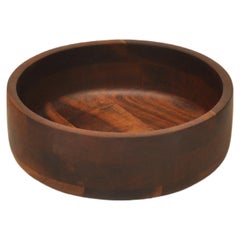
Bowl designed by Jean Dobré for Tropic-Art. Brazil 1970s.
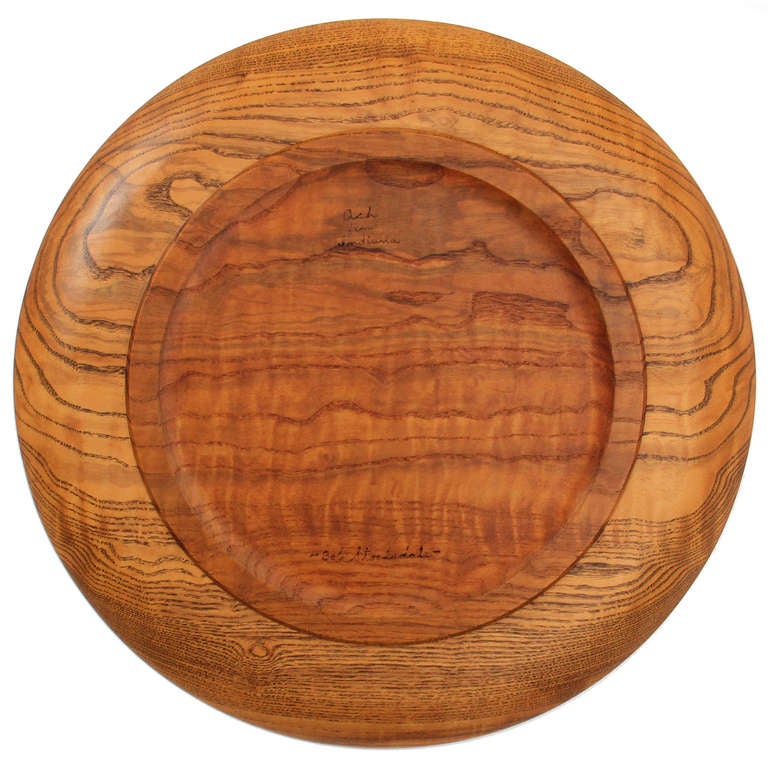
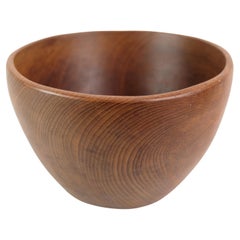
Bowl designed by Jean Dobré for Tropic-Art. Brazil 1970s.

Located in Barcelona, ES

Bowl with handle made of solid “imbuia” wood, designed by Jean Dobré for Tropic-Art. Brazil 1960s.

Category

Vintage 1970s Brazilian Mid-Century Modern Decorative Bowls

Materials

Hardwood

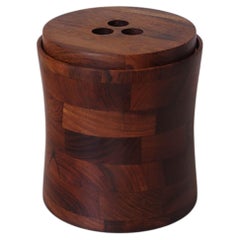
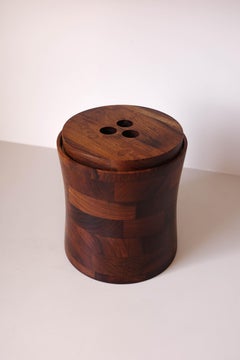
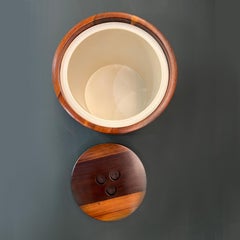
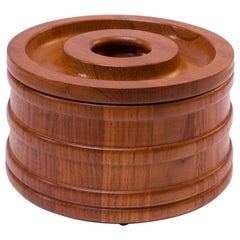
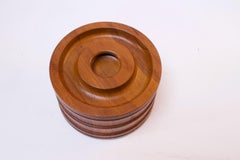
Brazilian Modern Wine Holder with Lid in Rosewood & Imbuia, Jean Dobré, 1960s

Brazilian Modern Wine Holder with Lid in Rosewood & Imbuia, Jean Dobré, 1960s

Located in New York, NY

The underside retains its original Jean Dobré – Tropic Art maker's label, an important mark of authenticity that reinforces its provenance and place within the history of Brazilian m...

Category

Mid-20th Century Brazilian Mid-Century Modern Wine Coolers

Materials

Imbuia, Rosewood

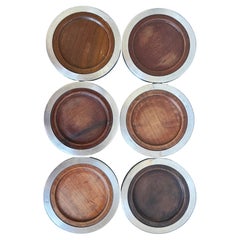
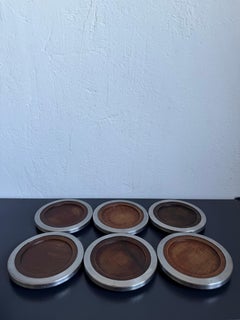
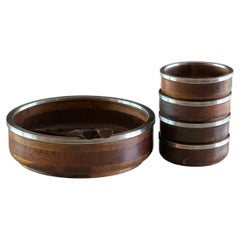
Brazilian tropical wood serving set by Jean Dobre for Tropic-Art, circa 1960

Brazilian tropical wood serving set by Jean Dobre for Tropic-Art, circa 1960

Located in View Park, CA

A set of tropical wood Brazilian modern bowls by Jean Dobre for Tropic-art, circa 1960. Finely crafted of imbuia, a highly-prized tropical wood from southern Brazil, with chrome edgi...

Category

Mid-20th Century Brazilian Mid-Century Modern Serving Bowls

Materials

Metal

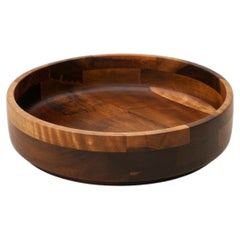
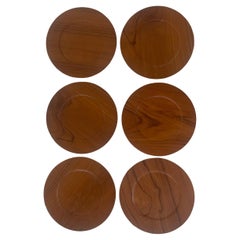
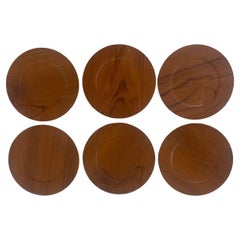
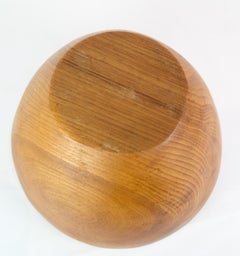
Jean Dobré for Tropic-Art Staved Solid Imbuia Wood Plate, Brazil, 1970s

Jean Dobré for Tropic-Art Staved Solid Imbuia Wood Plate, Brazil, 1970s

Located in Rio De Janeiro, BR

Wood plate designed by Jean Dobré for Tropic-Art, Brazil, circa 1970. Expertly crafted from solid imbuia wood using the staved construction technique, the piece highlights the rich g...

Category

Mid-20th Century Brazilian Mid-Century Modern Platters and Serveware

Materials

Imbuia

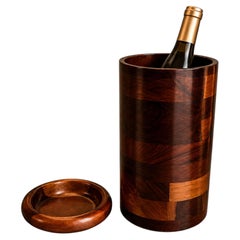
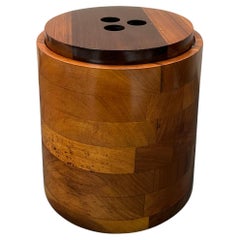
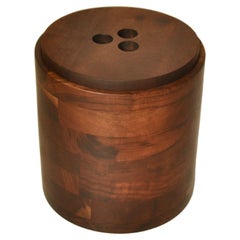
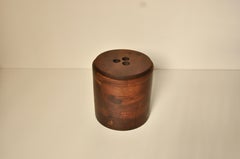
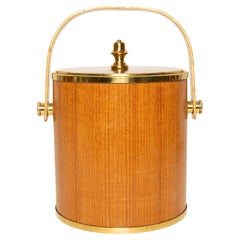
Brazilian Mid-Century Ice Bucket by Tropic-Art

Brazilian Mid-Century Ice Bucket by Tropic-Art

Located in Rio De Janeiro, BR

It has an inner plastic container. Jean Dobré for Tropic-Art, Brazil, c. 1970. Professionally restored and presented in excellent condition.

Category

Mid-20th Century Brazilian Mid-Century Modern Barware

Materials

Hardwood

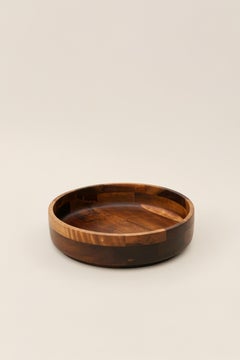
Brazilian Mid-Century Salad Bowl Ø25cm by Tropic-Art

Brazilian Mid-Century Salad Bowl Ø25cm by Tropic-Art

Located in Rio De Janeiro, BR

Salad bowl designed by Jean Dobré for Tropic-Art, crafted from segmented noble hardwoods in the distinctive marquetry technique that became a hallmark of the manufacturer's production.

Category

Mid-20th Century Brazilian Mid-Century Modern Serving Bowls

Materials

Hardwood

Brazilian Mid-Century Salad Bowl Ø30cm by Tropic-Art

Brazilian Mid-Century Salad Bowl Ø30cm by Tropic-Art

Located in Rio De Janeiro, BR

Salad bowl designed by Jean Dobré for Tropic-Art, crafted from segmented noble hardwoods in the distinctive marquetry technique that became a hallmark of the manufacturer's production.

Category

Mid-20th Century Brazilian Mid-Century Modern Serving Bowls

Materials

Hardwood

Brazilian Mid-Century Salad Bowl Ø38cm by Tropic-Art

Brazilian Mid-Century Salad Bowl Ø38cm by Tropic-Art

Located in Rio De Janeiro, BR

Salad bowl designed by Jean Dobré for Tropic-Art, crafted from segmented noble hardwoods in the distinctive marquetry technique that became a hallmark of the manufacturer's production.

Category

Mid-20th Century Brazilian Mid-Century Modern Serving Bowls

Materials

Hardwood

Recent Sales

Ice Bucket in noble wood designed by Jean Dobré for Tropic- Art  Brazil, 1970s

Ice Bucket in noble wood designed by Jean Dobré for Tropic- Art Brazil, 1970s

Located in Brasília, BR

In the 1970s, designer Jean Dobré collaborated with Tropic-Art to develop a wide range of sophisticated design items.

Category

Mid-20th Century Brazilian Mid-Century Modern Decorative Baskets

Materials

Wood

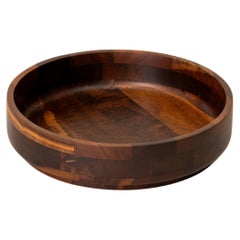
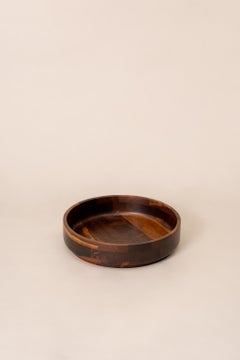
Brazilian Mid-Century Wooden Bowl by Jean Dobré for Tropic-Art

Brazilian Mid-Century Wooden Bowl by Jean Dobré for Tropic-Art

Located in Rio De Janeiro, RJ

Brazilian mid-century wooden bowl in solid pieces of imbuia wood, designed by Jean Dobré for Tropic-Art. These pieces preserve the manufacturer's seal.

Category

Mid-20th Century Brazilian Mid-Century Modern Serving Bowls

Materials

Hardwood

Brazilian Mid-Century Wooden Ice Bucket by Jean Dobré for Tropic-Art

Brazilian Mid-Century Wooden Ice Bucket by Jean Dobré for Tropic-Art

Located in Rio De Janeiro, RJ

Brazilian mid-century wooden ice bucket in solid pieces of imbuia wood, designed by Jean Dobré for Tropic-Art. This piece preserve the manufacturer's seal.

Category

Mid-20th Century Brazilian Mid-Century Modern Barware

Materials

Hardwood

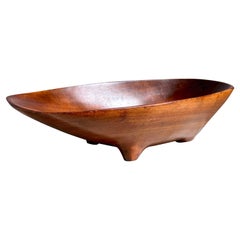
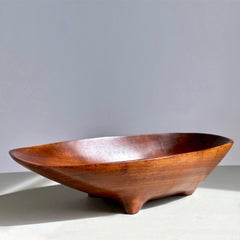
Brazilian Midcentury Centerpiece Bowl in Noble Wood, c. 1970

Brazilian Midcentury Centerpiece Bowl in Noble Wood, c. 1970

Located in Rio De Janeiro, RJ

Large and stunning bowl carved in noble wood that can also be used as a centerpiece, designer by Jean Dobré for Tropic-Art. It keeps the manufacturer's mark on the bottom.

Category

Mid-20th Century Brazilian Mid-Century Modern Centerpieces

Materials

Wood

Get Updated with New Arrivals
Save "Jean Dobre", and we’ll notify you when there are new listings in this category.

Jean Dobre For Sale on 1stDibs

With a vast inventory of beautiful furniture at 1stDibs, we’ve got just the jean dobre you’re looking for. Each jean dobre for sale was constructed with extraordinary care, often using wood, hardwood and imbuia. Whether you’re looking for an older or newer jean dobre, there are earlier versions available from the 20th Century and newer variations made as recently as the 20th Century. When you’re browsing for the right jean dobre, those designed in mid-century modern styles are of considerable interest.

How Much is a Jean Dobre?

Prices for a jean dobre start at $191 and top out at $1,200 with the average selling for $470.

A Close Look at Mid-century-modern Furniture

Organically shaped, clean-lined and elegantly simple are three terms that well describe vintage mid-century modern furniture. The style, which emerged primarily in the years following World War II, is characterized by pieces that were conceived and made in an energetic, optimistic spirit by creators who believed that good design was an essential part of good living.

ORIGINS OF MID-CENTURY MODERN FURNITURE DESIGN

CHARACTERISTICS OF MID-CENTURY MODERN FURNITURE DESIGN

MID-CENTURY MODERN FURNITURE DESIGNERS TO KNOW

ICONIC MID-CENTURY MODERN FURNITURE DESIGNS

VINTAGE MID-CENTURY MODERN FURNITURE ON 1STDIBS

The mid-century modern era saw leagues of postwar American architects and designers animated by new ideas and new technology. The lean, functionalist International-style architecture of Le Corbusier and Bauhaus eminences Ludwig Mies van der Rohe and Walter Gropius had been promoted in the United States during the 1930s by Philip Johnson and others. New building techniques, such as “post-and-beam” construction, allowed the International-style schemes to be realized on a small scale in open-plan houses with long walls of glass.

Materials developed for wartime use became available for domestic goods and were incorporated into mid-century modern furniture designs. Charles and Ray Eames and Eero Saarinen, who had experimented extensively with molded plywood, eagerly embraced fiberglass for pieces such as the La Chaise and the Womb chair, respectively. 

Architect, writer and designer George Nelson created with his team shades for the Bubble lamp using a new translucent polymer skin and, as design director at Herman Miller, recruited the Eameses, Alexander Girard and others for projects at the legendary Michigan furniture manufacturer

Harry Bertoia and Isamu Noguchi devised chairs and tables built of wire mesh and wire struts. Materials were repurposed too: The Danish-born designer Jens Risom created a line of chairs using surplus parachute straps for webbed seats and backrests.

The Risom lounge chair was among the first pieces of furniture commissioned and produced by celebrated manufacturer Knoll, a chief influencer in the rise of modern design in the United States, thanks to the work of Florence Knoll, the pioneering architect and designer who made the firm a leader in its field. The seating that Knoll created for office spaces — as well as pieces designed by Florence initially for commercial clients — soon became desirable for the home.

As the demand for casual, uncluttered furnishings grew, more mid-century furniture designers caught the spirit.

Classically oriented creators such as Edward Wormley, house designer for Dunbar Inc., offered such pieces as the sinuous Listen to Me chaise; the British expatriate T.H. Robsjohn-Gibbings switched gears, creating items such as the tiered, biomorphic Mesa table. There were Young Turks such as Paul McCobb, who designed holistic groups of sleek, blond wood furniture, and Milo Baughman, who espoused a West Coast aesthetic in minimalist teak dining tables and lushly upholstered chairs and sofas with angular steel frames.

Generations turn over, and mid-century modern remains arguably the most popular style going. As the collection of vintage mid-century modern chairs, dressers, coffee tables and other furniture for the living room, dining room, bedroom and elsewhere on 1stDibs demonstrates, this period saw one of the most delightful and dramatic flowerings of creativity in design history.

On the Origins of Brazilian

More often than not, vintage mid-century Brazilian furniture designs, with their gleaming wood, soft leathers and inviting shapes, share a sensuous, unique quality that distinguishes them from the more rectilinear output of American and Scandinavian makers of the same era.

Commencing in the 1940s and '50s, a group of architects and designers transformed the local cultural landscape in Brazil, merging the modernist vernacular popular in Europe and the United States with the South American country's traditional techniques and indigenous materials.

Key mid-century influencers on Brazilian furniture design include natives Oscar NiemeyerSergio Rodrigues and José Zanine Caldas as well as such European immigrants as Joaquim TenreiroJean Gillon and Jorge Zalszupin. These creators frequently collaborated; for instance, Niemeyer, an internationally acclaimed architect, commissioned many of them to furnish his residential and institutional buildings.

The popularity of Brazilian modern furniture has made household names of these designers and other greats. Their particular brand of modernism is characterized by an émigré point of view (some were Lithuanian, German, Polish, Ukrainian, Portuguese, and Italian), a preference for highly figured indigenous Brazilian woods, a reverence for nature as an inspiration and an atelier or small-production mentality.

Hallmarks of Brazilian mid-century design include smooth, sculptural forms and the use of native woods like rosewoodjacaranda and pequi. The work of designers today exhibits many of the same qualities, though with a marked interest in exploring new materials (witness the Campana Brothers' stuffed-animal chairs) and an emphasis on looking inward rather than to other countries for inspiration.

Find a collection of vintage Brazilian furniture on 1stDibs that includes chairssofastables and more.

Finding the Right Dining-entertaining for You

Your dining room table is a place where stories are shared and personalities shine — why not treat yourself and your guests to the finest antique and vintage glass, silver, ceramics and serveware for your meals?

Just like the people who sit around your table, your serveware has its own stories and will help you create new memories with your friends and loved ones. From ceramic pottery to glass vases, set your table with serving pieces that add even more personality, color and texture to your dining experience.

Invite serveware from around the world to join your table settings. For special occasions, dress up your plates with a striking Imari charger from 19th-century Japan or incorporate Richard Ginori’s Italian porcelain plates into your dining experience. Celebrate the English ritual of afternoon tea with a Japanese tea set and an antique Victorian kettle. No matter how big or small your dining area is, there is room for the stories of many cultures and varied histories, and there are plenty of ways to add pizzazz to your meals.

Add different textures and colors to your table with dinner plates and pitchers of ceramic and silver or a porcelain lidded tureen, a serving dish with side handles that is often used for soups. Although porcelain and ceramic are both made in a kiln, porcelain is made with more refined clay and is more durable than ceramic because it is denser. The latter is ideal for statement pieces — your tall mid-century modern ceramic vase is a guaranteed conversation starter. And while your earthenware or stoneware is maybe better suited to everyday lunches as opposed to the fine bone china you’ve reserved for a holiday meal, handcrafted studio pottery coffee mugs can still be a rich expression of your personal style.

“My motto is ‘Have fun with it,’” says author and celebrated hostess Stephanie Booth Shafran. “It’s yin and yang, high and low, Crate & Barrel with Christofle silver. I like to mix it up — sometimes in the dining room, sometimes on the kitchen banquette, sometimes in the loggia. It transports your guests and makes them feel more comfortable and relaxed.”

Introduce elegance at supper with silver, such as a platter from celebrated Massachusetts silversmith manufacturer Reed and Barton or a regal copper-finish flatware set designed by International Silver Company, another New England company that was incorporated in Meriden, Connecticut, in 1898. By then, Meriden had already earned the nickname “Silver City” for its position as a major hub of silver manufacturing.

At the bar, try a vintage wine cooler to keep bottles cool before serving or an Art Deco decanter and whiskey set for after-dinner drinks — there are many possibilities and no wrong answers for tableware, barware and serveware. Explore an expansive collection of antique and vintage glass, ceramics, silver and serveware today on 1stDibs.