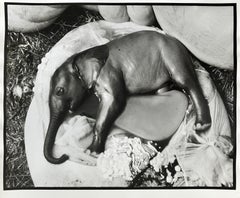
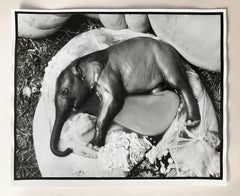
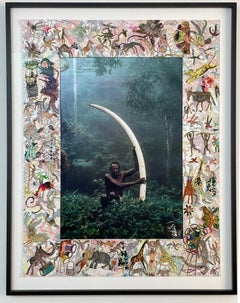
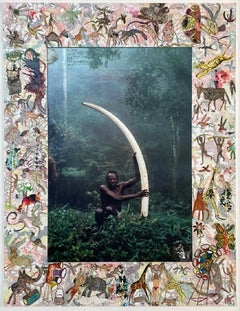
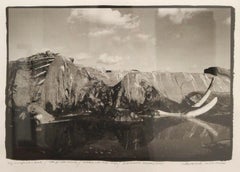
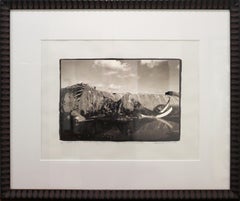
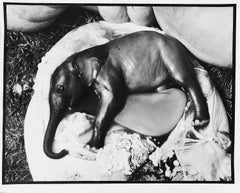
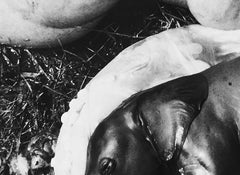
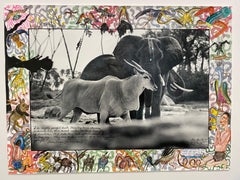
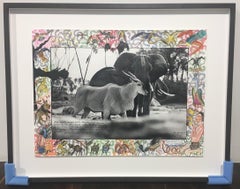
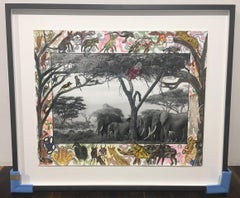
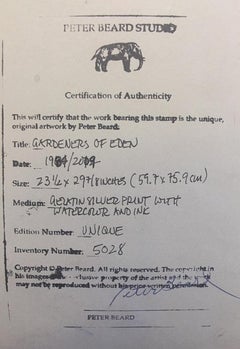
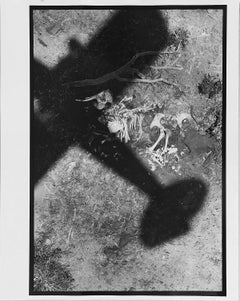
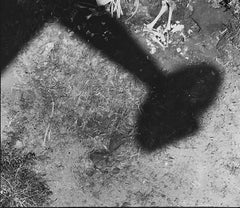
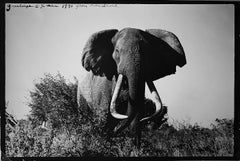
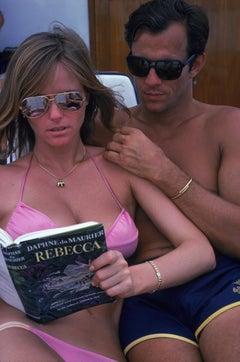
Reckless, uninhibited and brazen, photographer Peter Beard was, as The Washington Post put it, “as wild as the animals he photographed.” Beard produced some of the most beautiful images of wildlife ever captured on film.
Beard was born in 1938 in New York City. His great-grandfather was James J. Hill, founder of the Great Northern Railway. As a child, he spent his summers at his grandmother’s Tuxedo Park estate, where she gave him his first camera, a Voightländer. He used it to take pictures to accompany his diaries; Beard was a keen diarist throughout his life, amassing more than 100 volumes. At the age of 17, he took a life-changing trip to Africa with Quentin Keynes, Charles Darwin’s great-grandson, using his Voightländer to photograph wildlife.
After attending prestigious private schools such as Buckley and Pomfret, Beard entered Yale University in 1957 as a pre-med student. However, he soon turned his attention toward art, studying under architectural historian Vincent Scully, German artist Josef Albers and painter Richard Lindner. He graduated in 1961 with a degree in art history.
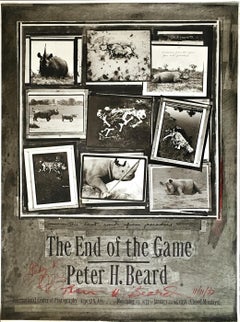
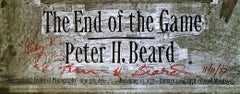
In the 1960s, Beard returned to Africa, where he met Out of Africa author Karen Blixen. Enamored by the continent’s natural beauty, he purchased Hog Ranch near Blixen’s coffee plantation in Kenya. While there, he received a special dispensation from President Uhuru Kenyatta to film, photograph and document the flora and wildlife at Tsavo National Park. This led to The End of the Game, published in 1965, which documented the demise of more than 35,000 starving elephants and 5,000 black rhinos.
Beard became renowned for his black-and-white and color photography, figurative photos and landscapes. He exhibited around the world, including at New York’s Blum Helman Gallery in 1975, the International Center of Photography in Manhattan in 1977, the Centre National de la Photographie in Paris in 1996 and Guild Hall in East Hampton in 2016.
Beard died in 2020 at the age of 82. His works remain in demand with collectors.
On 1stDibs, find original Peter Beard photography, mixed media work and prints.
Used to refer to a time rather than an aesthetic, Contemporary art generally describes pieces created after 1970 or being made by living artists anywhere in the world. This immediacy means it encompasses art responding to the present moment through diverse subjects, media and themes. Contemporary painting, sculpture, photography, performance, digital art, video and more frequently includes work that is attempting to reshape current ideas about what art can be, from Felix Gonzalez-Torres’s use of candy to memorialize a lover he lost to AIDS-related complications to Jenny Holzer’s ongoing “Truisms,” a Conceptual series that sees provocative messages printed on billboards, T-shirts, benches and other public places that exist outside of formal exhibitions and the conventional “white cube” of galleries.
Contemporary art has been pushing the boundaries of creative expression for years. Its disruption of the traditional concepts of art are often aiming to engage viewers in complex questions about identity, society and culture. In the latter part of the 20th century, contemporary movements included Land art, in which artists like Robert Smithson and Michael Heizer create large-scale, site-specific sculptures, installations and other works in soil and bodies of water; Sound art, with artists such as Christian Marclay and Susan Philipsz centering art on sonic experiences; and New Media art, in which mass media and digital culture inform the work of artists such as Nam June Paik and Rafaël Rozendaal.
The first decades of the 21st century have seen the growth of Contemporary African art, the revival of figurative painting, the emergence of street art and the rise of NFTs, unique digital artworks that are powered by blockchain technology.
Major Contemporary artists practicing now include Ai Weiwei, Cecily Brown, David Hockney, Yayoi Kusama, Jeff Koons, Takashi Murakami and Kara Walker.
Find a collection of Contemporary prints, photography, paintings, sculptures and other art on 1stDibs.
Find a broad range of photography on 1stDibs today.
The first permanent image created by a camera — which materialized during the 1820s — is attributed to Joseph Nicéphore Niépce. The French inventor was on to something for sure. Kodak introduced roll film in the 1880s, allowing photography to become more democratic, although cameras wouldn’t be universally accessible until several decades later.
Digital photographic techniques, software, smartphone cameras and social-networking platforms such as Instagram have made it even easier in the modern era for budding photographers to capture the world around them as well as disseminate their images far and wide.
What might leading figures of visual art such as Andy Warhol have done with these tools at their disposal?
Today, when we aren’t looking at the digital photos that inundate us on our phones, we look to the past to celebrate the photographers who have broken rules as well as records — provocative and prolific artists like Horst P. Horst, Lillian Bassman and Helmut Newton, who altered the face of fashion and portrait photography; visionary documentary photographers such as Gordon Parks, whose best-known work was guided by social justice; and pioneers of street photography such as Henri Cartier-Bresson, who shot for revolutionary travel magazines like Holiday with the likes of globetrotting society lensman Slim Aarons.
Find photographers you may not know in Introspective and The Study — where you’ll read about Berenice Abbott, who positioned herself atop skyscrapers for the perfect shot, or “conceptual artist-adventurer” Charles Lindsay, whose work combines scientific rigor with artistic expression, or Massimo Listri, known for his epic interiors of opulent Old World libraries. Photographer Jeannette Montgomery Barron was given a Kodak camera as a child. Later, she shot on Polaroid film before buying her first 35mm camera in her teens. Barron's stunning portraits of Jean-Michel Basquiat, Warhol and other artists chronicle a crucial chapter of New York’s cultural history.
Throughout the past two centuries, photographers have used their medium to create expressive work that has resonated for generations. Shop a voluminous collection of this powerful fine photography on 1stDibs. Search by photographer to find the perfect piece for your living room wall, or spend some time with the work organized under various categories, such as landscape photography, nude photography and more.