Timeless Intaglio
to
2
289
288
218
196
97
82
49
49
46
39
36
35
26
23
20
20
15
12
10
10
9
9
7
7
7
7
6
5
5
5
5
4
4
3
2
2
2
2
1
1
1
1
1
1
1
1
85
40
35
34
30
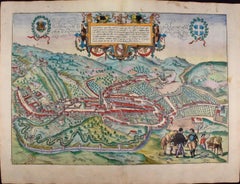
View of Emden, Germany: A 16th Century Hand-colored Map by Braun & Hogenberg
By Franz Hogenberg
Located in Alamo, CA
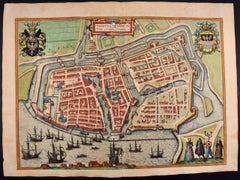
This is a 16th century original hand-colored copperplate engraved map of a bird's-eye View of Embden, Germany entitled " Emuda, vulgo Embden vrbs Frisia orientalis primaria" by Georg Braun & Franz Hogenberg, in volume II of their famous city atlas "Civitates Orbis Terrarum", published in Cologne, Germany in 1575.
This is a beautifully colored and detailed map of Emden, a seaport in northwestern Germany, along the Ems River and perhaps portions of over Dollart Bay, near the border with the Netherland. The map depicts a bird's-eye view of the city from the southwest, as well as a view of the harbor and an extensive system of canals. Numerous ships of various sizes, as well as two rowboats containing numerous occupants are seen in the main waterway in the foreground and additional boats line two canals in the center of the city. Two men and two women are shown on a hill in the foreground on the right, dressed in the 16th century style of nobility. Two ornate crests are included in each corner. A title strap-work cartouche is in the upper center with the title in Latin. The crest on the right including Engelke up de Muer (The Little Angel on the Wall) was granted by Emperor Maximilian I in 1495.
This is an English translation of an excerpt of Braun's description of Embden: "In Emden, the capital of East Frisia, rich merchants live in very fine houses. The city has a broad and well-situated harbour, which in my opinion is unique in Holland. Frisia and the whole of the Netherlands, for the ships can anchor here right under the city walls. They have also extended the harbour as far as the New Town, so that up to 400 ships can now find shelter here when the sea is rough."
The emphasis on the harbor and waterways within the city highlights the importance of Emden's place as a seaport at this time. Embden developed from a Dutch/Flemish trading settlement in the 7th-8th centuries into a city as late as late 14th century. In 1494 it was granted staple rights, and in 1536 the harbour was extended. In the mid-16th century Emden's port was thought to have the most ships in Europe. Its population then was about 5,000, rising to 15,000 by the end of the 16th century. The Ems River flowed directly under the city walls, but its course was changed in the 17th century by the construction of a canal. Emden has canals within its city limits, a typical feature of Dutch towns, which also enabled the extension of the harbor. In 1744 Emden was annexed by Prussia and is now part of Germany. It was captured by French forces in 1757 during the Seven Years' War, but recaptured by Anglo-German forces in 1758. During the Napoleonic French era, Emden and the surrounding lands of East Frisia were part of the short-lived Kingdom of Holland.
References:Van der Krogt 4, 1230, State 2; Taschen, Braun and Hogenberg...
Category
16th Century Old Masters Landscape Prints
Materials
Engraving

View of Meissen, Germany: A 16th Century Hand-colored Map by Braun & Hogenberg
By Franz Hogenberg
Located in Alamo, CA
This is a 16th century original hand-colored copperplate engraved map of View of View of Meissen, Germany entitled "Misena Hermun Duvorum Urbs" by Georg Braun & Franz Hogenberg, from their famous city atlas "Civitates Orbis Terrarum", published in Cologne, Germany in 1575.
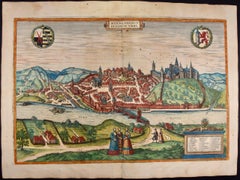
The map depicts a side view and bird's-eye view, looking across the Elbe River (labelled Albis Fluvius on the map; White River in Latin) from the northeast. In the foreground are three women in conversation on a hill above the city, along with a man and a woman in conversation by a road, all dressed in contemporary costumes of the upper class. A coat-of-arms is present in each upper corner. A great castle sits atop a hill in the background on the left. Meissen grew up around Albrechtsburg castle, built by Emperor Henry I around AD 929, and was granted a municipal charter at the end of the 12th century. From 1471 onwards, the castle complex was reconstructed as the residence of the Saxon electors on the northeast corner of the Domberg (Cathedral Hill). Meissen cathedral is a Gothic hall church begun c. 1270; in 1413 a bolt of lightning destroyed its west towers, which were replaced only in the 20th century. Meissen lies to the northwest of Dresden, Germany in Saxony. Meissen is famous for its Meissen porcelain and the Albrechtsburg castle
The following is an English translation of an excerpt from Braun's description of the city: "This city is surrounded by very many rivers, to the east flows the Elbe, to the south the Triebisch, to the west are the mountains, to the north the Meisse, after which the city is said to be named. The city is well-situated in its surroundings, the navigable rivers, the mountains and the healthy air. Around the city there is a good land to grow grain, fertile vineyards on the hillsides and without doubt the mountains are not without ore, for one mile away, up the Elbe, is Scharfenberg, where silver and lead ore are mined.."
References: Van der Krogt 4, 2684; Taschen, Braun and Hogenberg...
Category
16th Century Old Masters Landscape Prints
Materials
Engraving
Silver Rock Melon: A Framed 19th C. Color Engraving by George Brookshaw
By George Brookshaw
Located in Alamo, CA
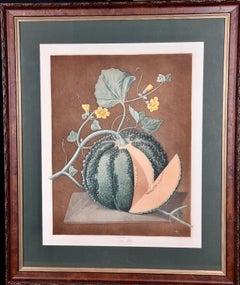
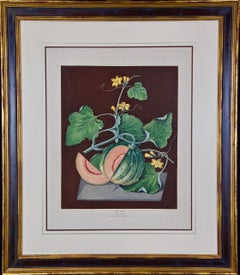
This is a 19th century colored aquatint and stipple engraving finished by hand entitled "Silver Rock Melon", drawn and engraved by George Brookshaw and published in London in 1812 as plate 67 in his 'Pomona Britannica; or, A Collection of the Most Esteemed Fruits'. It depicts a Silver Rock Melon still on the vine, but the melon lies on a heater green mat. A wedge of the melon has been dissected to reveal its inner anatomy, including the seeds. The melon skin is a heather and light green color, while the inner portions are a light peach color. The vine and leaves are shown attractive shades of light green and there are soft yellow flowers. The plant is displayed on a light brown textured background with shadows to impart 3-dimensionality. The scene is reminiscent of an engraving in an 18th century artistically stylized human anatomy atlas. There are wide white margins. The title and inscription lies within the lower border.
This striking engraving is presented in a reddish brown decorative wood frame with a darker brown scroll-work outer trim and a gold-colored inner fillet and a thick heather green mat. The frame measures 25.75" high, 21.5" wide and 1.13" deep. It is glazed with UV conservation glass. There is a short thin vertical line of discoloration in the lower margin through the word "melon" and a tiny spot in the upper margin on the left. The print and frame are otherwise in excellent condition.
There is a second Brookshaw engraving that is framed in identical moulding, although a slightly different size and a different color mat. t depicts a cluster of grapes. The two prints would make a striking display pairing...
Category
Early 19th Century Naturalistic Still-life Prints
Materials
Engraving, Aquatint
View of Seravalle, Italy: A 16th Century Hand-colored Map by Braun & Hogenberg
By Franz Hogenberg
Located in Alamo, CA
This is an original 16th century copperplate originally hand-colored engraved map of View of Seravalle, Italy entitled "Seravallum Celeberrimum Marchiae Tarvisiniae in Agro Foro Juliensi Opp. - Seravalli, quam vides, Spectator, iconem, operi huic nostro suis sumptib. . . ." by Georg Braun & Franz Hogenberg, from their famous city atlas "Civitates Orbis Terrarum", published in Augsberg, Germany in 1575.
The map depicts a view of Seravalle, now Vittorio Veneto, in San Marino, Italy, north of Venice, in a topographically accurate bird's-eye view from the south. A water-filled moat is seen to the south of the city walls and farmland to the east. Two men are depicted standing on a hill in the lower right in conversation next to grain sacks and a grazing horse, while a younger man behind them to the right herds a mule carrying presumably pigs. A very colorful and ornate title cartouche is in the upper center and coat-of-arms are in the right and left upper corners. Serravalle lies in an idyllic setting in the foothills and surrounded by orchards. St Mary's Cathedral with its tall bell tower is prominent in the center of the town. The marketplace and town hall with a bell tower in the square are depicted. Houses and shops are around the main square. Serravalle's importance as an agricultural centre is emphasized by the figures in the foreground. In 1337 Serravalle was conquered by the Republic of Venice. In 1866 the town was united with neighbouring Ceneda to form the town of Vittorio Veneto.
The following is an English translation of an excerpt from the French description of the city on the back of the map: "Serravalle, a market town renowned for cloth, wine and grain, is in such a beautiful situation that the number of its inhabitants, attracted by the loveliness of the place, has grown so much at times that the wall encircling it has had to be enlarged for the third time. The city with the surrounding town once belonged to the Church in Ceneda as an imperial fief. It subsequently became the seat of the Da Camino family (a princely house that at that time was one of the five most noble in all Italy). Now the city is under the sway of the Venetians but is prudently governed by them. For they send only one city councillor with instructions to ensure that justice prevails and to collect duties. In all else, power lies in the hands of the noble families."
This is a translation of the Latin in the title cartouche on the front: "The picture of the town of Serravalle, which you see, viewer, has been contributed to our work entirely at his own expense by Minutius, son of Hieronymus Minutius, a noble gentleman and one renowned for the far-reaching competence of his jurisdiction. We saw him sojourning in Cologne, where he was on business for Gregory XIII; while our good wishes accompany him, we should also like to accompany him on his way with this remembrance, even though it might be against his will, so that even those who have not seen him may learn of his excellence. However, those who do not yet know him will also see his excellence if God the Almighthy does not summon erring souls too soon back to the eternal seat of the Blessed."
References: Van der Krogt 4, 4728, State 1; Taschen, Braun and Hogenberg, p.331; Fauser, #14960
This striking hand-colored city view is printed on laid, chain-linked paper with wide margins. The sheet measures 16" high by 21" wide. There is a central vertical fold as issued and French text on the verso, with Latin on the front. There is some discoloration in the upper and right margins which may represent some watercolor paint from the time of the original hand-coloring of the map. There is a small hole to the right of the upper portion of the vertical fold, which is only visible when held up to light and an area of reinforcement on the verso of the lower vertical fold. The map is otherwise in very good to excellent condition.
Braun and Hogenberg's 'The Civitates Orbis Terrarum' was the second atlas of maps ever published and the first atlas of cities and towns of the world. It is one of the most important books published in the 16th century. Most of the maps in the atlas were engraved by Franz Hogenberg and the text, with its descriptions of the history and additional factual information of the cities, was written by a team of writers and edited by Georg Braun. The work contained 546 bird-eye views and map views of cities and towns from all over the world. It gave graphic representation of the main features of the illustrated cities and towns, including the buildings and streets. Although the ordinary buildings are stylized, the principal buildings are reproduced from actual drawings created on location. The principal landmarks and streets can still be recognized today. In addition, the maps often include the heraldic arms of the city, the nature of the surrounding countryside, the important rivers, streams and harbors, even depicting stone bridges, wooden pontoons, flat-bottomed ferries, ships and working boats, wharves and jetties, as well as land-based activities, including horsemen, pedestrians, wagons, coaches, and palanquins. Small vignettes are often included which illustrate the trade, occupations and habits of the local inhabitants, such as agriculture, paper-making and textiles, as well as local forms of punishment, such as gibbets, wheels, floggings etc. Large figures dressed in their local costume are often presented out of proportion in the foreground. The aim of the authors was to give as much information as possible in a pleasing visual form. They succeeded in creating maps that were both informative and decorative works of art. The atlas is a wonderful glimpse of life in medieval Europe.
Georg Braun (1541-1622) was German Catholic...
Category
16th Century Old Masters Landscape Prints
Materials
Engraving
Tah-Ro-Hon, An Ioway Warrior: Original Hand-colored McKenney & Hall Lithograph
By McKenney & Hall
Located in Alamo, CA
This is an original 19th century hand-colored McKenney and Hall lithograph of a Native American entitled "Tah-Ro-Hon, An Ioway Warrior", lithographed by J. T. Bowen after a painting by Charles Bird King and published by Rice and Hart & Co. in Philadelphia in 1848. For his portrait Tah-Ro-Hon is wearing a feathered multicolored headdress, long ornamental earrings, a chain necklace, a presidential piece medal on a ribbon necklace and he holds a multicolored staff with feathers.
This original McKenney and Hall hand-colored lithograph is printed on a sheet measuring 10" high and 7" wide. There is a tiny spot of red paint adjacent to a red feather hanging...
Category
Mid-19th Century Naturalistic Portrait Prints
Materials
Lithograph

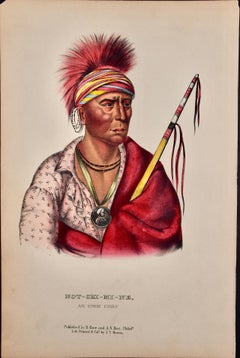
Not-Chi-Mi-Ne, An ioway Chief: Original Hand-colored McKenney & Hall Lithograph
By McKenney & Hall
Located in Alamo, CA
This is an original 19th century hand-colored McKenney and Hall lithograph of a Native American entitled "Not-Chi-Mi-Ne, An Ioway Chief ",...
Category
Mid-19th Century Naturalistic Portrait Prints
Materials
Lithograph
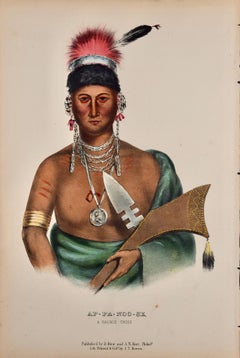
Ap-Pa-Noo-Se, A Saukie Chief: Original Hand-colored McKenney & Hall Lithograph
By McKenney & Hall
Located in Alamo, CA
This is an original 19th century hand-colored McKenney and Hall lithograph of a Native American entitled "Ap-Pa-Noo-Se, A Saukie Chief", lithographed by J. T. Bowen after a painting by Charles Bird King and published by Rice and Hart & Co. in Philadelphia in 1848. For his portrait Ap-Pa-Noo-Se (A Chief When a Child) is wearing a feathered headdress, long ornamental earrings, multiple chain necklaces...
Category
Mid-19th Century Naturalistic Portrait Prints
Materials
Lithograph
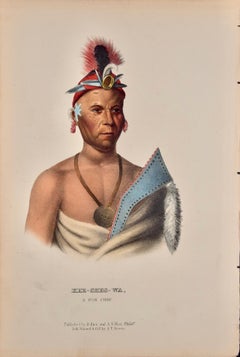
Kee-Shes-Wa, A Fox Chief: An Original Hand-colored McKenney & Hall Lithograph
By McKenney & Hall
Located in Alamo, CA
This is an original 19th century hand-colored McKenney and Hall lithograph of a Native American entitled "Kee-Shes-Wa, A Fox Chief", litho...
Category
Mid-19th Century Naturalistic Portrait Prints
Materials
Lithograph
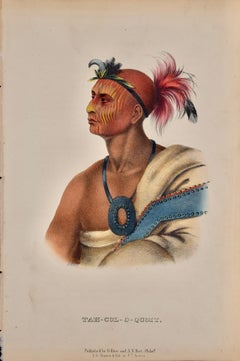
Tah-Col-O-Quoit: Original 19th Century Hand-colored McKenney & Hall Lithograph
By McKenney & Hall
Located in Alamo, CA
This is an original 19th century hand-colored McKenney and Hall lithograph of a Native American entitled "Tah-Col-O-Quoit", lithographed b...
Category
Mid-19th Century Naturalistic Portrait Prints
Materials
Lithograph
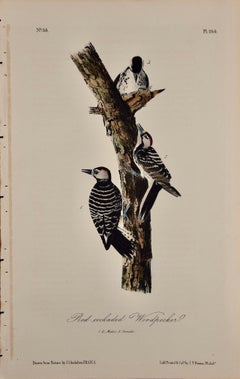
Red-cockaded Woodpecker: A First Octavo Edition Audubon Hand-colored Lithograph
By John James Audubon
Located in Alamo, CA
This is an original John James Audubon hand-colored royal first octavo edition lithograph entitled "Red-cockaded Woodpecker, 1. 2. Male, 3. Female", No. 5...
Category
Mid-19th Century Naturalistic Animal Prints
Materials
Lithograph
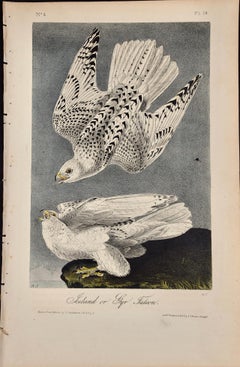
Iceland or Gyr Falcon: An Original 1st Ed. Audubon Hand-colored Bird Lithograph
By John James Audubon
Located in Alamo, CA
This is an original rare first edition John James Audubon hand-colored lithograph entitled "Iceland or Gyr Falcon", No. 4, Plate 19 from Audubon's "Birds of America, lithographed, pr...
Category
Mid-19th Century Naturalistic Animal Prints
Materials
Lithograph
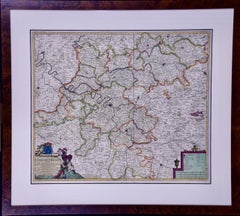
L'Isle de France: A Hand-colored 17th Century Map by De Wit
By Frederick de Wit
Located in Alamo, CA
This colorful and detailed 17th century hand-colored copperplate map by Frederick De Wit was published in Amsterdam between 1666 and 1760. The map depicts the Île-de-France, which is one of the ancient provinces of France. Paris is located in the center of the map, with Versailles to the southwest The map extends from Rouen in the west to Reims in the east. The area around Paris, the Véxin Français, was the original domain of the king of France. Other areas were ruled by French feudal lords. For example, the Véxin Normand area was the domain of the Duke of Normandy...
Category
Early 18th Century Old Masters More Prints
Materials
Engraving
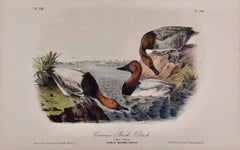
Canvass Back Duck: An Original 19th C. Audubon Hand-colored Bird Lithograph
By John James Audubon
Located in Alamo, CA
This is an original John James Audubon hand-colored lithograph entitled "Canvass Back Duck, 1. Male 2. Female, View of Baltimore, Maryland", No. 79, Plate 395 from Audubon's "Birds o...
Category
Late 19th Century Naturalistic Animal Prints
Materials
Lithograph
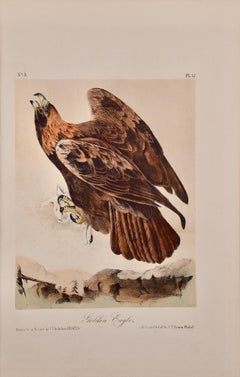
Golden Eagle: An Original 19th C. Audubon Hand-colored Bird Lithograph
By John James Audubon
Located in Alamo, CA
This is an original John James Audubon hand-colored lithograph entitled "Golden Eagle", No. 3, Plate 12 from Audubon's "Birds of America, lithographed, printed and colored by JT Bowe...
Category
Late 19th Century Naturalistic Animal Prints
Materials
Lithograph
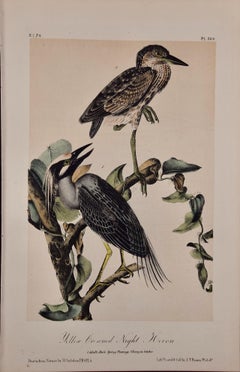
Night Heron Birds: An Original 19th C. Audubon Hand-colored Bird Lithograph
By John James Audubon
Located in Alamo, CA
This is an original John James Audubon hand-colored lithograph entitled "Yellow Crowned Night Heron, 1. Adult Male Spring Plumage, 2. Young in October", No. 73, Plate 364 from Audubo...
Category
Late 19th Century Naturalistic Animal Prints
Materials
Lithograph
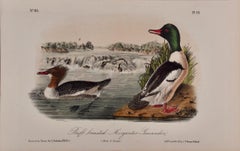
Buff-breasted Merganser: Original 19th C. Audubon Hand-colored Bird Lithograph
By John James Audubon
Located in Alamo, CA
This is an original John James Audubon hand-colored lithograph entitled "Buff-breasted Merganser Goosander, 1. Male 2. Female", No. 83, Plate 411 from Audubon's "Birds of America, li...
Category
Late 19th Century Naturalistic Animal Prints
Materials
Lithograph
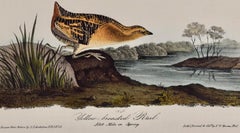
Yellow-breasted Rail Bird: Original 19th C. Audubon Hand-colored Lithograph
By John James Audubon
Located in Alamo, CA
This is an original 1st octavo edition John James Audubon hand-colored lithograph entitled "yellow-breasted Rail, Adult Male in Spring", No. 62, Plate 307, from Audubon's "Birds of America". It was lithographed, printed and colored by J. T. Bowen and published in Philadelphia between 1840 and 1841. It depicts an adult male yellow-breasted Rail bird on the left standing on a rock on the bank of a body of water, looking to the right, perhaps at something in the water or on an island on the right with trees. The landscape surrounding the bird is striking.
This original 1st octavo edition hand-colored Audubon lithograph...
Category
Late 19th Century Naturalistic Animal Prints
Materials
Lithograph
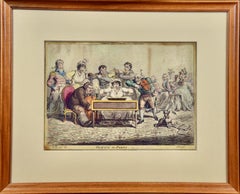
"Playing in Parts": A 19th Century James Gillray Hand-colored Musical Caricature
By James Gillray
Located in Alamo, CA
This hand-colored etching and aquatint caricature entitled "Playing in Parts" by James Gillray was published in London by Hanna Humphrey, 27 St. James Street on May 15th 1801. The print is signed in the plate in the lower right. This is a rare musical caricature. It depicts five amateur musicians, a woman and four men, performing their music in a drawing room. A young overweight woman dressed in white is seated in the center, playing a piano...
Category
Early 19th Century Portrait Prints
Materials
Etching
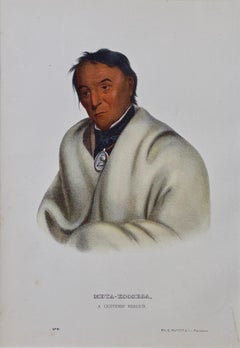
Meta-Koosega Chippeway Warrior: Original Hand-colored McKenney & Hall Lithograph
By McKenney & Hall
Located in Alamo, CA
This is an original 19th century hand-colored McKenney and Hall lithograph of a Native American entitled "Meta-Koosega, Chippeway Warrior,...
Category
Mid-19th Century Naturalistic Portrait Prints
Materials
Engraving
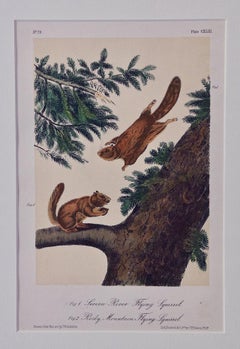
Flying Squirrels: An Original Audubon Hand-colored Lithograph
By John James Audubon
Located in Alamo, CA
This is an original John James Audubon hand colored lithograph entitled "Severn River Flying Squirrel & Rocky Mountain Flying Squirrel", No. 29, P...
Category
Mid-19th Century Naturalistic Animal Prints
Materials
Lithograph
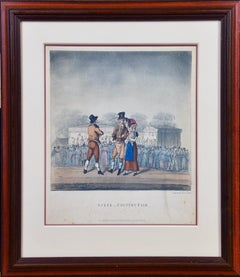
"Scene _ Country Fair": A Framed Early 19th Century Engraving by George Hunt
By George Hunt
Located in Alamo, CA
This is a framed colored engraving entitled "Scene _ Country Fair" by George Hunt, published in London in 1825. It depicts a gathering of people at an early 19th century county fair, presumably in England. A majority of the crowd are turned away, watching a performance on a stage in the background. In the foreground a man is in conversation with a couple. The man wears a top hat and the woman is holding a baby. They are dressed in the typical attire of the middle class at that time.
The engraving is presented in a brown wood frame and a double mat, with a cream-colored outer mat and a light cranberry...
Category
Early 19th Century Landscape Prints
Materials
Engraving
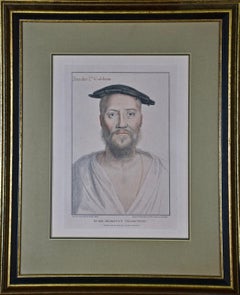
18th C. Bartolozzi Portrait of Brooke Cobham from a 16th Century Holbein Drawing
By Hans Holbein
Located in Alamo, CA
This is an 18th century engraved portrait of Brooke Cobham, a nobleman in King Henry VIII's court, created by Francesco Bartolozzi (1728–1815), after a drawing by Hans Holbein the Younger (1497- 1543) in the 16th century. Holbein was the official artist in the court of King Henry VIII. Bartolozzi used both etching and stipple engraving techniques to create the work which was then was printed in color on pink paper and hand finished with watercolor. It was published by John Chamberlaine in London in 1793 in "The Book of Imitations of Original Drawings by Hans Holbein in the Collection of His Majesty".
Sir George Brooke, Baron Cobham (1497-1558) was a prominent member of King Henry VIII's royal court. He became a member of parliament in 1529 and served as a peer in the trial of Queen Anne Boleyn, which resulted in her beheading. He was rewarded for his political and military service to King Henry and Britain with land, castles and former monasteries and was made a Knight of the Garter, a prestigious membership limited to the king and a very limited number of prominent British subjects. As a member of the Privy Council following the death of young King Edward VI (Henry VIII's son), he fell out of favor when he signed a ruling disinheriting both of Henry VIII's daughters, Mary and Elizabeth, in favor of Lady Jane Grey...
Category
Late 18th Century Old Masters Portrait Prints
Materials
Engraving, Etching
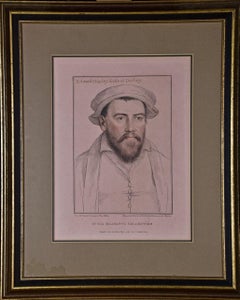
18th C. Portrait of Edward Stanley from Henry VIII's Court after Holbein Drawing
By Hans Holbein
Located in Alamo, CA
This is an 18th century engraved portrait of "Edward Stanley" created by Francesco Bartolozzi (1728–1815), after a drawing by Hans Holbein the Younger (1497- 1543) in the 16th century. Holbein was the official artist in the court of King Henry VIII. Bartolozzi used both etching and stipple engraving techniques to create the work which was published by John Chamberlaine in London in 1793 in "The Book of Imitations of Original Drawings by Hans Holbein in the Collection of His Majesty".
Edward Stanley, 3rd Earl of Derby...
Category
Late 18th Century Old Masters Portrait Prints
Materials
Engraving, Etching
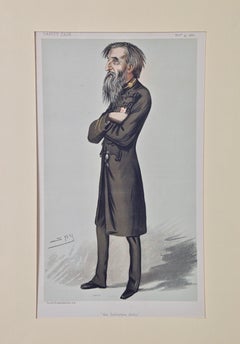
William Booth, Founder of "The Salvation Army": A 19th C. Vanity Fair Caricature
By Sir Leslie Ward
Located in Alamo, CA
This is a 19th century Vanity Fair color chromolithograph caricature of William Booth "The Salvation Army" by Spy (Leslie Ward) November 25, 1882, No. 2...
Category
Late 19th Century Victorian Portrait Prints
Materials
Lithograph
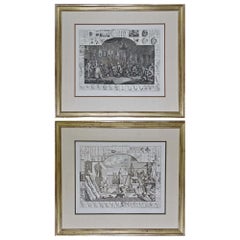
William Hogarth's "Analysis of Beauty": A Set of Two Framed 18th C. Engravings
By William Hogarth
Located in Alamo, CA
The two plates in this set were created utilizing both engraving and etching techniques by William Hogarth in 1753, originally as illustrations of his book on aesthetics, entitled "Analysis of Beauty". Due to their popularity, these plates were later published separately. The publication line in the lower right reads: "Designed, Engraved, and Publish'd by Wm. Hogarth, March 5th 1753, according to Act of Parliament." Hogarth's original copper plates were refurbished where needed by James Heath and engravings were republished in London in 1822 by Braddock, Cradock & Joy. This was the last time Hogarth's copper plates were used for printing. Most were melted during World War I for the construction of bombs.
These large folio sized "Analysis of Beauty" engravings are presented in antiqued gold-colored frames with double mats; the outer silk mats are light brown-colored and the inner mats are dark brown. Each frame measures 27.38" x 31.25" x 1.13". There is one tiny spot in the right margin of plate 1 and another in the lower margin; the latter could be from the printing process. The prints are otherwise in excellent condition.
The "Analysis of Beauty" series is in the collection of many major museums, including: The British Museum, The Metropolitan Museum of Art, The Tate Museum, The Chicago Art Institute and The Fine Arts Museums of San Francisco.
The first engraving (Plate 1) depicts a courtyard of statues which is filled with some of the most famous works of classical sculpture. The most important sculptures are surrounded by less impressive works. The Medicean Venus (#13) is in the center with a statue of Julius Caesar (#19) to the right, elevated on a pulley with a short, overdressed Brutus stands over the falling Caesar. The Apollo Belvedere (#12) is next. A judge stands to the right with his foot on a cherub (#16). Another crying cherub holds a gallows and wipes his tears with the judge's robe.
A sphinx (#21) and the drunken Silenus (#107) are below the Venus. Michaelangelo's torso (#54) and a statue of Antonius (#6) are seen in the foreground. The Farnese Hercules (#3) and a bust of another Hercules (#4) under two statuettes of Isis are also included in the scene.
The key to these objects is included in the form of a serpentine line winding around a cone (#26), Hogarth's "Line of Beauty". For Hogarth the winding line is an essential element of beauty in art. Hogarth's theory of beauty is communicated in this plate.
Plate 2 is thought to represent the Wanstead Assembly, with the Earl of Tynley and his household. It is an adaptation of a scene in the Happy Marriage series, which complements Hogarth's Marriage à la Mode...
Category
Mid-18th Century Old Masters Interior Prints
Materials
Engraving, Etching
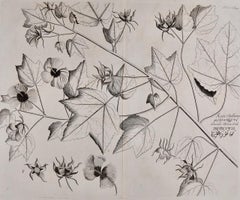
"Katu-Belluren": A 17th Century Botanical Engraving by Hendrik van Rheede
Located in Alamo, CA
This is a 17th century engraving of a vine spinach plant entitled "Katu-Belluren" by Hendrik van Rheede tot Drakenstein, plate 46 from his 'Hortus Indicus M...
Category
Late 17th Century Naturalistic Landscape Prints
Materials
Engraving
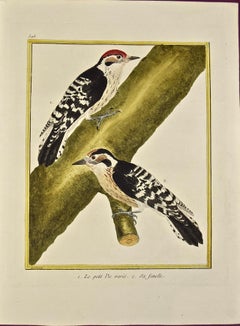
Woodpeckers "Le Petit Pic" An 18th Century Hand-colored Engraving by Martinet
By François Nicolas Martinet
Located in Alamo, CA
This is a hand-colored engraving of male and female woodpeckers entitled "1. Le Petit Pie varie, 2. Sa Femelle" by Francois Nicolas Martinet, plate 598 from 'Histoire Naturelle des O...
Category
1760s Naturalistic Animal Prints
Materials
Engraving
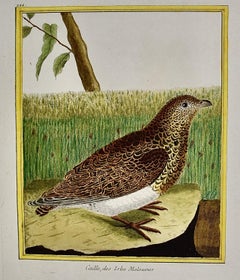
A Falkland Island Quail: An 18th Century Hand-colored Engraving by Martinet
By François Nicolas Martinet
Located in Alamo, CA
This is a hand-colored engraving of a Falkland Island Quail ("Caille des Isles Malouines") by Francois Nicolas Martinet, plate 222 from 'Histoire Naturelle des Oiseaux' in associatio...
Category
1760s Naturalistic Animal Prints
Materials
Engraving
A Greenfinch & A Sparrow: An 18th Century Hand-colored Engraving by Martinet
By François Nicolas Martinet
Located in Alamo, CA
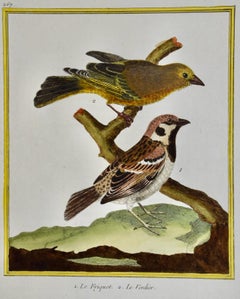
This is a hand-colored engraving of a Greenfinch bird and a tree sparrow ("1, Le Friquet, 2. Le Verdier") by Francois Nicolas Martinet, plate 227 from 'Histoire Naturelle des Oiseaux...
Category
1760s Naturalistic Animal Prints
Materials
Engraving
Basilica of San Lorenzo in Rome: A Framed 18th Century Etching by Piranesi
By Giovanni Battista Piranesi
Located in Alamo, CA
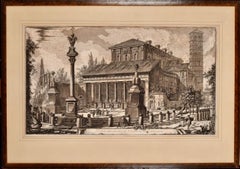
This large framed 18th century etching by Giovanni Battista Piranesi entitled "Veduta della Basilica di S. Lorenzo fuor della mura" (Basilica of San Lorenzo Outside the Walls), published in Rome in 1750 in Piranesi's Vedute di Roma (Views of Rome), This etching depicts the Basilica of San Lorenzo Outside the Walls, which is a Roman Catholic papal basilica and parish church, located in Rome, Italy. The Basilica is one of the Seven Pilgrim Churches of Rome and one of the five "papal basilicas". It was built as a shrine to the martyred Roman deacon St. Lawrence.
This Piranesi etching is held by many museums and institutions, including: The Metropolitan Museum, The British Museum, The National Gallery of Art, The Yale University Art Gallery, and The Harvard Museum of Art.
This magnificent etching is presented in a brown-colored wood frame and a tan French...
Category
1750s Old Masters Landscape Prints
Materials
Etching
Jean Racine Portrait: 17th C. Engraving by Edelinck in Perrault's Les Hommes
By Gerard Edelinck
Located in Alamo, CA
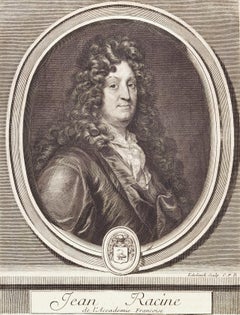
This is a 17th century portrait engraving of Jean-Baptiste Racine by Gerard Edelinck (1640-1707), published in Charles Perrault's 'Les Hommes Illustres' in Paris in 1696. Jean Racine (1639-1699) was a French dramatist, one of the three great playwrights of 17th-century France, along with Molière and Corneille. Racine's works were primarily tragedies. He wrote Phèdre, Andromaque, and Athalie. He did write one comedy, Les Plaideurs, and a muted tragedy, Esther for young readers. His writing is renowned for its elegance, purity, speed, and fury. The American poet Robert Lowell described his style as a "diamond-edge" and the "glory of its hard, electric rage". Racine's works often displayed his psychological insight, the passion of his characters, and the stark reality of his plots and stage descriptions. In 1672, he was elected to the Académie Française, and two years later he achieved the title of "treasurer of France", and later the honorary title of an "ordinary gentleman of the king" to King Louis XIV, and subsequently a secretary of the king .
This beautiful engraved portrait is printed on chain-linked, laid paper with wide margins. The sheet measures 17.13" high by 10.75" wide. There is a small spot in the lower margin and a few tiny faint spots in the margins, but the print is otherwise in very good condition. The original descriptive text pages, 81 & 82, are included.
Provenance: This engraving was owned by Arthur Pomeroy, 1st Baron Harberton and the Viscount Harberton (1723-1798). He was an Irish politician, who represented County Kildare in the Irish House...
Category
Late 17th Century Old Masters Portrait Prints
Materials
Engraving
Vincent de Paul Portrait: 17th C. Engraving by Edelinck in Perrault's Les Hommes
By Gerard Edelinck
Located in Alamo, CA
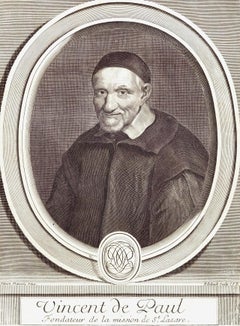
This is a 17th century portrait engraving of Saint Vincent de Paul by Gerard Edelinck (1640-1707) after a painting by Simon Francois (1606-1671), published in Charles Perrault's 'Les Hommes Illustres' in Paris in 1696. Vincent de Paul (1581-1660) was a French Catholic...
Category
Late 17th Century Old Masters Portrait Prints
Materials
Engraving
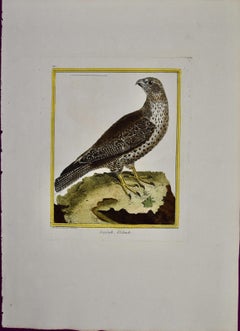
An Icelandic GyrFalcon: An 18th Century Hand-colored Engraving by Martinet
By François Nicolas Martinet
Located in Alamo, CA
This is a hand-colored engraving of an Icelandic Ger Falcon entitled "Gerfault d''Islande" by Francois Nicolas Martinet, plate 210 from 'Histoire Naturelle des Oiseaux' in associatio...
Category
1760s Naturalistic Animal Prints
Materials
Engraving
Wa-Kawn, A Winnebago Chief: Folio-sized Hand-colored McKenney & Hall Lithograph
By McKenney & Hall
Located in Alamo, CA
This is an original 19th century hand-colored folio-size McKenney and Hall lithograph of a Native American entitled "Wa-Kawn, A Winnebago Chief", after a painting by Charles Bird Kin...
Category
Mid-19th Century Naturalistic Portrait Prints
Materials
Engraving

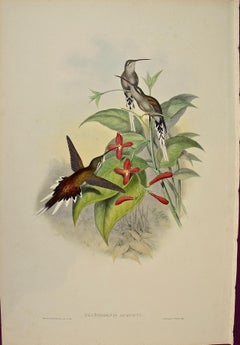
Salle's Hermit Hummingbirds: A 19th C. Gould Hand-colored "Phaethornis Augusti"
By John Gould and Henry Constantine Richter
Located in Alamo, CA
This is a hand-colored folio sized lithograph entitled "Phaethornis Augusti", Salle's Hermit Hummingbird by John Gould, published in his "A Monograph of the Trochilidae, or Family of Humming-birds", published in London in 1850. The print, which was drawn by Gould and Henry Richter and lithographed by Hullmandel and Walton, depicts three brown, grey, black, white and some green colored hummingbirds about a plant with green leaves and coral and yellow flowers.
This beautiful Gould hand-colored hummingbird lithograph is in excellent condition. The original text page is included.
There are five other unframed Gould hummingbird...
Category
Mid-19th Century Naturalistic Animal Prints
Materials
Lithograph
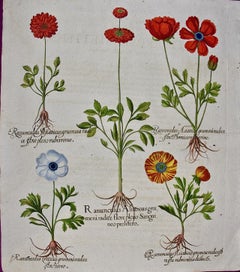
Buttercup Flowers: A Besler 18th Century Hand-colored Botanical Engraving
Located in Alamo, CA
This is a hand-colored copper plate engraving depicting Ranunculus (Persian Buttercup) flowers from Basilius Besler's landmark work, Hortus Eystettensis (Garden at Eichstatt), first published in 1613 in Eichstatt, Germany near Nuremberg and later in 1640 and 1713.
This beautiful colorful engraving is printed on thick laid chain-linked paper. There is latin text on the verso. There are central horizontal creases and two small holes on the right and another in the left lower corner. It is otherwise in excellent condition.
Basilius Besler (1561–1629) was an apothecary and botanist. He was curator of the Willibaldsburg Castle garden of Johann Konrad von Gemmingen, prince bishop...
Category
Early 18th Century Academic Still-life Prints
Materials
Engraving
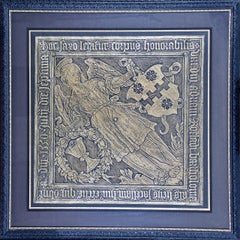
Framed Rubbing of 1550 Brass Monument in Grote Kerk Church, Breda, Netherlands
Located in Alamo, CA
This is an engraving of a tomb monument rubbing that has been highlighted with gold color on a dark grey to black background. The rubbing is of a brass plaque on a stone slab. It has...
Category
16th Century Northern Renaissance Figurative Prints
Materials
Engraving
Fresh Gathered Peas: An 18th C. Engraving From the Series 'The Cries of London'
By Francis Wheatley
Located in Alamo, CA
This is a beautifully framed engraving, printed in colors with additional hand coloring, from the famous "Cries of London" series, depicting the lives and professions of the common p...
Category
Late 18th Century Naturalistic Figurative Prints
Materials
Engraving
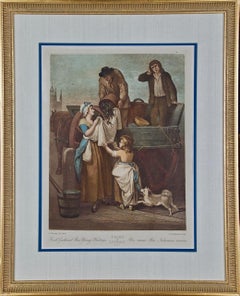
"New Mackrel": An Engraving From the 18th Century Series 'The Cries of London'
By Francis Wheatley
Located in Alamo, CA
This is a beautifully framed engraving, printed in colors with additional hand coloring, from the famous "Cries of London" series, depicting the lives and professions of the common p...
Category
Late 18th Century Naturalistic Figurative Prints
Materials
Engraving
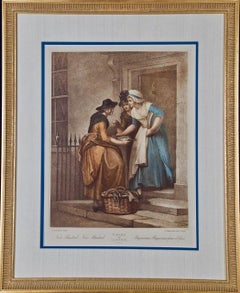
"Une Partie de Campagne": 19th Century Honore Daumier Caricature
By Honoré Daumier
Located in Alamo, CA
This is a 19th century Honore Daumier lithographic caricature/satire entitled "Une Partie de Campagne" (Part of the Campaign), plate 59 from the ser...
Category
Mid-19th Century Other Art Style Landscape Prints
Materials
Lithograph
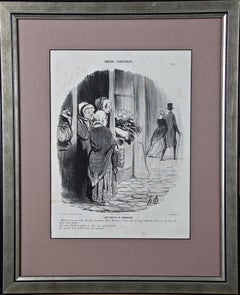
Piranesi Etching of Hadrian's Ancient Roman Aqueduct and Baths, "Aquae Virginis"
By Giovanni Battista Piranesi
Located in Alamo, CA
This is a framed Giovanni Battista Piranesi (1720-1778) etching entitled "Orthographia utriusque lateris arcuum ductus Aquae Virginis a specu principe ad Hadriani thermas, effossorum...
Category
Mid-18th Century Old Masters Landscape Prints
Materials
Etching

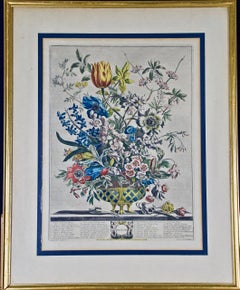
"February Bouquet" from 'The Twelve Months of Flowers' series by Robert Furber
By Robert Furber
Located in Alamo, CA
This framed hand-colored engraving entitled "February Bouquet" is from 'The Twelve Months of Flowers' by Henry Furber, published in London in 1730 by Robert Sayer and John King. Each of the twelve hand-colored engravings in the book were produced from paintings by Pieter Casteels (1684-1749) and engraved by Henry Fletcher (1710-1753). The book featured twelve detailed engravings of seasonal plants in bloom in the form of a bouquet. More than 400 different species of flowering plants were included with each plant numbered and accompanied by a list of the corresponding species names. Thirty-five species of flowers are depicted in this engraving in a bouquet sitting in an ornate attractive bowl. A few of the flowers lie loose on a table. The flower species are listed in a table in the lower portion of the plate, along with the month that these flowers are in bloom.
This colorful print is presented in a gold-colored wood frame with a cream-colored double mat with a heather green inner mat. The frame measures 23.5" High, 19" wide and 1.63" deep. There are a few small frame abrasions, but the print is in very good condition.
Robert Furber...
Category
Mid-18th Century Naturalistic Still-life Prints
Materials
Engraving
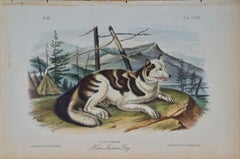
Hare Indian Dog: An Original 19th Century Audubon Hand-colored Lithograph
By John James Audubon
Located in Alamo, CA
This is an original 19th century John James Audubon hand-colored lithograph entitled "Hare Indian Dog", No. 27, Plate CXXXII, 132, from Audubon's "Quadruped...
Category
Mid-19th Century Naturalistic Animal Prints
Materials
Lithograph
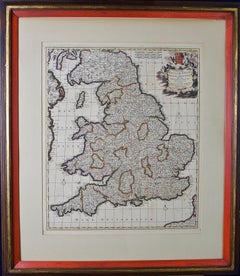
England and the British Isles: A Large 17th Century Hand-colored Map by de Wit
By Frederick de Wit
Located in Alamo, CA
This is a large hand-colored 17th century map of England and the British Isles by Frederick de Wit entitled "Accuratissima Angliæ Regni et Walliæ Principatus", published in Amsterdam in 1680. It is a highly detailed map of England, Scotland, the Scottish Isles...
Category
Late 17th Century Other Art Style Landscape Prints
Materials
Engraving
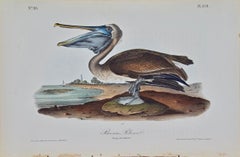
Brown Pelican: An Original Audubon 1st Edition Hand-colored Bird Lithograph
By John James Audubon
Located in Alamo, CA
This is an original rare and extremely collectible first octavo edition John James Audubon hand colored lithograph entitled "Brown Pelican, Young First Winter", No. 85, Plate 424, fr...
Category
Mid-18th Century Naturalistic Animal Prints
Materials
Lithograph
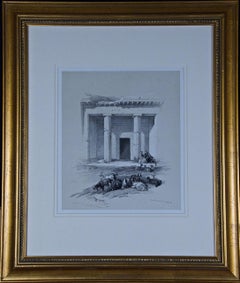
David Roberts' Entrance to the Caves: A 19th Century Hand-colored Lithograph
By David Roberts
Located in Alamo, CA
"Entrance To The Caves Of Beni Hasan" is a 19th century half-folio sized tinted duo-tone lithograph from the "The Holy Land, Syria, Idumea, Arabia, Egypt and Nubia" volume of David R...
Category
1840s Realist Landscape Prints
Materials
Lithograph
Colossal Statues of Ramses: David Roberts' 19th Century Hand Colored Lithograph
By David Roberts
Located in Alamo, CA
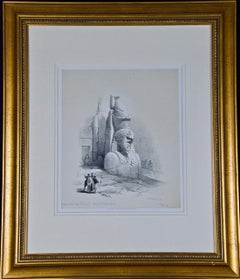
"One of Two Colossal Statues of Rameses II. Entrance to the Temple at Luxor" is a 19th century half-folio sized duo-tone lithograph from the "The Holy Land, Syria, Idumea, Arabia, Eg...
Category
1840s Realist Landscape Prints
Materials
Lithograph
West Germany: Original Hand Colored 17th Century Map by Johannes Janssonius
By Johannes Janssonius
Located in Alamo, CA
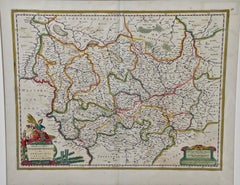
An original hand colored copperplate engraved map entitled in Latin "Archiepiscopatus Maghdeburgensis et Anhaltinus Ducatus cum terris adjacentibus", published in Amsterdam in 1640 i...
Category
Mid-17th Century Old Masters More Prints
Materials
Engraving
Ring-Tailed Bassaris: An Original Audubon Hand-colored Lithograph
By John James Audubon
Located in Alamo, CA
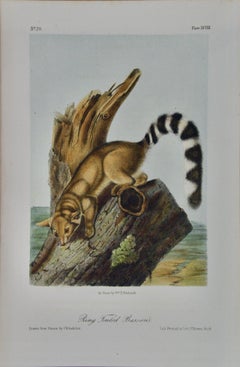
This is an original John James Audubon hand colored lithograph entitled "Ring-Tailed Bassaris", No. 20, Plate XCVIII, 98, from John James Audubon's Qu...
Category
Mid-19th Century Naturalistic Animal Prints
Materials
Lithograph
Virginian Opossum: An Original Audubon Hand-colored Lithograph
By John James Audubon
Located in Alamo, CA
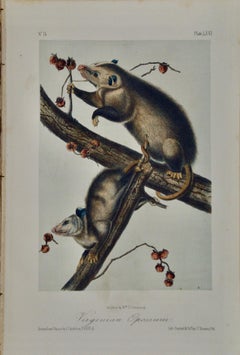
This is an original John James Audubon hand-colored lithograph entitled "Virginian Opossum", No. 14, Plate LXVI, 66, from John James Audubon's Quadrupeds of North America, drawn on s...
Category
Mid-19th Century Naturalistic Animal Prints
Materials
Lithograph
Raccoon: An Original 19th Century Audubon Hand-colored Lithograph
By John James Audubon
Located in Alamo, CA
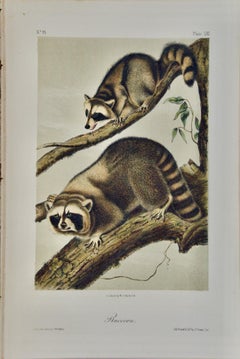
This is an original 19th century John James Audubon hand colored lithograph entitled "Raccoon", No. 13, Plate LXI, 61, from Audubon's "Quadrupeds of North America", printed and color...
Category
Mid-19th Century Naturalistic Animal Prints
Materials
Lithograph
Marsh Hare: Original 19th Century 1st Octavo Ed. Audubon Hand-colored Lithograph
By John James Audubon
Located in Alamo, CA
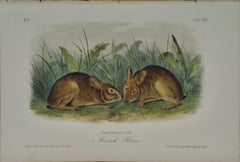
This is an original 19th century John James Audubon hand-colored first octavo edition lithograph entitled "Marsh Hare", No. 4, Plate XVIII, 18, from Audubon's "Quadrupeds of North America", printed and colored by Nagel & Weingaertner and published in New York in 1849. It depicts a pair of Marsh Hares/rabbits, presumably a male and a female, lying on grass, nose to nose, with plants in the background.
This antique hand-colored Audubon quadruped lithograph has a few faint spots, but the print is otherwise in very good condition. The sheet measures 7" high and 10.5" wide. The descriptive text pages, 151-156, from Audubon's original publication are included.
John James Audubon (1785-1851) was a naturalist and artist. He was initially unsuccessful financially prior to the publication of his famous work “The Birds of America”, spending time in debtor’s prison...
Category
Mid-19th Century Naturalistic Animal Prints
Materials
Lithograph
American Badger: An Original 19th Century Audubon Hand-colored Lithograph
By John James Audubon
Located in Alamo, CA
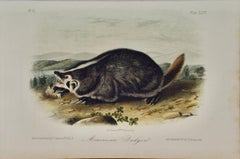
This is an original 19th century John James Audubon hand colored lithograph entitled "American Badger", No. 10, Plate XLVII, 47, from Audubon's "Quadrupeds of North America", printed...
Category
Mid-19th Century Naturalistic Animal Prints
Materials
Lithograph
A Pair of Framed 19th Century Colored Lithographs of Tudor Scenes by Joseph Nash
By Joseph Nash
Located in Alamo, CA
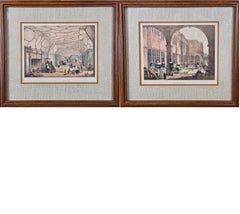
This is a pair of framed 19th century tinted lithographs with hand-coloring entitled "Gallery Over the Hall, Knowle, Kent" and "Terrace Bramshill, Hants" by Charles Joseph Hullmandel (1789-1850) after drawings by Joseph Nash (1809-1878), from "Mansions of England in the Olden Time", published in London in 1839-1849. Nash's publication consists of a series of views of Tudor domestic architecture, which Nash said depicted "the most characteristic features of the domestic architecture of the Tudor Age, and also illustrating the costumes, habits, and recreations of our ancestors." The scenes of the aristocratic ladies and gentlemen (including Henry VIII and Queen Elizabeth I), who are depicted inhabiting the rooms of these great houses, were taken directly from the portraits on the walls.
Charles Joseph Hullmandel, was involved in the creation of these lithographs. He was a famous British lithographer, who invented the "lithotint" process, which he named and patented in 1840. This technique, allowing for greater nuance and value gradation than pure lithography, was an ideal means of expression for Nash's historically rich and picturesque depictions of Tudor mansions and their inhabitants. Hullmandel is also remembered for creating many lithographs from the paintings by J. M. W. Turner.
The "Gallery Over the Hall" depicts a great hall with children playing with skittles (wooden pins resembling bowling pins), a doll and what looks to be a St Charles spaniel, while a lady in Tudor attire watches over them next to a massive stone fireplace. Adults are watching from in the distance while a man bows...
Category
Late 19th Century Romantic Interior Prints
Materials
Lithograph
"Amicua Melon" Hand Finished Color Engraving by George Brookshaw
By George Brookshaw
Located in Alamo, CA
This is a colored aquatint and stipple engraving finished by hand entitled "Amicua Melon", drawn and engraved by George Brookshaw and published in London in 1812 as plate LXXII in hi...
Category
Early 19th Century Naturalistic Still-life Prints
Materials
Engraving, Aquatint
Holbein Hand-colored Portrait of Warham, Archbishop of Canterbury for Henry VIII
By (After) Hans Holbein The Younger
Located in Alamo, CA
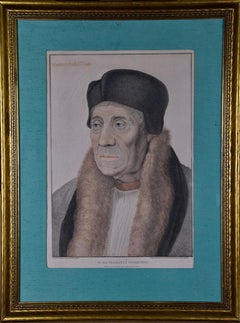
This framed hand colored stipple engraving and etching portrait of William Warham, Archbishop of Canterbury under King Henry VII and his son King Henry VIII was created by Francesco Bartolozzi (1728–1815) after a drawing and a painting by Hans Holbein (1497-1543), who was Henry VIII's court painter. The print was published in London by John Chamberlaine in 1795. The print was created utilizing stipple engraving and etching techniques by the Italian artist Francesco Bartolozzi, who was employed as the royal engraver by King George III of England. The publisher, John Chamberlaine, was Keeper of the King's Drawings and Medals. The inscription beneath the portrait reads" "In His Majesty's Collection", "Engraved by F. Bartolozzi R A Historical Engraver to His Majesty'' in the lower right, and ''From an original drawing by Hans Holbien'' in the lower left. The original painting by Holbein is displayed at Lambeth Castle and the original drawing is in the art collection at Windsor Castle. The engraving is held by many museums, including: The British Museum, The Metropolitan Museum of Art, The National Portrait Gallery, The Chicago Art Institute and The Fine Arts Museums of San Francisco.
This portrait depicts Archbishop William Warham facing to his right, wearing a black cap covering his ears and fur trimmed clerical robes. The print is presented in a decorative gold-colored wood frame with a blue-grey fabric mat. The frame measures 26.5" x 20.13" x 1". The print is in excellent condition.
William Warham (1450-1532) was the last of the pre-Reformation archbishops of Canterbury, serving under King Henry VII and then under King Henry VIII. He was a quiet, unassuming intellectual whose career ended with a strong and brave stance against the divorce of King Henry VIII and the king's resultant withdrawal of England from the Catholic church and his draconian actions against the clergy. As Lord Chancellor...
Category
Late 18th Century Portrait Prints
Materials
Engraving, Etching
Canada Goose: an Original 1st Edition Hand Colored Audubon Bird Lithograph
By John James Audubon
Located in Alamo, CA
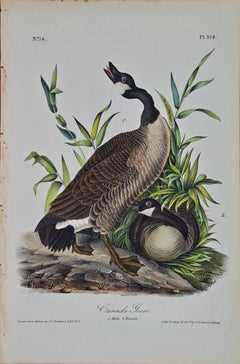
This original first edition hand-colored lithograph entitled "Canada Goose" was produced by J. T. Bowen after a drawing by John James Audubon. It was published in Audubon's first octavo edition of Birds of America in Philadelphia in 1840. It depicts two Canada geese, a male and a female.
This Audubon bird lithograph is in excellent condition other than tiny foci (1-2 mm) of discoloration at the edge of the upper margin of the sheet and some wrinkling along the left edge related to the book binding. The print is otherwise in very good condition. The original descriptive text from Audubon's publication is included with the purchase of this beautiful and striking lithograph. The sheet measures 10.13' x 6.75".
John James Audubon (1785-1851) was a naturalist and artist. He was initially unsuccessful financially prior to the publication of his famous work “The Birds of America”, spending time in debtor’s prison...
Category
Mid-18th Century Naturalistic Animal Prints
Materials
Lithograph
Willet or Stone Curlew: A First Octavo Edition Audubon Hand-colored Lithograph
By John James Audubon
Located in Alamo, CA
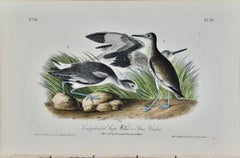
This is an original John James Audubon hand-colored royal first octavo edition lithograph entitled "Semipalmated Snipe, Willet or Stone Curlew, 1. ...
Category
Mid-19th Century Naturalistic Animal Prints
Materials
Lithograph
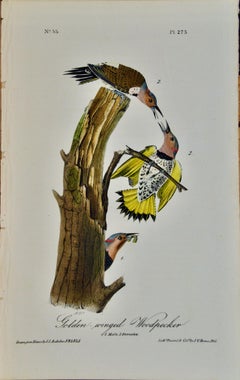
Golden-winged Woodpecker: First Octavo Edition Audubon Hand-colored Lithograph
By John James Audubon
Located in Alamo, CA
This is an original John James Audubon hand-colored royal first octavo edition lithograph entitled "Golden-winged Woodpecker, 1. Male, 2. Female2", No. 55...
Category
Mid-19th Century Naturalistic Animal Prints
Materials
Lithograph
Red-shafted Woodpecker: A First Octavo Edition Audubon Hand-colored Lithograph
By John James Audubon
Located in Alamo, CA
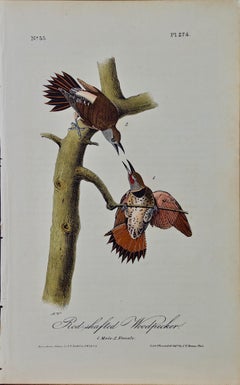
This is an original John James Audubon hand-colored royal first octavo edition lithograph entitled "Red-shafted Woodpecker, 1. Male, 2. Female", No. 55, P...
Category
Mid-19th Century Naturalistic Animal Prints
Materials
Lithograph