Pop Art Prints and Multiples

POP ART STYLE

Perhaps one of the most influential contemporary art movements, Pop art emerged in the 1950s. In stark contrast to traditional artistic practice, its practitioners drew on imagery from popular culture — comic books, advertising, product packaging and other commercial media — to create original Pop art paintings, prints and sculptures that celebrated ordinary life in the most literal way.

ORIGINS OF POP ART

CHARACTERISTICS OF POP ART 

  • Bold imagery
  • Bright, vivid colors
  • Straightforward concepts
  • Engagement with popular culture 
  • Incorporation of everyday objects from advertisements, cartoons, comic books and other popular mass media

POP ARTISTS TO KNOW

ORIGINAL POP ART ON 1STDIBS

The Pop art movement started in the United Kingdom as a reaction, both positive and critical, to the period’s consumerism. Its goal was to put popular culture on the same level as so-called high culture.

Richard Hamilton’s 1956 collage Just what is it that makes today’s homes so different, so appealing? is widely believed to have kickstarted this unconventional new style.

Pop art works are distinguished by their bold imagery, bright colors and seemingly commonplace subject matter. Practitioners sought to challenge the status quo, breaking with the perceived elitism of the previously dominant Abstract Expressionism and making statements about current events. Other key characteristics of Pop art include appropriation of imagery and techniques from popular and commercial culture; use of different media and formats; repetition in imagery and iconography; incorporation of mundane objects from advertisements, cartoons and other popular media; hard edges; and ironic and witty treatment of subject matter.

Although British artists launched the movement, they were soon overshadowed by their American counterparts. Pop art is perhaps most closely identified with American Pop artist Andy Warhol, whose clever appropriation of motifs and images helped to transform the artistic style into a lifestyle. Most of the best-known American artists associated with Pop art started in commercial art (Warhol made whimsical drawings as a hobby during his early years as a commercial illustrator), a background that helped them in merging high and popular culture.

Roy Lichtenstein was another prominent Pop artist that was active in the United States. Much like Warhol, Lichtenstein drew his subjects from print media, particularly comic strips, producing paintings and sculptures characterized by primary colors, bold outlines and halftone dots, elements appropriated from commercial printing. Recontextualizing a lowbrow image by importing it into a fine-art context was a trademark of his style. Neo-Pop artists like Jeff Koons and Takashi Murakami further blurred the line between art and popular culture.

Pop art rose to prominence largely through the work of a handful of men creating works that were unemotional and distanced — in other words, stereotypically masculine. However, there were many important female Pop artists, such as Rosalyn Drexler, whose significant contributions to the movement are recognized today. Best known for her work as a playwright and novelist, Drexler also created paintings and collages embodying Pop art themes and stylistic features.

Read more about the history of Pop art and the style’s famous artists, and browse the collection of original Pop art paintings, prints, photography and other works for sale on 1stDibs.

to
1,478
1,183
906
1,944
1,407
859
Overall Width
to
Overall Height
to
21,198
18,657
10,668
6,299
5,217
2,719
1,553
1,467
1,383
896
874
427
345
198
351
280
211
207
204
3
2
3,345
2,949
1
1
23
395
877
1,023
751
3,167
1,694
1,253
1,842
888
846
646
542
435
387
348
294
230
222
207
200
191
191
147
146
140
139
138
1,763
1,447
1,273
1,055
579
1,342
1,681
4,433
1,304
Style: Pop Art
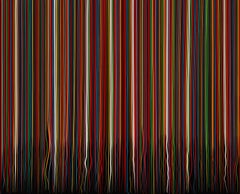
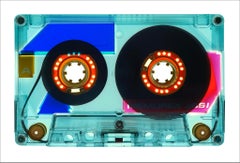
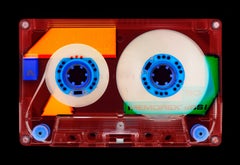
Tape Collection 90 Minutes Vintage Blue - Contemporary Pop Art Color Photography
Located in Cambridge, GB
90 Minutes Vintage Blue, pop art from the Heidler & Heeps Tape Collection The Heidler & Heeps collaborations are creative representations of Natasha Heidler and Richard Heeps’, pers...
Category

2010s Pop Art Prints and Multiples

Materials

Photographic Paper, C Print, Color, Silver Gelatin

Andy Warhol, 'Mick Jagger FSII.139', Framed Announcement-card, 1975
Located in Pembroke Pines, FL
Artist: Andy Warhol. Title: 'Mick Jagger' FS II.139 Framed Announcement card. Medium: Lithograph Size: Image size: 6" x 4" Framed: 10" x 8" Year: 1975 Description: Signed and numbere...
Category

1970s Pop Art Prints and Multiples

Materials

Offset

Rainbow Rain I (Limited Edition Print)
Located in LOS ANGELES, CA
**FALL SUPER SALE UNTIL OCTOBER 13TH** **IMPORTANT** This is a Limited edition of only 30 museum quality prints on CANVAS, signed and numbered by the artist** >>>It will arrive ro...
Category

21st Century and Contemporary Pop Art Prints and Multiples

Materials

Giclée

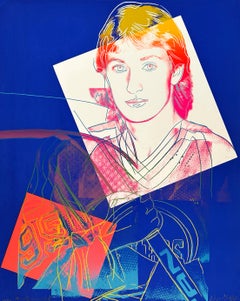
Wayne Gretzky #99
Located in Washington, DC
Artist: Andy Warhol Title: Wayne Gretzky #99 Medium: Screenprint on Lenox Museum Board Date: 1984 Edition: AP 32/50 Sheet Size: 40" x 32" Signature: Hand signed by Andy Warhol and Wa...
Category

1980s Pop Art Prints and Multiples

Materials

Screen

Marilyn Monroe, Pop Art Lithograph by Al Hirschfeld
Located in Long Island City, NY
Al Hirschfeld, American (1903 - 2003) - Marilyn Monroe, Year: 1988, Medium: Lithograph, signed and numbered in pencil, Edition: 65/125, Size: 24.5 x 21.5 in. (62.23 x 54.61 cm), ...
Category

1980s Pop Art Prints and Multiples

Materials

Lithograph

Christmas print with hand coloring in oil stick, Signed, Framed, hand colored
Located in New York, NY
Jim Dine The Christmas Print (Burg, 26), 2001 Drypoint, direct gravure, etching over offset lithograph with hand coloring by artist in oil stick, on T.H. Saunders paper, the full she...
Category

Early 2000s Pop Art Prints and Multiples

Materials

Oil Crayon, Drypoint, Etching, Offset

David Hockney, The Prisoner for Amnesty International, hand signed 17/100 Framed
Located in New York, NY
From the rare, Deluxe, hand signed edition of only 100: David Hockney The Prisoner, for Amnesty International, 1977 Color Offset Lithograph Hand signed, numbered 17/100 and inscribed...
Category

1970s Pop Art Prints and Multiples

Materials

Pencil, Graphite, Lithograph, Offset

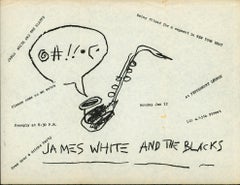
Jean-Michel Basquiat Downtown 81 / New York Beat, 1981
Located in NEW YORK, NY
Jean-Michel Basquiat Downtown 81 / New York Beat: Basquiat created this impossibly rare printed flyer in 1981 to advertise a band performance within his feature acted film: Downtown ...
Category

1980s Pop Art Prints and Multiples

Materials

Lithograph, Offset

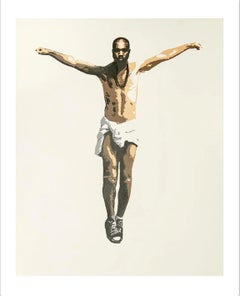
"The New Messiah" – Acrylic Stencil on Paper
Located in West Hollywood, CA
Plastic Jesus is a Los Angeles based street artist that specializes in bold stencil and installation work, inspired by world news events, society, the urban environment, culture and politics. His work is more about shining a small light into some of those dark corners of society then standing back and watching reactions and opinions. his work combines humor, irony, criticism and unique opinion to create art that engages on many levels. Works usually begin on the streets and then expand to limited edition prints and originals on canvas. "The New Messiah" – Acrylic Stencil on Paper...
Category

2010s Pop Art Prints and Multiples

Materials

Acrylic, Stencil

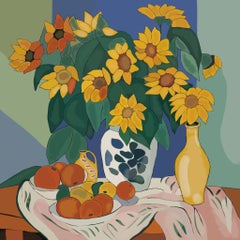
Still life with sunflowers , 70x70cm, print on canvas.Edition 20 pcs.
Located in Yerevan, AM
70x70cm, print on canvas Edition 20 pcs.
Category

2010s Pop Art Prints and Multiples

Materials

Canvas, Color

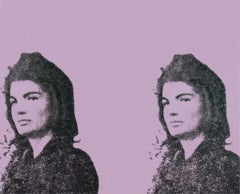
Jacqueline Kennedy (Jackie II) (Feldman/Schellmann II.14), Andy Warhol
Located in Fairfield, CT
Artist: Andy Warhol (1928-1987) Title: Jacqueline Kennedy (Jackie II) Year: 1966 Medium: Silkscreen in colors on wove paper Size: 24 x 30 inches Condition: Excellent Inscription: Sig...
Category

1960s Pop Art Prints and Multiples

Materials

Screen

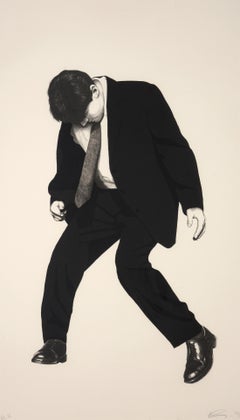
Large Robert Longo JAMES Lithograph, 70"H
Located in Lake Worth Beach, FL
Artist/Designer; Manufacturer: Robert Longo (American, b. 1955) Marking(s); notes: signed, blind stamp; ed. HC 1/10 aside from the edition of 50; 1999 Materials: lithograph on Arches...
Category

Early 2000s Pop Art Prints and Multiples

Materials

Lithograph

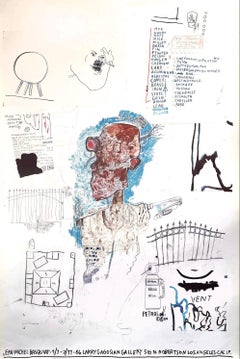
Jean-Michel Basquiat Gagosian gallery Los Angeles 1986 (exhibition poster)
Located in NEW YORK, NY
Jean-Michel Basquiat Gagosian Gallery 1986: Original 1980’s Basquiat exhibition poster, published on the occasion of: Jean-Michel Basquiat at Larry Gagosian Gallery, 510 North Robert...
Category

1980s Pop Art Prints and Multiples

Materials

Paper

Fred Astaire, Pop Art Lithograph by Al Hirschfeld
Located in Long Island City, NY
Al Hirschfeld, American (1903 - 2003) - Fred Astaire, Year: 1989, Medium: Lithograph, signed and numbered in pencil, Edition: 80/125, Size: 28 x 25 in. (71.12 x 63.5 cm), Frame S...
Category

1980s Pop Art Prints and Multiples

Materials

Lithograph

Blue still life , 50x50cm, print on canvas.Edition 20 pcs.
Located in Yerevan, AM
Blue still life , 50x50cm, print on canvas.Edition 20 pcs.
Category

2010s Pop Art Prints and Multiples

Materials

Canvas, Color

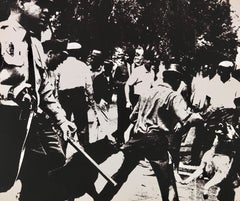
Andy Warhol, Birmingham Race Riot, from Ten Works by Ten Painters, 1964
Located in Southampton, NY
This exquisite silkscreen by Andy Warhol (1928–1987), titled Birmingham Race Riot, originates from the landmark 1964 folio X + X (Ten Works by Ten Painters). Published by the Wadswor...
Category

1960s Pop Art Prints and Multiples

Materials

Screen

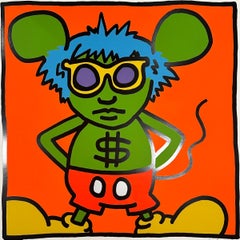
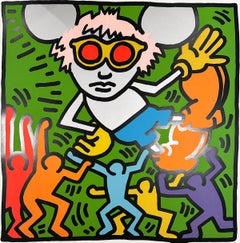
Andy Mouse Plate 4
Located in Washington, DC
Artist: Keith Haring Title: Andy Mouse: Plate 4 Medium: Silkscreen Date: 1986 Edition: 2/30 Sheet Size: 38" x 38" Signature: Hand signed and dated by the artist (K. Haring '86) and t...
Category

1980s Pop Art Prints and Multiples

Materials

Screen

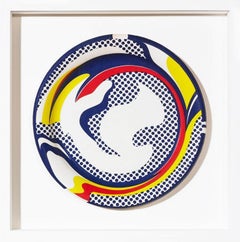
PLATE
Located in Aventura, FL
Screen print on waxed paper plate. Unsigned from an unknown edition. Published by Bert Stern, New York. Plate size 10 x 10 inches. Frame size approx 17 x 17 inches. Stamped "Ro...
Category

1970s Pop Art Prints and Multiples

Materials

Paper, Screen

PLATE
PLATE
$1,400 Sale Price
20% Off
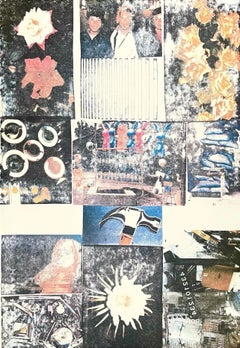
Charms against harms, Robert Rauschenberg
Located in Fairfield, CT
Artist: Robert Rauschenberg (1925-2008) Title: Charms against harms Year: 1993 Medium: Lithograph on wove paper Edition: H.C. 8/15, 100, plus proofs Size: 40.5 x 28 inches Condition:...
Category

1990s Pop Art Prints and Multiples

Materials

Lithograph

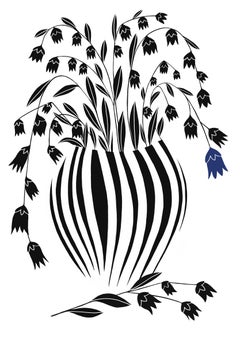
Campanula , 62x43cm, print on canvas.Edition 20 pcs.
Located in Yerevan, AM
Campanula , 62x43cm, print on canvas.Edition 20 pcs.
Category

2010s Pop Art Prints and Multiples

Materials

Canvas, Color

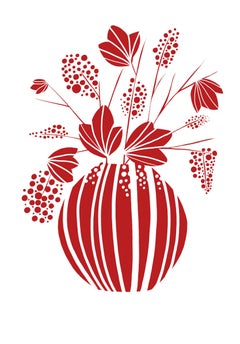
Red still life , 62x43cm, print on canvas.Edition 20 pcs.
Located in Yerevan, AM
Red still life , 62x43cm, print on canvas.Edition 20 pcs.
Category

2010s Pop Art Prints and Multiples

Materials

Canvas, Color

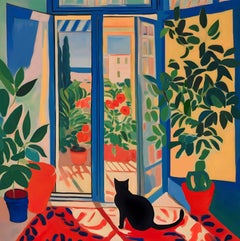
Black cat for good luck, 70x70cm, print on canvas.Edition 20 pcs.
Located in Yerevan, AM
70x70cm, print on canvas Edition 20 pcs.
Category

2010s Pop Art Prints and Multiples

Materials

Canvas, Color

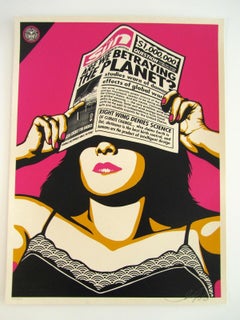
Global Warning - Global Warming (Andy Warhol museum Edition) - Signed/N politics
Located in New York, NY
SHEPARD FAIREY Global Warning - Global Warming (Andy Warhol Edition), 2009 Silkscreen on wove paper 24 × 18 inches Pencil signed and numbered 264/450 on the front Unframed Global War...
Category

Early 2000s Pop Art Prints and Multiples

Materials

Screen

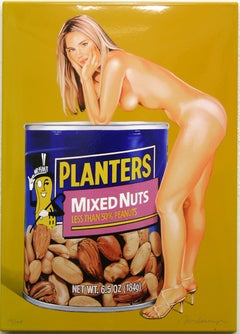
Mixed Nuts, Pop Art Pin-Up Enamel Print by Mel Ramos
Located in Long Island City, NY
Artist: Mel Ramos, American (1935 - ) Title: Mixed Nuts Year: 2008 Medium: Enamel on Steel, signed and numbered in marker Edition: 125, 25 AP Size: 28 in. x 20 in. x 1.5 in. (71.12 c...
Category

21st Century and Contemporary Pop Art Prints and Multiples

Materials

Enamel, Steel

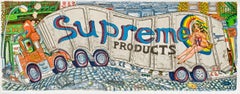
Truck II (VEL 106; Knestrick 78), Red Grooms
Located in Fairfield, CT
Artist: Red Grooms (1937) Title: Truck II (VEL 106; Knestrick 78) Year: 1979-1980 Medium: Color lithograph, screenprint, rubber stamp impressions on Arches paper Edition: 5/8 A.P., 7...
Category

1970s Pop Art Prints and Multiples

Materials

Lithograph, Screen

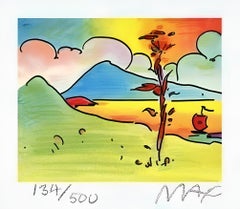
Tree with Sailboat, Peter Max
Located in Fairfield, CT
Artist: Peter Max (1937) Title: Tree with Sailboat Year: 2000 Edition: 500/500, plus proofs Medium: Lithograph on Lustro Saxony paper Size: 2.75 x 3.125 inches Condition: Excellent I...
Category

Early 2000s Pop Art Prints and Multiples

Materials

Lithograph

Tiger-Tiger, 3-D Relief of impact-resistant polystyrene, deep-drawn, silkscreen
Located in New York, NY
Peter Phillips Tiger-Tiger, 1968 3-D Relief made of impact-resistant polystyrene, deep-drawn, silkscreened in 8 colors, rear wall made of styrofoam and vacuum form plastic 28 7/10 × ...
Category

1960s Pop Art Prints and Multiples

Materials

Plastic, Polystyrene, Mixed Media, Screen
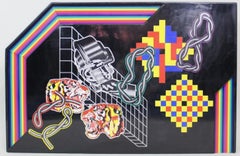
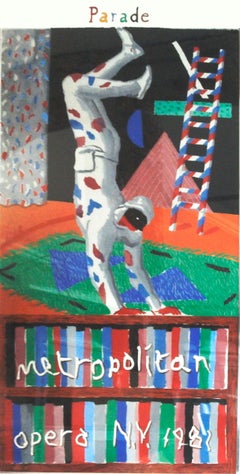
Harlequin from Parade for the Metropolitan Opera
Located in Brooklyn, NY
This rare and collectible poster by David Hockney was part of a series of three billboards commissioned by the Metropolitan Opera in New York City in 1981. Designed specifically for ...
Category

1980s Pop Art Prints and Multiples

Materials

Screen

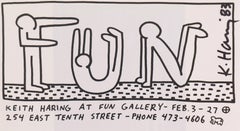
'At the Fun Gallery', Hand Signed by Haring, Subway Drawings, New York, Pop Art
Located in Santa Cruz, CA
Hand signed by Keith Haring in felt pen, upper center, 'K. Haring' for Keith Haring (American, 1958-1990) and dated 1983. A trimmed, print magazine advertisement for the artist's ina...
Category

1980s Pop Art Prints and Multiples

Materials

Offset, Paper

Andy Mouse Plate 2
Located in Washington, DC
Artist: Keith Haring Title: Andy Mouse: Plate 2 Medium: Silkscreen Date: 1986 Edition: 2/30 Sheet Size: 38" x 38" Signature: Hand signed and dated by the artist (K. Haring '86) and t...
Category

1980s Pop Art Prints and Multiples

Materials

Screen

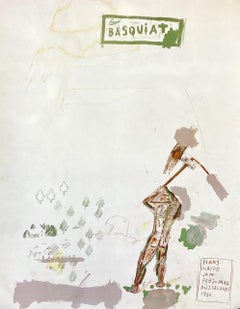
Basquiat Galerie Hans Mayer 1988 (1980s Basquiat exhibition poster)
Located in NEW YORK, NY
Basquiat Galerie Hans Mayer Düsseldorf 1988: A rare, exceptional 1980s exhibition poster designed & illustrated by Basquiat during his lifetime; published in 1988 on the occasio...
Category

1980s Pop Art Prints and Multiples

Materials

Lithograph, Offset

Flowers (Hand-Colored)
Located in Washington, DC
Artist: Andy Warhol Title: Flowers (Hand-Colored) Medium: Screenprint hand-colored with watercolor on white wove paper Date: 1974 Edition: 238/250 Sheet Size: 40 7/8" x 27 1/4" Signa...
Category

1970s Pop Art Prints and Multiples

Materials

Watercolor, Screen

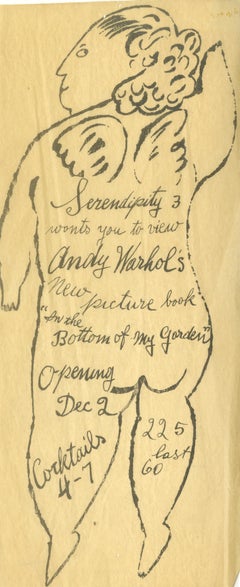
Untitled from In the Bottom of My Garden (Plate 1)
Located in Washington, DC
Artist: Andy Warhol Title: Untitled (Plate 1) Portfolio: 1956 In the Bottom of My Garden Medium: Offset lithograph and watercolor on paper Date: 1956 Frame Size: 15 3/4" x 18 3/8" Sh...
Category

1950s Pop Art Prints and Multiples

Materials

Lithograph

Jonathan Winters, "The Thoughts of a Matador, " hand signed
Located in Chatsworth, CA
This piece is a giclée after an original painting created by Jonathan Winters in 1977. Jonathan Winters was an American comedian, actor, author, and artist whose iconic career spanne...
Category

Early 2000s Pop Art Prints and Multiples

Materials

Giclée

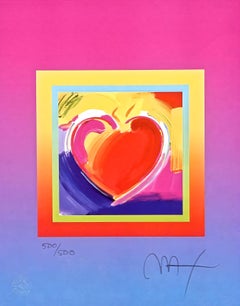
Heart on Blends, Peter Max
Located in Fairfield, CT
Artist: Peter Max (1937) Title: Heart on Blends Year: 2005 Edition: 500/500, plus proofs Medium: Lithograph on Lustro Saxony paper Size: 12.75 x 10 inches Condition: Excellent Inscri...
Category

Early 2000s Pop Art Prints and Multiples

Materials

Lithograph

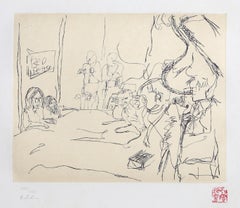
Bed in for Peace, Lithograph by John Lennon
Located in Long Island City, NY
A lithograph based off of an original drawing that was given to Yoko Ono as a wedding gift, published by his estate (Bag One Arts) in 1986 Date: 1986 Lithograph and chine colle on A...
Category

1980s Pop Art Prints and Multiples

Materials

Lithograph

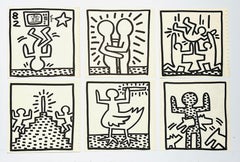
Keith Haring Tony Shafrazi gallery 1982 (set of 6 printed works)
Located in NEW YORK, NY
Keith Haring Tony Shafrazi 1982: set of 6 printed works: A set of six, individual, double-sided lithographic inserts from the seminal, spiral bound 1982 Keith Haring Tony Shafrazi ca...
Category

1980s Pop Art Prints and Multiples

Materials

Lithograph, Offset

Jim Dine European museum print on lithographic paper Limited Edition of 300
Located in New York, NY
Jim Dine, 1985 Color Lithograph on wove paper with deckled edges 38 1/2 × 27 1/2 inches Edition of 300 Unframed Signed in plate, unnumbered; bears museum copyright on the lower front...
Category

1980s Pop Art Prints and Multiples

Materials

Lithograph, Offset

Year 2250 II, Peter Max
Located in Fairfield, CT
Artist: Peter Max (1937) Title: Year 2250 II Year: 2003 Edition: 500/500, plus proofs Medium: Lithograph on archival paper Size: 15.43 x 13.5 inches Condition: Excellent Inscription:...
Category

Early 2000s Pop Art Prints and Multiples

Materials

Lithograph

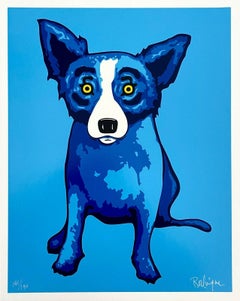
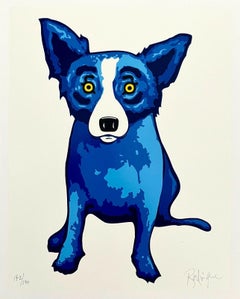
Blue Skies Shinning on Me (Blue Dog Series), George Rodrigue
Located in Fairfield, CT
Artist: George Rodrigue (1944-2013) Title: Blue Skies Shinning on Me (Blue Dog Series) Year: 2005 Edition: 141/190, plus proofs Medium: Silkscreen on a...
Category

Early 2000s Pop Art Prints and Multiples

Materials

Screen

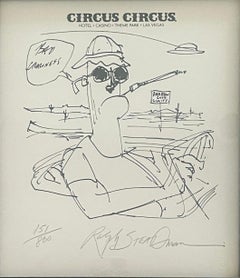
Barstow City Limits
Located in Hollywood, FL
Limited edition 9 x 11 silkscreen print of a Ralph Steadman drawing entitled 'Barstow City Limit,' numbered from an edition of 800, depicting gonzo author Hunter S. Thompson driving ...
Category

2010s Pop Art Prints and Multiples

Materials

Screen

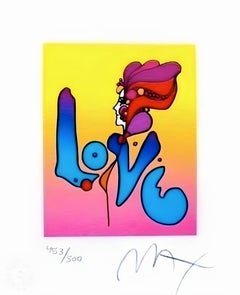
Love I, Peter Max
Located in Fairfield, CT
Artist: Peter Max (1937) Title: Love I Year: 2001 Edition: 453/500, plus proofs Medium: Lithograph on Lustro Saxony paper Size: 6 x 5 inches Condition: Excellent Inscription: Signed ...
Category

Early 2000s Pop Art Prints and Multiples

Materials

Lithograph

Love I, Peter Max
$912 Sale Price
20% Off
Mass Card for Andy Warhol's Funeral issued at St. Patrick's Cathedral Limited
Located in New York, NY
This is a rare, two-sided mass card from Andy Warhol's memorial mass, which was held on April 1, 1987 at St. Patrick's Cathedral in New York. The front of the card depicts Warhol's 1...
Category

1980s Pop Art Prints and Multiples

Materials

Lithograph, Offset

Unique portrait of Roy Lichtenstein, Authenticated by the Andy Warhol Foundation
Located in New York, NY
Andy Warhol Portrait of Roy Lichtenstein, 1975 Polaroid dye-diffusion print Authenticated by the Andy Warhol Foundation for the Visual Arts, bears the Foundation stamp verso Frame included: Framed in white wood frame with UV plexiglass; with die-cut window in the back to show official Warhol Foundation authentication stamp and text Measurements: 9 9/16 x 8 9/16 x 9/16 inches (frame) 3 1/2 x 2 3/4 inches (window) 4.16 x 3.15 inches (Artwork) Authenticated and stamped by the Estate of Andy Warhol/Warhol Foundation for the Visual Arts An impressive piece of Pop Art history! A must-have for fans and collectors of both Andy Warhol and Roy Lichtenstein: This is a unique, authenticated color Polaroid taken by one Pop Art legend, Andy Warhol, of his most formidable contemporary and, in many respects, rival, Roy Lichtenstein. One of only a few portraits Andy Warhol took of Roy Lichtenstein, during one tense photo shoot. Both iconic artists, colleagues and, perhaps lesser known to the public, rivals, would be represented at the time by the renowned Leo Castelli Gallery. The truth is - they were really more rivals than friends. (the rivalry intensified when Warhol, who was working with Walt Disney, discovered that Lichtenstein painted Mickey Mouse before he did!!) Leo Castelli was committed to Roy Lichtenstein, and, it's easy to forget today, wasn't that interested in Warhol as he considered Lichtenstein the greater talent and he could relate better with Roy on a personal level. However, Ivan Karp, who worked at Castelli, was very interested in Warhol, as were some powerful European dealers, as well as many wealthy and influential American and European collectors. That was the start of Warhol's bypassing the traditional gallery model - so that dealers like Castelli could re-discover him after everybody else had. Warhol is known to have taken hundreds of self-portrait polaroid photographs - shoe boxes full - and he took many dozens of images of celebrities like Blondie and Farrah Fawcett. But only a small number of photographic portraits of fellow Pop Art legend Roy Lichtenstein -- each unique,- are known to have appeared on the market over the past half a century - all from the same photo session. This is one of them. There is another Polaroid - from this same (and only) sitting, in the permanent collection of the Getty Museum in California. There really weren't any other collaborations between these two titans, making the resulting portrait from this photo session extraordinary. It is fascinating to study Roy Lichtenstein's face and demeanor in this photograph, in the context of the great sense of competition, but perhaps even greater, albeit uneasy respect, these two larger than life Pop art titans had for each other: Like Leo Castelli, Roy Lichtenstein was Jewish of European descent; whereas Warhol was Catholic and quintessentially American, though also of European (Polish) descent. They were never going to be good friends, but this portrait, perhaps even arranged by Leo Castelli, represents an uneasy acknowledgement there would be room at the top for both of them. Floated, framed with die cut back revealing authentication details, and ready to hang. Measurements: 9 9/16 x 8 9/16 x 9/16 inches (frame) 3 1/2 x 2 3/4 inches (window) 4.16 x 3.15 inches (sheet) Authenticated by the Estate of Andy Warhol/The Andy Warhol Foundation for the Visual Arts. Estate Stamped: Stamped with the Andy Warhol Estate, Warhol Foundation for the Visual Arts stamp, numbered "B 512536P", with the Estate of Andy Warhol stamp and inscribed UP on the reverse. Bears the Warhol Foundation unique inventory number. Roy Lichtenstein Biography Roy Lichtenstein was one of the most influential and innovative artists of the second half of the twentieth century. He is preeminently identified with Pop Art, a movement he helped originate, and his first fully achieved paintings were based on imagery from comic strips and advertisements and rendered in a style mimicking the crude printing processes of newspaper reproduction. These paintings reinvigorated the American art scene and altered the history of modern art. Lichtenstein’s success was matched by his focus and energy, and after his initial triumph in the early 1960s, he went on to create an oeuvre of more than 5,000 paintings, prints, drawings, sculptures, murals and other objects celebrated for their wit and invention. Roy Fox Lichtenstein was born on October 27, 1923, in New York City, the first of two children born to Milton and Beatrice Werner Lichtenstein. Milton Lichtenstein (1893–1946) was a successful real estate broker, and Beatrice Lichtenstein (1896–1991), a homemaker, had trained as a pianist, and she exposed Roy and his sister Rénee to museums, concerts and other aspects of New York culture. Roy showed artistic and musical ability early on: he drew, painted and sculpted as a teenager, and spent many hours in the American Museum of Natural History and the Museum of Modern Art. He played piano and clarinet, and developed an enduring love of jazz, frequenting the nightspots in Midtown to hear it. Lichtenstein attended the Franklin School for Boys, a private junior high and high school, and was graduated in 1940. That summer he studied painting and drawing from the model at the Art Students League of New York with Reginald Marsh. In September he entered Ohio State University (OSU) in Columbus in the College of Education. His early artistic idols were Rembrandt, Daumier and Picasso, and he often said that Guernica (1937; Museo Reina Sofía, Madrid), then on long-term loan to the Museum of Modern Art, was his favorite painting. Even as an undergraduate, Lichtenstein objected to the notion that one set of lines (one person’s drawings) “was considered brilliant, and somebody’s else’s, that may have looked better to you, was considered nothing by almost everyone.”i Lichtenstein’s questioning of accepted canons of taste was encouraged by Hoyt L. Sherman, a teacher whom he maintained was the person who showed him how to see and whose perception-based approach to art shaped his own. In February 1943, Lichtenstein was drafted, and he was sent to Europe in 1945. As part of the infantry, he saw action in France, Belgium and Germany. He made sketches throughout his time in Europe and, after peace was declared there, he intended to study at the Sorbonne. Lichtenstein arrived in Paris in October 1945 and enrolled in classes in French language and civilization, but soon learned that his father was gravely ill. He returned to New York in January 1946, a few weeks before Milton Lichtenstein died. In the spring of that year, Lichtenstein went back to OSU to complete his BFA and in the fall he was invited to join the faculty as an instructor. In June 1949, he married Isabel Wilson Sarisky (1921–80), who worked in a cooperative art gallery in Cleveland where Lichtenstein had exhibited his work. While he was teaching, Lichtenstein worked on his master’s degree, which he received in 1949. During his second stint at OSU, Lichtenstein became closer to Sherman, and began teaching his method on how to organize and unify a composition. Lichtenstein remained appreciative of Sherman’s impact on him. He gave his first son the middle name of “Hoyt,” and in 1994 he donated funds to endow the Hoyt L. Sherman Studio Art Center at OSU. In the late 1940s and early 1950s, Lichtenstein began working in series and his iconography was drawn from printed images. His first sustained theme, intimate paintings and prints in the vein of Paul Klee that poked lyrical fun at medieval knights, castles and maidens, may well have been inspired by a book about the Bayeux Tapestry. Lichtenstein then took an ironic look at nineteenth-century American genre paintings he saw in history books, creating Cubist interpretations of cowboys and Indians spiked with a faux-primitive whimsy. As with his most celebrated Pop paintings of the 1960s, Lichtenstein gravitated toward what he would characterize as the “dumbest” or “worst” visual item he could find and then went on to alter or improve it. In the 1960s, commercial art was considered beneath contempt by the art world; in the early 1950s, with the rise of Abstract Expressionism, nineteenth-century American narrative and genre paintings were at the nadir of their reputation among critics and collectors. Paraphrasing, particularly the paraphrasing of despised images, became a paramount feature of Lichtenstein’s art. Well before finding his signature mode of expression in 1961, Lichtenstein called attention to the artifice of conventions and taste that permeated art and society. What others dismissed as trivial fascinated him as classic and idealized—in his words, “a purely American mythological subject matter.”ii Lichtenstein’s teaching contract at OSU was not renewed for the 1951–52 academic year, and in the autumn of 1951 he and Isabel moved to Cleveland. Isabel Lichtenstein became an interior decorator specializing in modern design, with a clientele drawn from wealthy Cleveland families. Whereas her career blossomed, Lichtenstein did not continue to teach at the university level. He had a series of part-time jobs, including industrial draftsman, furniture designer, window dresser and rendering mechanical dials for an electrical instrument company. In response to these experiences, he introduced quirkily rendered motors, valves and other mechanical elements into his paintings and prints. In 1954, the Lichtensteins’ first son, David, was born; two years later, their second child, Mitchell, followed. Despite the relative lack of interest in his work in Cleveland, Lichtenstein did place his work with New York dealers, which always mattered immensely to him. He had his first solo show at the Carlebach Gallery in New York in 1951, followed by representation with the John Heller Gallery from 1952 to 1957. To reclaim his academic career and get closer to New York, Lichtenstein accepted a position as an assistant professor at the State University of New York at Oswego, in the northern reaches of the state. He was hired to teach industrial design, beginning in September 1957. Oswego turned out to be more geographically and aesthetically isolated than Cleveland ever was, but the move was propitious, for both his art and his career. Lichtenstein broke away from representation to a fully abstract style, applying broad swaths of pigment to the canvas by dragging the paint across its surface with a rag wrapped around his arm. At the same time, Lichtenstein was embedding comic-book characters figures such as Mickey Mouse and Donald Duck in brushy, expressionistic backgrounds. None of the proto-cartoon paintings from this period survive, but several pencil and pastel studies from that time, which he kept, document his intentions. Finally, when he was in Oswego, Lichtenstein met Reginald Neal, the new head of the art department at Douglass College, the women’s college of Rutgers University, in New Brunswick, New Jersey. The school was strengthening and expanding its studio art program, and when Neal needed to add a faculty member to his department, Lichtenstein was invited to apply for the job. Lichtenstein was offered the position of assistant professor, and he began teaching at Douglass in September 1960. At Douglass, Lichtenstein was thrown into a maelstrom of artistic ferment. With New York museums and galleries an hour away, and colleagues Geoffrey Hendricks and Robert Watts at Douglass and Allan Kaprow and George Segal at Rutgers, the environment could not help but galvanize him. In June 1961, Lichtenstein returned to the idea he had fooled around with in Oswego, which was to combine cartoon characters from comic books with abstract backgrounds. But, as Lichtenstein said, “[I]t occurred to me to do it by mimicking the cartoon style without the paint texture, calligraphic line, modulation—all the things involved in expressionism.”iii Most famously, Lichtenstein appropriated the Benday dots, the minute mechanical patterning used in commercial engraving, to convey texture and gradations of color—a stylistic language synonymous with his subject matter. The dots became a trademark device forever identified with Lichtenstein and Pop Art. Lichtenstein may not have calibrated the depth of his breakthrough immediately but he did realize that the flat affect and deadpan presentation of the comic-strip panel blown up and reorganized in the Sherman-inflected way “was just so much more compelling”iv than the gestural abstraction he had been practicing. Among the first extant paintings in this new mode—based on comic strips and illustrations from advertisements—were Popeye and Look Mickey, which were swiftly followed by The Engagement Ring, Girl with Ball and Step-on Can with Leg. Kaprow recognized the energy and radicalism of these canvases and arranged for Lichtenstein to show them to Ivan Karp, director of the Leo Castelli Gallery. Castelli was New York’s leading dealer in contemporary art, and he had staged landmark exhibitions of Jasper Johns and Robert Rauschenberg in 1958 and Frank Stella in 1960. Karp was immediately attracted to Lichtenstein’s paintings, but Castelli was slower to make a decision, partly on account of the paintings’ plebeian roots in commercial art, but also because, unknown to Lichtenstein, two other artists had recently come to his attention—Andy Warhol and James Rosenquist—and Castelli was only ready for one of them. After some deliberation, Castelli chose to represent Lichtenstein, and the first exhibition of the comic-book paintings was held at the gallery from February 10 to March 3, 1962. The show sold out and made Lichtenstein notorious. By the time of Lichtenstein’s second solo exhibition at Castelli in September 1963, his work had been showcased in museums and galleries around the country. He was usually grouped with Johns, Rauschenberg, Warhol, Rosenquist, Segal, Jim Dine, Claes Oldenburg, Robert Indiana and Tom Wesselmann. Taken together, their work was viewed as a slap in the face to Abstract Expressionism and, indeed, the Pop artists shifted attention away from many members of the New York School. With the advent of critical and commercial success, Lichtenstein made significant changes in his life and continued to investigate new possibilities in his art. After separating from his wife, he moved from New Jersey to Manhattan in 1963; in 1964, he resigned from his teaching position at Douglass to concentrate exclusively on his work. The artist also ventured beyond comic book subjects, essaying paintings based on oils by Cézanne, Mondrian and Picasso, as well as still lifes and landscapes. Lichtenstein became a prolific printmaker and expanded into sculpture, which he had not attempted since the mid-1950s, and in both two- and three-dimensional pieces, he employed a host of industrial or “non-art” materials, and designed mass-produced editioned objects that were less expensive than traditional paintings and sculpture. Participating in one such project—the American Supermarket show in 1964 at the Paul Bianchini Gallery, for which he designed a shopping bag—Lichtenstein met Dorothy Herzka (b. 1939), a gallery employee, whom he married in 1968. The late 1960s also saw Lichtenstein’s first museum surveys: in 1967 the Pasadena Art Museum initiated a traveling retrospective, in 1968 the Stedelijk Musem in Amsterdam presented his first European retrospective, and in 1969 he had his first New York retrospective, at the Solomon R. Guggenheim Museum. Wanting to grow, Lichtenstein turned away from the comic book subjects that had brought him prominence. In the late 1960s his work became less narrative and more abstract, as he continued to meditate on the nature of the art enterprise itself. He began to explore and deconstruct the notion of brushstrokes—the building blocks of Western painting. Brushstrokes are conventionally conceived as vehicles of expression, but Lichtenstein made them into a subject. Modern artists have typically maintained that the subject of a painting is painting itself. Lichtenstein took this idea one imaginative step further: a compositional element could serve as the subject matter of a work and make that bromide ring true. The search for new forms and sources was even more emphatic after 1970, when Roy and Dorothy Lichtenstein bought property in Southampton, New York, and made it their primary residence. During the fertile decade of the 1970s, Lichtenstein probed an aspect of perception that had steadily preoccupied him: how easily the unreal is validated as the real because viewers have accepted so many visual conceptions that they don’t analyze what they see. In the Mirror series, he dealt with light and shadow upon glass, and in the Entablature series, he considered the same phenomena by abstracting such Beaux-Art architectural elements as cornices, dentils, capitals and columns. Similarly, Lichtenstein created pioneering painted bronze sculpture that subverted the medium’s conventional three-dimensionality and permanence. The bronze forms were as flat and thin as possible, more related to line than volume, and they portrayed the most fugitive sensations—curls of steam, rays of light and reflections on glass. The steam, the reflections and the shadow were signs for themselves that would immediately be recognized as such by any viewer. Another entire panoply of works produced during the 1970s were complex encounters with Cubism, Futurism, Purism, Surrealism and Expressionism. Lichtenstein expanded his palette beyond red, blue, yellow, black, white and green, and invented and combined forms. He was not merely isolating found images, but juxtaposing, overlapping, fragmenting and recomposing them. In the words of art historian Jack Cowart, Lichtenstein’s virtuosic compositions were “a rich dialogue of forms—all intuitively modified and released from their nominal sources.”v In the early 1980s, which coincided with re-establishing a studio in New York City, Lichtenstein was also at the apex of a busy mural career. In the 1960s and 1970s, he had completed four murals; between 1983 and 1990, he created five. He also completed major commissions for public sculptures in Miami Beach, Columbus, Minneapolis, Paris, Barcelona and Singapore. Lichtenstein created three major series in the 1990s, each emblematic of his ongoing interest in solving pictorial problems. The Interiors, mural-sized canvases inspired by a miniscule advertisement in an Italian telephone...
Category

1970s Pop Art Prints and Multiples

Materials

Polaroid

Purity of Soul (Blue Dog Series), George Rodrigue
Located in Fairfield, CT
Artist: George Rodrigue (1944-2013) Title: Purity of Soul (Blue Dog Series) Year: 2005 Edition: 142/190, plus proofs Medium: Silkscreen on archival pap...
Category

Early 2000s Pop Art Prints and Multiples

Materials

Screen

Portraits of the 1970s, Deluxe Monograph + Slipcase Hand Signed/N by Andy Warhol
Located in New York, NY
Andy Warhol Portraits of the 1970s (Deluxe Limited Edition Monograph with Slipcase, Hand Signed and Numbered by Warhol), 1979 Hand Signed and Numbered Hardback Monograph with 120 Bound offset lithographs and text, held in original slipcase (boxed set). Boldly signed by Andy Warhol and numbered 7, from the edition of 200 on the colophon page. 9 1/2 × 8 1/2 × 2 inches Provenance The original (uptown) Whitney Museum An amazing and historic gift! As dazzling as the Warhol show was in 2019 at the new Whitney Museum -- only his show in the late 1970s at the old Whitney Museum, could offer this Deluxe limited edition collectors item - hand signed and numbered by Andy Warhol - because the latter was published during his lifetime. This rare 1979 First (and only) Edition hardback monograph is held in the original slipcase, and is hand signed by Andy Warhol and numbered 108 out of only 200 on the first front end page (see image). This collectors item features text, accompanied by 120 full page color offset lithograph bound, double sided plates on regular pages. (Total pages are: 145) It was published by the Whitney Museum in collaboration with Random House, in conjunction with the exhibition held at the Whitney Museum of American Art, November 20, 1979 to January 27, 1980. Text foreword is by Tom Armstrong, the Whitney's director. Total pages are: 145. The Warhol portraits included are: Giovanni Agnelli, Marella Agnelli, Corice Arman, Marian Block, Irving Blum, Truman Capote, Cristina Caramati, Leo Castelli, Carol Coleman, Norman Fisher, Kay Fortson, Tina Freeman, Diane Von Furstenberg, Henry Geldzahler, Halston, Brooke Hayward...
Category

1970s Pop Art Prints and Multiples

Materials

Offset, Lithograph, Pencil, Board, Mixed Media, Ink, Paper

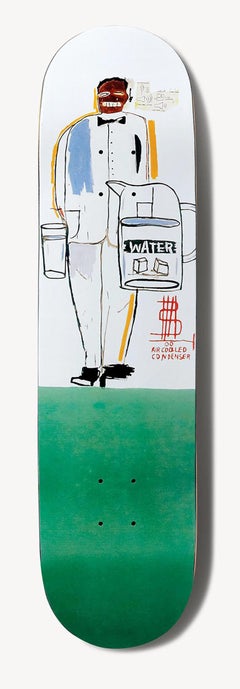
Basquiat Skateboard Deck 2018 (Basquiat skate deck)
Located in NEW YORK, NY
Jean-Michel Basquiat Skateboard Deck: Limited edition Basquiat skateboard deck licensed by the Estate of Jean-Michel Basquiat in conjunction with Artestar in 2018, featuring offset ...
Category

21st Century and Contemporary Pop Art Prints and Multiples

Materials

Wood, Lithograph

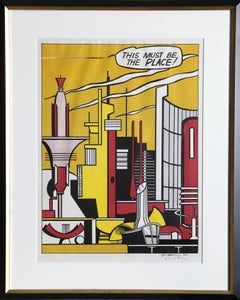
This Must Be the Place (C. III.20), Pop Art Lithograph by Roy Lichtenstein
Located in Long Island City, NY
Artist: Roy Lichtenstein, American (1923 - 1997) Title: This Must Be the Place (C. III.20) Year: 1965 Medium: Offset Lithograph, signed in the plate and in pencil l.r. Edition of unk...
Category

1960s Pop Art Prints and Multiples

Materials

Offset

Jonathan Winters, "The Day They All Got Their Wings, " hand signed
Located in Chatsworth, CA
This piece is a giclee after an original painting created by Jonathan Winters in 1970. Jonathan Winters was an American comedian, actor, author, and artist whose iconic career spanned from 1949-2013. This piece is hand signed, titled, dated and numbered 14/275 from the edition of 275. The sheet size measures 21.75 x 26.5 inches and the image measures 17.5 x 23.5 inches. It was published by Andrew Weiss...
Category

Early 2000s Pop Art Prints and Multiples

Materials

Giclée

Die Deutsche Liebe, 1968, Pop Art Screenprint by Robert Indiana
Located in Long Island City, NY
Robert Indiana, American (1928 - 2018) - Die Deutsche Liebe, 1968, Portfolio: The American Dream, Year: 1997, Medium: Screenprint on Wove Paper, Edition: 395, Image Size: 14 x 1...
Category

1990s Pop Art Prints and Multiples

Materials

Screen

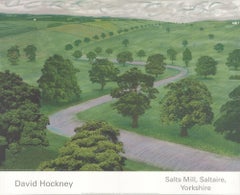
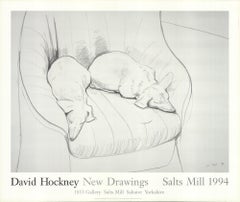
UK exhibition poster of Grimms' Fairy Tales (Hand signed by David Hockney)
Located in New York, NY
David Hockney Grimms' Fairy Tales (Hand Signed), 1996 Offset Lithograph Poster Boldly signed in ink marker on the top front 16 1/2 × 11 1/2 inches Unframed This signed offset lithogr...
Category

1990s Pop Art Prints and Multiples

Materials

Lithograph, Offset

Mao - Screenprint by Andy Warhol - 1974
Located in Roma, IT
Mao is a contemporary artwork realized by Andy Warhol in 1974. Colour screenprint on wallpaper. Includes frame: 113 x 86 x 3 cm Hand signed by lower left. Prov. Galerie Vayhinger...
Category

1970s Pop Art Prints and Multiples

Materials

Screen

Forgotten Future, Pop Art Lithograph by Erró
Located in Long Island City, NY
A lithograph by Icelandic Pop artist Erro. Like many other noteworthy Pop artists, Erro drew inspiration for his style and subjects from popular media, focusing mostly on comic books...
Category

Early 2000s Pop Art Prints and Multiples

Materials

Lithograph

Warhol-Basquiat Limited Edition Poster (30th Anniversary Edition)
Located in London, GB
30th Anniversary reprint edition of the exhibition poster for Warhol/Basquiat Paintings. Printed in 2015. Signed and numbered "153/300" in ink by Tony Shafrazi. Published by Tony Sha...
Category

2010s Pop Art Prints and Multiples

Materials

Offset

Warhol Basquiat Be@rbrick 400% figure (Basquiat Warhol Bearbrick)
Located in NEW YORK, NY
Andy Warhol Jean-Michel Basquiat Bearbrick Vinyl Figures: (400% & 100%): A unique, timeless collectible trademarked & licensed by the Estate of Jean-Michel Basquiat & And...
Category

21st Century and Contemporary Pop Art Prints and Multiples

Materials

Resin, Vinyl

Takashi Murakami Flowers Skateboard Deck (Takashi Murakami skate deck)
Located in NEW YORK, NY
Takashi Murakami Flowers Skate Deck: A vibrant piece of Takashi Murakami wall art produced as a limited series in conjunction with the 2017 Murakami exhibit: The Octopus Eats Its Own...
Category

1980s Pop Art Prints and Multiples

Materials

Wood, Lithograph, Offset

Neo Classical by BATIK Super Oversize Signed Limited Edition
Located in London, GB
Neo Classical by BATIK Pop artwork featuring Neo from the Matrix films stopping an onslaught of assorted colourful pills. signed & limited edition. BATIK is an increasingly collec...
Category

2010s Pop Art Prints and Multiples

Materials

Archival Pigment

VIP Invitation to "The Drawings of Roy Lichtenstein" @ MoMA, Hand Signed, Framed
Located in New York, NY
Historically scarce -- hand signed museum invitations by Lichtenstein from MoMA, where the artist attended himself, rarely surface, especially when framed and preserved at this level...
Category

1980s Pop Art Prints and Multiples

Materials

Lithograph, Offset

1964 original poster by Ellsworth Kelly for an exhibition at the Maeght Gallery
Located in PARIS, FR
Original poster made by Ellsworth Kelly in original Lithography, for his exhibition at the Maeght Gallery in 1964. Ellsworth Kelly was an American painter, sculptor and printmaker as...
Category

1960s Pop Art Prints and Multiples

Materials

Paper, Lithograph

Basquiat Gold Griot Skateboard Deck (Basquiat skate deck)
Located in NEW YORK, NY
Limited edition Basquiat Gold Griot Skateboard Deck c. 2019: Rare limited edition Basquiat skateboard deck published by The Broad Museum Los Angeles in conjunction with the estate of...
Category

21st Century and Contemporary Pop Art Prints and Multiples

Materials

Wood, Offset

Pop Art prints and multiples for sale on 1stDibs.

Find a wide variety of authentic Pop Art prints and multiples available for sale on 1stDibs. Works in this style were very popular during the 21st Century and Contemporary, but contemporary artists have continued to produce works inspired by this movement. If you’re looking to add prints and multiples created in this style to introduce contrast in an otherwise neutral space in your home, the works available on 1stDibs include elements of blue, orange, red, purple and other colors. Many Pop art paintings were created by popular artists on 1stDibs, including Peter Max, Francisco Nicolás, Heidler & Heeps, and Andy Warhol. Frequently made by artists working with Screen Print, and Lithograph and other materials, all of these pieces for sale are unique and have attracted attention over the years. Not every interior allows for large Pop Art prints and multiples, so small editions measuring 1.5 inches across are also available.

Still Thinking About These?

All Recently Viewed