
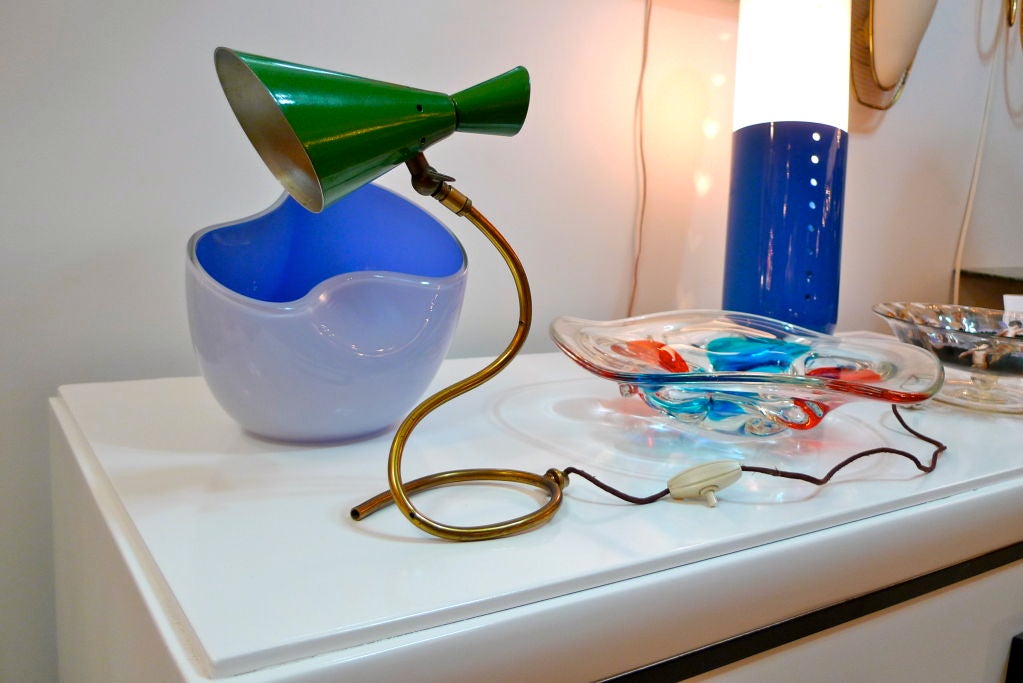
Cocotte Diabolo Desk Lamp
Located in Hanover, MA
Pure French modernist beauty. Entirely original. Manner of Pierre Guariche.
Category
Vintage 1950s French Table Lamps
Materials
Brass
Cocotte Diabolo Desk Lamp
Located in Hanover, MA
Pure French modernist beauty. Entirely original. Manner of Pierre Guariche.
Brass
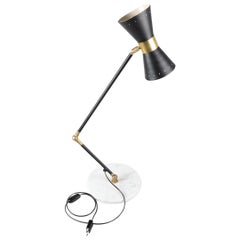
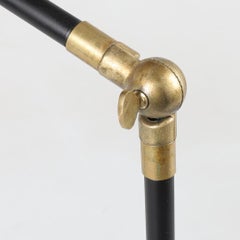
Stilnovo Style Diabolo table/desk lamp, 1950's
By luci, Stilnovo
Located in Uccle, BE
The Diabolo desk/Table lamp has 2 lights. Patinated brass.
Carrara Marble, Metal, Brass

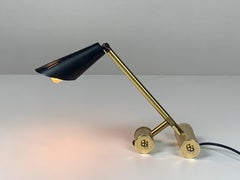
Midcentury adjustable diabolo counter balance architectural desk lamp, 1960s
By Stilnovo
Located in Zaandam, NL
A perfect example of midcentury italian craftsmanship from the 1960s. The brass is in a lovely patinated condition. The diabolo shade can be adjusted as can be seen in the pics. The ...
Metal, Brass
$1,514Sale Price|20% Off
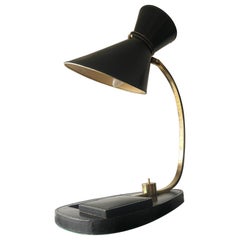
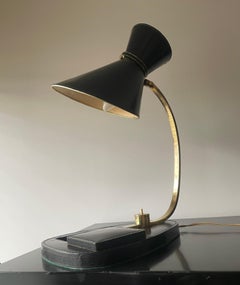
Black Leather Diabolo Shade Desk Lamp by Jacques Adnet, France 1950
By Jacques Adnet
Located in Brussels, BE
A leather desk lamp with a diabolo shade designed by Jacques Adnet; Some accessories are included on the base.
Brass
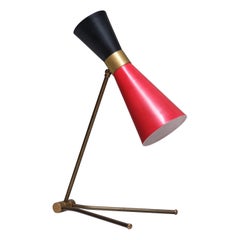
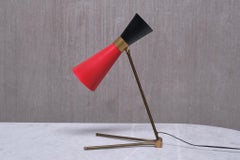
Stilnovo Adjustable Brass Desk Lamp, Black and Red Diabolo Shade, Italy, 1950s
By Stilnovo
Located in The Hague, NL
This very rare desk/table lamp was produced by Stilnovo in Italy in the mid 1950s.
Metal, Brass
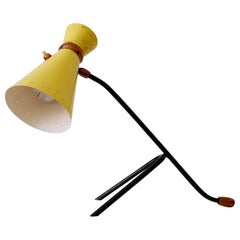
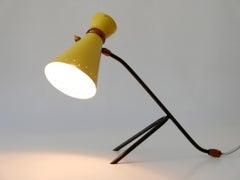
Rare & Lovely Mid-Century Modern Diabolo Table Lamp Desk Light Italy 1960s
Located in München, BY
Extremely rare, highly decorative and articulated Mid-Century Modern diabolo table lamp or desk light. Due to the joint ball, the lamp shade can be adjusted in various positions.
Metal, Aluminum, Copper
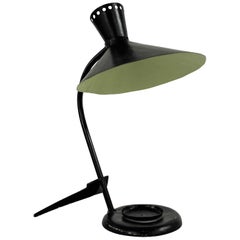
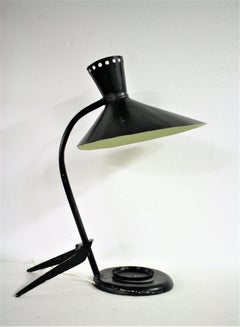
Vintage French Diabolo Desk Lamp, 1950s
By Jean Boris Lacroix
Located in Leuven, Vlaams Gewest
Huge Mid-Century Modern desk lamp. This beautiful tripod design lamp was probably designed by Jean Boris Lacroix, although this is not confirmed.
Metal, Enamel
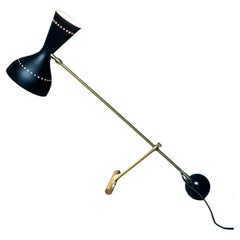
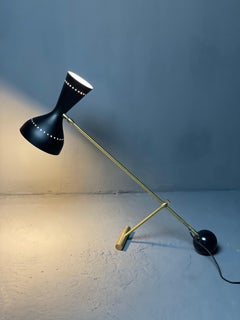
Italian Bedside Lamp, 2 Lights
By Stilnovo
Located in LYON, FR
Very nice contemporary Italian reissue of the "diabolo" desk lamp. The structure is in solid brass and the lampshade is in black lacquered steel, in the spirit of the creations of st...
Metal, Brass
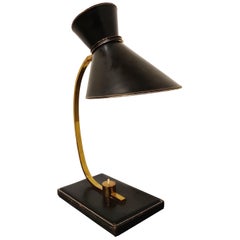
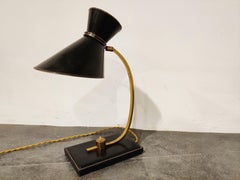
Vintage Leather Desk Lamp by Adnet, 1950s
By Jacques Adnet
Located in Leuven, Vlaams Gewest
Midcentury diabolo shade desk lamp made from brass and leather, designed by Frenchman Jacques Adnet (1901-1984).
Leather
Sold
H 19.89 in W 15.75 in D 10.63 in
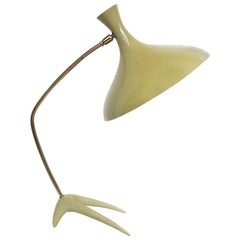
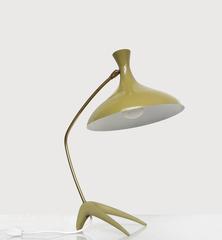
1950 Philips Louis Kalff Tripod 'Diabolo' Desk Lamp Crow's Foot Olive & Brass
By Philips, Louis Kalff
Located in Niederdorfelden, Hessen
Elegant mid century desk light with olive trumpet shade and crow's feet. The shaped iron base comes with a brass stand and a ball joint to adjust the metal shade. Designed by Louis K...
Brass
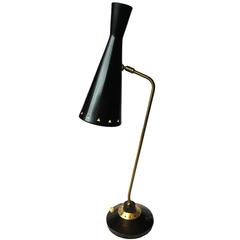
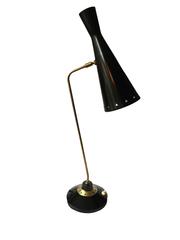
1950s French Diabolo Lamp
Located in London, GB
French 1950s diabolo desk lamp. Adjustable angle head. Brass, cast iron base in black.
Brass, Steel
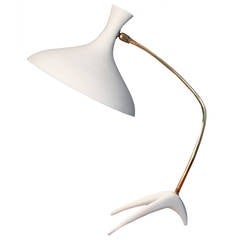
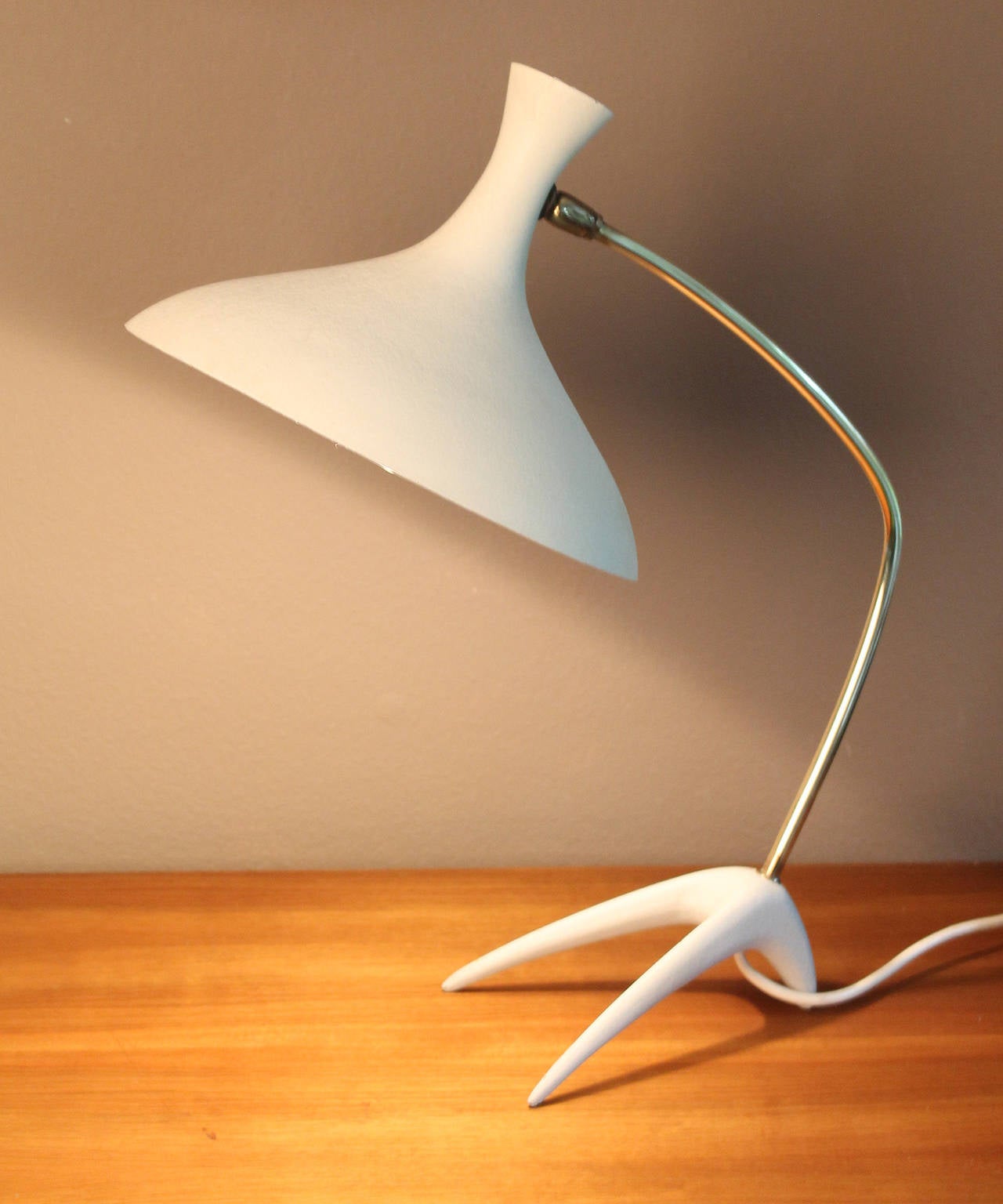
1950s Louis Kalf Tripod Desk Lamp with Diabolo Shade
By Stilnovo, Louis Christiaan Kalff
Located in Bremen, DE
Louis Kalff Desk Lamp featuring a large biomorphic diabolo shade on unusual tripod foot This fine piece of lighting truly can compete in quality and finishing details with many ...
Aluminum, Brass, Iron
Organically shaped, clean-lined and elegantly simple are three terms that well describe vintage mid-century modern furniture. The style, which emerged primarily in the years following World War II, is characterized by pieces that were conceived and made in an energetic, optimistic spirit by creators who believed that good design was an essential part of good living.
ORIGINS OF MID-CENTURY MODERN FURNITURE DESIGN
CHARACTERISTICS OF MID-CENTURY MODERN FURNITURE DESIGN
MID-CENTURY MODERN FURNITURE DESIGNERS TO KNOW
ICONIC MID-CENTURY MODERN FURNITURE DESIGNS
VINTAGE MID-CENTURY MODERN FURNITURE ON 1STDIBS
The mid-century modern era saw leagues of postwar American architects and designers animated by new ideas and new technology. The lean, functionalist International-style architecture of Le Corbusier and Bauhaus eminences Ludwig Mies van der Rohe and Walter Gropius had been promoted in the United States during the 1930s by Philip Johnson and others. New building techniques, such as “post-and-beam” construction, allowed the International-style schemes to be realized on a small scale in open-plan houses with long walls of glass.
Materials developed for wartime use became available for domestic goods and were incorporated into mid-century modern furniture designs. Charles and Ray Eames and Eero Saarinen, who had experimented extensively with molded plywood, eagerly embraced fiberglass for pieces such as the La Chaise and the Womb chair, respectively.
Architect, writer and designer George Nelson created with his team shades for the Bubble lamp using a new translucent polymer skin and, as design director at Herman Miller, recruited the Eameses, Alexander Girard and others for projects at the legendary Michigan furniture manufacturer.
Harry Bertoia and Isamu Noguchi devised chairs and tables built of wire mesh and wire struts. Materials were repurposed too: The Danish-born designer Jens Risom created a line of chairs using surplus parachute straps for webbed seats and backrests.
The Risom lounge chair was among the first pieces of furniture commissioned and produced by celebrated manufacturer Knoll, a chief influencer in the rise of modern design in the United States, thanks to the work of Florence Knoll, the pioneering architect and designer who made the firm a leader in its field. The seating that Knoll created for office spaces — as well as pieces designed by Florence initially for commercial clients — soon became desirable for the home.
As the demand for casual, uncluttered furnishings grew, more mid-century furniture designers caught the spirit.
Classically oriented creators such as Edward Wormley, house designer for Dunbar Inc., offered such pieces as the sinuous Listen to Me chaise; the British expatriate T.H. Robsjohn-Gibbings switched gears, creating items such as the tiered, biomorphic Mesa table. There were Young Turks such as Paul McCobb, who designed holistic groups of sleek, blond wood furniture, and Milo Baughman, who espoused a West Coast aesthetic in minimalist teak dining tables and lushly upholstered chairs and sofas with angular steel frames.
Generations turn over, and mid-century modern remains arguably the most popular style going. As the collection of vintage mid-century modern chairs, dressers, coffee tables and other furniture for the living room, dining room, bedroom and elsewhere on 1stDibs demonstrates, this period saw one of the most delightful and dramatic flowerings of creativity in design history.
Antique table lamps became a category of their own once electricity moved light off the wall and onto furniture. The form split quickly: task-driven designs like the Anglepoise on one side, decorative ceramic and glass on the other.
Styles to Know
Base material shapes the light as much as the shade does: ceramic and glass diffuse a softer glow, while brass and metal read more directional. Layer the look with a mid-century modern floor lamp for ambient light, or set a pair on a mid-century modern nightstand for a bedroom.
How to Choose the Right Vintage Table Lamp
Buying individually rather than as a pair allows more flexibility when mixing eras across a room. For those shopping by name rather than by shape, the history of the Anglepoise lamp is worth a read. Each piece comes from a vetted 1stDibs seller, with era, designer and condition detailed, and the 1stDibs Promise stands behind every purchase.
The alluring pendant light exemplifies the designer’s winsome mid-career work.
Patrizio Chiarparini of Brooklyn’s Duplex gallery sheds light on the lasting legacy of Italy’s postwar furniture boom.
There are many lessons to be learned from the lofts, apartments and townhouses of architects and decorators in Manhattan and beyond.
Having created extravagant homes for reality TV’s biggest stars, the designer is stepping into the spotlight with his first book.
The Louisiana-born and -bred architect talks to 1stdibs about the art of making timeless places that matter.
The Palm Springs interior decorator developed a mid-century style that defined the vacation homes of celebrities and other notables, including Bob Hope and Lucille Ball.
The houses from this New York studio cloak modernist tendencies within what are often more traditional trappings.
In the market for a fantastic fixture from the 1940s, ’50s or ’60s? Here are some names to know.