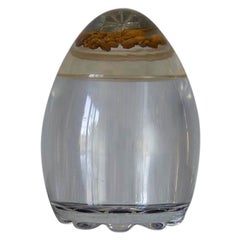
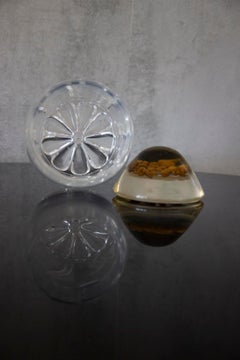
Vintage Coffee Storage Container For Sale on 1stDibs
Find many varieties of an authentic vintage coffee storage container available at 1stDibs. Each vintage coffee storage container for sale was constructed with extraordinary care, often using
metal,
fabric and
wood. There are many kinds of the vintage coffee storage container you’re looking for, from those produced as long ago as the 20th Century to those made as recently as the 20th Century. Each vintage coffee storage container bearing
mid-century modern or
modern hallmarks is very popular. Many designers have produced at least one well-made vintage coffee storage container over the years, but those crafted by
Verner Panton,
Anna Castelli Ferrieri and
Collezioni Longato are often thought to be among the most beautiful.
How Much is a Vintage Coffee Storage Container?
Prices for a vintage coffee storage container start at $389 and top out at $11,000 with the average selling for $1,096.
A Close Look at Mid-century-modern Furniture
Organically shaped, clean-lined and elegantly simple are three terms that well describe vintage mid-century modern furniture. The style, which emerged primarily in the years following World War II, is characterized by pieces that were conceived and made in an energetic, optimistic spirit by creators who believed that good design was an essential part of good living.
ORIGINS OF MID-CENTURY MODERN FURNITURE DESIGN
CHARACTERISTICS OF MID-CENTURY MODERN FURNITURE DESIGN
MID-CENTURY MODERN FURNITURE DESIGNERS TO KNOW
ICONIC MID-CENTURY MODERN FURNITURE DESIGNS
VINTAGE MID-CENTURY MODERN FURNITURE ON 1STDIBS
The mid-century modern era saw leagues of postwar American architects and designers animated by new ideas and new technology. The lean, functionalist International-style architecture of Le Corbusier and Bauhaus eminences Ludwig Mies van der Rohe and Walter Gropius had been promoted in the United States during the 1930s by Philip Johnson and others. New building techniques, such as “post-and-beam” construction, allowed the International-style schemes to be realized on a small scale in open-plan houses with long walls of glass.
Materials developed for wartime use became available for domestic goods and were incorporated into mid-century modern furniture designs. Charles and Ray Eames and Eero Saarinen, who had experimented extensively with molded plywood, eagerly embraced fiberglass for pieces such as the La Chaise and the Womb chair, respectively.
Architect, writer and designer George Nelson created with his team shades for the Bubble lamp using a new translucent polymer skin and, as design director at Herman Miller, recruited the Eameses, Alexander Girard and others for projects at the legendary Michigan furniture manufacturer.
Harry Bertoia and Isamu Noguchi devised chairs and tables built of wire mesh and wire struts. Materials were repurposed too: The Danish-born designer Jens Risom created a line of chairs using surplus parachute straps for webbed seats and backrests.
The Risom lounge chair was among the first pieces of furniture commissioned and produced by celebrated manufacturer Knoll, a chief influencer in the rise of modern design in the United States, thanks to the work of Florence Knoll, the pioneering architect and designer who made the firm a leader in its field. The seating that Knoll created for office spaces — as well as pieces designed by Florence initially for commercial clients — soon became desirable for the home.
As the demand for casual, uncluttered furnishings grew, more mid-century furniture designers caught the spirit.
Classically oriented creators such as Edward Wormley, house designer for Dunbar Inc., offered such pieces as the sinuous Listen to Me chaise; the British expatriate T.H. Robsjohn-Gibbings switched gears, creating items such as the tiered, biomorphic Mesa table. There were Young Turks such as Paul McCobb, who designed holistic groups of sleek, blond wood furniture, and Milo Baughman, who espoused a West Coast aesthetic in minimalist teak dining tables and lushly upholstered chairs and sofas with angular steel frames.
Generations turn over, and mid-century modern remains arguably the most popular style going. As the collection of vintage mid-century modern chairs, dressers, coffee tables and other furniture for the living room, dining room, bedroom and elsewhere on 1stDibs demonstrates, this period saw one of the most delightful and dramatic flowerings of creativity in design history.
On the Origins of Brazilian
More often than not, vintage mid-century Brazilian furniture designs, with their gleaming wood, soft leathers and inviting shapes, share a sensuous, unique quality that distinguishes them from the more rectilinear output of American and Scandinavian makers of the same era.
Commencing in the 1940s and '50s, a group of architects and designers transformed the local cultural landscape in Brazil, merging the modernist vernacular popular in Europe and the United States with the South American country's traditional techniques and indigenous materials.
Key mid-century influencers on Brazilian furniture design include natives Oscar Niemeyer, Sergio Rodrigues and José Zanine Caldas as well as such European immigrants as Joaquim Tenreiro, Jean Gillon and Jorge Zalszupin. These creators frequently collaborated; for instance, Niemeyer, an internationally acclaimed architect, commissioned many of them to furnish his residential and institutional buildings.
The popularity of Brazilian modern furniture has made household names of these designers and other greats. Their particular brand of modernism is characterized by an émigré point of view (some were Lithuanian, German, Polish, Ukrainian, Portuguese, and Italian), a preference for highly figured indigenous Brazilian woods, a reverence for nature as an inspiration and an atelier or small-production mentality.
Hallmarks of Brazilian mid-century design include smooth, sculptural forms and the use of native woods like rosewood, jacaranda and pequi. The work of designers today exhibits many of the same qualities, though with a marked interest in exploring new materials (witness the Campana Brothers' stuffed-animal chairs) and an emphasis on looking inward rather than to other countries for inspiration.
Find a collection of vintage Brazilian furniture on 1stDibs that includes chairs, sofas, tables and more.
Materials: Lucite Furniture
Antique, new and vintage Lucite furniture has been on design editors’ radars for several seasons now, but thanks to a renewed interest in Lucite coffee tables, chairs and other pieces from the late 1960s and ’70s, the trend has reached fever pitch.
“I think there’s a freshness and cleanness to it,” says Fawn Galli, an interior designer based in New York. Not only is Lucite, or transparent plastic, practical, since it can work in nearly any environment, it’s incredibly stylish.
Some of the most acclaimed furniture designers share the same love for Lucite as an effective and practical material for use in any interior.
“I think there’s something really nice about the simplicity of anything Lucite or acrylic — it feels lightweight,” says Tamara Eaton, whose eponymous firm deftly balances traditional and modern designs. Even in the most historical setting, “you can still introduce some Lucite or something kind of lightweight and not have it feel like a distinct interjection, but a playful one that’s more about the shape,” she says.
For the living room in a mid-century modern townhouse in Park Slope, Brooklyn, Eaton chose a pair of box-shaped Lucite tables with copper handles from Jamie Dietrich. “We didn’t want anything to be too heavy, and that area was a place where [the family] would sometimes move those tables so the kids could play,” she says. The tables doubled as snack trays since the kitchen is nearby. “They have this transportable feel to them that I think was really fun.”
Browse a range of antique, new and vintage Lucite side tables, table lamps and other furniture now on 1stDibs.
Finding the Right Decorative-boxes for You
Antique, vintage and new decorative boxes will safely store items while adding a splash of color or texture to a corner in any room. They have had a range of purposes over the years — from trinkets to serving as useful receptacles, such as snuff boxes, jewelry boxes and more. Boxes have also been designed in a range of forms and styles.
Box making is a craft dating back thousands of years. Early boxes as decorative objects were regularly designed and decorated both inside and out, ranging from minimal looks to more flashy styles. Decorative boxes have been constructed from different materials, with wood and metal being the most common. Wood is widely available and versatile, with woodworkers able to carve complex designs or showcase its natural grain.
Some antique jewelry boxes were made with tortoiseshell, mother-of-pearl, ivory and even porcupine quills, such as those created by the Anishinabe in Canada and the United States. In Sri Lanka, well-crafted boxes were inlaid with porcupine quills and ivory discs between ebony bands. Chinese sewing boxes and tea boxes made of black lacquer were popular in Europe during the late 18th and early 19th centuries. These often featured gold-painted designs or landscape scenes. Silk, paper and velvet frequently enhanced these boxes’ interiors.
Any style of decorative box can be a nice tabletop or desktop decor, whether to hold candy or tea in the living room or paper, pencils and other business supplies in the office. They can also act as jewelry boxes. Sewing boxes can be a lovely touch to any space while storing magazines or other trinkets.
You can find metal, wood and silver antique boxes on 1stDibs. The collection includes mid-century modern, Victorian and Art Deco styles that can add elegance to any home.