Japonisme Decorative Objects

JAPONISME STYLE

In the late 19th and early 20th century, France developed an enduring passion for Japanese aesthetics and craftsmanship. Not only did this interpretation of Japanese culture — which became known as Japonisme — infuse fresh energy into French art and design, but it also radically transformed how Europeans, and subsequently the world, would come to understand visual culture. 

Until 1853, Japan had been closely guarded against foreign visitors for over two centuries. However, American Commodore Matthew C. Perry sailed into Japan that year and initiated the first of its treaties with the United States and Europe, thereby opening its borders and giving the West its first-ever look at Japanese design. 

For the next few decades, taken with Japonisme, sophisticated collectors in Paris, New York and elsewhere gorged themselves on lacquered screens, celadon ceramics and netsuke ornaments, along with artworks depicting various aspects of Japanese life. The East Asian country’s influence on Europe, particularly France, contributed to one of the most creatively prosperous periods in history, leaving an imprint on the Impressionist, Art Nouveau and Art Deco movements, and inspiring artists like Edgar Degas, Mary Cassatt, Vincent van Gogh as well as luxury houses such as Louis Vuitton and Hermès. Japonisme emerged at the time when the ornate Renaissance Revival style was the most prominent mode of decorating in Europe, and Japanese aesthetics seemed strikingly modern and elegant in comparison. 

In addition to everyday practical objects from Japan, such as vases, tableware and decorative boxes, Japanese art, especially Japanese woodblock prints by masters of the ukiyo-e school, caught the eye of many artists — particularly those in the Art Nouveau poster community in 1880s Paris. The luscious organic colors associated with traditional Japanese design, motifs like cherry blossoms and carp and the vivid patterns found in woodblock prints, silks and more were adopted and appropriated by painters as well as ceramicists and those working in other fields of the decorative arts. Today, demand for Japanese lacquerware — furniture, trays, writing boxes, screens, incense burners — from the Edo period (1615–1868) and the late 19th century continues to be very strong among collectors.

Find a collection of antique Japonisme furniture and decorative objects on 1stDibs.

to
59
364
34
6
17
175
172
40
88
40
17
17
5
13
4
2
7
4
3
5
1
27,370
14,499
9,558
5,732
4,090
3,134
2,362
1,687
1,548
1,426
1,274
1,263
1,068
913
902
674
639
628
186
145
82
71
62
235
114
269
267
263
106
79
Height
to
Width
to
404
401
401
13
8
7
4
4
Style: Japonisme
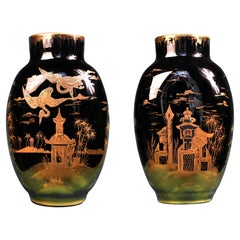
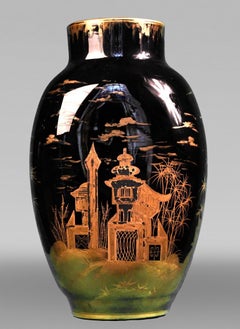
Baccarat, Pair of "Birds" Vases, France, circa 1880

Baccarat, Pair of "Birds" Vases, France, circa 1880

By Baccarat

Located in PARIS, FR

Fine pair of baluster-shaped opaline vases of Japanese inspiration, adorned with a chiselled and gilded bronze mount imitating bamboo, extending up the neck with two movable ring han...

Category

1870s French Antique Japonisme Decorative Objects

Materials

Bronze

Large 19th Century Japanese Imari Vase on Stand

Large 19th Century Japanese Imari Vase on Stand

Located in Brighton, Sussex

A large and very impressive 19th Century Japanese lidded Imari vase. Measures: 45". Having a wonderful Foo dog finial to the lid, classical bold blue and orange ground. Scrolling fo...

Category

19th Century Japanese Antique Japonisme Decorative Objects

Materials

Porcelain

Pair 19th Century Japanese Imari Porcelain & Gilt-Bronze Torchere Candelabra

Pair 19th Century Japanese Imari Porcelain & Gilt-Bronze Torchere Candelabra

By Imari Porcelain

Located in Los Angeles, CA

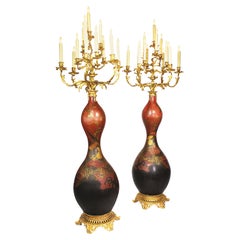
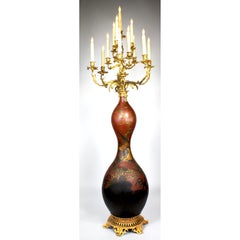
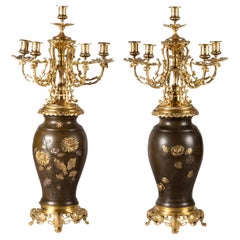
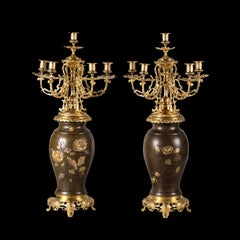
A fine Pair of 19th century Japanese Imari Porcelain and French Gilt-Bronze Mounted Thirteen-Light Celadon Torchere Candelabra. The bottle-shaped Japonisme vases with a Royal red background, decorated with parcel-gilt and black soaring eagles in the hunt within a forestall scene. Each Vase fitted and surmounted with a French 19th century Louis XV Style 13-Light scrolled candelabrum and all raised on a circular pierced gilt-bronze plinth. circa: 1880. Imari Porcelain (????) is the name for Japanese porcelain wares made in the town of Arita, in the former Hizen Province, northwestern Kyushu. They were exported to Europe extensively from the port of Imari, Saga, between the second half of the 17th century and the first half of the 18th century. The Japanese as well as Europeans called them Imari. In Japanese, these porcelains are also known as Arita-yaki (???). Imari or Arita porcelain has been continously produced up through the present day. Characteristics Though there are many types of Imari, Westerners' conception of Imari in the popular sense is associated only with a type of Imari produced and exported in large quantity in mid-17th century. This type is called Kinrande. Kinrande Imari is colored porcelain with cobalt blue underglaze and red and gold overglaze. The color combination was not seen in China at that time. Traditional Ming dynasty color porcelain used dominantly red and green, probably due to scarcity of gold in China, whereas gold was abundant in Japan in those days. The subject matter of Imari is diverse, ranging from foliage and flowers to people, scenery and abstractions. Some Imari design structures such as kraak style were adopted from China, but most designs were uniquely Japanese owing to the rich Japanese tradition of paintings and costume design. The porcelain has a gritty texture on the bases, where it is not covered by glaze. There is also blue and white Imari. Kakiemon style Imari is another type of Imari, but it tends to be categorized separately in Europe. History "Imari" was simply the trans-shipment port for Arita wares. It was the kilns at Arita which formed the heart of the Japanese porcelain industry. Arita's kilns were set up in the 17th century, when kaolin was discovered in 1616 by the immigrant Korean potter, Yi Sam-pyeong (1579–1655). (He may also be known by the name, "Kanage Sambei".) Yi Sam-Pyeong, along with his extended family of 180 persons, left Korea on the offer of a privileged position in Japan. This decision was made after the occurrence of certain Japanese invasions of Korea. After Yi Sam-Pyeong's discovery, his kilns began to produce revised Korean-style blue and white porcelains, known as "Shoki-Imari". In the mid-17th century there were also a lot of Chinese refugees in Northern Kyushu due to the turmoil on Chinese continent, and it is said one of them brought coloring technique to Arita. Thus Shoki-Imari developed into Ko-KutaniImari. Ko-Kutani was produced around 1650 for both export and domestic market. Blue and white porcelain continued to be produced and they are called Ai-Kutani. Ko-Kutani Imari for the export market usually adopted Chinese design structure such as kraak style, whereas Ai-Kutani for the domestic market were highly unique in design and are accordingly valued very much among collectors. Ko-Kutani style evolved into Kakiemon style Imari, which was produced for about 50 years around 1700. Imari achieved its technical and aesthetic peak in Kakiemon style, and it dominated European market. Blue and white Kakiemon is called Ai-Kakiemon. Kakiemon style transformed into Kinrande in the 18th century. Kinrande used blue underglaze and red and gold overglaze, and later some other colors. Imari began to be exported to Europe because the Chinese kilns at Ching-te-Chen were damaged in the political chaos and the new Qing dynasty government stopped trade in 1656–1684. Exports to Europe were made through the Dutch East India Company, but the designation "Imari Porcelain" in Europe connotes Arita wares of mostly Kinrande Imari. Export of Imari to Europe stopped in mid-18th century when China began export to Europe again, since Imari was not able to compete against China due to high labor cost. By that time, however, both Imari and Kakiemon style were already so popular among Europeans, Chinese export porcelain copied both Imari and Kakiemon style, which is called Chinese Imari. At the same time, European kilns, such as Meisen also tried to copy Imari and Kakiemon. Export of Imari surged again in late 19th century (Meiji era) when Japonism flourished in Europe. Thus in western world today, two kinds of Imari can...

Category

19th Century Japanese Antique Japonisme Decorative Objects
Materials

Bronze, Ormolu

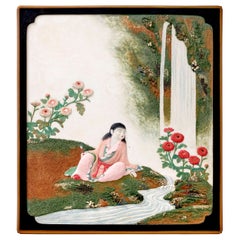
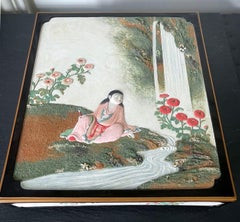
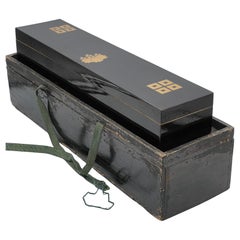
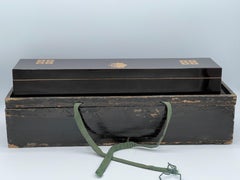
Japanese Meiji Period Lacquered Wooden Box w/ Original Outer Case, Ca. 1880

Japanese Meiji Period Lacquered Wooden Box w/ Original Outer Case, Ca. 1880

Located in New York, NY

Japanese Meiji Period Lacquered Wooden Box w/ Original Outer Case, Ca. 1880 Meiji Period: 1868-1912 DIMENSIONS Length: 16.5 inches Width: 3.5 inches Height: 2.5 inches

Category

1880s Japanese Antique Japonisme Decorative Objects
Materials

Wood

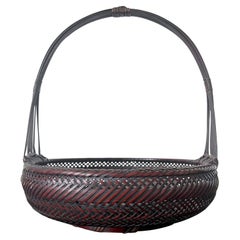
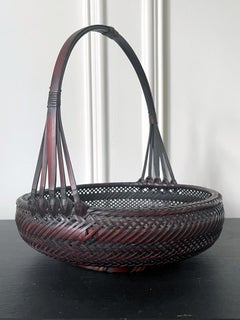
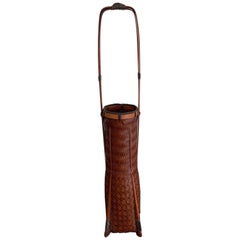
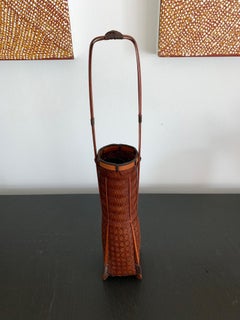
Japanese Late Meiji Period (1868-1912) Woven Bamboo Basket, Early 20th Century

Japanese Late Meiji Period (1868-1912) Woven Bamboo Basket, Early 20th Century

Located in New York, NY

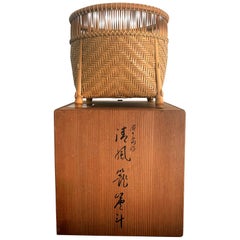
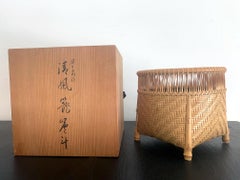
An elegant woven bamboo basket from the late Meiji period, dating to the early 20th century. This tall, finely crafted piece exemplifies the artistry and technical mastery of Japanes...

Category

Early 1900s Japanese Antique Japonisme Decorative Objects
Materials

Bamboo

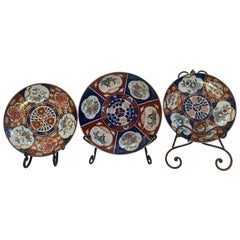
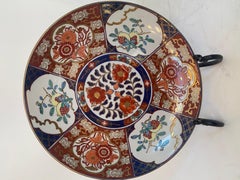
19th Century 3 Pieces Japanese Porcelain Dishes Meiji Period

19th Century 3 Pieces Japanese Porcelain Dishes Meiji Period

Located in Brea, CA

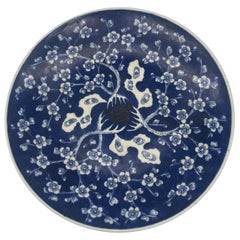
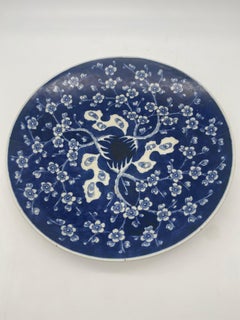
19th century 3 pieces Japanese porcelain dishes Meiji period decorated, largest 15.25'' x 2'', medium 13.25'' x 2'', smallest 12'' x 1.5''.

Category

Late 19th Century Japanese Antique Japonisme Decorative Objects
Materials

Porcelain

Sumida Gawa Pottery Vase, Japan, early 20th century.

Sumida Gawa Pottery Vase, Japan, early 20th century.

Located in Buenos Aires, Buenos Aires

Sumida Gawa Pottery Vase, Japan, early 20th century.

Category

Early 20th Century Japanese Japonisme Decorative Objects

Materials

Ceramic

Collection of Four Japanese Tanba Tokkuri Sake Bottles

Collection of Four Japanese Tanba Tokkuri Sake Bottles

Located in Atlanta, GA

A set of four Japanese Ceramic Tokkuri Sake storage bottles circa early 20th century (Meiji to Taisho period). The bottles were made in Tanba (or Tamba) ...

Category

Early 20th Century Japanese Japonisme Decorative Objects

Materials

Ceramic

Japanese Hanging Bamboo Ikebana Basket Signed

Japanese Hanging Bamboo Ikebana Basket Signed

Located in Atlanta, GA

A Japanese bamboo Ikebana hanging basket circa 1920s-1940s, made with "sooted" bamboo (susutake in Japanese). This bamboo material was collected from traditional thatched-roof houses...

Category

Early 20th Century Japanese Japonisme Decorative Objects

Materials

Bamboo

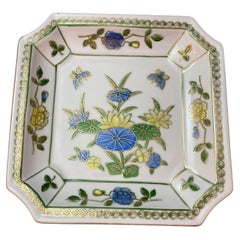
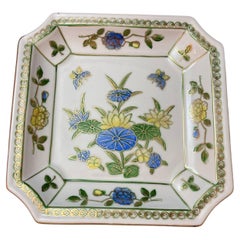
Vintage Asian Porcelain Octagonal Ashtray Dish Catchall

Vintage Asian Porcelain Octagonal Ashtray Dish Catchall

Located in Moreno Valley, CA

Vintage Asian Japanese style dish, ashtray, catchall. Large vintage ornamental hand painted Asian porcelain tray catchall with clipped edges. Hand painted octagonal porcelain dish di...

Category

Late 20th Century Japanese Japonisme Decorative Objects

Materials

Porcelain

Large Pair 19th Century Japanese Blue and White Vases

Large Pair 19th Century Japanese Blue and White Vases

Located in Brighton, Sussex

A very impressive pair of Japanese Meiji (1868-1912) period Blue and white porcelain vases, each with wonderful classical motif decoration to the neck and base. Blossom trees to the ...

Category

Late 19th Century Japanese Antique Japonisme Decorative Objects
Materials

Porcelain

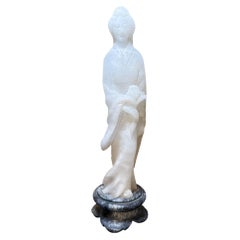
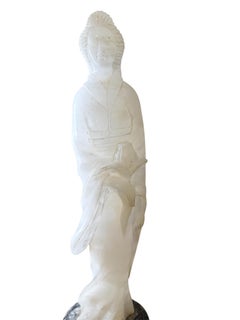
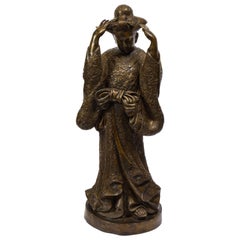
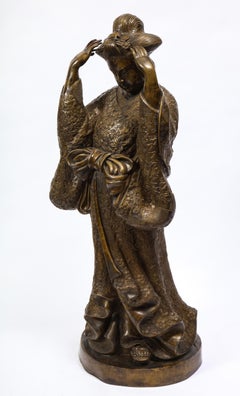
White Stone Sculpture Of A Japanese Young Lady

White Stone Sculpture Of A Japanese Young Lady

Located in Guaynabo, PR

This is an Asian White Stone Sculpture of a Japanese Lady. It depicts a standing up young lady wearing a flowing kimono, Japanese hairstyle and holding a tulip flower. The sculpture ...

Category

Early 20th Century Japanese Japonisme Decorative Objects

Materials

Jade

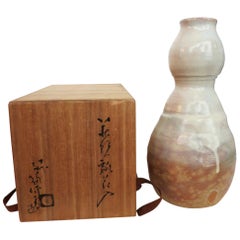
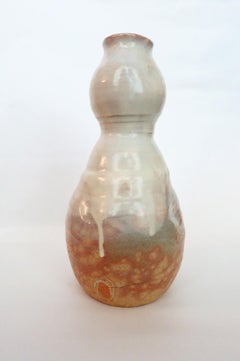
Hagi Ikebana Vase by Kyusetsu Miwa X Japanese Studio Pottery

Hagi Ikebana Vase by Kyusetsu Miwa X Japanese Studio Pottery

By Kyusetsu Miwa X

Located in Atlanta, GA

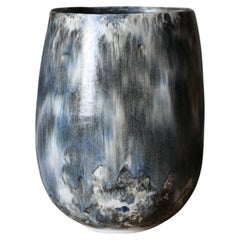
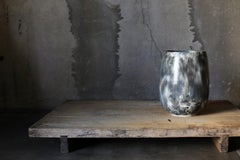
A stoneware vase with white dripping glaze from Hagi by Kyusetsu Miwa X (1895-1981), Showa Period. The vase is in the shape of "Double Gourd" with a bulbous ...

Category

20th Century Japanese Japonisme Decorative Objects

Materials

Ceramic

Japanese Lacquer Maki-e Sake Ewer Meiji Period

Japanese Lacquer Maki-e Sake Ewer Meiji Period

Located in Atlanta, GA

A Japanese lacquered wood sake ewer with maki-e design, circa late 19th century, Meiji period. The nicely decorated lacquerware is of a Classic sake ewer for...

Category

1890s Japanese Antique Japonisme Decorative Objects
Materials

Lacquer

Meissen Bowl in Hand-Painted Porcelain Decorated with Cherry Tree Branches

Meissen Bowl in Hand-Painted Porcelain Decorated with Cherry Tree Branches

Located in København, Copenhagen

Meissen bowl in hand-painted porcelain decorated with cherry tree branches, in Japanese style. Early 1900s. Measurements: 24.0 cm. x 3.5 cm. In good condition, with hairline crac...

Category

Early 20th Century German Japonisme Decorative Objects

Materials

Porcelain

Vintage Japanese Toyo Porcelain Plate, Hand-Painted Floral, 1950s

Vintage Japanese Toyo Porcelain Plate, Hand-Painted Floral, 1950s

By Toyo

Located in Moreno Valley, CA

Vintage Japanese decorative porcelain plate beautifully decorated with gorgeous colors and peony design typical of Toyo of Japan, circa 1950s. It is absolut...

Category

Early 20th Century Japanese Japonisme Decorative Objects

Materials

Porcelain

Japanese Inro by Koma Koryu Edo Period

Japanese Inro by Koma Koryu Edo Period

Located in Atlanta, GA

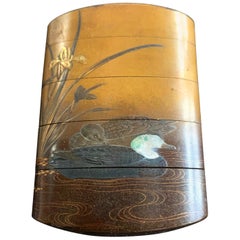
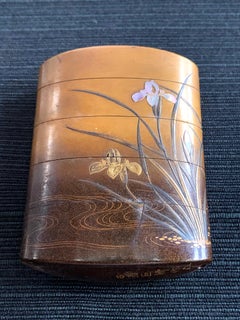
A four-case lacquered inro by Koma Koryu circa 19th century late Edo period. The inro features a pair of Chinese mandarin duck resting under a bundle of blooming irises on the pond. ...

Category

19th Century Japanese Antique Japonisme Decorative Objects
Materials

Wood, Lacquer

Carlton Ware, England, Bowl in Hand-Painted Porcelain with Trees, 1940s/50s

Carlton Ware, England, Bowl in Hand-Painted Porcelain with Trees, 1940s/50s

Located in København, Copenhagen

Carlton Ware, England. Bowl in hand-painted porcelain with trees and gold decoration, Japanism, 1940s / 50s. Measures: 20.5 x 10 cm. In excellent condition. Stamped.

Category

1940s English Vintage Japonisme Decorative Objects

Materials

Porcelain

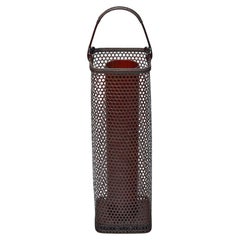
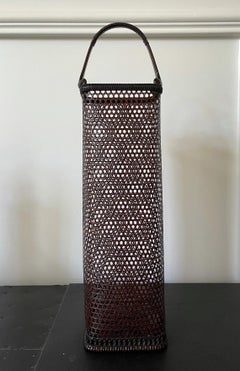
Elegant Japanese Lacquered Ikebana Bamboo Basket

Elegant Japanese Lacquered Ikebana Bamboo Basket

Located in Atlanta, GA

A vintage Japanese ikebana made from lacquered bamboo basketry circa first half of the 20th century. This piece of bamboo art displays an very light and delicate classic tapered squa...

Category

Early 20th Century Japanese Japonisme Decorative Objects

Materials

Bamboo, Rattan

Gilt Japonisme Porcelain Dresser Box

Gilt Japonisme Porcelain Dresser Box

Located in Philadelphia, PA

A fine 2-section Japonisme dresser box. In gilt porcelain. With cobalt blue and white geometric circle devices throughout. Simply a wonderful porcelain dresser box! Date: 20th Ce...

Category

20th Century Unknown Japonisme Decorative Objects

Materials

Porcelain

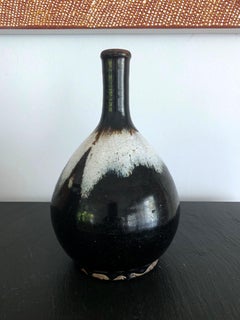
Japanese Ceramic Sake Bottle Chosen Karatsu Ware

Japanese Ceramic Sake Bottle Chosen Karatsu Ware

Located in Atlanta, GA

The long neck bottle of classic form was heavily potted with coarse clay with high iron content. The flask, circa 18th century Edo period, was purposed for sake storage but also substituted as a flower vase during tea ceremony. The surface is covered in glossy black glaze and contrasts strikingly with white ash glaze around the shoulder. The white, fired with straw, displays a splashing feather effect and fine crackles, blending in with the black artistically. This type of Karatsu ware...

Category

18th Century Japanese Antique Japonisme Decorative Objects
Materials

Ceramic

Japanese Rinpa Style Lacquer Ink Stone Box Suzuribako

Japanese Rinpa Style Lacquer Ink Stone Box Suzuribako

Located in Atlanta, GA

A Japanese writing box with ink stone (known as Suzuribako) with exquisite maki-e decoration circa late Meiji to early Taisho period (1890s-1930s)...

Category

Early 20th Century Japanese Japonisme Decorative Objects

Materials

Wood, Lacquer

THREE FIGURES HINA MATSURI  Japanese, Meiji period (1868-1912)

THREE FIGURES HINA MATSURI Japanese, Meiji period (1868-1912)

Located in Madrid, ES

THREE FIGURES HINA MATSURI Japanese, Meiji period (1868-1912) in painted plaster, eggshell, silk and other materials. Height: (largest) 50 cm good condit...

Category

19th Century Japanese Antique Japonisme Decorative Objects
Materials

Silk, Plaster

Set of Four Porcelain White & Gold Foo Dogs

Set of Four Porcelain White & Gold Foo Dogs

By Cerámicas BONDIA

Located in New York, NY

A set of four white and gold ceramic Foo Dog table bases. Made in Spain by Bondia in the Hollywood Regency style. Ornate ceramic sculptures with detailed faces, mouths, bodies, and p...

Category

Mid-20th Century Spanish Japonisme Decorative Objects

Materials

Ceramic

Japanese Porcelain Vase Makuzu Kozan Meiji Period

Japanese Porcelain Vase Makuzu Kozan Meiji Period

By Makuzu Kozan

Located in Atlanta, GA

A striking blue and white vase from the studio of Japanese Potter Makuzu Kozan, also known as Miyagawa Kozan (1842–1916), one of the most established and collected ceramist from Meiji Period. Born as Miyagawa Toranosuke, Kozan established his pottery studio in Yokohama circa 1870s and later became one of the appointed artists to the Japanese Imperial household. His work was exhibited in many international fairs that the Meiji government participated at the turn of the century and won many grand prizes. Of a relatively large size, this vase is decorated with underglaze cobalt blue using the novel technique developed by Kozan called Fuki-e (the blow painting). As a result, the bamboos appear took on a three-dimensional quality as if appearing in a mist. Known as one of the most creative ceramists, circa 1887, Kozan started experimenting with new chemical colors from the West in the format of his porcelain glaze. New colors allowed him to create underglaze design that appeared bright, smooth and glossy. He even invented his own receipt of cobalt blue to achieve a much brighter yet softer shade, as evident on this vase. To create landscape that is realistic and dimensional, more common in the western paintings, he was inspired by the native Japanese ink painting technique developed around 1900 by Yokoyama Taikan...

Category

Early 1900s Japanese Antique Japonisme Decorative Objects
Materials

Ceramic

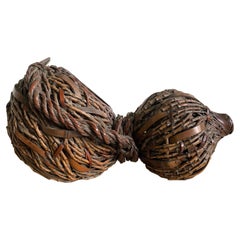
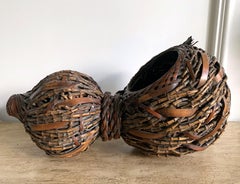
Antique Japanese Gourd Shape Bamboo Ikebana Basket

Antique Japanese Gourd Shape Bamboo Ikebana Basket

Located in Atlanta, GA

A lovely Japanese bamboo ikebana basket in the shape of gourd with an open mouth and a body circa 1920s-1940s. The piece was woven in great details and styles with mostly irregular a...

Category

20th Century Japanese Japonisme Decorative Objects
Materials

Bamboo, Rattan

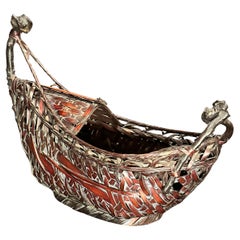
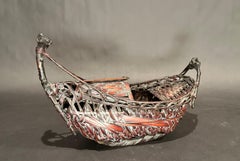
Antique Japanese Ikebana Boat Form Flower Basket

Antique Japanese Ikebana Boat Form Flower Basket

Located in Norwood, NJ

Antique Japanese woven boat shape (funagata) Ikebana flower basket, with lacquer,975 rattan, root and smoked bamboo. Fine quality weaving with wonderful patina.

Category

Early 20th Century Japanese Japonisme Decorative Objects
Materials

Bamboo, Rattan

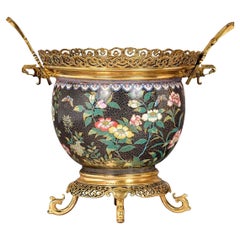
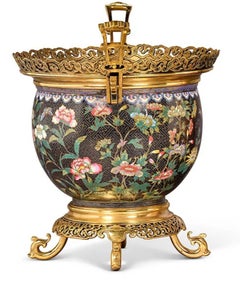
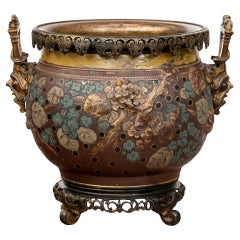
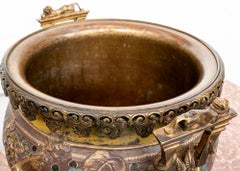
Japonisme  Jardinière by Haviland & Co att. to Alexandre Dammouse

Japonisme Jardinière by Haviland & Co att. to Alexandre Dammouse

By Haviland & Co.

Located in New York, NY

Japonisme stoneware and bronze jardinière attributed to Édouard-Alexandre Dammouse for Haviland & Co, with bronze mounts attributed to the F . Barbedienne foundry. Based on the...

Category

Late 19th Century Antique Japonisme Decorative Objects
Materials

Bronze

Japanese Bamboo Basket Ikebana by Tanabe Chikuunsai II

Japanese Bamboo Basket Ikebana by Tanabe Chikuunsai II

By Tanabe Chikuunsai II 1

Located in Atlanta, GA

A woven bamboo flower Ikebana basket by Tanabe Chikuunsai II (1921-2000) from Showa era (1926-1989), circa 1950-1960s. The ikebana basket takes a vertical square form, the body was e...

Category

20th Century Japanese Japonisme Decorative Objects
Materials

Bamboo, Wood

Atique Japanese Rootwood & Bamboo Ikebana Vase, XIX Century

Atique Japanese Rootwood & Bamboo Ikebana Vase, XIX Century

Located in New York, NY

Atique Rootwood & Bamboo Ikebana Vase Japan, XIX Century DIMENSIONS Height: 19.25vinches Width: 10.13 inches Depth: 9.5 inches ABOUT This absolutely unique ikebana vase consists of...

Category

Late 19th Century Japanese Antique Japonisme Decorative Objects
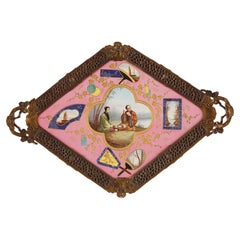
Materials

Bamboo, Wood

"Dragon Turtle" Bowl attr. to Baccarat & F. Barbedienne, France, circa 1890

"Dragon Turtle" Bowl attr. to Baccarat & F. Barbedienne, France, circa 1890

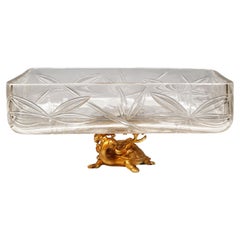
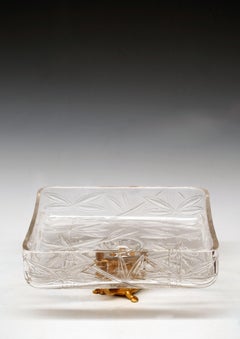
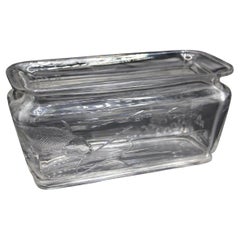
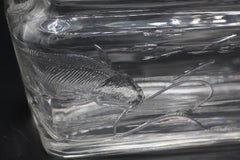
Beautiful square-shaped bowl in engraved crystal decorated with bamboo and birds. It rests on a gilded bronze dragon turtle, a legendary Chinese creature with the body of a dragon an...

Category

1880s French Antique Japonisme Decorative Objects
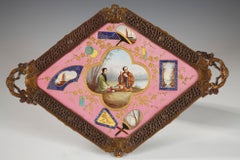
Materials

Crystal, Bronze

Large Japanese Woven Bamboo Morikago Basket by Maeda Chikubosai I

Large Japanese Woven Bamboo Morikago Basket by Maeda Chikubosai I

By Maeda Chikubosai

Located in Atlanta, GA

A large and impressive Japanese basket in the form of a morikago by Maeda Chikubosai I (1872-1950) circa first half of the 20th century. Chikubosai I was from the Kansai Region and active in Sakai, Osaka prefecture. He was instructed by Wada Waichisai I, (1851-1901). Morikago is a shallow open basket with handle. It was traditionally used to display fruits, sometimes flowers, during Sencha tea ceremony. In contrast to Chanoyu, Sencha ceremony uses loose green tea leaves instead of tea powder. The placement of loose fruits in the basket meant that the pattern of the bottom, which is often elaborate, was meant to be visible. This morikago was beautifully constructed with bent bamboo frame and twill plaits for the body. The bottom of the basket features a double diamond pattern achieved with a variation of plover plait. The bifurcated handles was bundle-plated with a rather free spirit approach. They show a poetic suggestion of movement, as if the bamboos were still swaying in the wind. The basket has a copper insert that fits perfectly and it is quite possibly the original. The basket is signed on the base "Chikubosai". The style of the signature shows that it was made by Maeda Chikubosai I. For another Morikago basket by Maeda Chikubosai I, see page 79 of "Masters of Bamboo" by Rinne. For the study of the signature of Chikubosai I "Baskets Master Pieces of Japanese Bamboo Art...

Category

Early 20th Century Japanese Japonisme Decorative Objects
Materials

Copper

Set of Five Ceramic Tea Cups by Otagaki Rengetsu

Set of Five Ceramic Tea Cups by Otagaki Rengetsu

Located in Atlanta, GA

A set of five stoneware sencha tea cups by Otagaki Rengetsu (1791-1875). These miniature cups were simply molded in the classic form, glazed in off white and incised with cursive waka poems, a signature decorative style by the artist. Accompanies the cups is a wood storage box and paper slip label inscribed "Rengetsu sencha, tea cups" Purportedly purchased from Tessai-do Co. Ltd., Japan in 1991. Otagaki Rengetsu was a famous Buddhist nun in Edo period who is widely regarded to have been one of the greatest Japanese poets...

Category

Late 19th Century Japanese Antique Japonisme Decorative Objects
Materials

Ceramic, Wood

Japanese Edo Period Bronze Jardinière w/ Birds & Cherry Blossom Tree, 19th C.

Japanese Edo Period Bronze Jardinière w/ Birds & Cherry Blossom Tree, 19th C.

Located in New York, NY

#350 Japanese Edo Period Bronze Jardinière w/ Birds & Cherry Blossom Tree, 19th C. DIMENSIONS: Height: 9 inches Diameter: 12 inches DETAILS Edo Period (1603-1868) Meiji Period (...

Category

Mid-19th Century Japanese Antique Japonisme Decorative Objects
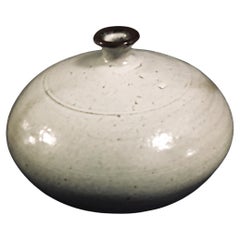
Materials

Bronze

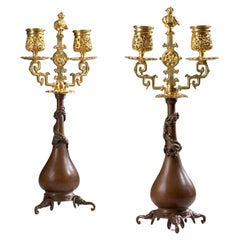
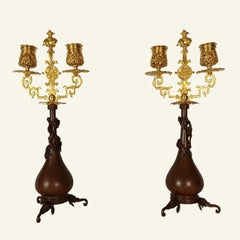
Pair of Japanese-style Candlesticks by Ferdinand Barbedienne and Edouard Lievre.

Pair of Japanese-style Candlesticks by Ferdinand Barbedienne and Edouard Lievre.

By Edouard Lievre, Ferdinand Barbedienne

Located in MOUGINS, FR

Exceptional pair of candlesticks with ovoid body and domed belly in chiseled bronze with brown patina on which a dragon coils, resting on tripod bases with 3 stylized elephant heads ...

Category

Late 19th Century French Antique Japonisme Decorative Objects
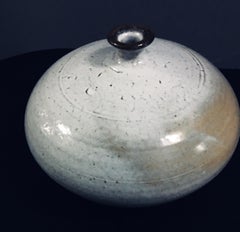
Materials

Bronze

Japanese Wagumi Handled Bamboo Basket Ikebana

Japanese Wagumi Handled Bamboo Basket Ikebana

Located in Atlanta, GA

Bold, rustic and with an earthy free spirit, this wagumi style flower basket with twisted handle (ikebana) was designed and woven to evoke a sense of serenity and humbleness during t...

Category

1920s Japanese Vintage Japonisme Decorative Objects
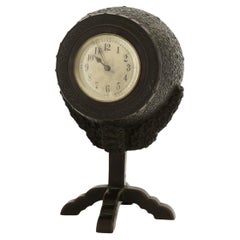
Materials

Bamboo

Japanese Ceramic Ikebana Vase Bizen Ware Nanba Koyo

Japanese Ceramic Ikebana Vase Bizen Ware Nanba Koyo

Located in Atlanta, GA

A tall vintage ceramic vase with handle from Japan (20th century) by Nanba Koyo. Made in the tradition of Bizen ware, the vase has a modern aesthetic with a...

Category

20th Century Japanese Japonisme Decorative Objects
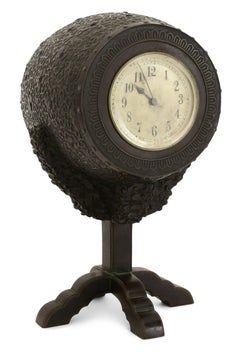
Materials

Ceramic

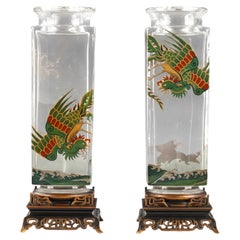
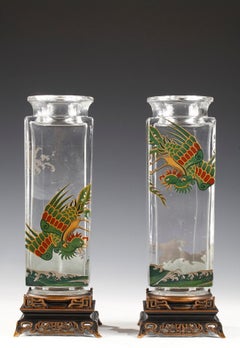
Pair of Birds of Paradise Vases Attributed to Baccarat, France, Circa 1880

Pair of Birds of Paradise Vases Attributed to Baccarat, France, Circa 1880

By Baccarat

Located in PARIS, FR

Elegant pair of square section vases attributed to Baccarat, in enameled crystal with polychrome decoration of birds of paradise, resting on an openwork patinated and gilded bronze b...

Category

1880s French Antique Japonisme Decorative Objects
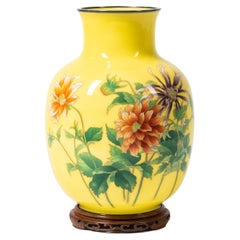
Materials

Crystal, Bronze, Enamel

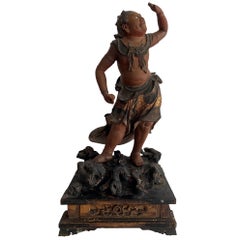
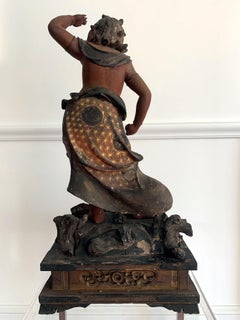
Japanese Lacquered and Gilt Wood Buddhism Statue from Edo Period

Japanese Lacquered and Gilt Wood Buddhism Statue from Edo Period

Located in Atlanta, GA

An exceptional and wood statue of Buddhism Guardian Seitaka Doji from Japan circa Edo period (1603-1868), likely the earlier part of 17th century. One of two chief attendants of Fudou Myouou (the other being Kongara Doji), the name of Seitaka Doji is a transliteration of Sanskrit "Cetaka", meaning servant, slave, and he is said to personify expedient action. He is most commonly found on the right side of Fudou, together with Kongara Doji on the left, forming the Immovable triad, Fudou Sanzon, the terror of evil doers. Seitaka largely adheres to the iconography of a wrathful youth with fleshy body and face, skin in the color of a red lotus, has his hair tied in five knots, and holds a vajra in his left hand and a vajra-club in his right hand, but the actual artistic representations of him in Japan do...

Category

17th Century Japanese Antique Japonisme Decorative Objects
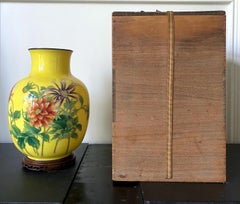
Materials

Metal

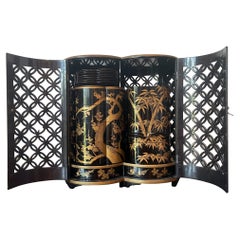
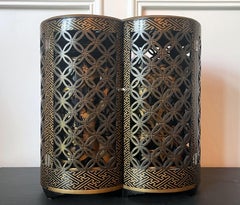
Japanese Rinpa Style Lacquer Box Meiji Period

Japanese Rinpa Style Lacquer Box Meiji Period

Located in Atlanta, GA

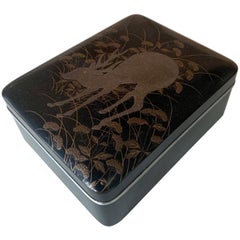
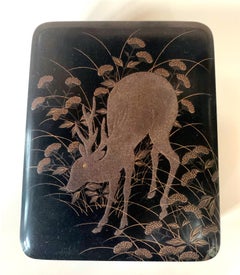
A black lacquer tebako (hand box) with maki-e decoration and silver trim, circa late 19th century, Meiji period. The surface of the lid features a Rinpa style maki-e paint depicting ...

Category

1890s Japanese Antique Japonisme Decorative Objects
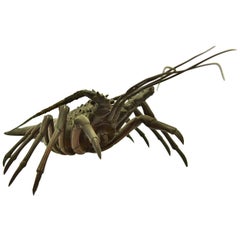
Materials

Wood, Lacquer

Pair of Large Japanese Carved Wood Temple Candleholders Edo Period

Pair of Large Japanese Carved Wood Temple Candleholders Edo Period

Located in Atlanta, GA

A tall pair of Japanese carved wood candle holders circa early 19th century (late Edo Period). The pair is carved in the typical form with a block base in the shape of stylized chrysanthemums and long fluted stem with changes in diameter that supports a grooved holder fitted with metal pricket. These types of oversized candle holders were traditionally used in Buddhist temples or Samurai's resident where they were placed on the altar table for worshiping. What is extraordinary of these candle stickers is that they feature a wonderfully conserved surface with lacquered gold leaf. The sparkling gold on the well weathered surface is visually striking. The professional conservation was performed in 2007 and as a result, the pieces display a wonderful aged Wabi-Sabi patina. The piece retains an original invoice from Far Eastern Antiques...

Category

Early 19th Century Japanese Antique Japonisme Decorative Objects
Materials

Gold Leaf

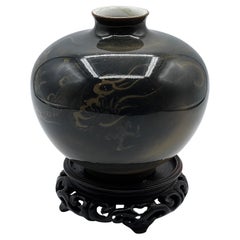
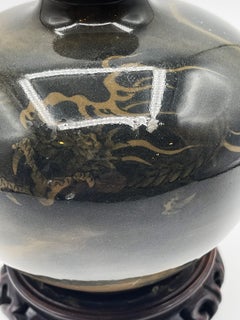
Rare Large Vase with White Slip Inlay Makuzu Kozan Meiji Period

Rare Large Vase with White Slip Inlay Makuzu Kozan Meiji Period

By Makuzu Kozan

Located in Atlanta, GA

A impressively large and unusual stoneware vase in an urn shape from the studio of Japanese Potter Makuzu Kozan, also known as Miyagawa Kozan (1842–1916), one of the most established and collected ceramist from Meiji Period. Born as Miyagawa Toranosuke, Kozan established his pottery studio in Yokohama circa 1870s and later became one of the appointed artist to the Japanese Imperial household. His work was exhibited in many international fairs that the Meiji government participated at the turn of the century and won many grand prizes. This vase is dated to the end of Makuzu's life circa 1910-1916 based on similar work created around that time. After achieving domestic and international fame, Makuzu retired and handed the business to his son Hanzan in 1912. He dedicated his time to other selected projects that were more in tune with Japanese sensibility than export aesthetic. He made a group of stoneware pottery pieces inspired by Edo master like Ninsei and Kenzan as well as his own poetic creation. This piece is attributed to that period. Standing of an impressive size, this vase is more like an urn, made with stoneware instead of porcelain. It was coated with a brown iron glaze with a slight translucent quality. Underglaze whit slips were used to draw low relief decoration of bamboo leaves that sparsely scatter on the surface. Slightly more elaborate scrolling vines and autumn flowers circles under the mouth rim. Same white slip inlay was used to sign the vase under the base. The whole effect of the piece is unusual. With its dark glaze in contrast with the sparse white decoration that is more abstract and geometric than realistic, it appears almost modern with an Art Deco flavor. For stoneware urn and vase in the similar genre by Makuzu Kozan: see figure 113 on page 182 of "Sekai ni Aisa Reta ya Kimono" MIYAGAWA KOZAN MAKUZU...

Category

1910s Japanese Vintage Japonisme Decorative Objects
Materials

Ceramic

Japanese Large Hand-Carved Boxwood Okimono – “Mino-Kame” Turtle, Ca. 1900

Japanese Large Hand-Carved Boxwood Okimono – “Mino-Kame” Turtle, Ca. 1900

Located in New York, NY

Japanese Large Hand-Carved Boxwood Okimono – “Mino-Kame” Turtle, Ca. 1900 DIMENSIONS: Height: 4 inches Length: 19 inches Wide : 5 inches ABOUT An exceptional example of Meiji-era c...

Category

Early 1900s Japanese Antique Japonisme Decorative Objects
Materials

Wood

20th Century Pair of Small Porcelain Satsuma Vases

20th Century Pair of Small Porcelain Satsuma Vases

By Satsuma

Located in Paris, FR

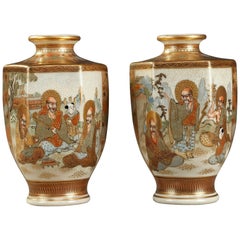
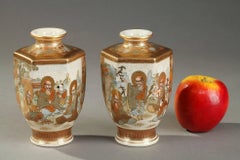
Two porcelain hexagonal Satsuma vases painted in polychrome enamels and gold. The paunch is decorated with intricate Japanese characters in a landscape, the neck and the shoulder wit...

Category

Early 19th Century Japanese Antique Japonisme Decorative Objects
Materials

Porcelain

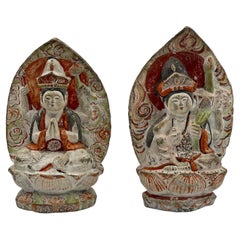
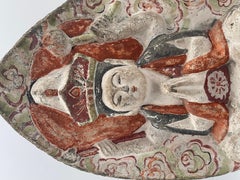
A Pair of Japanese Edo Period Stone Female Buddha Sattva Sculptures, c. 1750

A Pair of Japanese Edo Period Stone Female Buddha Sattva Sculptures, c. 1750

Located in New York, NY

A Pair of Japanese Mid Edo Period Carved Stone Sculptures of Female Buddha Sattva, ca. 1750 PERIOD Mid Edo Period (1603-1868) DIMENSIONS Height: 10.5 ...

Category

1750s Japanese Antique Japonisme Decorative Objects
Materials

Stone

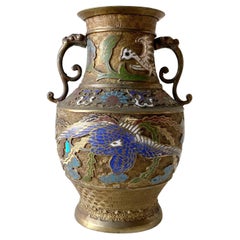
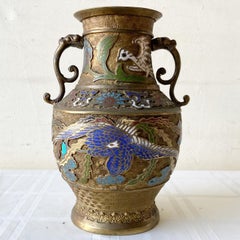
Early 20th Century Japanese Champleve Brass Vase

Early 20th Century Japanese Champleve Brass Vase

Located in Delray Beach, FL

Exceptional early 20th century Japanese brass champleve. Features vibrant enameled decorative designs throughout the vase.

Category

Early 20th Century Japanese Japonisme Decorative Objects
Materials

Brass, Enamel

Gilded bronze and alabaster letter carrier in the Japanese style, 19th century

Gilded bronze and alabaster letter carrier in the Japanese style, 19th century

Located in NICE, FR

Gilded bronze and alabaster letter carrier in the Japanese style. The bronze tree branch decorations are very delicate. The alabaster plates on the two main sides give a very luminou...

Category

Late 19th Century French Antique Japonisme Decorative Objects
Materials

Alabaster, Bronze

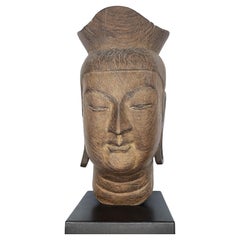
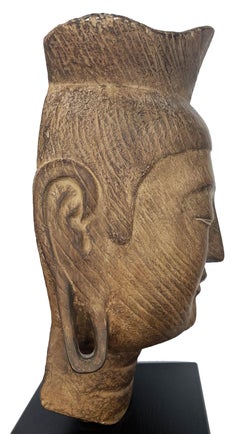
Japanese Late Meiji Period Head of Buddha in Wood, Ca. 1910

Japanese Late Meiji Period Head of Buddha in Wood, Ca. 1910

Located in New York, NY

Japanese Late Meiji Period Head of Buddha in Wood, Ca. 1910 DIMENSIONS: Height: 22 inches Width: 7 inches Depth: 7 inches ABOUT A serene and finely carved wooden Head of Buddha fro...

Category

1910s Japanese Vintage Japonisme Decorative Objects
Materials

Wood

Japanese Woven Bamboo Brazier by Maeda Chikubosai I

Japanese Woven Bamboo Brazier by Maeda Chikubosai I

By Maeda Chikubosai

Located in Atlanta, GA

An important piece of bamboo basketry art by Maeda Chikubosai I (1872-1950), circa 1920s-1930s. The body of the bamboo brazier was made with smoked bamboo (susudake) and rattan and with a built-in copper liner brazier. Mat plaiting, diagonal plaiting and twining were used to construct the robust body while hexagonal plaiting was used for the base. It is signed on the base Chikubosai Kore o tsukuru (Chikubosai made this). The copper brazier...

Category

1920s Japanese Vintage Japonisme Decorative Objects
Materials

Copper

Large Japanese Bamboo Ikebana Basket Maeda Chikubosai I

Large Japanese Bamboo Ikebana Basket Maeda Chikubosai I

By Maeda Chikubosai

Located in Atlanta, GA

An important woven bamboo ikebana basket circa first half of the 20th century (Taisho or Showa era) by Japanese bamboo master Maeda Chikubosai I (1872-1950). Chikubosai I was from th...

Category

Early 20th Century Japanese Japonisme Decorative Objects
Materials

Bamboo

Pair of Large Antique Japanese Hokai Lacquer Boxes

Pair of Large Antique Japanese Hokai Lacquer Boxes

Located in Atlanta, GA

A pair of Japanese lacquer lidded Hokai boxes with chased brass hardware and original ropes. Hokai boxes are traditionally used in Japan to store and carry s...

Category

Early 20th Century Japanese Japonisme Decorative Objects
Materials

Wood, Lacquer

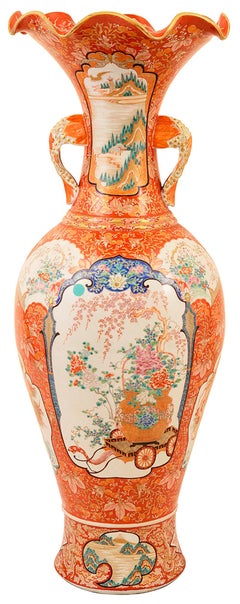
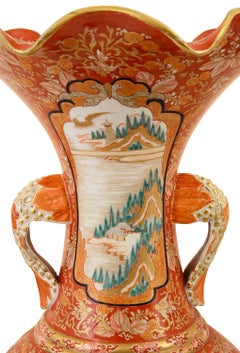
Large 19th Century Japanese Kutani Vase

Large 19th Century Japanese Kutani Vase

Located in Brighton, Sussex

A wonderfully decorative Japanese Kutani vase, Meiji period 1868-1912. Having the classical orange ground with scrolling foliate decoration, inset...

Category

Late 19th Century Japanese Antique Japonisme Decorative Objects
Materials

Porcelain

Japonisme decorative objects for sale on 1stDibs.
Find a broad range of unique Japonisme decorative objects for sale on 1stDibs. Many of these items were first offered in the 21st Century and Contemporary, but contemporary artisans have continued to produce works inspired by this style. If you’re looking to add vintage decorative objects created in this style to your space, the works available on 1stDibs include decorative objects, asian art and furniture, serveware, ceramics, silver and glass and other home furnishings, frequently crafted with ceramic, metal and other materials. If you’re shopping for used Japonisme decorative objects made in a specific country, there are Asia, East Asia, and Japan pieces for sale on 1stDibs. While there are many designers and brands associated with original decorative objects, popular names associated with this style include Makuzu Kozan, Norihiko Terayama, Tiffany & Co., and Royal Crown Derby Porcelain. It’s true that these talented designers have at times inspired knockoffs, but our experienced specialists have partnered with only top vetted sellers to offer authentic pieces that come with a buyer protection guarantee. Prices for decorative objects differ depending upon multiple factors, including designer, materials, construction methods, condition and provenance. On 1stDibs, the price for these items starts at $29 and tops out at $185,360 while the average work can sell for $3,500.