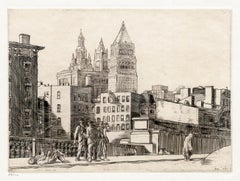
1930s Figurative Prints
to
651
979
174
49
19
25
Overall Width
to
Overall Height
to
649
40
39
37
35
22
8
8
2
83
34
29
28
25
3,541
7,600
26,167
6,820
294
653
1,400
1,258
1,341
2,300
3,839
5,367
2,815
1,276
3,037
922
316
6
950
504
501
373
320
257
193
111
79
69
65
63
59
37
35
32
32
28
27
24
485
420
217
88
81
74
474
623
444
Period: 1930s
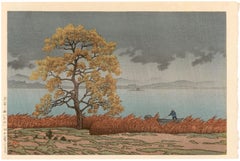
'Lakeside Shower, Matsue' — Showa-era Woodblock Print
By Kawase Hasui
Located in Myrtle Beach, SC
Kawase Hasui, 'Chihan no Ame, Matsue' (Lakeside Shower, Matsue), color woodblock print, 1932. A fine, atmospheric impression, with fresh colors; the full sheet, from a postwar editio...
Category
Showa 1930s Figurative Prints
Materials
Woodcut
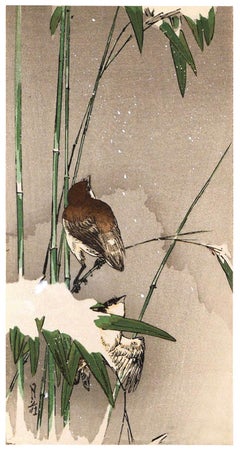
'Sparrows and Bamboo in Snow' — Showa-era 'kacho-e' Woodblock Print
Located in Myrtle Beach, SC
Gesso Yoshimoto, 'Sparrows and Bamboo in Snow', woodblock print, 1930s. Signed 'Gesso', lower left. A superb, impression with fresh colors and pronounced woodgrain, fine bokashi gr...
Category
Showa 1930s Figurative Prints
Materials
Woodcut
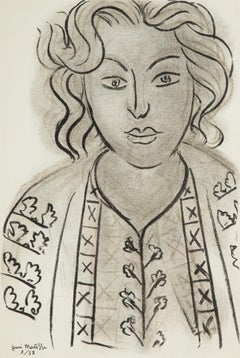
Tête, Verve: Revue Artistique et Littéraire
Located in Auburn Hills, MI
Lithograph on vélin des Papeteries du Marais paper. Paper Size: 14 x 10.25 inches. Inscription: Signed in the plate and unnumbered, as issued. Notes: From the album, Verve: Revue Art...
Category
Fauvist 1930s Figurative Prints
Materials
Lithograph

$716 Sale Price
20% Off
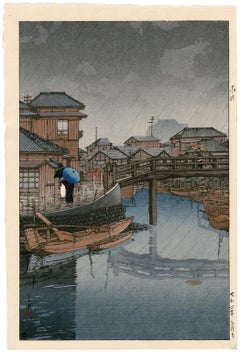
'Rain at Shinagawa, Ryoshimachi' — Showa-era Woodblock Print
By Kawase Hasui
Located in Myrtle Beach, SC
Kawase Hasui, 'Rain at Shinagawa, Ryoshimachi' from the series 'Selection of Views of the Tokaido', woodblock print, 1931. A very fine, atmospheric impression, with fresh colors; the...
Category
Showa 1930s Figurative Prints
Materials
Woodcut
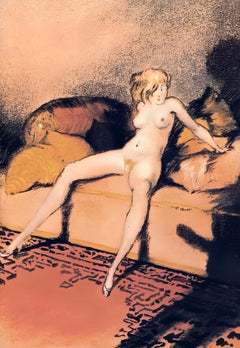
Icart, Composition, Le Sopha (after)
By Louis Icart
Located in Auburn Hills, MI
La pointe sèche etching on vélin de Rives filigrané à notre nom paper. Paper size: 9.5 x 7.5 inches; image size: 6.5 x 4.5 inches. Inscription: unsigned and unnumbered, as issued. No...
Category
Modern 1930s Figurative Prints
Materials
Drypoint, Etching
$876 Sale Price
20% Off
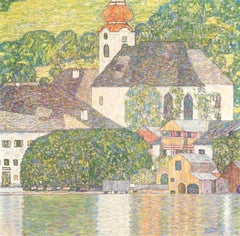
Klimt, Kirche am Wolfgangsee, Gustav Klimt, Eine Nachlese (after)
By Gustav Klimt
Located in Auburn Hills, MI
Héliogravure, collotype, metallic inks on vélin paper. Paper Size: 18.86 x 17.91 inches; image size: 12.01 x 12.09 inches. Inscription: Signed in the plate and unnumbered, as issued....
Category
Symbolist 1930s Figurative Prints
Materials
Lithograph
$19,996 Sale Price
20% Off
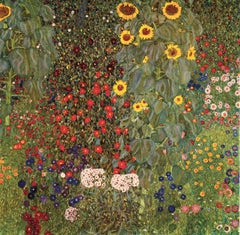
Klimt, Sonnenblumen, Gustav Klimt, Eine Nachlese (after)
By Gustav Klimt
Located in Auburn Hills, MI
Héliogravure, collotype, metallic inks on vélin paper. Paper Size: 18.86 x 17.91 inches; image size: 12.09 x 12.2 inches. Inscription: Signed in the plate and unnumbered, as issued. ...
Category
Symbolist 1930s Figurative Prints
Materials
Lithograph
$19,996 Sale Price
20% Off
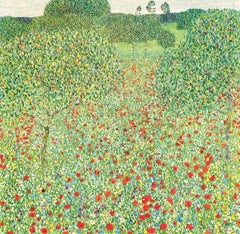
Klimt, Mohnwiese, Gustav Klimt, Eine Nachlese (after)
By Gustav Klimt
Located in Auburn Hills, MI
Héliogravure, collotype, metallic inks on vélin paper. Paper Size: 18.86 x 17.91 inches; image size: 11.93 x 12.09 inches. Inscription: Signed in the plate and unnumbered, as issued....
Category
Symbolist 1930s Figurative Prints
Materials
Lithograph
$19,996 Sale Price
20% Off
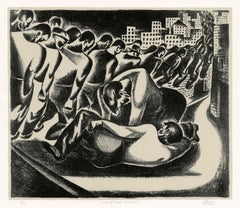
'Unemployed Marchers' — American Modernism, WPA
By Leon Bibel
Located in Myrtle Beach, SC
Leon Bibel, 'Unemployed Marchers', 2-color lithograph, c. 1938, edition 25. Signed, titled, and numbered '2/25' in pencil. A fine, richly-inked impression on off-white, wove paper, w...
Category
American Modern 1930s Figurative Prints
Materials
Lithograph
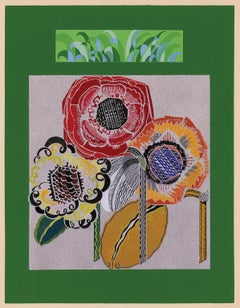
'Poppy' — Art Deco Pochoir from the acclaimed portfolio 'RELAIS'
Located in Myrtle Beach, SC
Edouard Benedictus, 'Poppy' from the portfolio 'Relais', plate 14, color pochoir, 1930. Signed in the matrix, in the center bottom margin. A superb, richly-inked impression, with fresh, vibrant colors, including metallic gold and silver inks, on heavy, cream wove paper; the full sheet with margins (1 3/8 inches), in excellent condition. Published by Éditions Vincent, Fréal et Cie, Paris. The pochoir production is by Jean Saudé, the French printmaker known for his mastery of the technique and the author of the first how-to book on the pochoir process. Matted to museum standards, unframed.
Image size 14 3/8 x 11 inches (365 x 279 mm); sheet size 17 1/4 x 13 7/8 inches (438 x 352 mm).
Impressions of this work are held in the following museum collections: Cooper-Hewitt National Design Museum Library (Smithsonian), Metropolitan Museum of Art, Minneapolis Institute of Art, New York Public Library, Toledo Museum of Art, Victoria and Albert Museum (London), Virginia Museum of Fine Arts.
ABOUT THIS WORK
The Pochoir process is a refined stencil-based technique employed to create multiples or to add color to prints produced in other mediums. Characterized by its crisp lines and rich color, the print-making process was most popular from the late 19th century through the 1930s, with its center of activity in Paris. The pochoir process began with the analysis of an image’s composition, including color tones and densities. The numerous stencils (made of aluminum, copper, or zinc) necessary to create a complete image were then designed and hand-cut by the 'découpeur.' The 'coloristes' applied watercolor or gouache pigments through the stencils, skillfully employing a variety of different brushes and methods of paint application to achieve the desired depth of color and textural and tonal nuance. The pochoir process, by virtue of its handcrafted methodology, resulted in the finished work producing the effect of an original painting, and in fact, each print was unique.
ABOUT THE ARTIST
Edouard Benedictus (1878 -1930), artist, designer, composer, and chemist, was born and died in Paris. A highly-regarded designer and art critic of the Art Nouveau era, Benedictus gained renown as a colorist and creator of Art Deco-inspired geometric and floral motifs. His work had a significant influence on international fashions in clothing, home furnishings, graphic design, and decorative objects of the period, earning him commissions from leading European design firms. In 1925 he was invited to represent Art Deco textile design...
Category
Art Nouveau 1930s Figurative Prints
Materials
Stencil
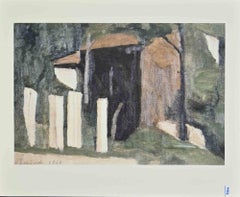
Still Life - Offset Print after Giorgio Morandi - 1932
Located in Roma, IT
Still Life is a Photolithograph print, reproducing the original watercolor by Giorgio Morandi created in 1932.
The signature by the artist is perfectly reproduced on the plate and d...
Category
Modern 1930s Figurative Prints
Materials
Offset
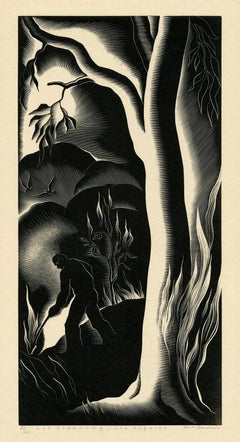
'Lot Cleaning, Los Angeles' — 1930s Modernism
Located in Myrtle Beach, SC
'Lot Cleaning, Los Angeles', wood engraving, edition 60, Zeitlin & Ver Brugge 69. Signed, titled and numbered '51/60' in pencil. A brilliant, black impression, on Kitakata Japan pape...
Category
American Modern 1930s Figurative Prints
Materials
Woodcut
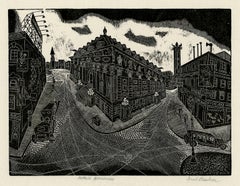
'Public Building' — American Modernism, WPA
Located in Myrtle Beach, SC
Fred Becker, 'Public Building', wood engraving, c. 1937, edition c. 25. Signed and titled in pencil. A superb, richly-inked impression, on cream wove Japan...
Category
Modern 1930s Figurative Prints
Materials
Woodcut
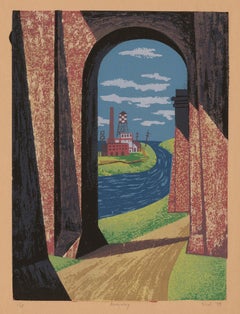
'Archway' — American Modernism, WPA
By Leon Bibel
Located in Myrtle Beach, SC
Leon Bibel, 'Archway', color serigraph, 1939, edition 25. Signed, dated, titled, and numbered ' /25' in pencil. A rich, painterly impression, with fresh colors, on buff wove paper; ...
Category
American Modern 1930s Figurative Prints
Materials
Screen
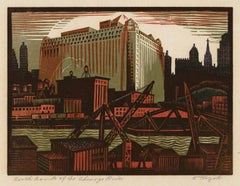
'North Bank of the Chicago River' — WPA Graphic Modernism
Located in Myrtle Beach, SC
Charles Turzak, 'North Bank of the Chicago River', color woodcut, c. 1935, edition 50. Signed and titled in pencil. A fine, richly-inked impression, with...
Category
American Modern 1930s Figurative Prints
Materials
Woodcut
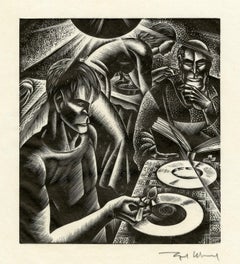
'Wild Pilgrimage' (Contemplation) — 'Story Without Words' Graphic Modernism
By Lynd Ward
Located in Myrtle Beach, SC
Lynd Ward, 'Wild Pilgrimage', No. 26, wood engraving, 1932, edition not stated but very small. Signed in pencil. A fine, black impression, with full margins (1 1/16 to 3 3/16 inches), on tissue-thin cream Japan paper, in very good condition. A scarce, artist-printed, hand-signed proof impression before the published edition. Matted to museum standards, unframed.
Created by Lynd Ward for his narrative book of illustrations without words, 'Wild Pilgrimage', published by Harrison Smith...
Category
American Modern 1930s Figurative Prints
Materials
Woodcut
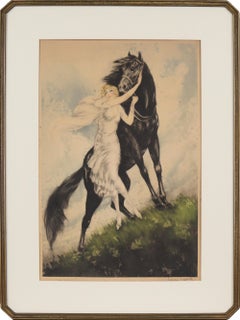
Art Deco Etching and Aquatint "Jeunesse" Original Signed by Louis Icart
By Louis Icart
Located in Soquel, CA
Art Deco Etching and Aquatint "Jeunesse" (Youth) Signed by Louis Icart
Iconic figurative of woman and horse titled "Jeunesse" (Youth) by famous Art Deco artist Louis Icart (French, ...
Category
Art Deco 1930s Figurative Prints
Materials
Paper, Pencil, Aquatint
$2,520 Sale Price
20% Off
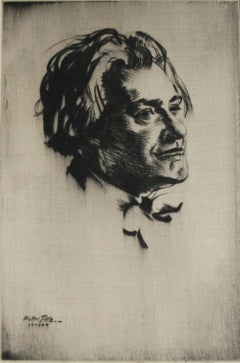
Portrait of James McBey.
Located in Storrs, CT
James McBey. 1931. Drypoint. 8 7/8 x 5 7/8 (sheet 11 1/2 x 9 ). An extremely rich impression with drypoint burr, printed by the artist on cream wove paper. Signed in the plate lower ...
Category
American Modern 1930s Figurative Prints
Materials
Drypoint, Etching
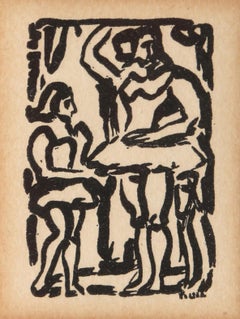
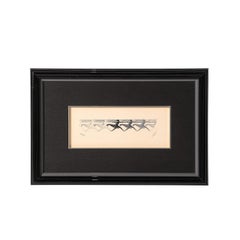
Dancers, 1936 Woodcut by Georges Rouault
Located in Long Island City, NY
Dancers
Georges Rouault, French (1871–1958)
Date: 1936
Woodcut, initialed in the stone
Size: 3 x 2 in. (7.62 x 5.08 cm)
Frame Size: 9.5 x 8.25 inches
Category
Expressionist 1930s Figurative Prints
Materials
Woodcut
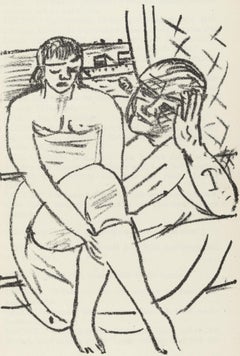
Beckmann, Composition (Hofmaier 323-329), Der Mensch ist kein Haustier (after)
By Max Beckmann
Located in Auburn Hills, MI
Lithograph on Van Gelder Zonen Bütten paper. Inscription: Unsigned and unnumbered, as issued. Good condition. Notes: From the volume, Der Mensch ist kein Haustier, 1937. Published by...
Category
Modern 1930s Figurative Prints
Materials
Lithograph
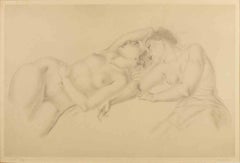
Les Amies - Etching by Leonard Tsuguharu Foujita - 1930
Located in Roma, IT
Etching and drypoint on japanese paper applied on cardboard.
One of 10 artist's proofs, numbered I/X, aside of the edition of 100.
Hand signed and numbered.
Very Good condition.
Category
Modern 1930s Figurative Prints
Materials
Etching
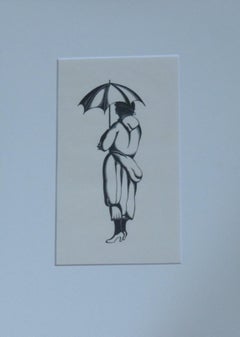
Mrs. Hezekiah Brown
Located in Bournemouth, Dorset
Mrs. Hezekiah Brown
Image: 19.0 x 11.2 cm
Mount: 31.8 x 23.0 cm
Wood engraving
1932
One of Fourteen Wood Engravings, from drawings made on Orient Line Cruises by Robert Gibbings...
Category
Modern 1930s Figurative Prints
Materials
Wood, Engraving
$89 Sale Price
20% Off
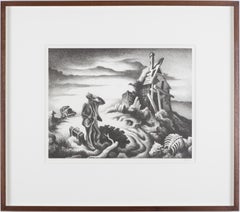
Prodigal Son
Located in London, GB
A man raises his hand to his chin, his neck tilted and face turned to look at a dilapidated farmhouse, barely held together by planks of wood and exposed to the elements. Behind him ...
Category
American Modern 1930s Figurative Prints
Materials
Lithograph
Simka Simkhovitch WPA Artist Lithograph Island Beach 1933 American Modernist
Located in Surfside, FL
Simka Simkhovitch (Russian/American 1893 - 1949) signed lithograph. Pencil signed and dated "S. Simkhovitch 1933" lower center. Title "Island Beach,"...
Category
American Modern 1930s Figurative Prints
Materials
Lithograph
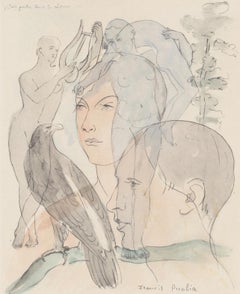
Composition, Le Peseur d'âmes (The Weigher of Souls), Francis Picabia
Located in Auburn Hills, MI
Lithograph and stencil on vélin d'Arches paper. Unsigned and unnumbered, as issued. Good Condition. Notes: From the volume, Le Peseur d'âmes, précédé d'un frontispice et suivi de hui...
Category
Modern 1930s Figurative Prints
Materials
Lithograph, Stencil
$1,436 Sale Price
20% Off
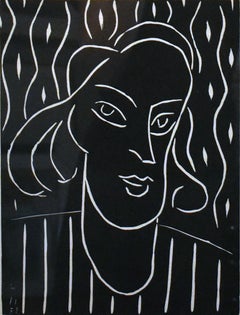
Henri Matisse Teeny
Located in Washington, DC
Artist: Henri Matisse
Title: Teeny
Portfolio: Other Portfolios
Medium: Linocut
Date: 1938
Edition: Unnumbered
Frame Size: 19" x 16 1/4"
Sheet Size: 12 1/4” x 9 1/2”
Image Size: 11 7/...
Category
Fauvist 1930s Figurative Prints
Materials
Linocut
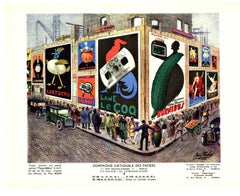
Original Affiches Paul Mohr Compagnie Nationale des Papers 1932 vintage poster
Located in Spokane, WA
Original small format poster Affiches Paul Mohr, 1932. Archival linen backed in excellent condition, ready to frame. The rare Paul Mohr posters are incredibly elusive; many have had only one remaining known copy survive. Printing method: Helio-Typo or Typelo.
Before television, beautiful lithographs adorn the streets and walls of Paris and other European cities. Art for the street, art for the public. Weather and rain would destroy these works of art by renowned artists, only to be replaced.
The artist: Paul Gustave Mohr, a French Avant-garde poster designer from the Art Deco period was born Sept. 4, 1890 in Ham, France and died on April 13, 1959 in Paris. He lived most of his life in Paris, and then settled in the small town of Asnieres, France, just outside of Paris. He attended the Sorbonne University, as well as several art schools. During World War I, he was a pilot in the French Army from 1914-1917. Paul Mohr married Jeanne Levy in 1917 and they had three daughters: Helene, Genevieve, and Jacqueline.
As an artist, he designed advertising posters from 1920 to 1940. His
posters advertised Wonder cycles, Dainty cycles, Lustucru pasta, Banania sugar, Bremsit brakes, Champigneulles beer, L'Union beer, Dubonnet wine, as well as shoes and ham.
This information was provided to me by my mother, Helene Mohr Breitenbucher, who was his eldest daughter. Carol Schuler (granddaughter)
Advertising posters, the affiches of Paul Mohr. This is an original advertising poster for the affiches (posters) created by the master artist Paul Mohr (1890-1959). Archival linen backed in very good condition. No stains, no tears, no paper loss. Grade A condition. Ready to frame. Compagnie Nationale des Papier, Paris.
The crowd on the street looks up in amazement at the art deco-style images that the artist created. Images on the wall feature incredible image that this artist created such as Lustucru, Amer...
Category
Art Deco 1930s Figurative Prints
Materials
Offset
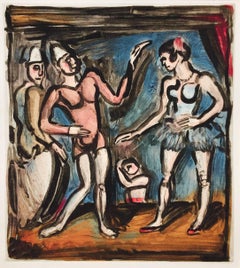
LA PARADE
Located in Santa Monica, CA
GEORGES ROUAULT (1871 – 1958)
La PARADE 1932 (CR.203, W.211) color etching and aquatint 1932. Edition 270. Frontispiece from “Cirque”. Signed in plate as i...
Category
Modern 1930s Figurative Prints
Materials
Etching
$1,100 Sale Price
43% Off
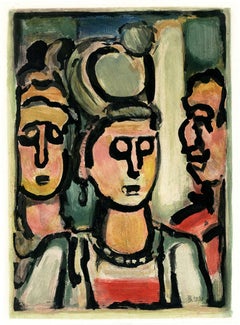
Trio
Located in Fairlawn, OH
Trio
Color aquatint, 1938
Edition 250 printed on Montval wove paper with Maillol watermark
From: Les Fleurs de Mal III (12 color aquatints)
Published by Ambrose Vollard, 1940, Paris
...
Category
French School 1930s Figurative Prints
Materials
Aquatint
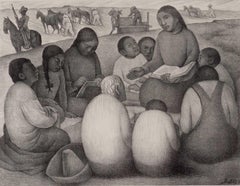
Open Air School (iconic image of indigenous teacher by Mexican muralist)
By Diego Rivera
Located in New Orleans, LA
An indigenous teacher, surrounded by her multi-generational students, sits at the edge of a field, open book in hand. In the distance, we see campesinos working the fields with their horses. A lone, armed horseman watches over the class, locating the lithograph in its historical setting, the aftermath of the Mexican Revolution...
Category
Modern 1930s Figurative Prints
Materials
Lithograph
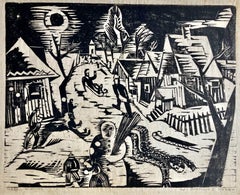
Werner Drewes, Winter, 1933, modernist woodcut
Located in New York, NY
A modernist fantasy winter scene created by Werner Drewes, this print brings key aspects of the period together. His cubist-inspired woodcut technique is utilized here to bring the s...
Category
American Modern 1930s Figurative Prints
Materials
Woodcut
Violets - Etching by Luigi Bartolini - 1936
Located in Roma, IT
Violets is a modern artwork realzied by Luigi Bartolini in 1936
Black and white etching.
Hand signed, titled and numbered on the lower margin.
Includes frame
Edition of 13/50
Go...
Category
Modern 1930s Figurative Prints
Materials
Etching
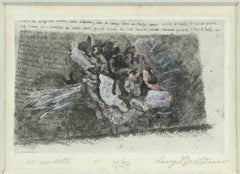
$496 Sale Price
25% Off
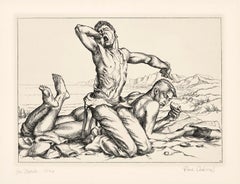
'Two Boys On A Beach, No. 1' — Erotic Realism
By Paul Cadmus
Located in Myrtle Beach, SC
Paul Cadmus, 'Two Boys On A Beach, No. 1', etching, 1938, edition 75, Johnson & Miller 85. Signed in pencil and initialed in the plate in the lower right image corner. Annotated by t...
Category
American Realist 1930s Figurative Prints
Materials
Etching
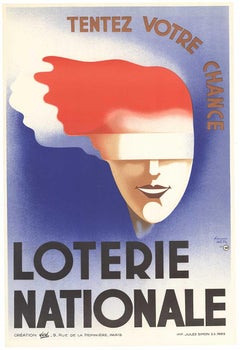
Original vintage poster Tentez Votre Chance Loterie Nationale art deco litho
Located in Spokane, WA
Tentez Votre Chance Loterie Nationale original antique French art deco poster; image created by artist Francois del Ry. "Try Your Luck National Lottery." This is a small format size...
Category
Art Deco 1930s Figurative Prints
Materials
Lithograph
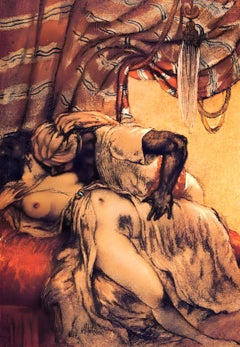
Icart, Composition, Le Sopha (after)
By Louis Icart
Located in Auburn Hills, MI
La pointe sèche etching on vélin de Rives filigrané à notre nom paper. Paper size: 9.5 x 7.5 inches; image size: 6.5 x 4.5 inches. Inscription: unsigned and unnumbered, as issued. No...
Category
Modern 1930s Figurative Prints
Materials
Drypoint, Etching
$876 Sale Price
20% Off
Art Deco Serigraph entitled Dancers by Erté
By Erté
Located in New York, NY
This striking serigraph by Erté (Romain de Tirtoff) exemplifies the elegance and fluidity of the Art Deco style. Known for his iconic depictions of movement and couture, Erté capture...
Category
Art Deco 1930s Figurative Prints
Materials
Black and White
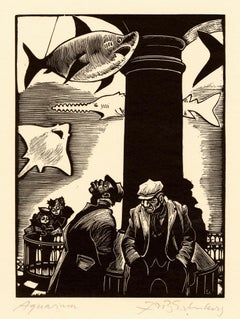
'The Aquarium' — WPA Era Graphic Modernism
Located in Myrtle Beach, SC
Fritz Eichenberg, 'The Aquarium', wood engraving, 1933, edition 200. Signed and titled in pencil. Initialed in the block, lower right. A superb, richly-inked impression, on pale yel...
Category
American Modern 1930s Figurative Prints
Materials
Woodcut
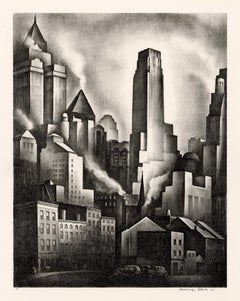
'Financial District', New York City — American Modernism
Located in Myrtle Beach, SC
Howard Cook, 'Financial District', lithograph, 1931, edition 75, Duffy 155. A fine, richly-inked impression, on cream wove paper, the full sheet with wide margins (2 3/4 to 5 5/8 inches), in excellent condition. Image size 13 5/16 x 10 3/8 inches (338 x 264 mm); sheet size 23 x 16 inches (584 x 406 mm). Matted to museum standards, unframed.
Literature: 'American Master Prints from the Betty and Douglas Duffy Collection', the Trust for Museum Exhibitions, Washington, D.C., 1987.
Collections: Crystal Bridges Museum of American Art, Library of Congress, Metropolitan Museum of Art, Philadelphia Museum of Art, Smithsonian American Art Museum.
ABOUT THE ARTIST
Howard Norton Cook (1901-1980) was one of the best-known of the second generation of artists who moved to Taos. A native of Massachusetts, he studied at the Art Students League in New York City and at the Woodstock Art Colony. Beginning his association with Taos in 1926, he became a resident of the community in the 1930s. During his career, he received two Guggenheim Fellowships and was elected an Academician in the National Academy of Design. He earned a national reputation as a painter, muralist, and printmaker.
Cook’s work in the print mediums received acclaim early in his career with one-person exhibitions at the Denver Art Museum (1927) and the Museum of New Mexico (1928). He received numerous honors and awards over the years, including selection in best-of-the-year exhibitions sponsored by the American Institute of Graphics Arts, the Brooklyn Museum, the Society of American Etchers, and the Philadelphia Print Club. His first Guggenheim Fellowship took him to Taxco, Mexico in 1932 and 1933; his second in the following year enabled him to travel through the American South and Southwest.
Cook painted murals for the Public Works of Art Project in 1933 and the Treasury Departments Art Program in 1935. The latter project, completed in Pittsburgh, received a Gold Medal from the Architectural League of New York. One of his most acclaimed commissions was a mural in the San Antonio Post Office in 1937.
He and Barbara Latham settled in Talpa, south of Taos, in 1938 and remained there for over three decades. Cook volunteered in World War II as an Artist War Correspondent for the US Navy, where he was deployed in the Pacific. In 1943 he was appointed Leader of a War Art Unit...
Category
American Modern 1930s Figurative Prints
Materials
Lithograph
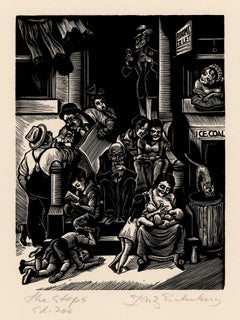
'The Steps' — WPA Era Graphic Modernism
Located in Myrtle Beach, SC
Fritz Eichenberg, 'The Steps', wood engraving, 1933, edition 200. Signed, titled, and annotated 'Ed. 200' in pencil. Initialed in the block, lower right. A superb, richly-inked impr...
Category
American Modern 1930s Figurative Prints
Materials
Woodcut
PROLETARIANS
Located in Santa Monica, CA
JOSE CLEMENTE OROZCO (1893 - 1949)
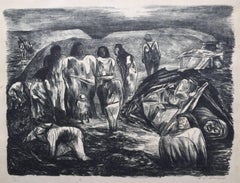
PROLETARIANS (aka Basurero, Scavengers ) 1935 (Orozco 27)
lithograph, One of 88 signed and numbered of a total edition of 133, (+ 42 unnumbered a...
Category
Other Art Style 1930s Figurative Prints
Materials
Lithograph
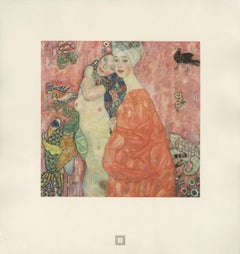
Max Eisler Eine Nachlese folio "Girlfriends II" collotype print
Located in Chicago, IL
After Gustav Klimt, Max Eisler #1, Die Freundinnen II; multi-color collotype after 1916/17 painting in oil on canvas which was destroyed by fire in May 1945 at Immendorf Castle Lower Austria.
Eisler’s choice to begin his 1931 portfolio of works by Klimt with Girlfriends II was both bold and prescient. Just 14 years later, the painting was tragically destroyed in a fire. With such a loss, this rare and exquisite image is all the more valuable by virtue of having been made in color. In works from his late period, Klimt continued his fascination with exploring female dynamics and their various forms of love. Girlfriends II is a fine example of how space, color and ornament play a noticeable role in the evolution of his symbolic language. Wide swaths of space in the background as well as the two female forms create the structure. Klimt’s strong brushstrokes show a painterly quality and a new move toward abstraction which feels very far away from his earlier work. Nor should Klimt’s economy of line be overlooked. His draughtsmanship is what infuses the female bodies with movement, emotion and a profundity of life. Both women confront the viewer’s gaze unselfconsciously, as if they are modern-day Viennese women stepping out of a Klimtesque ukiyo-e print. Characteristic of this late period, Klimt uses ornament...
Category
Vienna Secession 1930s Figurative Prints
Materials
Paper
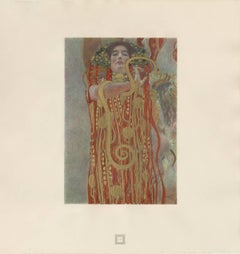
Max Eisler Eine Nachlese folio “Hygieia” collotype print
Located in Chicago, IL
After Gustav Klimt, Max Eisler #10, Ausschnitt aus dem Bilde “Medizin”; multi-color collotype detail from Medicine, one of the faculty paintings for the Uni...
Category
Vienna Secession 1930s Figurative Prints
Materials
Paper
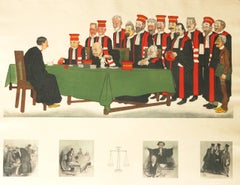
Passing the Bar
Located in Paonia, CO
artist: Adrien Barrere (1877-1931)
title: Passing the Bar
medium: Lithograph
paper size: 19.75 x 25.50
image size: 18 x 24.25
French caricaturist...
Category
1930s Figurative Prints
Materials
Lithograph
Icart, Composition, Le Sopha (after)
By Louis Icart
Located in Auburn Hills, MI
La pointe sèche etching on vélin de Rives filigrané à notre nom paper. Paper size: 9.5 x 7.5 inches; image size: 6.5 x 4.5 inches. Inscription: unsigned and unnumbered, as issued. No...
Category
Modern 1930s Figurative Prints
Materials
Drypoint, Etching
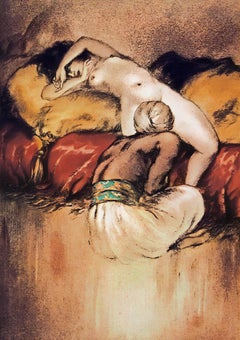
$876 Sale Price
20% Off
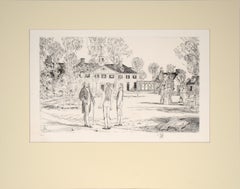
Bowling on the Green (from the Bicentennial Pageant of George Washington)
Located in Soquel, CA
Bowling on the Green (from the Bicentennial Pageant of George Washington)
'Bowling on the Green', by printmaker Frederick Childe Hassam, depicts George Washington and friends lawn b...
Category
American Impressionist 1930s Figurative Prints
Materials
Ink, Etching, Laid Paper
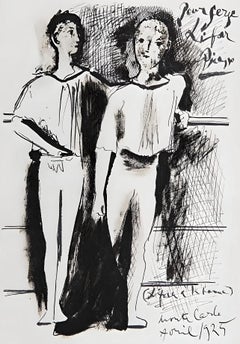
Picasso, Composition (Horodisch D10), Serge Lifar, Destin d'un danseur (after)
Located in Auburn Hills, MI
Lithograph on vélin Saint-Vincent-de-Blanzat des Papeteries Navarre paper. Unsigned and unnumbered, as issued. Good condition. Notes: From the album, Sources du vent 1915-1929, avec ...
Category
Modern 1930s Figurative Prints
Materials
Lithograph
$716 Sale Price
20% Off
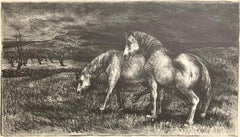
Reginald Wilson, Horses
Located in New York, NY
Although this work is titled Horses. It nice to think it could be (Horses in a Field in Woodstock, NY), but it was printed by Will Barnet at the Art Students League, about 1938, and Wilson, who visited Woodstock with Arnold Blanche...
Category
American Modern 1930s Figurative Prints
Materials
Lithograph
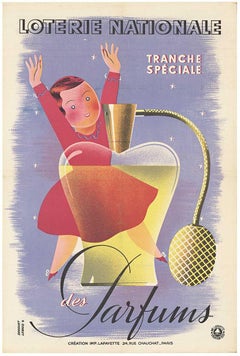
Original LOTERIE NATIONALE des PARFUMS vintage French poster lithograph
Located in Spokane, WA
LOTERIE NATIONALE des PARFUMS. Original vintage French poster, 1939 lithograph. Professional acid-free archival linen-backed, fine condition. Read...
Category
Art Deco 1930s Figurative Prints
Materials
Lithograph
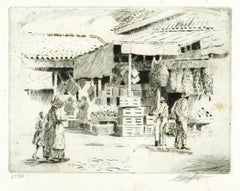
Noon Time Lull (Charleston, South Carolina)
Located in Fairlawn, OH
Noon Time Lull (Charleston, South Carolina)
Etching, c. 1930
Signed by the artist in pencil lower right (see photo)
Note: An image done in South Carolina.
An impression of this image...
Category
American Impressionist 1930s Figurative Prints
Materials
Etching
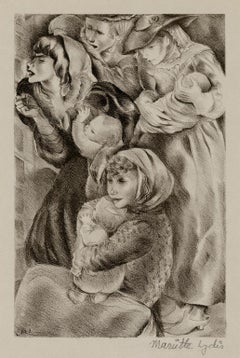
'Four Women' from the suite 'The Beggar's Opera'
Located in Myrtle Beach, SC
Mariette Lydis, 'Four Women' from the suite 'The Beggar's Opera', lithograph, edition unknown but small, 1937. Signed in pencil; initialed in the stone, low...
Category
Realist 1930s Figurative Prints
Materials
Lithograph
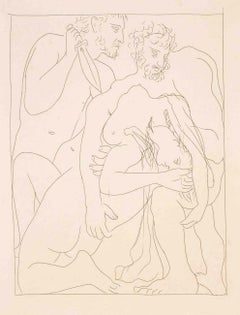
Polyxène, Fille de Priam, est égorgée sur la Tombe d'Achille
Located in Roma, IT
Original etching from the portfolio "Les Métamorphoses d'Ovide" realized by Pablo Picasso in 1930 and published by Skira. Edition of 145 copies.
Very good conditions.
Re. Bloch p....
Category
Modern 1930s Figurative Prints
Materials
Etching
$2,254 Sale Price
25% Off
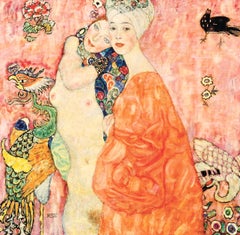
Klimt, Die Freundinnen, Gustav Klimt, Eine Nachlese (after)
By Gustav Klimt
Located in Auburn Hills, MI
Héliogravure, collotype, metallic inks on vélin paper. Paper Size: 18.86 x 17.91 inches; image size: 11.65 x 11.81 inches. Inscription: Signed in the plate and unnumbered, as issued....
Category
Symbolist 1930s Figurative Prints
Materials
Lithograph
$19,996 Sale Price
20% Off
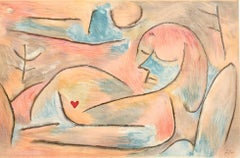
Sommeil d'hiver, Verve: Revue Artistique et Littéraire
By Paul Klee
Located in Auburn Hills, MI
Lithograph on vélin des Papeteries du Marais paper. Paper Size: 10.25 x 14 inches. Inscription: Signed in the plate and unnumbered, as issued. Notes: From the album, Verve: Revue Art...
Category
Modern 1930s Figurative Prints
Materials
Lithograph
$956 Sale Price
20% Off
Grapin fait le bon vin original French vintage poster
By Leon Dupin
Located in Spokane, WA
Original vintage 1933 poster: Graphin. The silhouette of the man is sitting on a casket of wine with a big bottle of wine resting on the ground in front ...
Category
Art Deco 1930s Figurative Prints
Materials
Lithograph

$1,260 Sale Price
20% Off
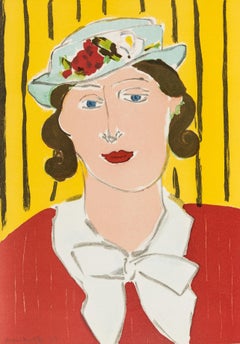
Femme au Chapeau, Verve: Revue Artistique et Littéraire
Located in Auburn Hills, MI
Lithograph on vélin des Papeteries du Marais paper. Paper Size: 14 x 10.25 inches. Inscription: Signed in the plate and unnumbered, as issued. Notes: From the album, Verve: Revue Art...
Category
Fauvist 1930s Figurative Prints
Materials
Lithograph
$956 Sale Price
20% Off
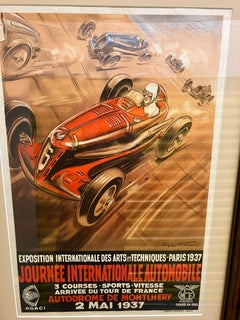
Geo Ham 1937 Paris Race Poster
By Geo Ham
Located in San Francisco, CA
Geo Ham: 1900-1972. Well listed French artist who is best known for his posters of car racing. He has auction results over $32,000 for a single poster. This original lithographic pos...
Category
1930s Figurative Prints
Materials
Lithograph
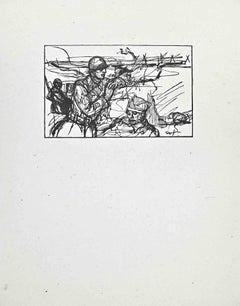
The Disastrous War - Woodcut Print by Paul Baudier - 1930s
Located in Roma, IT
The Disastrous War is a woodcut print on ivory-colored paper realized by Paul Baudier (1881-1962) in the 1930s.
Good conditions.
Paul Baudier, (born October 18, 1881 in Paris and d...
Category
Modern 1930s Figurative Prints
Materials
Woodcut
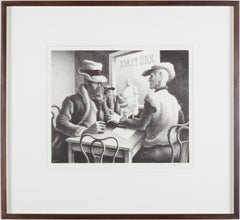
$162 Sale Price
25% Off
Discussion
Located in London, GB
In this charming regionalist lithograph, Benton captures a classic Midwestern American scene: two men talking, drinking, and smoking together in a bar. Titled 'Discussion', the artwo...
Category
American Modern 1930s Figurative Prints
Materials
Lithograph
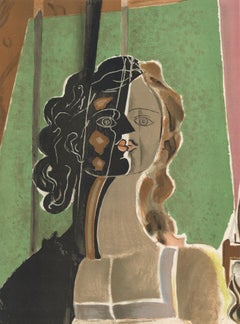
Figure, Verve: Revue Artistique et Littéraire
Located in Auburn Hills, MI
Lithograph on vélin des Papeteries du Marais paper. Paper Size: 14 x 10.25 inches. Inscription: Signed in the plate and unnumbered, as issued. Notes: From the album, Verve: Revue Art...
Category
Cubist 1930s Figurative Prints
Materials
Lithograph
$716 Sale Price
20% Off
'A Morning in May' — Ashcan School Social Realism, New York City
Located in Myrtle Beach, SC
Reginald Marsh, 'A Morning in May', etching, 1936, edition 100 (Whitney, 1969), Sasowsky 169. Unsigned as published; numbered '89/100' in pencil. A superb, richly-inked impression, ...
Category
Ashcan School 1930s Figurative Prints
Materials
Etching