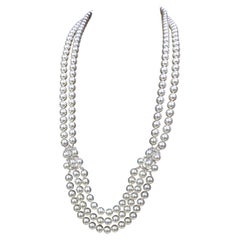
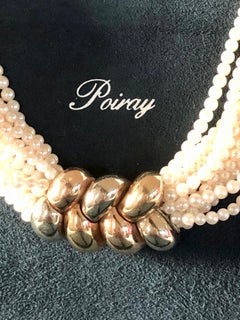
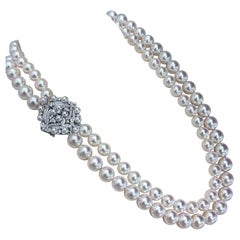
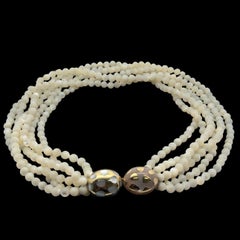
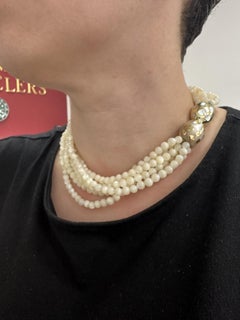
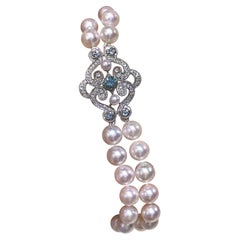
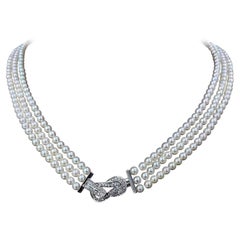
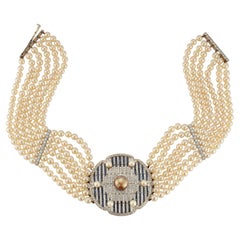
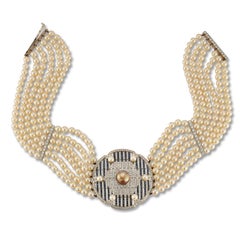
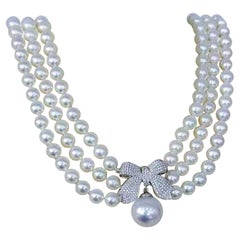
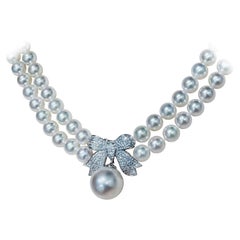
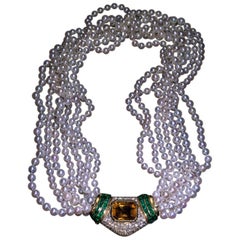
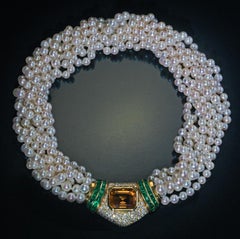
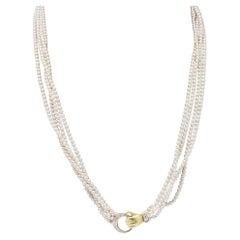
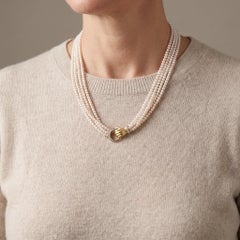
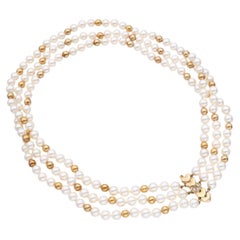
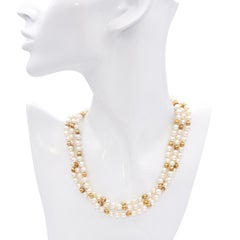
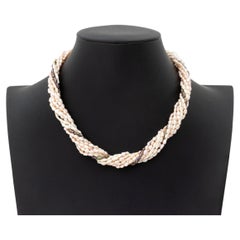
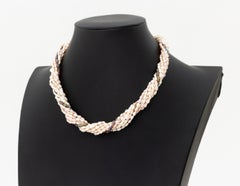
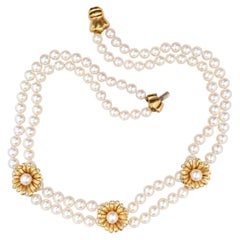
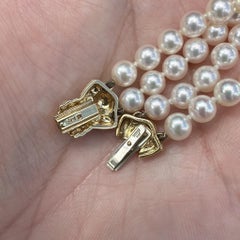
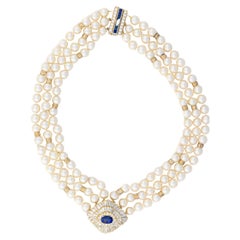
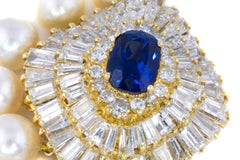
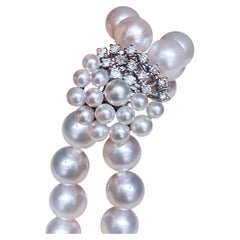
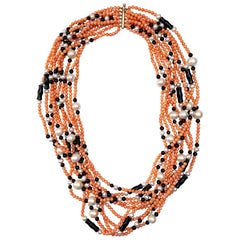
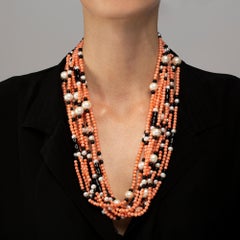
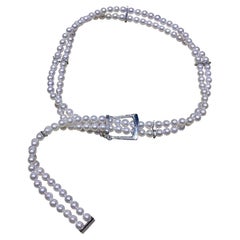
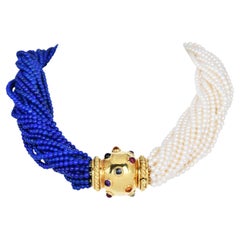
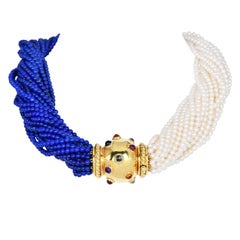
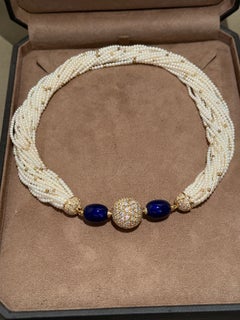
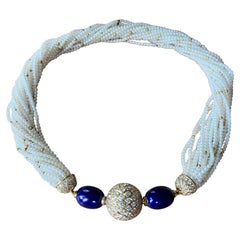
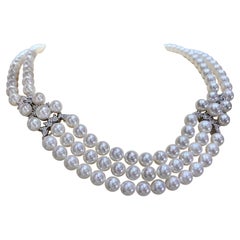
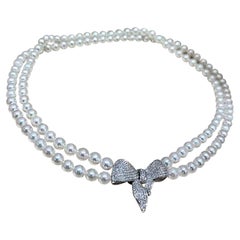
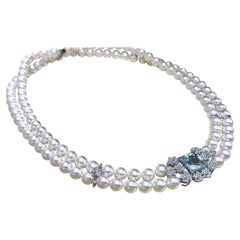
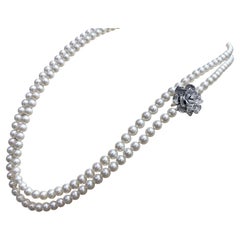
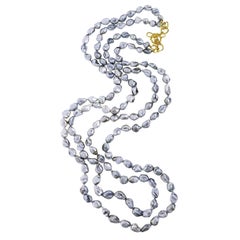
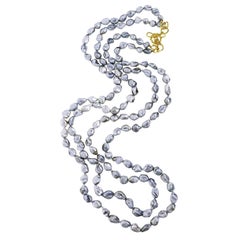
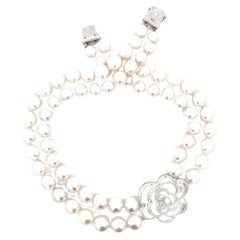
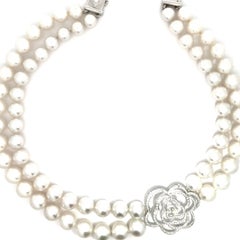
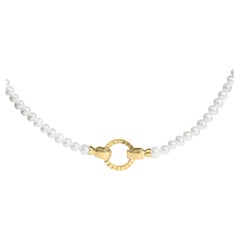
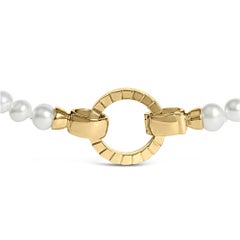
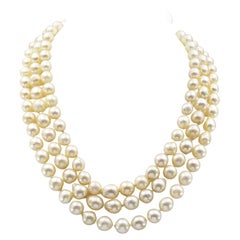
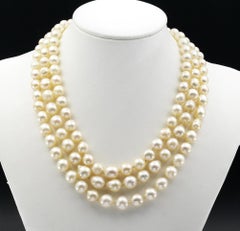
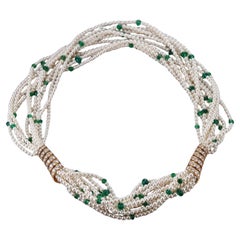
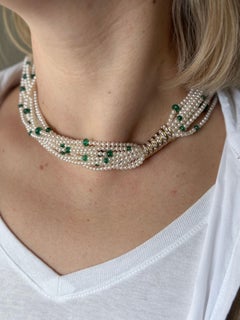
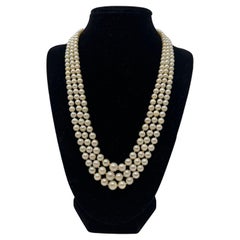
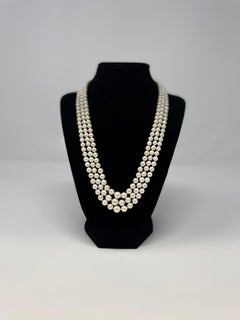
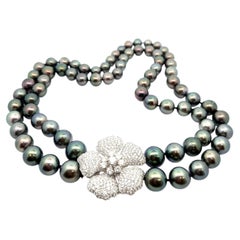
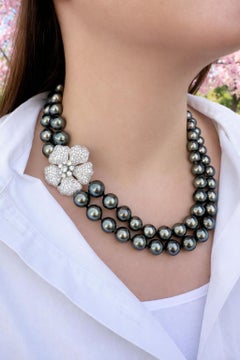
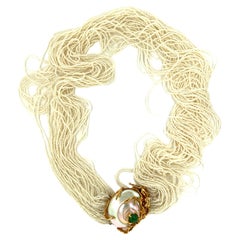
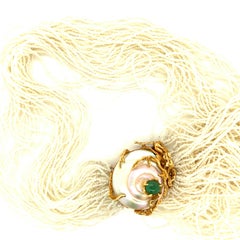
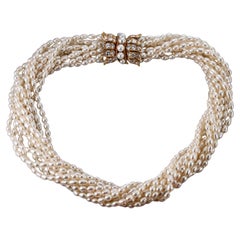
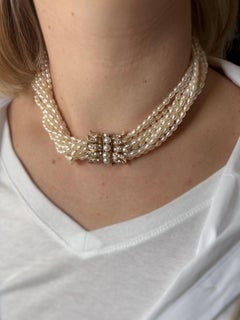
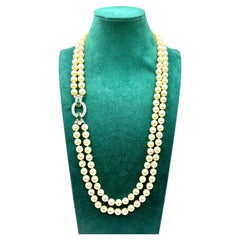
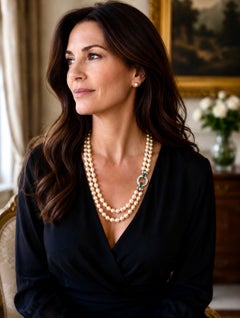
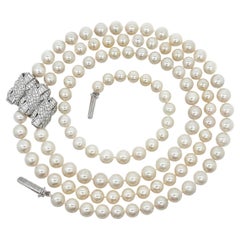
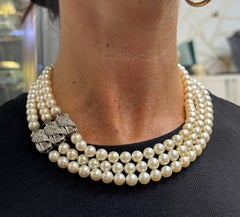
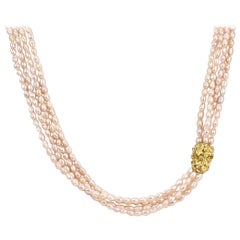
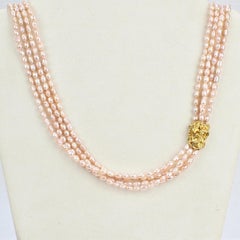
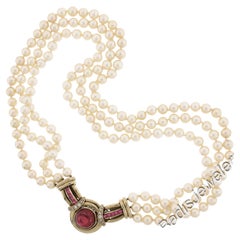
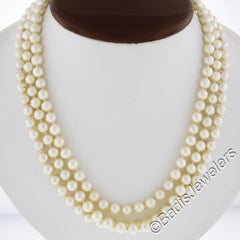
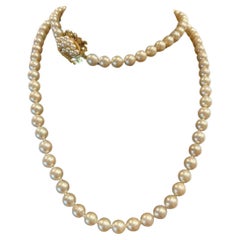
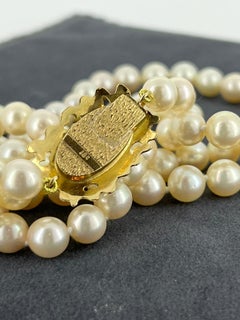
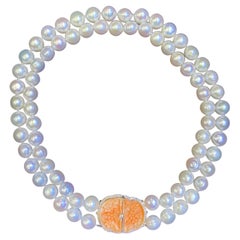
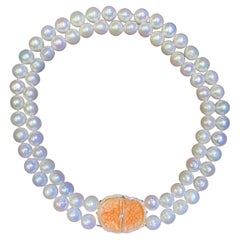
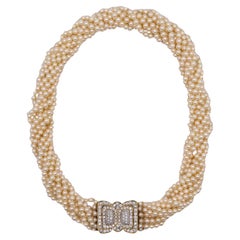
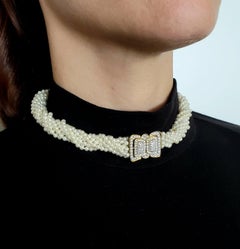
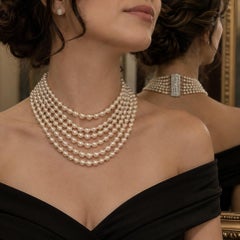
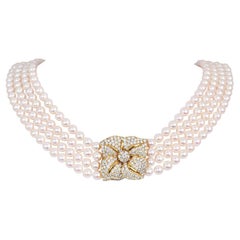
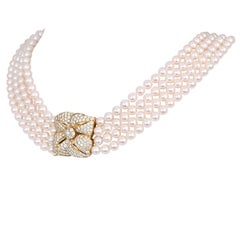
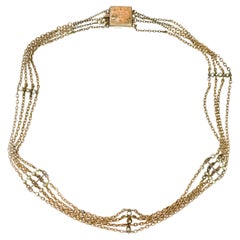
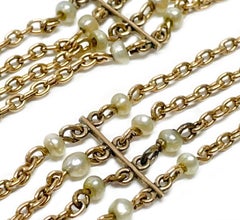
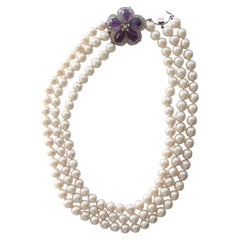
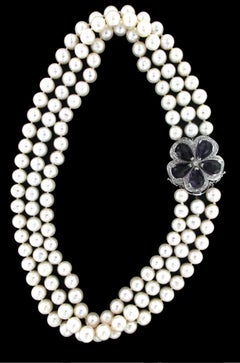
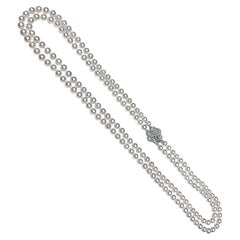
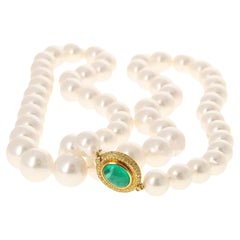
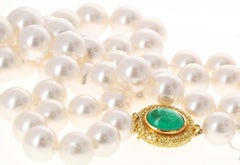
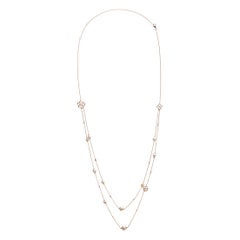
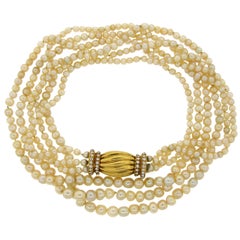
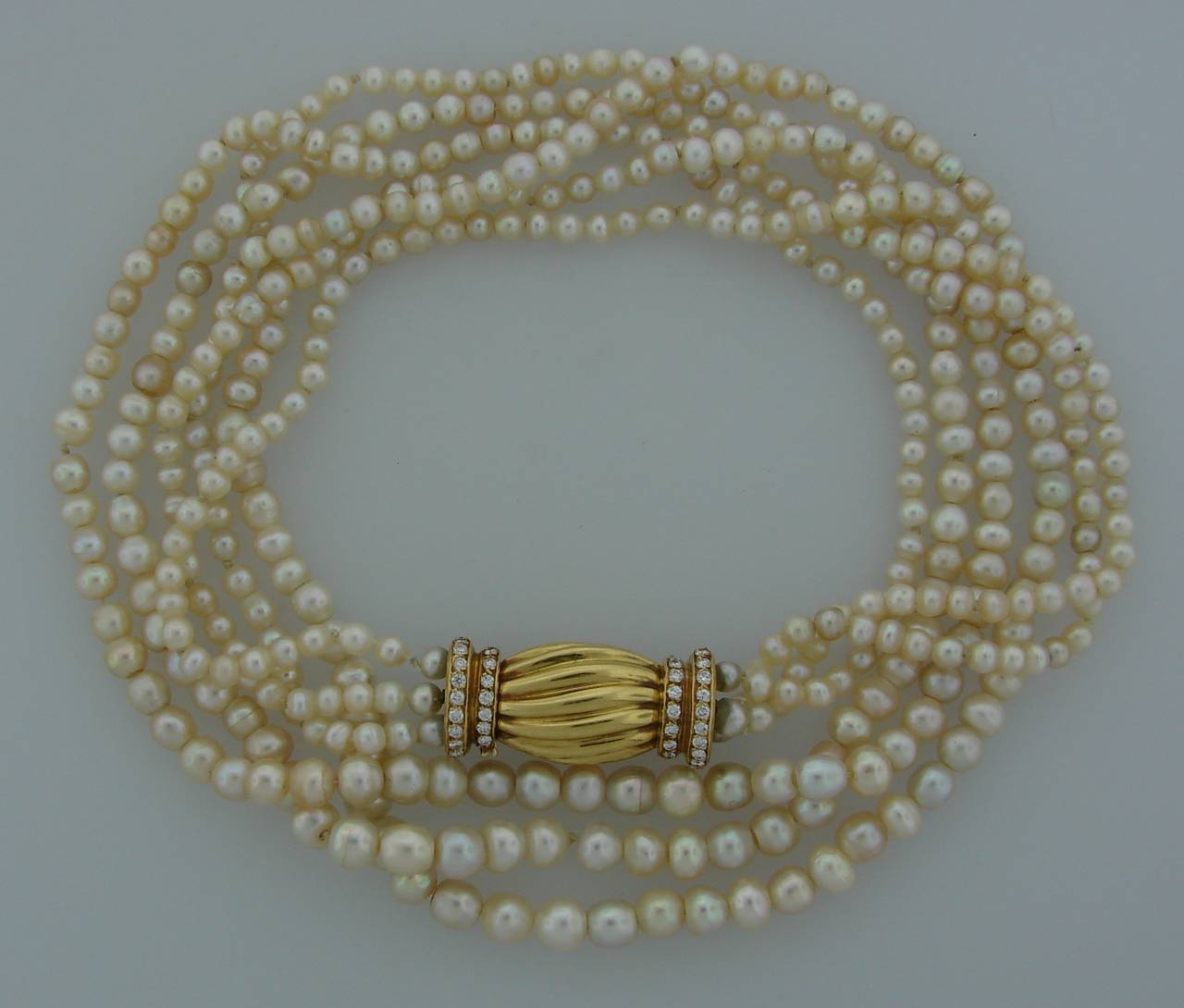
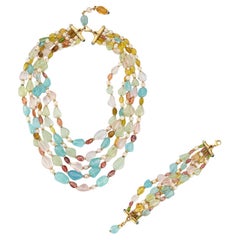
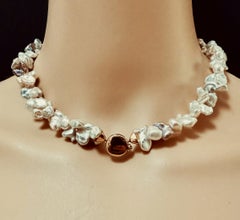
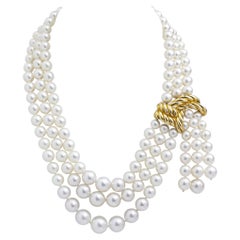
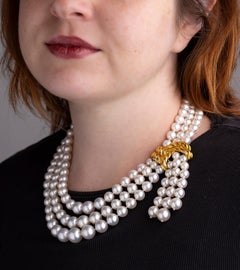
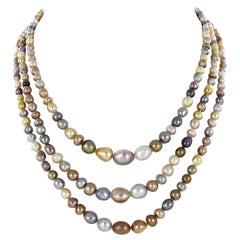
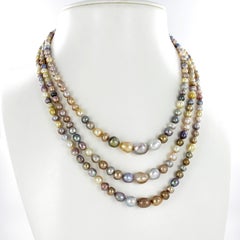
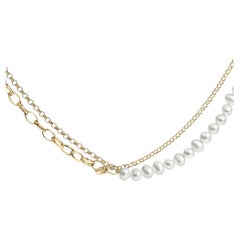
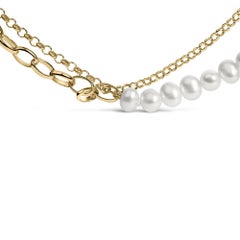
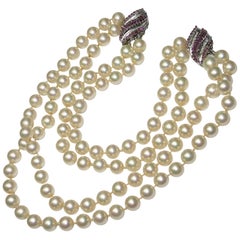
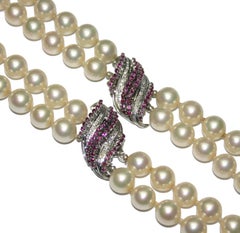
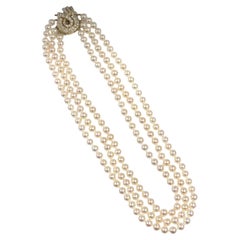
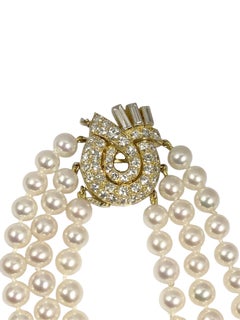
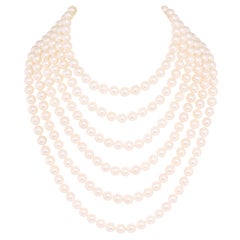
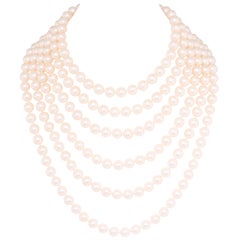
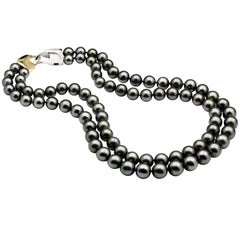
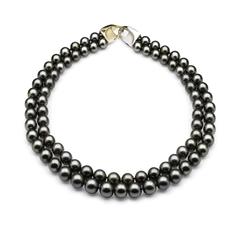
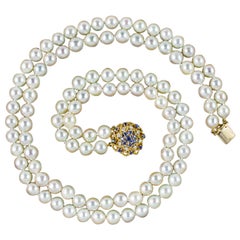
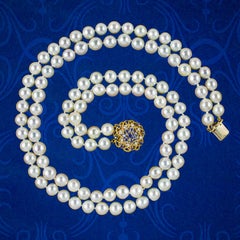
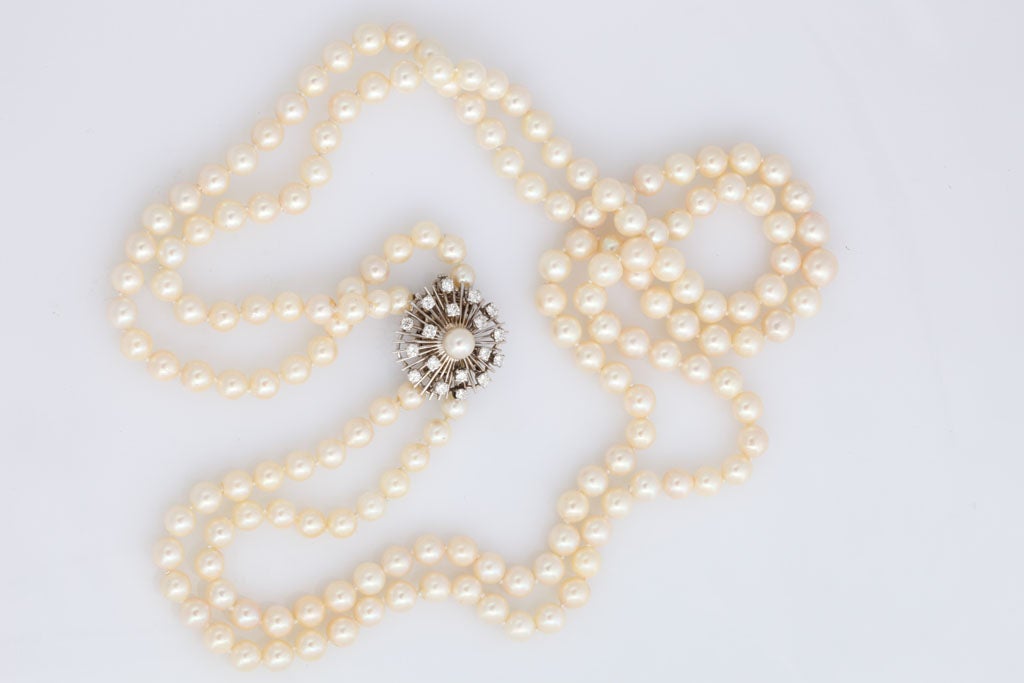
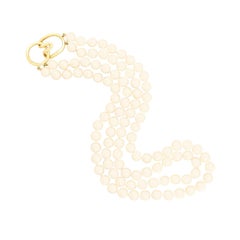
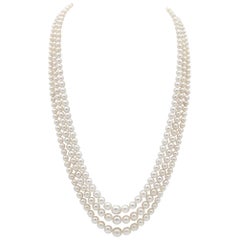
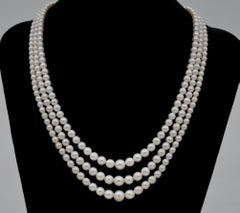
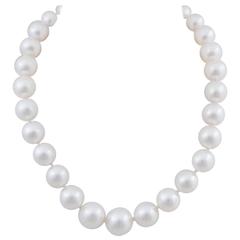
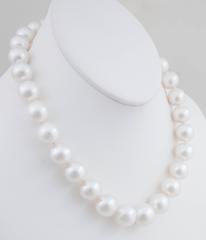
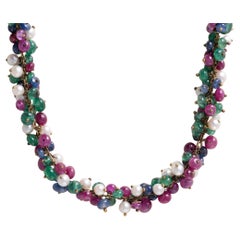
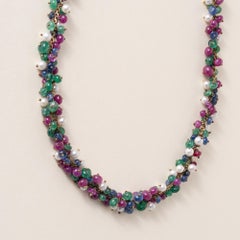
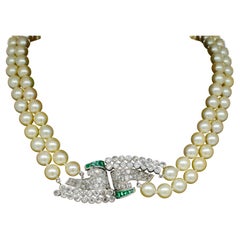
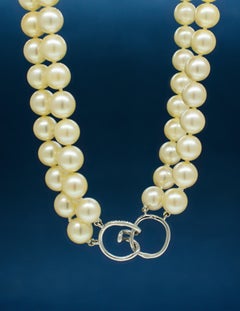
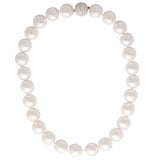
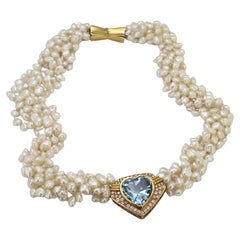
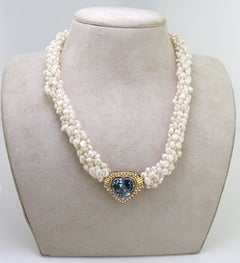
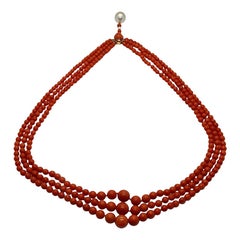
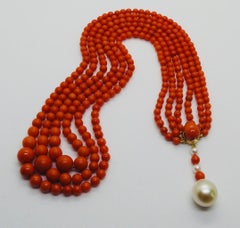
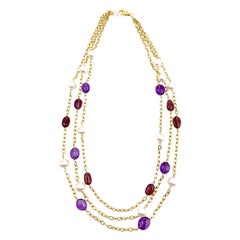
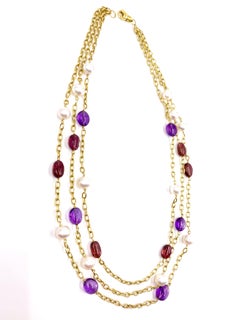
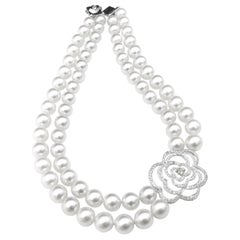
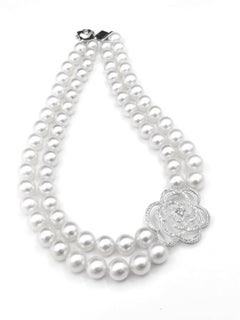
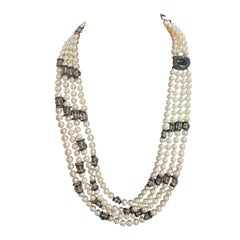
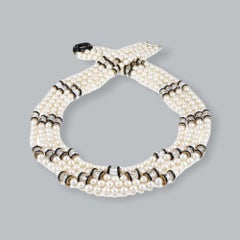
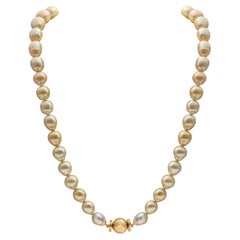
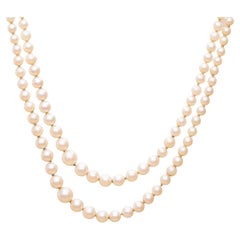
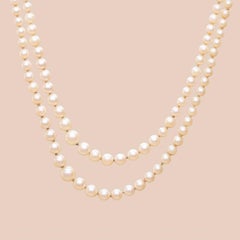
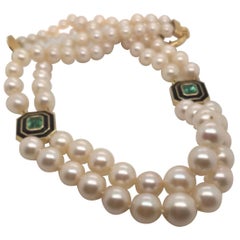
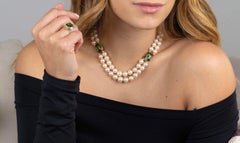
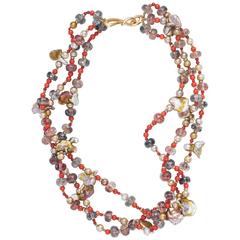
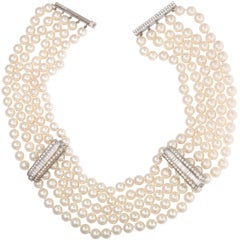
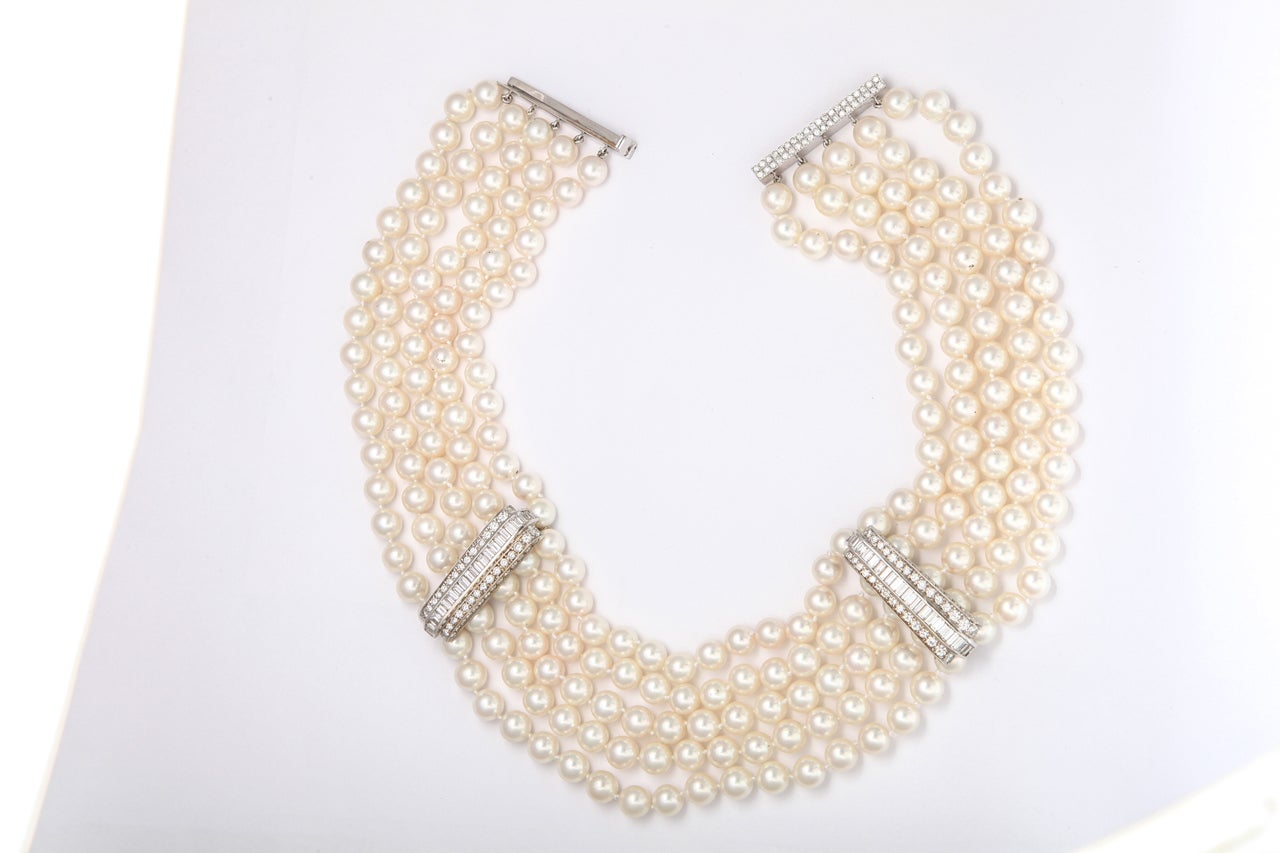
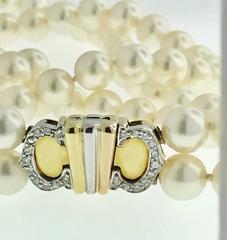
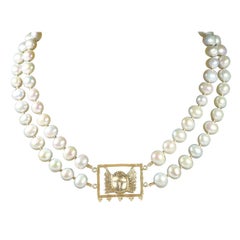
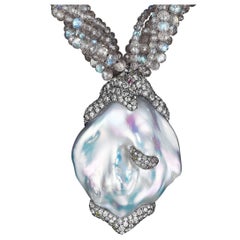
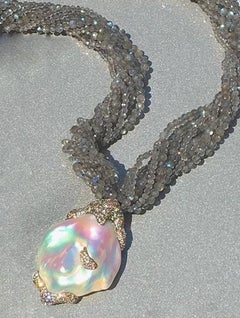
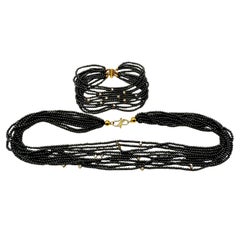
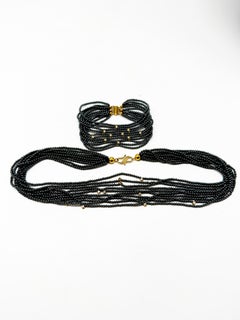
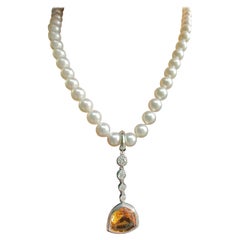
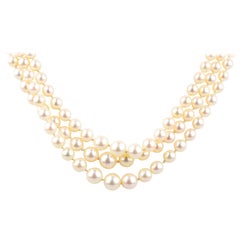
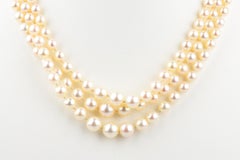
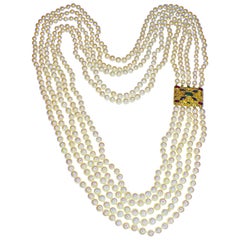
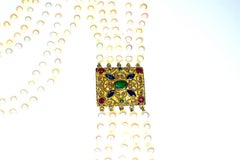
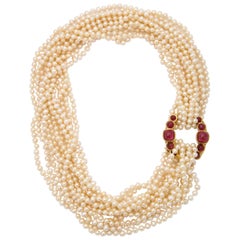
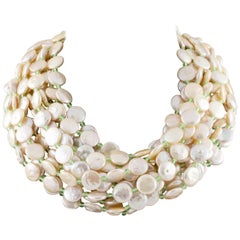
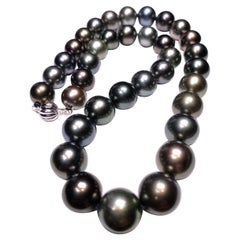
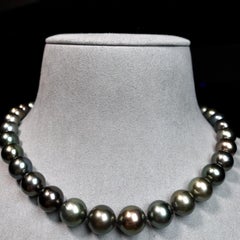
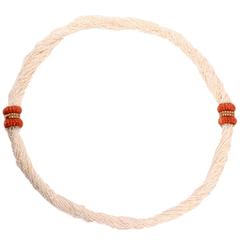
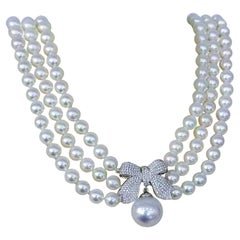
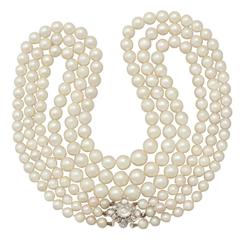
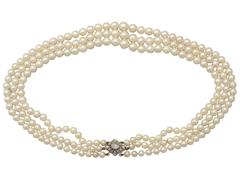
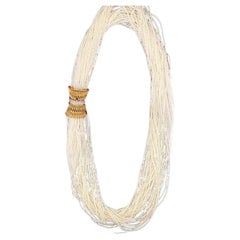
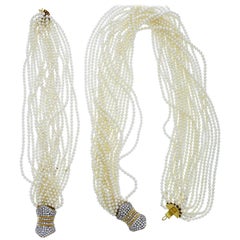
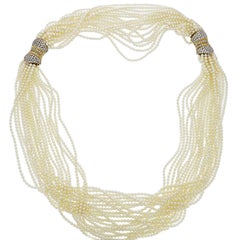
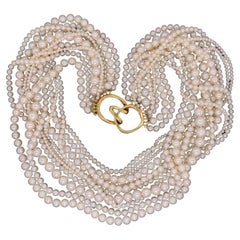
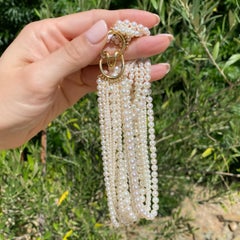
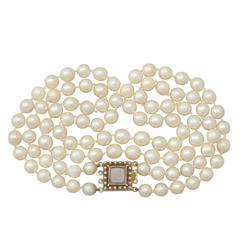
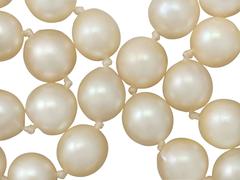
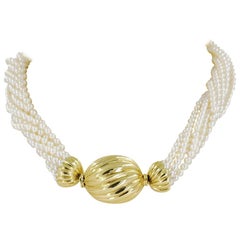
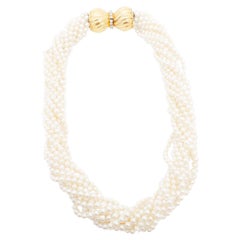
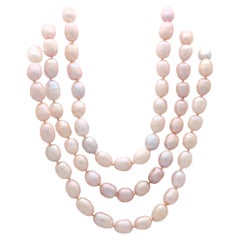
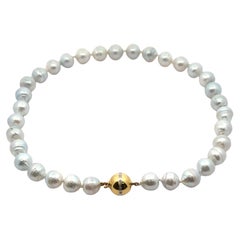
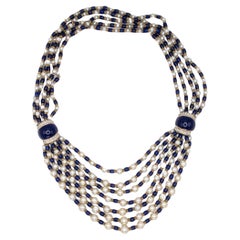
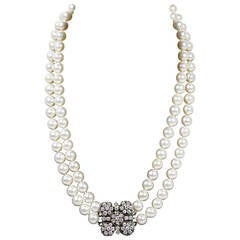
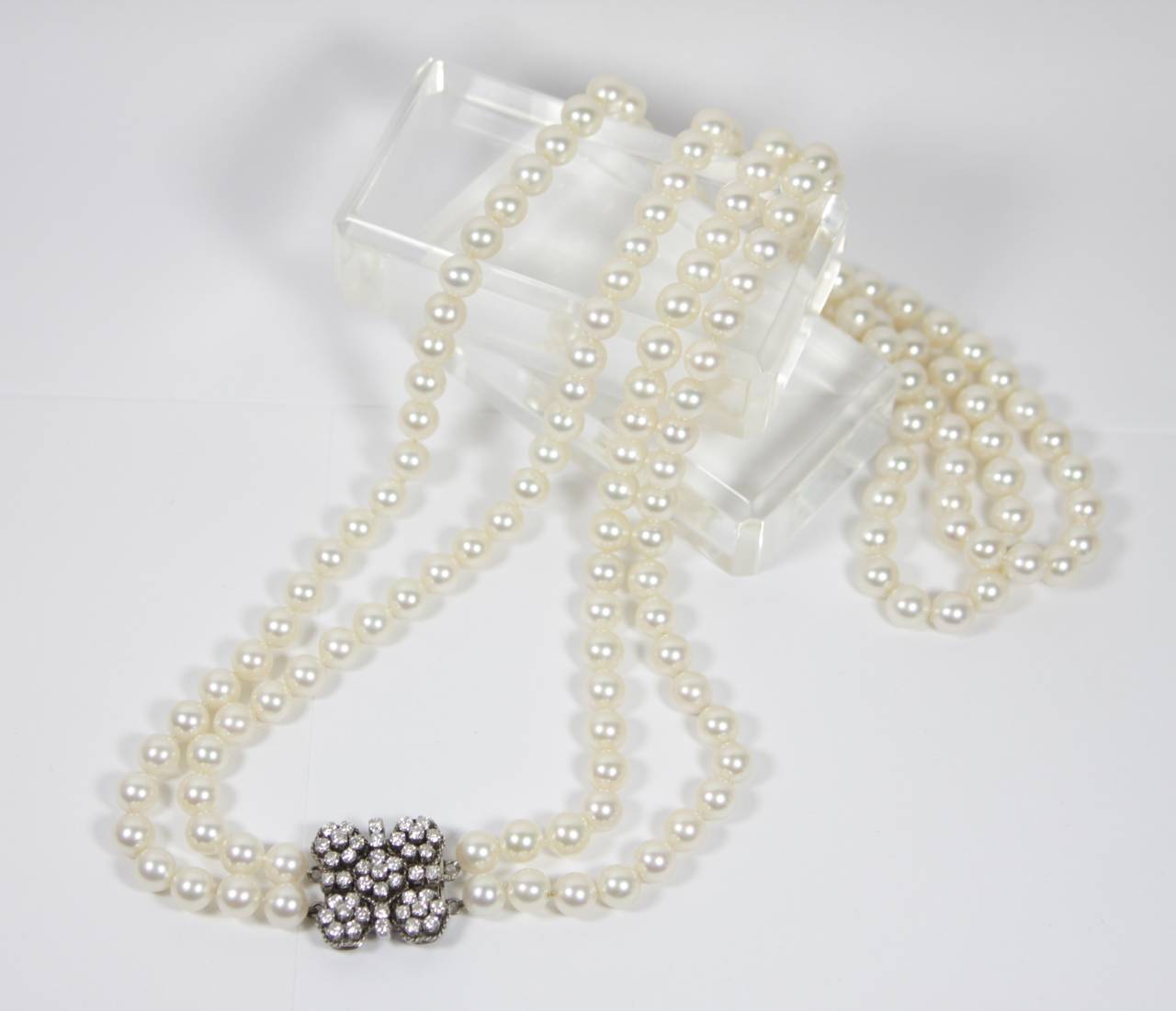
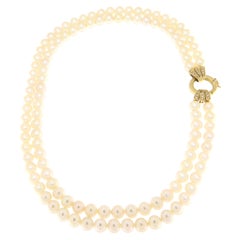
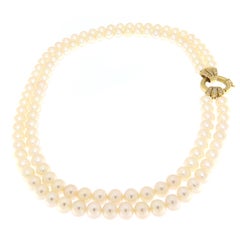
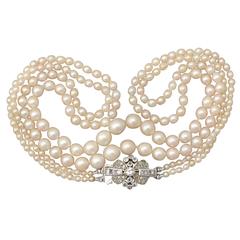
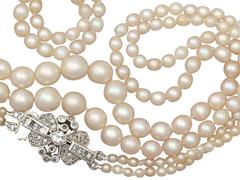
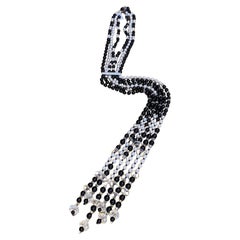
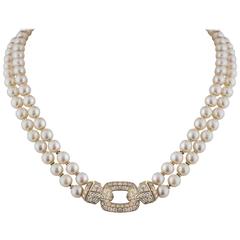
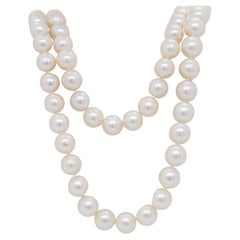
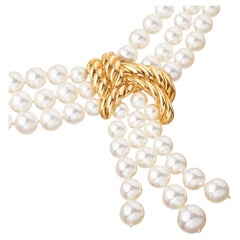
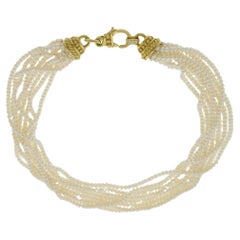
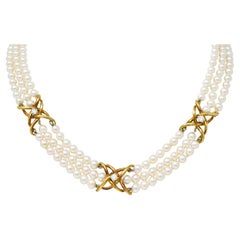
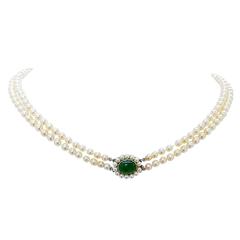
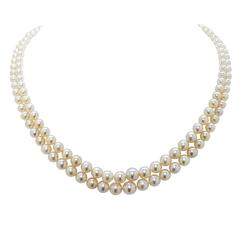
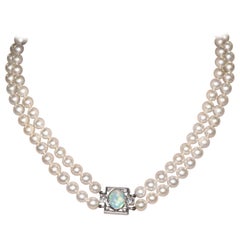
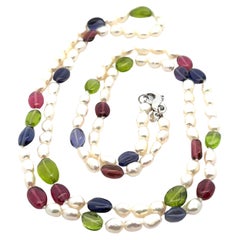
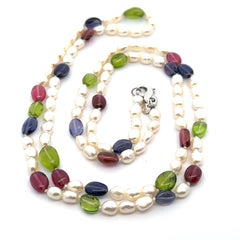
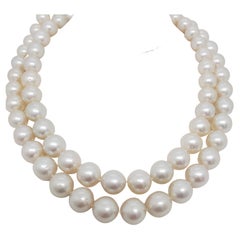
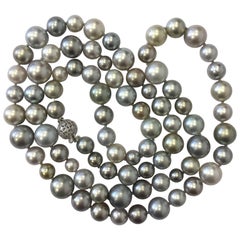
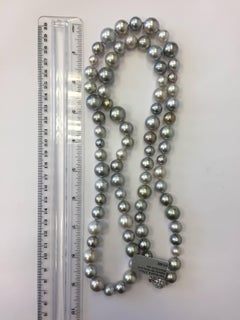
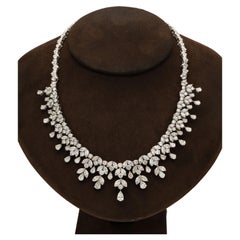
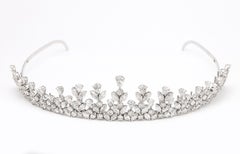
On 1stDibs, you can find the most appropriate multi strand pearl necklace 18k clasp for your needs in our varied inventory. Every item for sale was constructed with extraordinary care, often using
Gold,
18k Gold and
Yellow Gold. Our collection of these items for sale includes 51 vintage editions and 34 modern creations to choose from as well. Making the right choice when shopping for a multi strand pearl necklace 18k clasp may mean carefully reviewing examples of this item dating from different eras — you can find an early iteration of this piece from the 19th Century and a newer version made as recently as the 21st Century, both of which have proven very popular over the years. Creating a multi strand pearl necklace 18k clasp has been a part of the legacy of many jewelers, but those produced by
Tiffany & Co.,
Buccellati and
Cartier are consistently popular. A multi strand pearl necklace 18k clasp of any era or style can lend versatility to your look, but a version featuring
Pearl, from our inventory of 60, is particularly popular. A
round cut version of this piece has appeal, but there are also
bead and
brilliant cut versions for sale. There aren’t many items for
men if you’re seeking a multi strand pearl necklace 18k clasp, as most of the options available are for
women and unisex.
Prices for a multi strand pearl necklace 18k clasp can differ depending upon size, time period and other attributes — at 1stDibs, these accessories begin at $655 and can go as high as $140,000, while this accessory, on average, fetches $6,691.
Gold is the feel-good metal, the serotonin of jewelry. Wear vintage and antique gold necklaces, watches, gold bracelets or gold rings and you feel happy, you feel dressed, you feel, well, yourself.
Gold, especially yellow gold, with its rich patina and ancient pedigree going back thousands of years, is the steady standby, the well-mannered metal of choice. Any discussion of this lustrous metal comes down to a basic truth: Gold is elementary, my dear. Gold jewelry that couples the mystique of the metal with superb design and craftsmanship achieves the status of an enduring classic. Many luxury houses have given us some of our most treasured and lasting examples of gold jewelry over the years.
Since its founding, in 1837, Tiffany & Co. has built its reputation on its company jewelry as well as its coterie of boutique designers, which has included Jean Schlumberger, Donald Claflin, Angela Cummings and Elsa Peretti. There are numerous gold Tiffany classics worth citing. Some are accented with gemstones, but all stand out for their design and the workmanship displayed.
For the woman who prefers a minimalist look, the Tiffany & Co. twist bangle (thin, slightly ovoid) is stylishly simple. For Cummings devotees, signature pieces feature hard stone inlay, such as her pairs of gold ear clips inlaid with black jade (a play on the classic Chanel black and tan), or bangles whose design recalls ocean waves, with undulating lines of lapis lazuli and mother-of-pearl. And just about any design by the great Jean Schlumberger is by definition a classic.
Even had he eschewed stones and diamonds, Southern-born David Webb would be hailed for the vast arsenal of heavy gold jewelry he designed. Gold, usually hammered or textured in some manner, defines great David Webb jewelry. The self-taught jeweler made very au courant pieces while drawing inspiration from ancient and out-of-the-way sources — East meets West in the commanding gold necklaces made by Webb in the early 1970s. The same could be said for his endlessly varied gold cuffs.
In Europe, many houses have given us gold jewelry that sets the highest standard for excellence, pieces that were highly sought after when they were made and continue to be so.
Numerous designs from Cartier are homages to gold. There are the classic Trinity rings, necklaces and bracelets — trifectas of yellow, white and rose gold. As a testament to the power of love, consider the endurance of the Cartier Love bracelet.
Aldo Cipullo, Cartier’s top in-house designer from the late 1960s into the early ’70s, made history in 1969 with the Love bracelet. Cipullo frequently said that the Love bracelet was born of a sleepless night contemplating a love affair gone wrong and his realization that “the only remnants he possessed of the romance were memories.” He distilled the urge to keep a loved one close into a slim 18-karat gold bangle.
BVLGARI and its coin jewelry, gemme nummarie, hit the jackpot when the line launched in the 1960s. The line has been perennially popular. BVLGARI coin jewelry features ancient Greek and Roman coins embedded in striking gold mounts, usually hung on thick link necklaces of varying lengths. In the 1970s, BVLGARI introduced the Tubogas line, most often made in yellow gold. The Tubogas watches are classics, and then there is the Serpenti, the house's outstanding snake-themed watches and bracelets.
A collection called Monete that incorporated the gold coins is one of several iconic BVLGARI lines that debuted in the 1970s and ’80s, catering to a new generation of empowered women. Just as designers like Halston and Yves Saint Laurent were popularizing fuss-free ready-to-wear fashion for women on the go, BVLGARI offered jewels to be lived in.
Since Van Cleef & Arpels opened its Place Vendôme doors in 1906, collection after collection of jewelry classics have enchanted the public. As predominantly expressed in a honeycomb of gold, there is the Ludo watch and accessories, circa the 1920s, and the golden Zip necklace, 1951, whose ingenious transformation of the traditional zipper was originally proposed by the Duchess of Windsor. Van Cleef's Alhambra, with its Moroccan motif, was introduced in 1968 and from the start its popularity pivoted on royalty and celebrity status. It remains one of VCA’s most popular and collected styles.
Mention must be made of Buccellati, whose name is synonymous with gold so finely spun that it suggests tapestry. The house’s many gold bracelets, typically embellished with a few or many diamonds, signified taste and distinction and are always in favor on the secondary market. Other important mid-20th-century houses known for their gold-themed jewelry include Hermès and Ilias Lalaounis.
Find a stunning collection of vintage and antique gold jewelry on 1stDibs.
The pearl has been synonymous with ladylike elegance since the Tudor period — learn what to look for when shopping for vintage and antique pearl jewelry as well as how to tell the origin of a pearl with our handy primer.
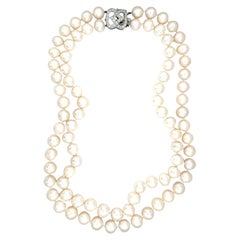
Every woman at some point in her life desires a simple strand of pearls. They are elegant, timeless, versatile — just ask Coco Chanel or Jacqueline Kennedy — and valuable. In 1917, Pierre Cartier famously traded a double-strand of natural pearls for a Fifth Avenue mansion, the Cartier brand’s flagship store ever since. And if you were born in the beginning of summer, pearl is the June birthstone.
It is possible to tell where a pearl originated from its appearance. Akoyas are usually round and white — the classic pearl, if you will. South Sea pearls are normally larger and vary in color; orangey yellow ones are not uncommon. Tahitian pearls are mostly black but can also be gray or brown, and between the Akoya and the South Sea varieties in size. Freshwater pearls, or Orientals, run the gamut in terms of color and size, but in shape, they tend to resemble Rice Krispies. Another important distinction is a round pearl versus a baroque pearl. A round pearl is self-explanatory, but there are two types of baroque pearls: symmetrical and asymmetrical. In general, the symmetrical variation commands a higher valuation. Within a strand of pearls, uniformity is prized — the more the individual pearls resemble one another, the more valuable the strand.
According to the Gemological Institute of America (GIA), the earliest recorded mention of a pearl was in 2206 BC by a Chinese historian. Centuries later, Christopher Columbus made it a point to visit pearl fisheries during his 15th-century exploration of the Caribbean. Since the late-19th century, the Japanese have been at the forefront of cultivating pearls, when jeweler Kokichi Mikimoto successfully cultured the world’s first pearl in 1893.
On 1stDibs, find vintage and antique pearl necklaces, pearl earrings and other accessories.
Vintage multistrand necklaces add glamour to any outfit and are easy to accessorize with.
One of the oldest known forms of jewelry is the necklace; evidence includes shell beads dating back at least 142,000 years. Multistrand necklaces appeared early in this history, with archaeologists identifying examples from ancient Mesopotamia.
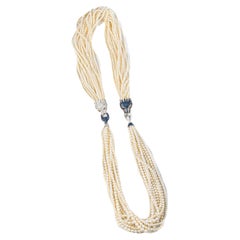
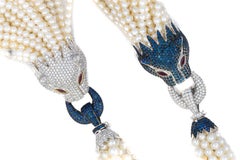
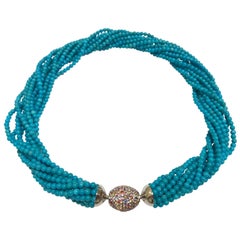
One popular style of multistrand necklace is the torsade necklace, with “torsade” coming from the French word for twist or cable. These necklaces are made by twisting several strands of beads, pearls or other material together and securing them with a clasp. The hippie and counterculture movements of the 1960s saw costume-jewelry designers celebrating self-expression through colorful multistrand necklaces and no shortage of beads, while Ciner helped popularize the torsade necklace in the 1980s with strands of glass beads often held by animal-head clasps.
The bayadère necklace, also known as the rope necklace, is similar but has only a few strands of pearls or beads that are twisted or braided together. It was particularly popular at the turn of the 20th century, including as a gift for bridesmaids. Sometimes the beads or pearls match; other times, they are multicolored, with accents such as a single tassel or pendant. Another version is the choker-style dog-collar necklace, a multistrand necklace usually between 16 to 18 inches long.
In all of these variations, a multistrand necklace offers a touch of sophistication for your look, from everyday wear to the red carpet. Explore 1stDibs for multistrand necklaces in a range of lengths, styles and materials.