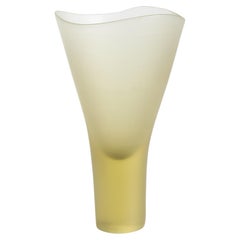
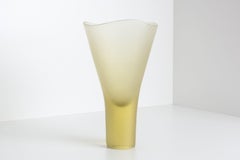
Tobia Scarpa Battuto Vase for Venini
By Venini, Tobia Scarpa
Located in Chicago, IL
Tobia Scarpa Battuto Vase for Venini, model no. 8067, blown glass with acid frosted surface
Category
Vintage 1960s Italian Vases
Materials
Blown Glass
Tobia Scarpa Battuto Vase for Venini
By Venini, Tobia Scarpa
Located in Chicago, IL
Tobia Scarpa Battuto Vase for Venini, model no. 8067, blown glass with acid frosted surface
Blown Glass
$5,600Sale Price / set|20% Off
H 2.75 in Dm 6 in
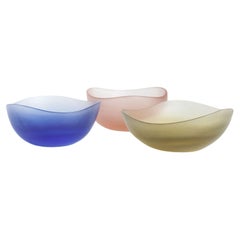
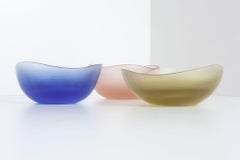
Tobia Scarpa Battuto Bowl, Set of Three, Venini, Italy
By Venini, Tobia Scarpa
Located in Chicago, IL
Tobia Scarpa Battuto Bowls, Set of Three, Venini, Italy, Wheel-Carved Glass 1962-97 Blue and pink
Glass
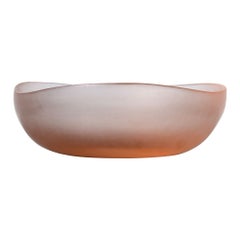
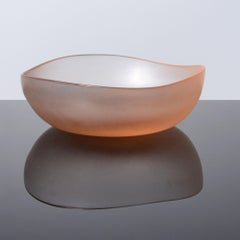
Tobia Scarpa BATTUTO Bowl, Murano
By Tobia Scarpa, Venini
Located in Lake Worth Beach, FL
Artist/Designer; Manufacturer: Tobia Scarpa (Italian, b. 1935); Venini (Italy) Marking(s); notes
Blown Glass
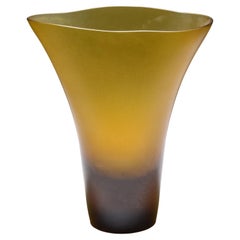
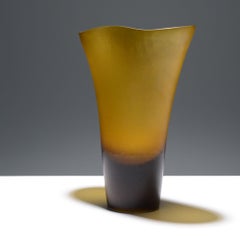
Monumental Tobia Scarpa BATTUTO Vase, 17.5"H, Murano
By Venini, Tobia Scarpa
Located in Lake Worth Beach, FL
Artist/Designer; Manufacturer: Tobia Scarpa (Italian, b. 1935); Venini (Italy) Marking(s); notes
Blown Glass
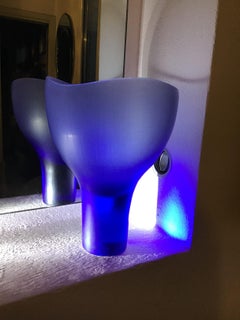
Tobia Scarpa “ Venini “ Vase Murano Battuto, 1959, Italy
By Tobia Scarpa
Located in Milano, IT
Venini vase “Tobia Scarpa”.
Murano Glass
Unavailable
H 12.75 in W 8 in D 9.25 in
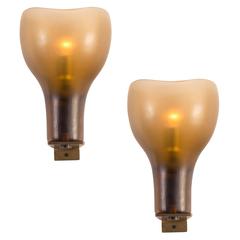
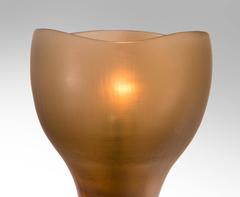
Tobia Scarpa for Venini, Pair of Rare Murano Battuto Glass Sconces
By Tobia Scarpa, Venini
Located in New York, NY
Very rarely available sconces manifest the genius of Tobia Scarpa. The goblet shaped battuto glass
Unavailable
H 3.25 in W 16.25 in D 13.75 in
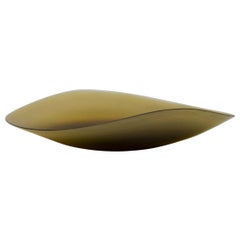
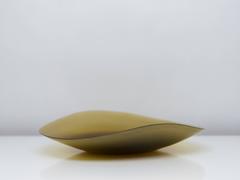
Tobia Scarpa for Venini Large 'Vetro Battuto' Ochre Hammered Glass Bowl, 1957
By Tobia Scarpa, Venini
Located in Los Angeles, CA
One of Tobia Scarpa's first manufactured designs which was made while he was working at the Venini
Murano Glass
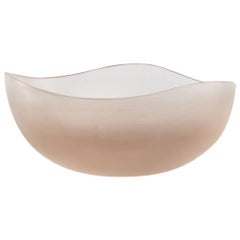
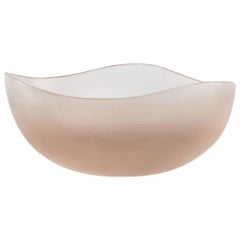
Tobia Scarpa, Battuto Rose Bowl, Venini, Murano, Italy
By Venini, Tobia Scarpa
Located in Uccle, BE
The battuti series was imagined by Tobia Scarpa in collaboration with Ludovico de Santillana who
Blown Glass
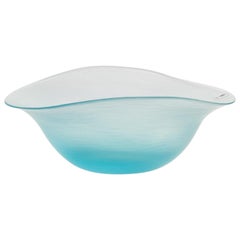
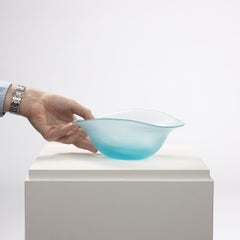
Tobia Scarpa for Venini Murano "Battuto" Dish
By Venini, Tobia Scarpa
Located in Uccle, BE
serie designed by Tobia Scarpa and later produced by the glassworks under the artistic direction of
Murano Glass, Art Glass
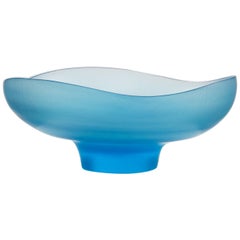
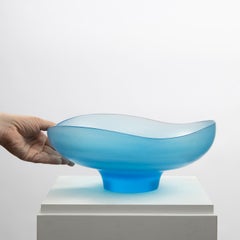
Tobia Scarpa for Venini Murano "Battuto" Dish on Foot
By Venini, Tobia Scarpa
Located in Uccle, BE
grindstone. This piece is part of "Battuti" series designed by Tobia Scarpa and later produced by the
Murano Glass, Art Glass
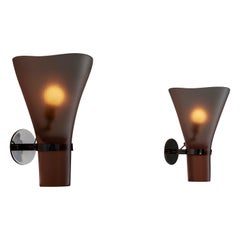

Pair of Battuto Murano Sconces by Tobia Scarpa for Venini
By Venini, Tobia Scarpa
Located in Los Angeles, CA
Rare Pair of Battuto Murano Sconces by Tobia Scarpa for Venini, in Italy in 1967. Chalice-shaped
Metal, Chrome
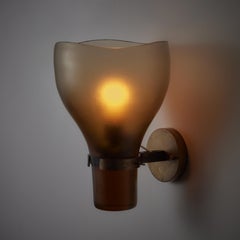

Single Sconce by Tobia Scarpa for Venini
By Tobia Scarpa, Venini
Located in Los Angeles, CA
Single sconce by Tobia Scarpa for Venini. Rare battuto glass chalice shaped wall sconce in an
Metal, Brass
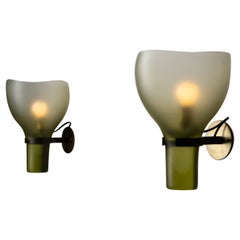

Pair of Sconces by Tobia Scarpa for Venini
By Venini, Tobia Scarpa
Located in Los Angeles, CA
Pair of sconces by Tobia Scarpa for Venini. Rare battuto glass chalice shaped wall sconce in a soft
Blown Glass
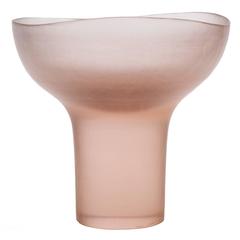

Venini Battuto Glass Footed Vase by Tobia Scarpa & Ludovico Diaz de, Santillana
By Ludovico Diaz de Santillana, Tobia Scarpa, Venini
Located in New York, NY
Venini Battuto glass footed vase by Tobia Scarpa & Ludovico Diaz de Santillana acid stamp to
Art Glass
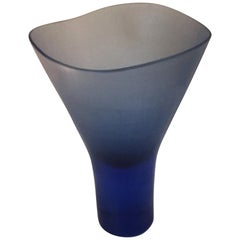

Signed Tobia Scarpa for Venini Murano Battuto Vase
By Tobia Scarpa
Located in Keego Harbor, MI
Tobia Scarpa for Venini signed Murano battuto vase.
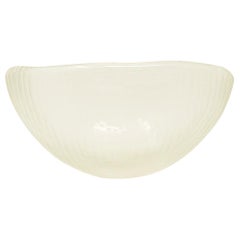

Vintage Murano Art Glass Bowl with Battuto Surface
By Carlo Scarpa, Tobia Scarpa
Located in Providence, RI
Vintage Murano art glass bowl with Battuto surface, circa 1960. Polished pontil. Unsigned
Art Glass
$548Sale Price / set|20% Off
H 4.14 in W 2.56 in D 4.14 in
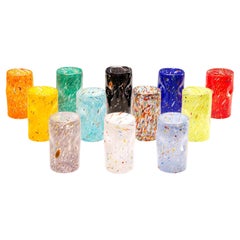
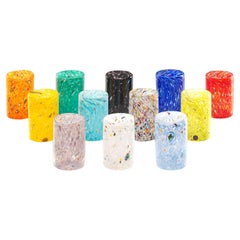
Set of 12 Handmade Unique Goto Murano Drinking Glasses
By Roberto Beltrami
Located in Murano, VE
The Murano Glass Goto collection brings a piece of authentic Italian art to your dining table. Hand-blown with artistic expertise, these glasses are inspired by the traditional Venet...
Murano Glass
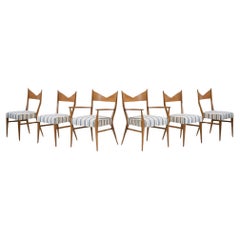
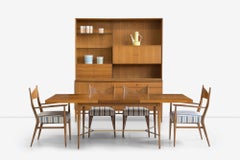
Paul McCobb Dining Chairs for Directional Set of Six
By Paul McCobb, Directional
Located in Chicago, IL
Paul McCobb Dining Chairs for Directional Set of Six, Four model-1080 Armless and Two model-1082 Arm Chairs, Solid Mahogany wood with Bow-Tie Backs, upholstered seats. Table and Cabi...
Mahogany
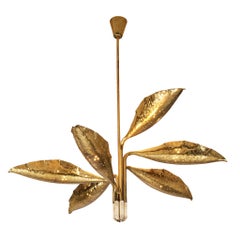
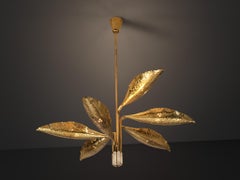
Angelo Lelii for Arredoluce Chandelier in Hammered Brass
By Arredoluce, Angelo Lelii
Located in Waalwijk, NL
Angelo Lelii for Arredoluce, chandelier model 12369, brass, Italy, design circa 1951 Organic chandelier by Angelo Lelii designed for Arredoluce. Six leaves open towards the ceiling ...
Brass
Widely recognized as superstars of postmodern Italian design, husband-and-wife team Afra and Tobia Scarpa (1937–2011; b. 1935) collaboratively created chairs, sofas and other furniture that work equally well in both traditional and cutting-edge environments.
Afra Bianchin and Tobia Scarpa met as architecture students at the Università Iuav di Venezia. In a class led by architect and furniture designer Franco Albini, they created their first collaborative piece, the Pigreco armchair, later produced with Gavina. After graduating in 1957, Tobia Scarpa worked for Murano glass company Venini & Co. before the couple opened a studio in Afra’s hometown, Montebelluna, in 1960. (Tobia, the son of famed glass artist and architect Carlo Scarpa, was born in Venice.)
Ranging from architecture and interior design to furniture and clothing, the Scarpas’ practice from its beginnings in the mid-1950s to the 21st century has included a diverse scope of projects combining new technology with thoughtful function and sculptural yet simple forms.
For Afra and Tobia, a close collaborative process was pivotal to the success of their designs. The duo was also prolific — they designed for the most influential European manufacturers, including B&B Italia, Cassina, Knoll and FLOS. With respect to the latter, Afra and Tobia were among the legendary Italian lighting maker’s earliest collaborators, and their pioneering designs for the brand included the Papillon lamp, one of the first fixtures to use halogen technology. Their most recognized designs include the Bastiano sofa (1962), the Vanessa bed (1959), the Coronado sofa (1966) and the Soriana seating collection (1970). Work on the Soriana sofa began in late 1969 for an early 1970 debut, and it feels as radical today as it did in its heyday.
Architecture was also a central part of Afra and Tobia’s practice, which spanned residential buildings and factories for Italian companies such as Benetton. Their commissions for the global fashion brand included numerous industrial projects, from textile plants to storefronts. By 1985, Afra and Tobia Scarpa’s work was celebrated in a 30-year retrospective at Center Four in Queens, New York. Looking around the 30,000-square-foot exhibition space, Afra joked to the New York Times, “Seeing all those things makes us feel very tired, and now we feel that maybe we worked too much.”
It was not too much for their legacy, as Afra and Tobia Scarpa’s work continues to inspire new generations. Scarpa designs are in collections at the Louvre, the Museum of Modern Art and the Victoria and Albert Museum. The couple was awarded the Compasso d’Oro in 1970 for the Soriana armchair.
Find vintage Tobia Scarpa table lamps, sofas, dining chairs and other furniture today on 1stDibs.
Organically shaped, clean-lined and elegantly simple are three terms that well describe vintage mid-century modern furniture. The style, which emerged primarily in the years following World War II, is characterized by pieces that were conceived and made in an energetic, optimistic spirit by creators who believed that good design was an essential part of good living.
ORIGINS OF MID-CENTURY MODERN FURNITURE DESIGN
CHARACTERISTICS OF MID-CENTURY MODERN FURNITURE DESIGN
MID-CENTURY MODERN FURNITURE DESIGNERS TO KNOW
ICONIC MID-CENTURY MODERN FURNITURE DESIGNS
VINTAGE MID-CENTURY MODERN FURNITURE ON 1STDIBS
The mid-century modern era saw leagues of postwar American architects and designers animated by new ideas and new technology. The lean, functionalist International-style architecture of Le Corbusier and Bauhaus eminences Ludwig Mies van der Rohe and Walter Gropius had been promoted in the United States during the 1930s by Philip Johnson and others. New building techniques, such as “post-and-beam” construction, allowed the International-style schemes to be realized on a small scale in open-plan houses with long walls of glass.
Materials developed for wartime use became available for domestic goods and were incorporated into mid-century modern furniture designs. Charles and Ray Eames and Eero Saarinen, who had experimented extensively with molded plywood, eagerly embraced fiberglass for pieces such as the La Chaise and the Womb chair, respectively.
Architect, writer and designer George Nelson created with his team shades for the Bubble lamp using a new translucent polymer skin and, as design director at Herman Miller, recruited the Eameses, Alexander Girard and others for projects at the legendary Michigan furniture manufacturer.
Harry Bertoia and Isamu Noguchi devised chairs and tables built of wire mesh and wire struts. Materials were repurposed too: The Danish-born designer Jens Risom created a line of chairs using surplus parachute straps for webbed seats and backrests.
The Risom lounge chair was among the first pieces of furniture commissioned and produced by celebrated manufacturer Knoll, a chief influencer in the rise of modern design in the United States, thanks to the work of Florence Knoll, the pioneering architect and designer who made the firm a leader in its field. The seating that Knoll created for office spaces — as well as pieces designed by Florence initially for commercial clients — soon became desirable for the home.
As the demand for casual, uncluttered furnishings grew, more mid-century furniture designers caught the spirit.
Classically oriented creators such as Edward Wormley, house designer for Dunbar Inc., offered such pieces as the sinuous Listen to Me chaise; the British expatriate T.H. Robsjohn-Gibbings switched gears, creating items such as the tiered, biomorphic Mesa table. There were Young Turks such as Paul McCobb, who designed holistic groups of sleek, blond wood furniture, and Milo Baughman, who espoused a West Coast aesthetic in minimalist teak dining tables and lushly upholstered chairs and sofas with angular steel frames.
Generations turn over, and mid-century modern remains arguably the most popular style going. As the collection of vintage mid-century modern chairs, dressers, coffee tables and other furniture for the living room, dining room, bedroom and elsewhere on 1stDibs demonstrates, this period saw one of the most delightful and dramatic flowerings of creativity in design history.