Located in Moreno Valley, CA
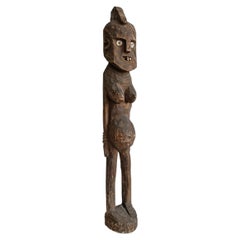
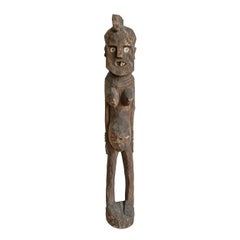
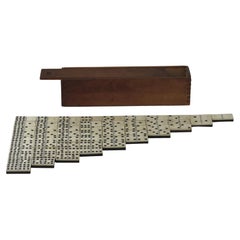
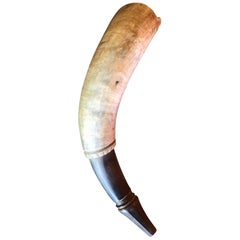
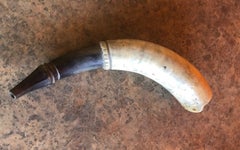
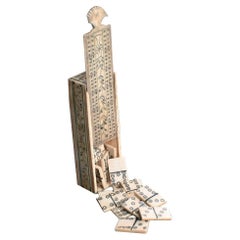
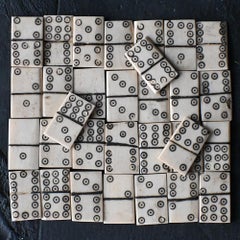
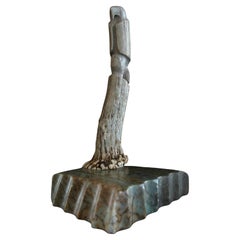
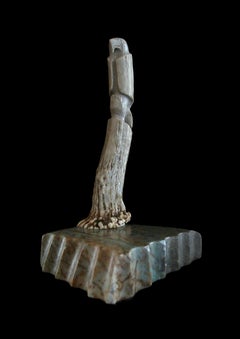
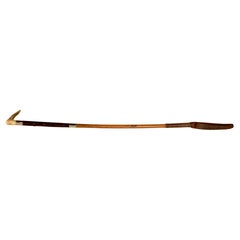
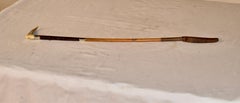
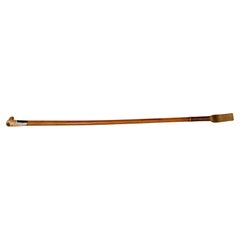
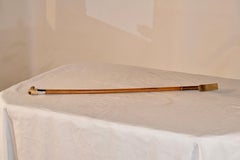
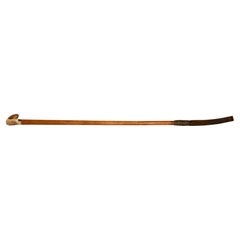
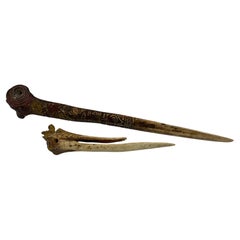
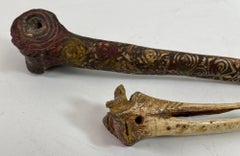
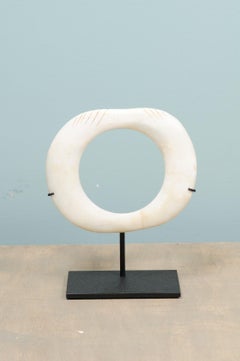
Antique Ethnic Artifact Sepik River Cassowary Bone from Papua New Guinea
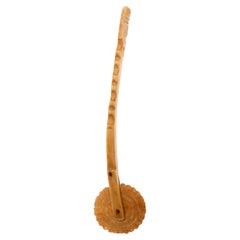
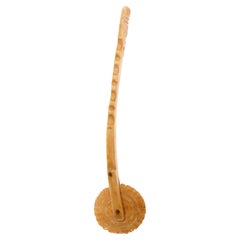
For many groups in Papua New Guinea, bone was an important medium for making tools of all types. This artifact is made from leg bone of a cassowary, a large, flightless, and extremely dangerous, bird.
Cassowaries also play an important role in the mythology of groups in the Sepik River area.
Though no longer used these bone artifacts are still used ceremonially. They often play important roles in male initiation and other rituals. They are also worn as personal adornment by tucking them into a band of braided fibers worn around the upper arm.
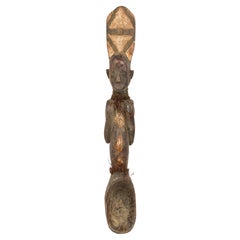
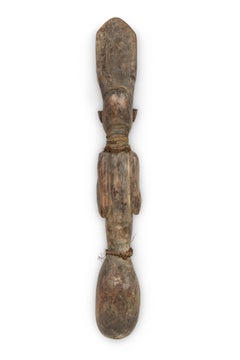
Antique Ethnic Bone Cassowary Artifact with minimal carving and incised design confined to the joint end.
A small hole has been drilled through from both sides of the top and presumably for the threading of a cord.
The bone has been partially divided near the top and to form two prongs that project down the back of the dagger possibly allowing the user to wear is tuck into a waist band or belt.
Origin Papua New Guinea Maprik Dist Area
From the Art Collection of Marian and John Scott, acquired in 1962.
Similar items are in display in the Timothy S. Y. Lam Museum of Anthropology.
Purchased from the amazing private collection of Mark Lissauer who spent his life collecting niche ethnographic pieces.
About Mark Lissauer:
Mark Lissauer spent forty years travelling abroad for months at a time collecting ethnographic artefacts primarily from New Guinea and the islands of the West Pacific, and from Asia and Himalayan countries. Fluent in five languages and having in the course of business travelled to more than forty countries, Mark is well-known to museums and art-collectors around the world for his long career and his interesting and diverse collection of rare ethnographic material.
Mark knows the origin and symbolism of each piece. Through extensive research and more than ninety trips around the globe, Mark familiarised himself with the traditions of the various cultures he visited in order to understand the meaning of each object to its region and tribe. His home has a specialist library and several rooms are filled with tribal carvings, textiles and ethnographica.
He acquired his first tribal piece in 1948 during a business trip to Milne Bay, New Guinea, and has since documented the acquisition of some 35,000 items. Several thousands of these have been sold to important private collections and museums worldwide, including the Rockefeller Museum, the British Museum and the Musée National des Arts d’Afrique et d’Océanie, now incorporated into the Louvre Museum.
Estimator certificate of authenticity by Wayne Heathcote Tribal Art Dealer and Expert.
Heathcote has a flash gallery in Brussels, where much of the tribal art business is centred, and is an expert at Sotheby's tribal art sale...
Category
Early 20th Century Folk Art Bone Folk Art