Art

to
296
929
167
122
25
43
Overall Width
to
Overall Height
to
2
1,236
48
63
35
18
357
551
91
31
406
377
176
56
30
10
6
1
1,116
134
6
830
622
358
354
340
296
180
89
45
43
30
30
27
26
18
17
15
12
10
9
829
290
84
84
55
45
10,083
2,775
1,380
168
448
609
541
Art For Sale
Artist: Marc Chagall
Artist: Paul Villinski
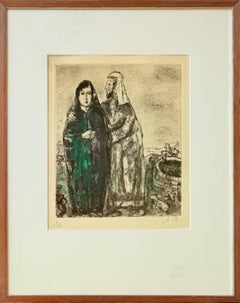
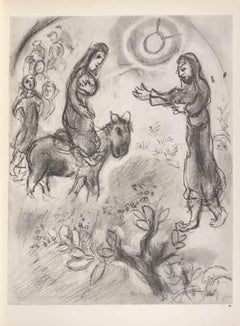
Meeting of Jacob and Rachel at the well
Located in OPOLE, PL
Marc Chagall (1887-1985) - Meeting of Jacob and Rachel at the well Etching from 1958. Edition of 100 Enhanced with watercolour by the artist. Dimensions of work: 52 x 37 cm. Han...
Category

1950s Modern Art

Materials

Etching

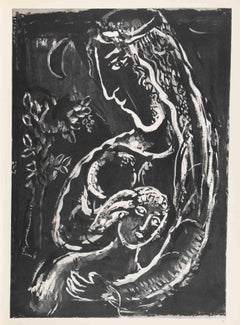
The Night in the Desert - Héliogravure by Marc Chagall - 1960
Located in Roma, IT
Héliogravure on brown-toned paper, so signature. Héliogravure  on bot sheets, recto and verso. Edition of 6500 unsigned copies. Printed by Mourlot and published by Tériade, Paris. ...
Category

1960s Surrealist Art

Materials

Photogravure

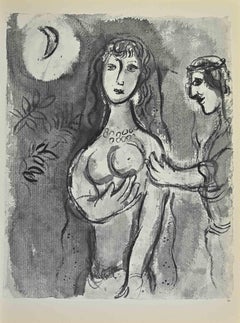
The Three Women - Héliogravure by Marc Chagall - 1960
Located in Roma, IT
Héliogravure on brown-toned paper, so signature. On bot sheets, recto and verso. Edition of 6500 unsigned copies. Printed by Mourlot and published by Tériade, Paris. Ref. Mourlot,...
Category

1960s Surrealist Art

Materials

Photogravure

Soleil couchant (Sunset)
Located in OPOLE, PL
Marc Chagall (1887-1985) - Soleil couchant (Sunset) Lithograph from 1967. an unsigned proof, from the numbered edition of 150, on Arches paper. Dimensions of work: 73 x 52 cm. Re...
Category

1960s Modern Art

Materials

Lithograph

The Return of David - Héliogravure by Marc Chagall - 1960
Located in Roma, IT
Héliogravure on brown-toned paper, no signature. Héliogravure  on bot sheets, recto and verso. Edition of 6500 unsigned copies. Printed by Mourlot and published by Tériade on the A...
Category

1960s Surrealist Art

Materials

Photogravure

Sarah and Abimelech - Lithograph by Marc Chagall - 1960
Located in Roma, IT
Color lithograph realized by Marc Chagall in 1960 to illustrate "The Bible".  Edition of 6500, published by Tériade in no. 33 and 34 of the Art Magazine Verve. Printed by Mourlot a...
Category

1960s Surrealist Art

Materials

Lithograph

Rachel leaves with Jacob - Héliogravure by Marc Chagall - 1960
Located in Roma, IT
Héliogravure on brown-toned paper, so signature. Héliogravure  on bot sheets, recto and verso. Edition of 6500 unsigned copies. Printed by Mourlot and published by Tériade, Paris. ...
Category

1960s Surrealist Art

Materials

Photogravure

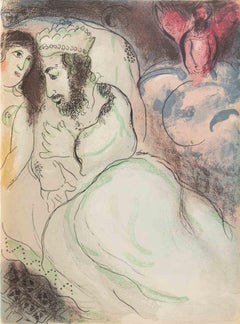
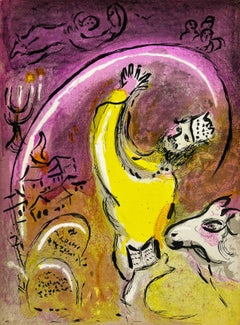
Solomon
Located in OPOLE, PL
Marc Chagall (1887-1985) - Solomon Lithograph from 1956. Dimensions of work: 35 x 26 cm. Publisher: Tériade, Paris. Reference: Mourlot 131. On the reverse: another original litho...
Category

1950s Modern Art

Materials

Lithograph

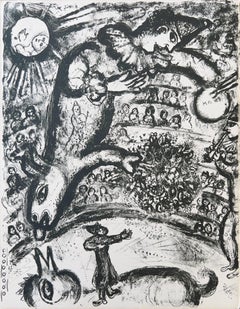
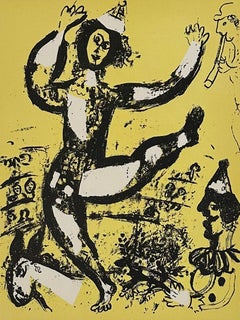
Cirque
Located in OPOLE, PL
Marc Chagall (1887-1985) - Cirque Lithograph from 1967. The edition of 250 on Arches paper. Dimensions of work: 42 x 32.5 cm. Publisher: Tériade, Paris. Reference: Mourlot 487, ...
Category

1930s Symbolist Art

Materials

Lithograph

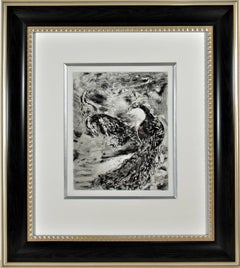
Le Geai Pare des Plumes du Paon, From the suite Les Fables De La Fontaine
Located in San Francisco, CA
Artist: Marc Chagall (Russian, 1887-1985) Title: Le Geai Pare des Plumes du Paon Year: 1927 Medium: Original etching Edition: fom the unumbered edition of 200 Paper: Montval Laid paper Image (plate mark) size: 11.5 x 9.5 inches paper size: 14.85 x 11.15 inches Signature: Signed in the plate as issue Publisher: Teriade, Paris Printer: Maurice Potin Condition: Excellent Frame: Framed in a custom wooden black and silver frame, with silver color bevel and fabric matting. Framed size is 26 x23 inches Description: From the suite les Fables De La Fontaine...
Category

Early 20th Century Modern Art

Materials

Etching

The Language of the Prophet - Héliogravure by Marc Chagall - 1960
Located in Roma, IT
Héliogravure on brown-toned paper, so signature. On bot sheets, recto and verso. Edition of 6500 unsigned copies. Printed by Mourlot and published by Tériade, Paris. Ref. Mourlot,...
Category

1960s Surrealist Art

Materials

Photogravure

Homage to Marc Chagall, from XXe Siecle
Located in Washington, DC
Artist: Marc Chagall Title: Homage to Marc Chagall Portfolio: XXe Siecle Medium: Lithograph Year: 1969 Edition: Unnumbered Framed Size: 20 1/2" x 17 1/4" Sheet Size: 12" x 9 1/2" Im...
Category

1960s Modern Art

Materials

Lithograph

Jonah and the Whale - Héliogravure by Marc Chagall - 1960
Located in Roma, IT
Héliogravure on brown-toned paper, no signature. Héliogravure  on bot sheets, recto and verso. Edition of 6500 unsigned copies. Printed by Mourlot and published by Tériade on the A...
Category

1960s Surrealist Art

Materials

Photogravure

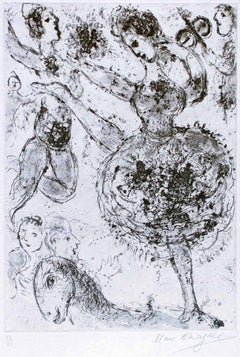
La Grande Danseuse - Etching by Marc Chagall - 1967
Located in Roma, IT
Etching and aquatint on Japan paper. Hand signed and numbered in pencil. Edition of 23/35 prints. Excellent condition. Ref. Cramer, Marc Chagall, The Illustrated Books, no. 6
Category

1960s Surrealist Art

Materials

Etching

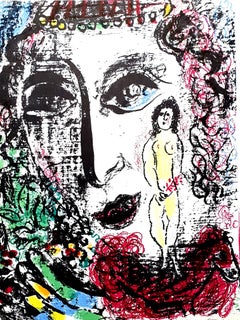
L'apparition au Cirque
Located in OPOLE, PL
"Marc Chagall (1887-1985) - L'apparition au Cirque Original Lithograph from 1960. Dimensions of work: 32 x 24 cm. Publisher: Maeght Éditeur, Paris. The work is in Excellent condi...
Category

1960s Modern Art

Materials

Lithograph

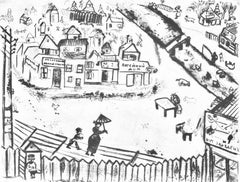
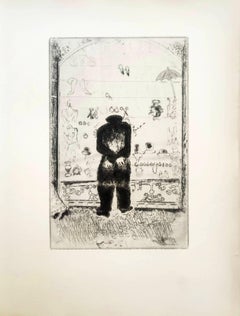
Marc Chagall, The Small Town, from Nicolas Gogol, Dead Souls, 1923-1927
Located in Southampton, NY
This exquisite etching by Marc Chagall (1887–1985), titled La petite ville (The Small Town), originates from the celebrated folio Nicolas Gogol, Les Ames mortes, Eaux-fortes original...
Category

1920s Expressionist Art

Materials

Etching

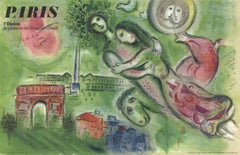
Romeo And Juliette By Marc Chagall
Located in Dubai, Dubai
Romeo and Juliette By Marc Chagall 1964 Medium: Lithograph Paper Size: 25 x 39 inches ( 64 x 99 cm ) Image Size: 25 x 39 inches ( 64 x 99 cm ) Edition Size: 5000
Category

1960s Contemporary Art

Materials

Lithograph

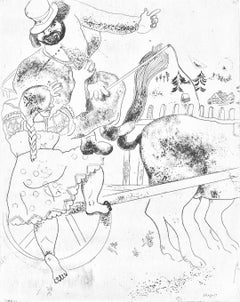
Marc Chagall, The Road Sign, from Nicolas Gogol, Dead Souls, 1923-1927
Located in Southampton, NY
This exquisite etching by Marc Chagall (1887–1985), titled L'indication de la route (The Road Sign), originates from the celebrated folio Nicolas Gogol, Les Ames mortes, Eaux-fortes ...
Category

1920s Expressionist Art

Materials

Etching

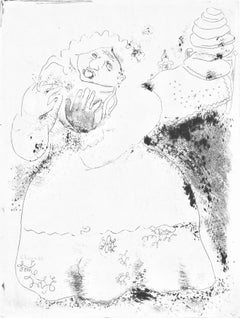
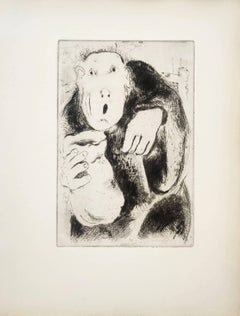
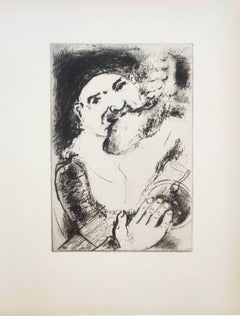
Marc Chagall, Madame Korobotchka, from Nicolas Gogol, Dead Souls, 1923-1927
Located in Southampton, NY
This exquisite etching by Marc Chagall (1887–1985), titled Madame Korobotchka (Madame Korobotchka), originates from the celebrated folio Nicolas Gogol, Les Ames mortes, Eaux-fortes o...
Category

1920s Expressionist Art

Materials

Etching

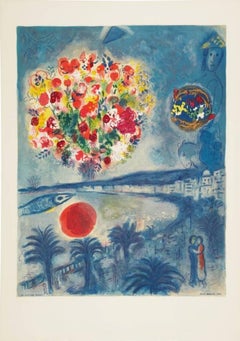
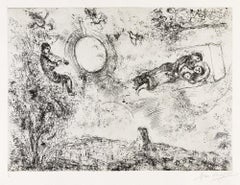
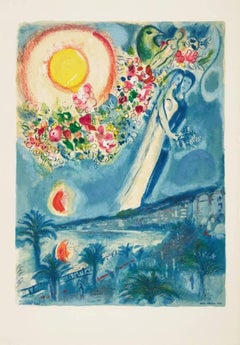
Fiancés dans le ciel de Nice (Finaces in the Sky at Nice)
Located in OPOLE, PL
Marc Chagall (1887-1985) - Fiancés dans le ciel de Nice (Finaces in the Sky at Nice) Lithograph from 1967. an unsigned proof, from the numbered edition of 150, on Arches paper. Di...
Category

1960s Modern Art

Materials

Lithograph

Acrobate - Lithograph by Marc Chagall - 1960
Located in Roma, IT
Acrobate  is an artwork realized by March Chagall, 1960s. Lithograph on brown-toned paper, no signature. Lithograph on both sheets. Edition of 6500 unsigned lithographs. Printed b...
Category

1960s Surrealist Art

Materials

Lithograph

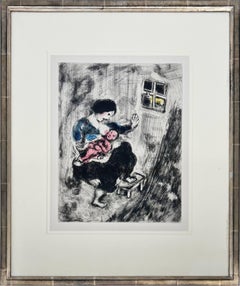
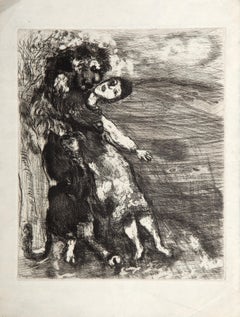
The Wolf, the Mother, and the Child
Located in OPOLE, PL
Marc Chagall (1887-1985) - The Wolf, the Mother, and the Child Etching from 1954. Edition of 85. Enhanced with watercolour by the artist. Dimensions of work: 39 x 30 cm. Referen...
Category

1950s Modern Art

Materials

Etching

Orpheus Orphée - Surrealism Mythology Greek
Located in London, GB
This original lithograph in colours is hand signed in pencil by the artist "Marc Chagall" at the lower right margin. It is also hand numbered 47 in pencil from the edition of 50, at...
Category

1960s Surrealist Art

Materials

Lithograph

Enlévement de Chloé, from Daphnis and Chloé
Located in Palo Alto, CA
Marc Chagall Enlévement de Chloé (Chloe is carried off by the Methymneans) from Daphnis and Chloé, 1961, is a stunning and gorgeous work of art tha...
Category

1960s Modern Art

Materials

Lithograph

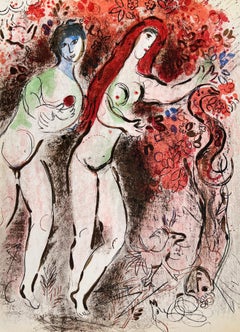
Adam and Eve and the Forbidden Fruit
Located in OPOLE, PL
Marc Chagall (1887-1985) - Adam and Eve and the Forbidden Fruit Lithograph from 1960. Dimensions of work: 35 x 26 cm Publisher: Tériade, Paris. The work is in Excellent condition...
Category

20th Century Modern Art

Materials

Lithograph

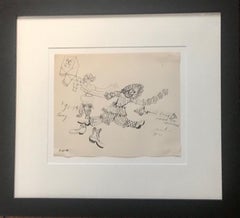
Venir voir à Carnot, 35-40
Located in Tel Aviv - Jaffa, IL
Stamped with the signature 'chAgAll' (lower left), inscribed '8 90-44 Passy.' (center left) and inscribed 'Carnot 35.40' (lower right) Pen and India ink on paper Executed circa 192...
Category

1920s Modern Art

Materials

India Ink, Pen

Les Amoureux dans le ciel à St-Paul
Located in New York, NY
Etching on paper, 1968. Signed by the artist in pencil, lower right. Numbered 9/50 in pencil, lower left. Catalogue raisonne reference: Cramer 36
Category

1960s Modern Art

Materials

Etching

Marc Chagall - Original Lithograph
Located in Collonge Bellerive, Geneve, CH
Marc Chagall Original Lithograph 1963 Dimensions: 32 x 24 cm Reference: Chagall Lithographe 1957-1962. VOLUME II. Condition : Excellent Marc Chagall (born in 1887) Marc Chagall was born in Belarus in 1887 and developed an early interest in art. After studying painting, in 1907 he left Russia for Paris, where he lived in an artist colony on the city’s outskirts. Fusing his own personal, dreamlike imagery with hints of the fauvism and cubism popular in France at the time, Chagall created his most lasting work—including I and the Village (1911)—some of which would be featured in the Salon des Indépendants exhibitions. After returning to Vitebsk for a visit in 1914, the outbreak of WWI trapped Chagall in Russia. He returned to France in 1923 but was forced to flee the country and Nazi persecution during WWII. Finding asylum in the U.S., Chagall became involved in set and costume design before returning to France in 1948. In his later years, he experimented with new art forms and was commissioned to produce numerous large-scale works. Chagall died in St.-Paul-de-Vence in 1985. The Village Marc Chagall was born in a small Hassidic community on the outskirts of Vitebsk, Belarus, on July 7, 1887. His father was a fishmonger, and his mother ran a small sundries shop in the village. As a child, Chagall attended the Jewish elementary school, where he studied Hebrew and the Bible, before later attending the Russian public school. He began to learn the fundamentals of drawing during this time, but perhaps more importantly, he absorbed the world around him, storing away the imagery and themes that would feature largely in most of his later work. At age 19 Chagall enrolled at a private, all-Jewish art school and began his formal education in painting, studying briefly with portrait artist Yehuda Pen. However, he left the school after several months, moving to St. Petersburg in 1907 to study at the Imperial Society for the Protection of Fine Arts. The following year, he enrolled at the Svanseva School, studying with set designer Léon Bakst, whose work had been featured in Sergei Diaghilev's Ballets Russes. This early experience would prove important to Chagall’s later career as well. Despite this formal instruction, and the widespread popularity of realism in Russia at the time, Chagall was already establishing his own personal style, which featured a more dreamlike unreality and the people, places and imagery that were close to his heart. Some examples from this period are his Window Vitebsk (1908) and My Fianceé with Black Gloves (1909), which pictured Bella Rosenfeld, to whom he had recently become engaged. The Beehive Despite his romance with Bella, in 1911 an allowance from Russian parliament member and art patron Maxim Binaver enabled Chagall to move to Paris, France. After settling briefly in the Montparnasse neighborhood, Chagall moved further afield to an artist colony known as La Ruche (“The Beehive”), where he began to work side by side with abstract painters such as Amedeo Modigliani and Fernand Léger as well as the avant-garde poet Guillaume Apollinaire. At their urging, and under the influence of the wildly popular fauvism and cubism, Chagall lightened his palette and pushed his style ever further from reality. I and the Village (1911) and Homage to Apollinaire (1912) are among his early Parisian works, widely considered to be his most successful and representative period. Though his work stood stylistically apart from his cubist contemporaries, from 1912 to 1914 Chagall exhibited several paintings at the annual Salon des Indépendants exhibition, where works by the likes of Juan Gris, Marcel Duchamp and Robert Delaunay were causing a stir in the Paris art world. Chagall’s popularity began to spread beyond La Ruche, and in May 1914 he traveled to Berlin to help organize his first solo exhibition, at Der Sturm Gallery. Chagall remained in the city until the highly acclaimed show opened that June. He then returned to Vitebsk, unaware of the fateful events to come. War, Peace and Revolution In August 1914 the outbreak of World War I precluded Chagall’s plans to return to Paris. The conflict did little to stem the flow of his creative output, however, instead merely giving him direct access to the childhood scenes so essential to his work, as seen in paintings such as Jew in Green (1914) and Over Vitebsk (1914). His paintings from this period also occasionally featured images of the war’s impact on the region, as with Wounded Soldier (1914) and Marching (1915). But despite the hardships of life during wartime, this would also prove to be a joyful period for Chagall. In July 1915 he married Bella, and she gave birth to a daughter, Ida, the following year. Their appearance in works such as Birthday (1915), Bella and Ida by the Window (1917) and several of his “Lovers” paintings give a glimpse of the island of domestic bliss that was Chagall’s amidst the chaos. To avoid military service and stay with his new family, Chagall took a position as a clerk in the Ministry of War Economy in St. Petersburg. While there he began work on his autobiography and also immersed himself in the local art scene, befriending novelist Boris Pasternak, among others. He also exhibited his work in the city and soon gained considerable recognition. That notoriety would prove important in the aftermath of the 1917 Russian Revolution when he was appointed as the Commissar of Fine Arts in Vitebsk. In his new post, Chagall undertook various projects in the region, including the 1919 founding of the Academy of the Arts. Despite these endeavors, differences among his colleagues eventually disillusioned Chagall. In 1920 he relinquished his position and moved his family to Moscow, the post-revolution capital of Russia. In Moscow, Chagall was soon commissioned to create sets and costumes for various productions at the Moscow State Yiddish Theater...
Category

1960s Surrealist Art

Materials

Lithograph

Le Sept Péchés Capitaux
Located in OPOLE, PL
Marc Chagall (1887-1985) - Le Sept Péchés Capitaux Etching from 1925. Edition of 300 proofs. Dimensions of work: 25 x 19.5 cm. Publisher: Tériade, Paris. Reference: Kornfeld 47....
Category

1920s Symbolist Art

Materials

Etching

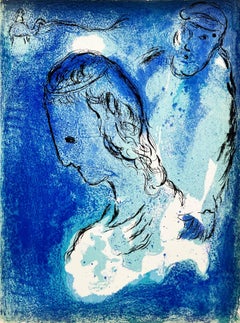
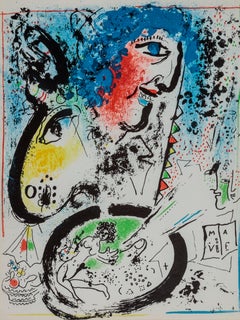
Chagall Lithographe Tome I - Frontispice, Auto-portrait
Located in Milwaukee, WI
Framed 25.75 x 22.75 in No. 282 in the Catalogue Raisonne of Chagall's lithographs This lithograph came from "The Lithographs of Chagall: Volume I" by Fernand Mourlot and Marc Cha...
Category

1960s Art

Materials

Lithograph

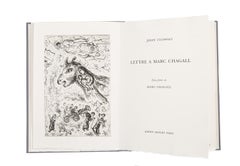
Lettre à Marc Chagall, with five etchings by the artist
Located in OPOLE, PL
Marc Chagall (1887 Liozna near Vitebsk – 1985 Saint-Paul-de-Vence), Jerzy Ficowski: Lettre à Marc Chagall with five etchings by the artist, 1969 Technique: etching on paper Dimensio...
Category

1960s Symbolist Art

Materials

Etching

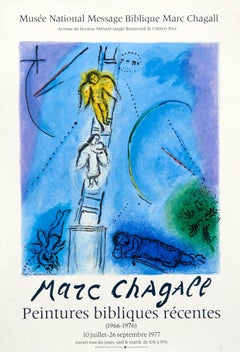
L'Echelle de Jacob, Peintures Bibliques Recentes 1966-1976 by Marc Chagall
Located in New York, NY
Artist: Marc Chagall Medium: Lithographic Poster, 1977 Dimensions: 30 x 20.75 in, 76.2 x 52.7 cm
Category

1970s Art

Materials

Lithograph

Abraham und Sarah
Located in OPOLE, PL
Marc Chagall (1887-1985) - Abraham und Sarah Lithograph from 1956. Dimensions of work: 35 x 26 cm. Publisher: Tériade, Paris. Reference: Mourlot 122. On the reverse: blank, as is...
Category

1950s Modern Art

Materials

Lithograph

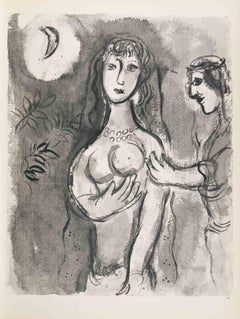
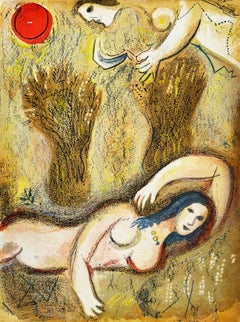
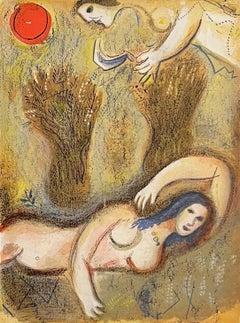
Boaz wakes up and sees Ruth
Located in OPOLE, PL
Marc Chagall (1887-1985) - Boaz wakes up and sees Ruth Lithograph from 1960. Dimensions of work: 35 x 26 cm Publisher: Tériade, Paris. The work is in Excellent condition. Fast ...
Category

20th Century Modern Art

Materials

Lithograph

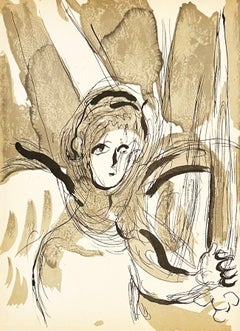
Marc Chagall Angel With Sword, from The Bible Lithographs 1956
Located in Washington, DC
Artist: Marc Chagall Medium: Lithograph Title: Angel With Sword Year: 1956 Portfolio: The Bible Lithographs 1956 Edition: 6500 Signed: No Reference: Cramer 25, Mourlot 119 Framed Siz...
Category

1950s Art

Materials

Lithograph

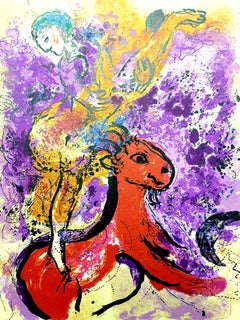
Marc Chagall - The Red Rider - Original Lithograph
Located in Collonge Bellerive, Geneve, CH
Marc Chagall - Original Lithograph The Red Rider From the unsigned, unnumbered lithograph printed in the literary review XXe Siecle 1957 See Mourlot 191 Dimensions: 32 x 24 cm Publisher: G. di San Lazzaro. Marc Chagall (born in 1887) Marc Chagall was born in Belarus in 1887 and developed an early interest in art. After studying painting, in 1907 he left Russia for Paris, where he lived in an artist colony on the city’s outskirts. Fusing his own personal, dreamlike imagery with hints of the fauvism and cubism popular in France at the time, Chagall created his most lasting work—including I and the Village (1911)—some of which would be featured in the Salon des Indépendants exhibitions. After returning to Vitebsk for a visit in 1914, the outbreak of WWI trapped Chagall in Russia. He returned to France in 1923 but was forced to flee the country and Nazi persecution during WWII. Finding asylum in the U.S., Chagall became involved in set and costume design before returning to France in 1948. In his later years, he experimented with new art forms and was commissioned to produce numerous large-scale works. Chagall died in St.-Paul-de-Vence in 1985. The Village Marc Chagall was born in a small Hassidic community on the outskirts of Vitebsk, Belarus, on July 7, 1887. His father was a fishmonger, and his mother ran a small sundries shop in the village. As a child, Chagall attended the Jewish elementary school, where he studied Hebrew and the Bible, before later attending the Russian public school. He began to learn the fundamentals of drawing during this time, but perhaps more importantly, he absorbed the world around him, storing away the imagery and themes that would feature largely in most of his later work. At age 19 Chagall enrolled at a private, all-Jewish art school and began his formal education in painting, studying briefly with portrait artist Yehuda Pen. However, he left the school after several months, moving to St. Petersburg in 1907 to study at the Imperial Society for the Protection of Fine Arts. The following year, he enrolled at the Svanseva School, studying with set designer Léon Bakst, whose work had been featured in Sergei Diaghilev's Ballets Russes. This early experience would prove important to Chagall’s later career as well. Despite this formal instruction, and the widespread popularity of realism in Russia at the time, Chagall was already establishing his own personal style, which featured a more dreamlike unreality and the people, places and imagery that were close to his heart. Some examples from this period are his Window Vitebsk (1908) and My Fianceé with Black Gloves (1909), which pictured Bella Rosenfeld, to whom he had recently become engaged. The Beehive Despite his romance with Bella, in 1911 an allowance from Russian parliament member and art patron Maxim Binaver enabled Chagall to move to Paris, France. After settling briefly in the Montparnasse neighborhood, Chagall moved further afield to an artist colony known as La Ruche (“The Beehive”), where he began to work side by side with abstract painters such as Amedeo Modigliani and Fernand Léger as well as the avant-garde poet Guillaume Apollinaire. At their urging, and under the influence of the wildly popular fauvism and cubism, Chagall lightened his palette and pushed his style ever further from reality. I and the Village (1911) and Homage to Apollinaire (1912) are among his early Parisian works, widely considered to be his most successful and representative period. Though his work stood stylistically apart from his cubist contemporaries, from 1912 to 1914 Chagall exhibited several paintings at the annual Salon des Indépendants exhibition, where works by the likes of Juan Gris, Marcel Duchamp and Robert Delaunay were causing a stir in the Paris art world. Chagall’s popularity began to spread beyond La Ruche, and in May 1914 he traveled to Berlin to help organize his first solo exhibition, at Der Sturm Gallery. Chagall remained in the city until the highly acclaimed show opened that June. He then returned to Vitebsk, unaware of the fateful events to come. War, Peace and Revolution In August 1914 the outbreak of World War I precluded Chagall’s plans to return to Paris. The conflict did little to stem the flow of his creative output, however, instead merely giving him direct access to the childhood scenes so essential to his work, as seen in paintings such as Jew in Green (1914) and Over Vitebsk (1914). His paintings from this period also occasionally featured images of the war’s impact on the region, as with Wounded Soldier (1914) and Marching (1915). But despite the hardships of life during wartime, this would also prove to be a joyful period for Chagall. In July 1915 he married Bella, and she gave birth to a daughter, Ida, the following year. Their appearance in works such as Birthday (1915), Bella and Ida by the Window (1917) and several of his “Lovers” paintings give a glimpse of the island of domestic bliss that was Chagall’s amidst the chaos. To avoid military service and stay with his new family, Chagall took a position as a clerk in the Ministry of War Economy in St. Petersburg. While there he began work on his autobiography and also immersed himself in the local art scene, befriending novelist Boris Pasternak, among others. He also exhibited his work in the city and soon gained considerable recognition. That notoriety would prove important in the aftermath of the 1917 Russian Revolution when he was appointed as the Commissar of Fine Arts in Vitebsk. In his new post, Chagall undertook various projects in the region, including the 1919 founding of the Academy of the Arts. Despite these endeavors, differences among his colleagues eventually disillusioned Chagall. In 1920 he relinquished his position and moved his family to Moscow, the post-revolution capital of Russia. In Moscow, Chagall was soon commissioned to create sets and costumes for various productions at the Moscow State Yiddish Theater, where he would paint a series of murals titled Introduction to the Jewish Theater as well. In 1921, Chagall also found work as a teacher at a school for war orphans. By 1922, however, Chagall found that his art had fallen out of favor, and seeking new horizons he left Russia for good. Flight After a brief stay in Berlin, where he unsuccessfully sought to recover the work exhibited at Der Sturm before the war, Chagall moved his family to Paris in September 1923. Shortly after their arrival, he was commissioned by art dealer and publisher Ambroise Vollard to produce a series of etchings for a new edition of Nikolai Gogol's 1842 novel Dead Souls. Two years later Chagall began work on an illustrated edition of Jean de la Fontaine’s Fables, and in 1930 he created etchings for an illustrated edition of the Old Testament, for which he traveled to Palestine to conduct research. Chagall’s work during this period brought him new success as an artist and enabled him to travel throughout Europe in the 1930s. He also published his autobiography, My Life (1931), and in 1933 received a retrospective at the Kunsthalle in Basel, Switzerland. But at the same time that Chagall’s popularity was spreading, so, too, was the threat of Fascism and Nazism. Singled out during the cultural "cleansing" undertaken by the Nazis in Germany, Chagall’s work was ordered removed from museums throughout the country. Several pieces were subsequently burned, and others were featured in a 1937 exhibition of “degenerate art” held in Munich. Chagall’s angst regarding these troubling events and the persecution of Jews in general can be seen in his 1938 painting White Crucifixion. With the eruption of World War II, Chagall and his family moved to the Loire region before moving farther south to Marseilles following the invasion of France. They found a more certain refuge when, in 1941, Chagall’s name was added by the director of the Museum of Modern Art (MOMA) in New York City to a list of artists and intellectuals deemed most at risk from the Nazis’ anti-Jewish campaign. Chagall and his family would be among the more than 2,000 who received visas and escaped this way. Haunted Harbors Arriving in New York City in June 1941, Chagall discovered that he was already a well-known artist there and, despite a language barrier, soon became a part of the exiled European artist community. The following year he was commissioned by choreographer Léonide Massine to design sets and costumes for the ballet Aleko, based on Alexander Pushkin’s “The Gypsies” and set to the music of Pyotr Ilyich Tchaikovsky. But even as he settled into the safety of his temporary home, Chagall’s thoughts were frequently consumed by the fate befalling the Jews of Europe and the destruction of Russia, as paintings such as The Yellow Crucifixion...
Category

1950s Surrealist Art

Materials

Lithograph

Le Lion Amoureux, de la Fables de La Fontaine, Etching by Marc Chagall
Located in Long Island City, NY
Marc Chagall, Russian (1887 - 1985) - Le Lion Amoureux, de la Fables de La Fontaine, Year: 1952, Medium: Etching on Japon Nacre, Image Size: 11.75 x 9.5 inches, Size: 15 x 11 in. (3...
Category

1950s Modern Art

Materials

Etching

Le Sept Péchés Capitaux
Located in OPOLE, PL
Marc Chagall (1887-1985) - Le Sept Péchés Capitaux Etching from 1925. Edition of 300 proofs. Dimensions of work: 25 x 19.5 cm. Publisher: Tériade, Paris. Reference: Kornfeld 47....
Category

1920s Symbolist Art

Materials

Etching

David (Poèmes, #18)
Located in Greenwich, CT
David is a woodcut on paper from Marc Chagall's Poèmes portfolio, published in 1968. The image size is 13 x 10 inches and the art is framed in an ornate, gold-tone frame. Unsigned as...
Category

20th Century Modern Art

Materials

Paper, Woodcut

Marc Chagall Cover, from The Bible Lithographs 1956
Located in Washington, DC
Artist: Marc Chagall Medium: Lithograph Title: Cover Year: 1956 Portfolio: The Bible Lithographs 1956 Edition: 6500 Signed: No Reference: Cramer 25, Mourlot 120 Framed Size: 22 1/2 x...
Category

1950s Art

Materials

Lithograph

The Circus, from 1960 Mourlot Lithographe I
Located in Washington, DC
Artist: Marc Chagall Title: The Circus Portfolio: Mourlot Lithographe I Medium: Lithograph Year: 1960 Edition: Unnumbered Framed Size: 20 1/2" x 17 1/2" Image Size: 12 1/2" x 9 1/2" ...
Category

1960s Modern Art

Materials

Lithograph

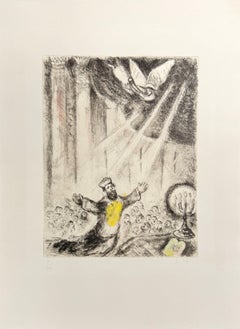
Solomon's Prayer
Located in OPOLE, PL
Marc Chagall (1887-1985) - Solomon's Prayer Etching from 1958. Edition of 100 Enhanced with watercolour by the artist. Dimensions of work: 52 x 37 cm. Hand signed. Publisher: T...
Category

1950s Modern Art

Materials

Etching

Solomon's Prayer
Solomon's Prayer
$5,260 Sale Price
20% Off
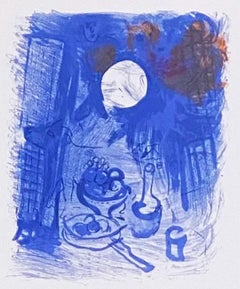
Blue Still Life
Located in Washington, DC
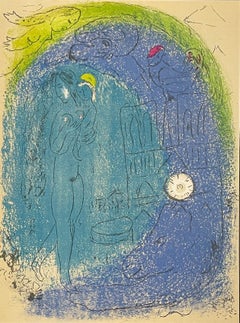
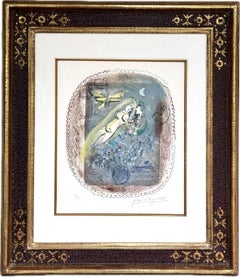
Artist: Marc Chagall Title: Blue Still Life Portfolio: Derriere le Miroir 99-100 Medium: Lithograph Date: 1957 Edition: 2500 Frame Size: 19 1/2" x 17 3/4" Sheet Size: 15" x 11" Signa...
Category

1950s Modern Art

Materials

Lithograph

Le Sept Péchés Capitaux
Located in OPOLE, PL
Marc Chagall (1887-1985) - Le Sept Péchés Capitaux Etching from 1925. Edition of 300 proofs. Dimensions of work: 25 x 19.5 cm. Publisher: Tériade, Paris. Reference: Kornfeld 47....
Category

1920s Symbolist Art

Materials

Etching

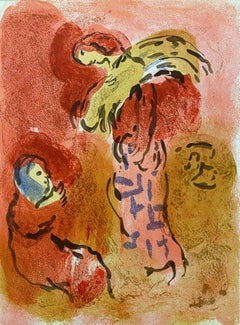
Ruth glaneuse
Located in Paris, FR
Original lithograph by Marc Chagall from The Bible of 1960 Ruth glaneuse Unsigned 35 x 26 cm Excellent condition
Category

1960s Surrealist Art

Materials

Lithograph

Le Sept Péchés Capitaux
Located in OPOLE, PL
Marc Chagall (1887-1985) - Le Sept Péchés Capitaux Etching from 1925. Edition of 300 proofs. Dimensions of work: 25 x 19.5 cm. Publisher: Tériade, Paris. Reference: Kornfeld 47....
Category

1920s Symbolist Art

Materials

Etching

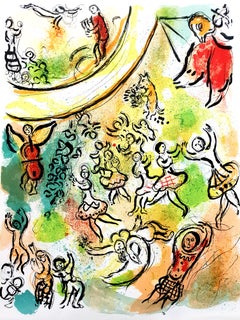
Le Plafond de l'Opera de Paris, Frontispice
Located in Milwaukee, WI
Framed 23 x 20 in
Category

1960s Art

Materials

Lithograph

Marc Chagall David and Bathsheba
Located in Washington, DC
Artist: Marc Chagall Title: David and Bathsheba Portfolio: The Bible Lithographs Medium: Lithograph Date: 1956 Edition: 6500 Frame Size: 22 1/2" x 19" Sheet Size: 14" x 10 3/8" Image...
Category

1950s Art

Materials

Lithograph

Boaz Wakes Up and Sees Ruth at His Feet
Located in Washington, DC
Artist: Marc Chagall Title: Boaz Wakes Up and Sees Ruth at His Feet Portfolio: 1960 Drawings for the Bible Medium: Original lithograph Date: 1960 Edition: Unnumbered Frame Size: 21 1...
Category

1960s Art

Materials

Lithograph

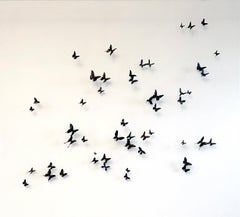
Cloud
Located in New Orleans, LA
medium: found aluminum cans, wire Available in multiple color/finish options (inquire with gallery). Installations are made to order, sizes and shapes of butterflies vary. Unique, ...
Category

21st Century and Contemporary Contemporary Art

Materials

Stainless Steel

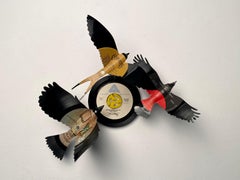
Stoned Soul Picnic
Located in New Orleans, LA
PAUL VILLINSKI has created studio and large-scale artworks for more than three decades. Villinski was born in York, Maine, USA, in 1960, son of an Air Force navigator. He has lived a...
Category

21st Century and Contemporary Contemporary Art

Materials

Steel

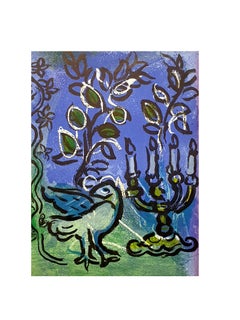
Marc Chagall - The Candlestick - Original Lithograph
Located in Collonge Bellerive, Geneve, CH
The Candlestick, from Jean Leymarie, Vitraux pour Jérusalem (Jerusalem Windows), André Sauret, Monte Carlo, 1962 (see M. 366-72; see C. books ...
Category

1960s Surrealist Art

Materials

Lithograph

Répit, 1968 (Poèmes, #9)
Located in Greenwich, CT
Répit (Respite) is a woodcut on paper from Marc Chagall's Poèmes portfolio, published in 1968. The image size is 13 x 10 inches and the art is framed in an ornate, gold-tone frame. U...
Category

20th Century Modern Art

Materials

Paper, Woodcut

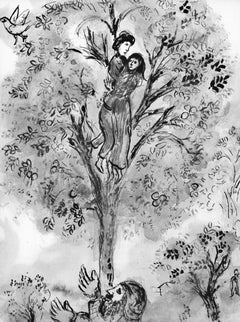
Marc Chagall, The Lovers in the Tree, from Tales of Boccaccio, 1950
Located in Southampton, NY
This exquisite lithograph by Marc Chagall (1887–1985), titled Les Amants dans l’arbre (The Lovers in the Tree), from Contes de Boccace, peintures du manuscrit des ducs de Bourgogne, ...
Category

1950s Expressionist Art

Materials

Lithograph

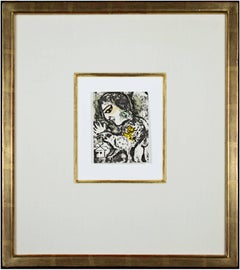
"Carte de Voeux #731, " Lithograph by Marc Chagall in Chagall Catalog Raisonne
Located in Milwaukee, WI
"Carte de Voeux #731" is an original lithograph greeting card by Marc Chagall. It is in the Chagall Catalogue Raisonne and is from a rare edition of only 200. It depicts a face and a bird in Chagall's signature whimsical modernist style. 5 1/2" x 4 1/4" art 21" x 18 1/4" frame Marc Chagall was born in Liozno, near Vitebsk, now in Belarus, the eldest of nine children in a close-knit Jewish family led by his father Khatskl (Zakhar) Shagal, a herring merchant, and his mother, Feige-Ite. This period of his life, described as happy though impoverished, appears in references throughout Chagall's work. The family home on Pokrovskaya Street is now the Marc Chagall Museum...
Category

1970s Modern Art

Materials

Lucite, Lithograph

LE COUPLE FROM SONGES (CRAMER 112)
Located in Aventura, FL
Color etching with aquatint on Rives paper. From Songes portfolio. Hand signed and numbered by Marc Chagall. Cramer 112. Published by Éditions Gérald Cramer, Geneva. Printed by Lacou...
Category

1980s Surrealist Art

Materials

Paper, Etching, Aquatint

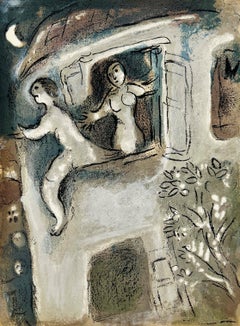
David saved by Michal
Located in OPOLE, PL
Marc Chagall (1887-1985) - David saved by Michal Lithograph from 1960. Dimensions of work: 35 x 26 cm Publisher: Tériade, Paris. The work is in Excellent condition. Fast and se...
Category

20th Century Modern Art

Materials

Lithograph

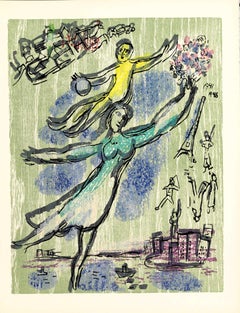
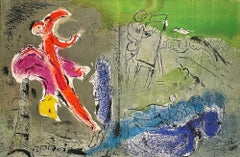
Vision de Paris II
Located in Washington, DC
Artist: Marc Chagall Title: Vision de Paris II Portfolio: 1953 Verve Vol VII No. 27-28 Medium: Lithograph Date: 1953 Edition: 6000 Frame Size: 28 1/4" x 21 1/2" Sheet Size: 14" x 20"...
Category

1950s Art

Materials

Lithograph

Revelations de Nozdriov
Located in San Francisco, CA
This artwork titled "Revelations de Nozdriov" from the suite "Nicholas Gogol, Les Ames Mortes" created 1923-1937, published 1948, is an etching on paper by renown Russian/French arti...
Category

Early 20th Century Modern Art

Materials

Etching

"Temple et Histoire de Bacchus"
Located in Astoria, NY
Marc Chagall (Russian/French, 1887-1985), "Temple et Histoire de Bacchus", from the "Daphnis et Chloe" series, Lithograph in Colors, 1961, from an edition of 250, published by Teria...
Category

1960s Art

Materials

Paper, Lithograph

Shop Art on 1stDibs: Photography, Drawings, Prints, Sculptures and Paintings for Sale

Whether growing your current fine art collection or taking the first steps on that journey, you will find an extensive range of original photography, drawings, prints, sculptures, paintings and more on 1stDibs.

Visual art is among the oldest forms of expression, and it has been evolving for centuries. Beautiful objects can provide a window to the past or insight into our current time. Art collecting enhances daily life through the presence of meaningful work. It displays an appreciation for culture, whether a print by Elizabeth Catlett channeling social change or a narrative quilt by Faith Ringgold.

Contemporary art has lured more initiates to collecting than almost any other category, with notable artists including Yayoi Kusama, Marc Chagall, Kehinde Wiley and Jean-Michel Basquiat. Navigating the waiting lists for the next Marlene Dumas, Jeff Koons or Jasper Johns has become competitive.

When you’re living with art, particularly as people more often work from home and enjoy their spaces, it’s important to choose art that resonates with you. While the richness of art with its many movements, styles and histories can be overwhelming, the key is to identify what is appealing and inspiring. Artwork can play with the surrounding color of a room, creating a layered approach. The dynamic shapes and sizes of sculptures can set different moods, such as a bronze by Miguel Guía on a mantel or an Alexander Calder mobile suspended over a table. A wall of art can evoke emotions in an interior while showing off your tastes and interests. A salon-style wall mixing eclectic pieces like landscape paintings with charcoal drawings is a unique way to transform a space and show off a collection.

For art meditating on the subconscious, investigate Surrealists like Joan Miró and Salvador Dalí. Explore Pop art and its leading artists such as Andy Warhol, Rosalyn Drexler and Keith Haring for bright and bold colors. Not only did these artists question art itself, but also how we perceive society. Similarly, 20th-century photography and abstract painting reconsidered the intent of art.

Abstract Expressionists like Helen Frankenthaler and Lee Krasner and Color Field artists including Sam Gilliam broke from conventional ideas of painting, while Op artists such as Yaacov Agam embraced visual trickery and kinetic movement. Novel visuals are also integral to contemporary work influenced by street art, such as sculptures and prints by KAWS.

Realist portraiture is a global tradition reflecting on what makes us human. This is reflected in the work of Slim Aarons, an American photographer whose images are at once candid and polished and appeared in Holiday magazine and elsewhere. Innovative artists Mickalene Thomas and Kerry James Marshall are now offering new perspectives on the form.

Collecting art is a rewarding, lifelong pursuit that can help connect you with the creative ways historic, modern and contemporary artists have engaged with the world. For more tips on piecing together an art collection, see our guide to buying and displaying art.

Find photography, drawings, paintings, prints and other art for sale on 1stDibs.

Still Thinking About These?

All Recently Viewed