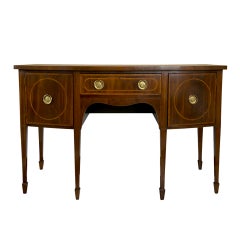
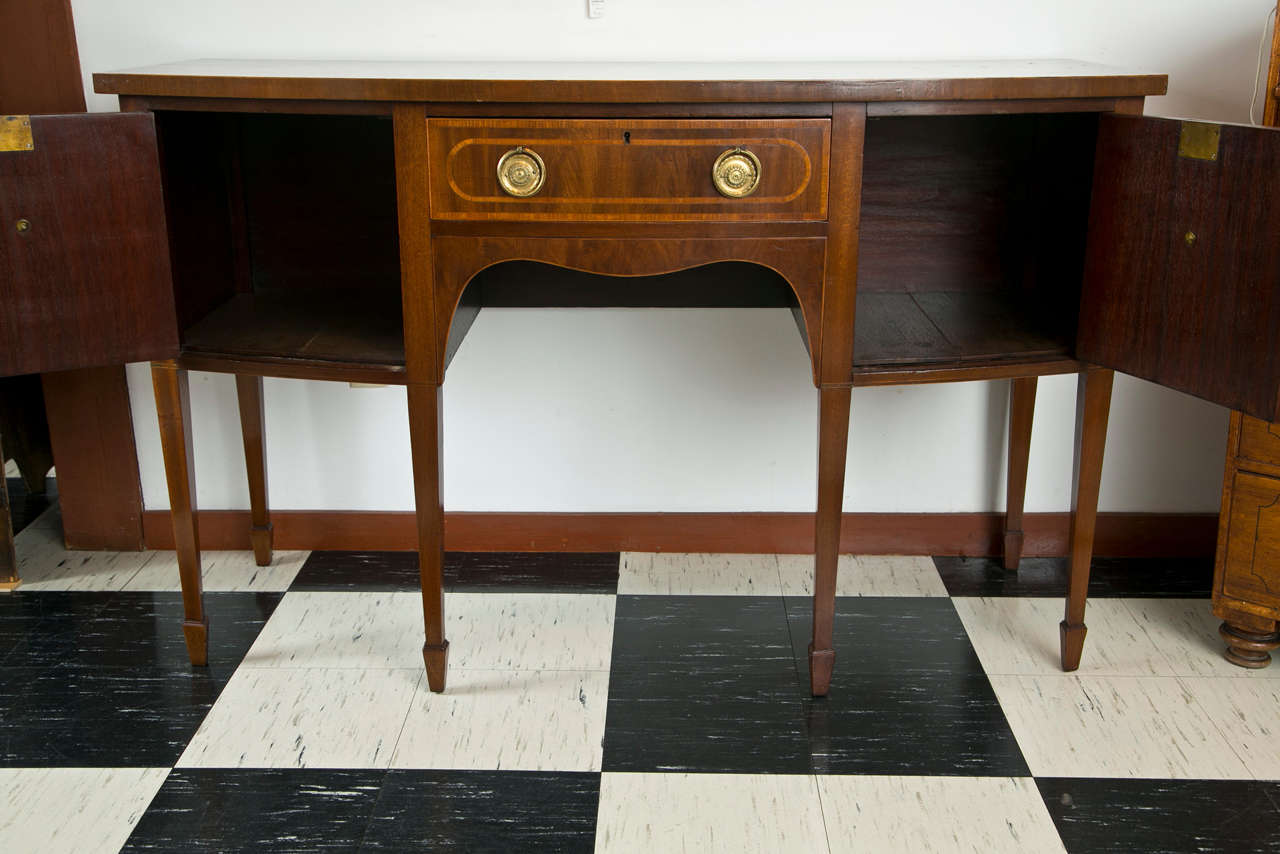
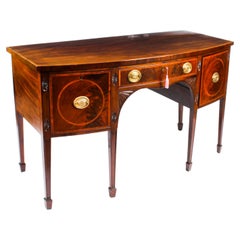
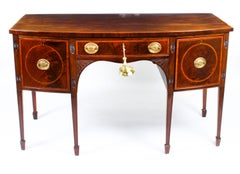
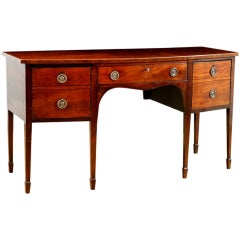
Small English Bow Front Sideboard
Located in Woodbury, CT
Even at 60 inches in width, this little sideboard does not lack for panache--the satinwood inlays
Category
Antique 19th Century British Regency Sideboards
Materials
Mahogany, Satinwood
Small English Bow Front Sideboard
Located in Woodbury, CT
Even at 60 inches in width, this little sideboard does not lack for panache--the satinwood inlays
Mahogany, Satinwood
$2,400
H 33.47 in W 59.85 in D 16.54 in
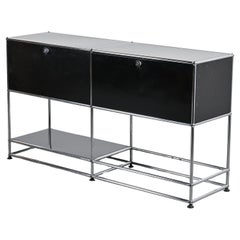
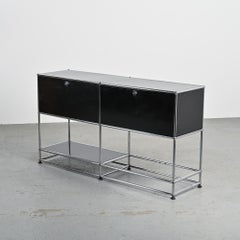
USM Haller Sideboard, Metal, Mid-Century Modern, Switzerland, 1970
By Usm Haller
Located in VILLEURBANNE, FR
width of approximately 60 inches, this sideboard offers a well-balanced format suitable for both
Metal
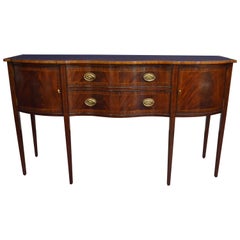
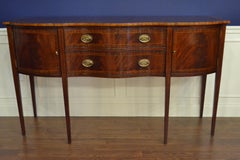
Mahogany Hepplewhite Style Sideboard by Leighton Hall
By Leighton Hall Furniture
Located in Suwanee, GA
This is a new traditional mahogany sideboard. It’s design was inspired by the Hepplewhite sideboards from the Regency period and features a Classic serpentine shaped front. It featur...
Mahogany
$17,233
H 38.59 in W 72.45 in D 26.78 in
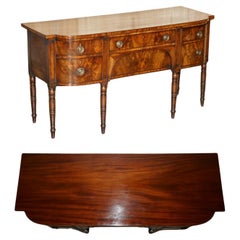
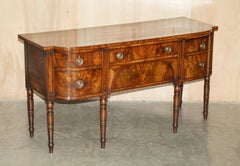
EXQUISITE FULLY RESTORED ENGLISH GEORGE III CiRCA 1780 FLAMED HARDWOOD SIDEBOARD
Located in West Sussex, Pulborough
Royal House Antiques is delighted to offer for sale this absolutely sublime King George III circa 1780 English flamed mahogany sideboard that has been fully restored Please note th...
Hardwood
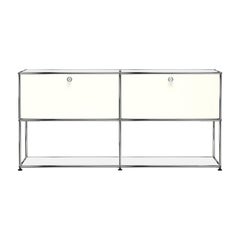
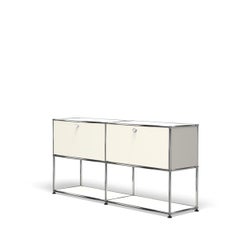
USM Haller Credenza F2 Storage System
By Fritz Haller, Usm Haller, Paul Schaerer
Located in New York, NY
Offered by M2L. With two drop down doors. Designed by Swiss architect Fritz Haller and Paul Schaerer in 1963. Made from powdercoated steel and chrome plated steel tubes, the USM H...
Chrome, Steel
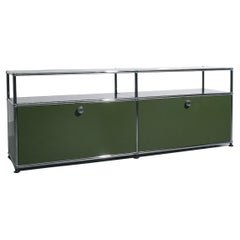
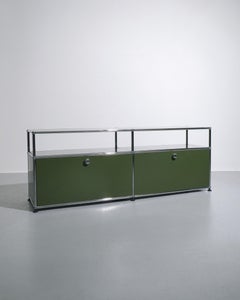
USM Haller Media Unit Sideboard - Olive Green
By Usm Haller
Located in London, GB
USM Haller Media Unit Sideboard – Olive Green Powder-coated steel panels, chromed steel frame H57 x W152 x D37 cm Switzerland, 1990s (10205) A highly functional and architecturally p...
Steel
$2,688Sale Price|36% Off
H 35 in W 75 in D 22.38 in
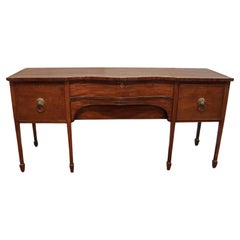
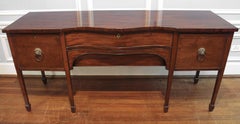
Early 19th Century George III English Serpentine Form Sideboard
Located in Chapel Hill, NC
Early 19th century serpentine form sideboard, English, George III Period. Lion mask backplate ring pulls. Deep drawers (one retaining cellarette dividers), flank the shaped central d...
Wood, Oak
$3,791
H 35.83 in W 59.85 in D 27.96 in
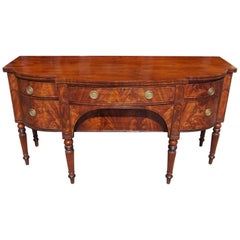
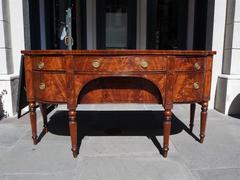
Antique George III Inlaid Flame Mahogany Sideboard, 18th Century
Located in London, GB
This is a superb antique George III inlaid flame mahogany bowfront sideboard, circa 1780 in date. The top is banded in satinwood and the sideboard has three oak lined frieze drawers...
Mahogany
$24,000
H 37.5 in W 72 in D 27.25 in
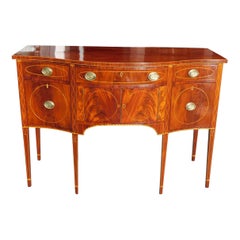
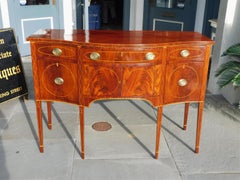
English Regency Mahogany Bow Front Ebony Inlaid Sideboard, Circa 1800
Located in Charleston, SC
English Regency mahogany bow front sideboard with a upper case centered long drawer, flanked by a cutlery drawer and bottle box drawer, lower case arched centered silver drawer, flan...
Brass
$35,000
H 41.25 in W 58.25 in D 25 in
American Hepplewhite Mahogany Serpentine Satinwood Inlaid Sideboard, NY C. 1780
Located in Charleston, SC
American Hepplewhite Mahogany serpentine sideboard with flanking oval satinwood string inlays, checkered inlays, period eagle oval brasses, and resting on the original satinwood stri...
Brass
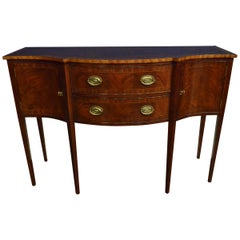
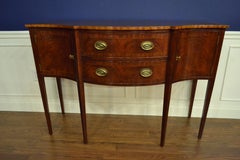
Small Mahogany Hepplewhite Style Sideboard by Leighton Hall
By Leighton Hall Furniture
Located in Suwanee, GA
This is a new traditional mahogany sideboard. It’s design was inspired by the Hepplewhite sideboards from the Regency period and features a Classic arc/serpentine shaped front. It fe...
Mahogany
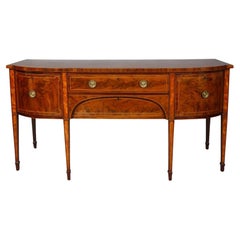
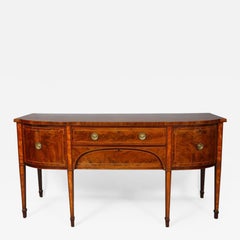
George III Sideboard
Located in Greenwich, CT
Very fine Georgian mahogany and satinwood stepped bow front sideboard, the richly figured top with ebony and holly string inlay over two deep and shallow drawers also strung with ebo...
Mahogany, Satinwood
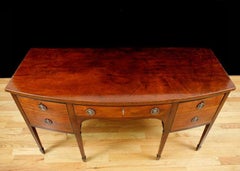
$11,500
H 35.75 in W 65.5 in D 26.5 in
English George III Bow-Front Huntboard or Sideboard in Mahogany, circa 1775
Located in INTERLAKEN, NY
A handsome George III sideboard in mahogany with bowed front and square tapered legs ending in spade feet, with central frieze drawer flanked by two cellarette drawers. Top is compos...
Mahogany
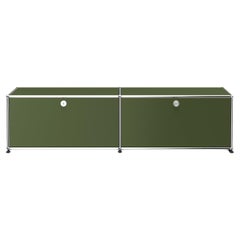

USM Haller Media B218 Storage System
By Usm Haller
Located in New York, NY
With two drop down doors, one cable cut out. Designed by Swiss architect Fritz Haller and Paul Schaerer in 1963. Made from powder coated steel and chrome plated steel tubes, the USM ...
Steel, Chrome
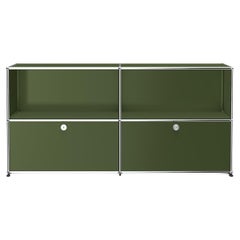

USM Haller Credenza C2A Storage System
By Usm Haller
Located in New York, NY
Offered by M2L. With two drop down doors. Designed by Swiss architect Fritz Haller and Paul Schaerer in 1963. Made from powder coated steel and chrome-plated steel tubes, the Usm Ha...
Steel, Chrome
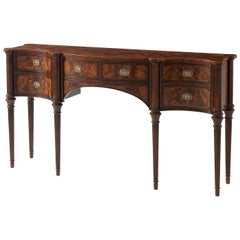
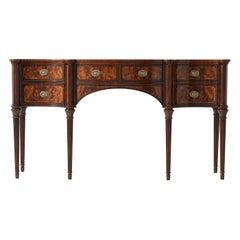
Regency Style Mahogany Sideboard
Located in Westwood, NJ
A Regency style mahogany and okum veneered line strung sideboard, the serpentine rosewood crossbanded top with protruding corners above turned uprights and tapering fluted legs, the ...
Wood
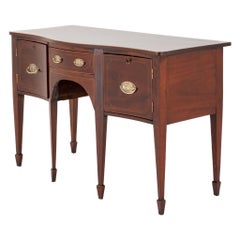
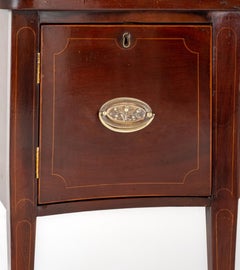
Georgian Sideboard Mahogany Server Buffet
Located in Potters Bar, GB
Here We Have a Georgian Revival Mahogany Sideboard of Small Proportions. Standing Upon Tapered legs With Spade Feet. Circa 1900 Featuring a Central Drawer Flanked By Cupboards. The D...
Mahogany

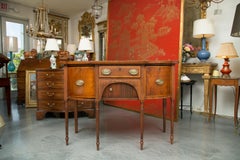
American Federal Mahogany and Inlaid Sideboard
Located in WEST PALM BEACH, FL
This is a small, but sophisticated American Federal inlaid mahogany bow front breakfront sideboard. The top has a straight edge over a central drawer and central tambour cabinet door...
Mahogany
An antique or vintage sideboard today is a sophisticated and stylish component in sumptuous dining rooms of every shape, size and decor scheme, as well as a statement of its own, showcased in art galleries and museums.
Once simply boards made of wood that were used to support ceremonial dining, sideboards have taken on much greater importance as case pieces since their modest first appearance. In Italy, the sideboard was basically a credenza, a solid furnishing with cabinet doors. It was initially intended as an integral piece of any dining room where the wealthy gathered for meals in the southern European country.
Later, in England and France, sideboards retained their utilitarian purpose — a place to keep hot water for rinsing silverware and from which to serve cold drinking water — but would evolve into double-bodied structures that allowed for the display of serveware and utensils on open shelves. We would likely call these buffets, as they’re taller than a sideboard. (Trust us — there is an order to all of this!)
The sideboard is often deemed a buffet in the United States, from the French buffet à deux corps, which referred to a storage and display case. However, a buffet technically possesses a tiered or shelved superstructure for displaying attractive kitchenware and certainly makes more sense in the context of buffet dining — abundant meals served for crowds of people.
Every imaginable iteration of the sideboard has taken shape over the years. Furniture maker and artist Paul Evans, whose work has been the subject of various celebrated museum exhibitions, created ornamented, welded and patinated sideboards for Directional Furniture, collections such as the Cityscape series that speak to his place in revolutionary brutalist furniture design as much as they echo the origins of these sturdy, functional structures centuries ago.
If mid-century modern sideboards or vintage Danish sideboards are more to your liking than an 18th-century mahogany sideboard with decorative inlays in the Hepplewhite style, the particularly elegant pieces crafted by designers Hans Wegner, Edward Wormley or Florence Knoll are often sought by today’s collectors.
Whether you have a specific era or style in mind or you’re open to browsing a vast collection to find the right fit, 1stDibs has a variety of antique and vintage sideboards to choose from.
Simple or sophisticated, equipped with console, cart or custom cabinetry, these stylish bar areas deserve a toast.
Whether you’re just moving in or ready to give your home a makeover, our guide will give you pointers on tables that are fitting for every room, nook and hallway.
The furniture equivalent of a Swiss Army knife, it's the multifunctional piece you didn't know you needed.
Italian studio DimoreMilano mustered great ingenuity when crafting these sculptural shelves, which are built without any screws.
Leaping into a design project, whether it's refreshing the bedroom or redoing the whole house, can be overwhelming. Luckily, we know more than a few interior designers. You asked questions on Instagram, and now they're answering.
Introduced nearly 500 years ago, curiosity cabinets are finding new fans among today's collectors and designers.
In the hands of New York Heartwoods cofounder Megan Offner, unwanted local trees become works of design art.
From Brooklyn townhouses to Maine campgrounds, Trattie Davies and Jonathan Toews relish a challenge, like transforming a former warehouse space into the new 1stdibs Gallery.


