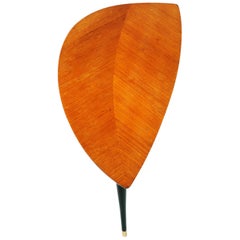
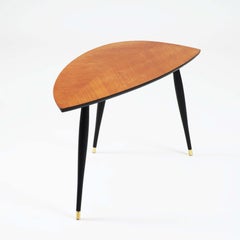
IKEA for sale on 1stDibs
IKEA is the world's largest furniture retailer, but its origins were far humbler than its global footprint suggests. Founded in 1943 by 17-year-old Ingvar Kamprad in the Swedish village of Älmhult, the company began as a mail-order business selling pens, wallets and picture frames. It wasn't until 1948 that the IKEA catalog started featuring furniture, altering the course of modern domestic design.
IKEA is rooted in democratic design, or the belief that well-made, beautiful objects should be accessible to everyone. This philosophy took shape in the 1950s when IKEA began working with independent designers to develop its own furniture lines. The pivotal innovation came in 1956, when IKEA introduced flat-pack furniture, a practical solution born out of necessity when designer Gillis Lundgren removed a table's legs to fit it into a car. This single insight reshaped how the world thinks about manufacturing, shipping and the relationship between consumer and object.
The 1970s and 1980s are now widely considered the golden age of IKEA design, a period when the company regularly collaborated with outside designers before transitioning to entirely in-house production. These decades produced some of the brand's most collectible pieces, and vintage examples are today actively sought after by collectors worldwide. Karen Mobring's safari-influenced seating — including the Diana, Natura and Amiral chairs — captures the organic, relaxed spirit of the era, while Noboru Nakamura's Bore chair and Lundgren's Pixi lounge chair round out the most coveted 1970s offerings. The 1980s brought a sharper, more industrial sensibility through Niels Gammelgaard's work in wire and tubular steel, among them the Enetri shelf, the wire Jarpen chairs and the foldable Ted chair, as well as Tord Björklund's Skye chaise and Klinte armchair.
Beyond these core collaborators, IKEA has worked with some of the most significant names in 20th-century design. Kai Kristiansen, Ettore Sottsass, Verner Panton and Mats Theselius all produced pieces for the brand, and rare examples of their IKEA work are among the most prized finds for collectors today. More recently, collaborations with designers such as Ilse Crawford, Tom Dixon and Hella Jongerius through its IKEA PS (“post scriptum”) collections have continued to push the brand into more expressive territory.
IKEA has also shaped retail culture itself. Its sprawling, maze-like store format — introduced in Älmhult in 1958 — transformed shopping into an experience, complete with room vignettes, a Swedish café and a one-way path designed to inspire. The brand has since expanded to more than 60 countries, while its annual catalog, once one of the most widely distributed publications in the world, became a cultural artifact in its own right.
IKEA continues to balance its founding tension: mass production in the service of good design. As Kamprad once put it, "to design a desk which may cost $1,000 is easy for a furniture designer, but to design a functional and good desk which shall cost $50 can only be done by the very best."
Find a range of vintage and collectible IKEA chairs, shelving and furniture on 1stDibs.
A Close Look at Scandinavian-modern Furniture
Scandinavian modernism is perhaps the warmest and most organic iteration of modernist design. The work of the designers associated with vintage Scandinavian modern furniture was founded on centuries-old beliefs in both quality craftsmanship and the ideal that beauty should enhance even the humblest accessories of daily life.
ORIGINS OF SCANDINAVIAN MODERN FURNITURE DESIGN
CHARACTERISTICS OF SCANDINAVIAN MODERN FURNITURE DESIGN
- Bold, clean lines and simple, sturdy symmetries
- Use of natural materials — native woods such as pine, ash and beech
- Open, airy spaces
- Promotion of functionality
- Emphasis on craftsmanship; rooted in cabinetry profession and traditional construction techniques
- Minimal ornamentation (little to no embellishment)
- A neutral or light color palette owing to prominence of light woods
SCANDINAVIAN MODERN FURNITURE DESIGNERS TO KNOW
ICONIC SCANDINAVIAN MODERN FURNITURE DESIGNS
VINTAGE SCANDINAVIAN MODERN FURNITURE ON 1STDIBS
The gentle, organic contours that are typical of Scandinavian design appear in the furnishings and decor created by Danish, Finnish and Swedish designers not as a stylistic gesture, but rather as a practical, ergonomic — and, as importantly, elegant — response to the human form.
Each nation produced exceptional talents in all areas of the applied arts, yet each had its forté. Sweden was home to Greta Magnusson Grossman and Bruno Mathsson — creators of the classic Grasshopper lighting series and Berlin daybed, respectively — but the country excelled most notably at ceramics. In the 1920s at the great Gustavsberg porcelain manufactory, Wilhelm Kåge introduced pieces in the Scandinavian style based on influences from folklore to Cubism; his skills were passed on to his versatile and inspired pupils Berndt Friberg and Stig Lindberg.
Likewise, Finland produced a truly ingenious Scandinavian modern furniture designer in the architect Alvar Aalto, a master at melding function and artistic form in works like the Paimio chair, created in collaboration with his first wife, Aino. Yet Finnish glassware was pre-eminent, crafted in expressive, sculptural designs by Tapio Wirkkala and Timo Sarpaneva.
The Danes excelled at chairs. Hans Wegner and Arne Jacobsen were exemplars of the country’s facility with wood, particularly teak.
Wegner created such iconic pieces as the Round chair and the Wishbone chair; Jacobsen — while the revolutionary architect and furniture innovator produced the best-selling plywood Ant chair — designed two classic upholstered pieces of the 1950s: the Swan chair and Egg chair. The list of great Danes could go on and on, including Finn Juhl, a stylistic maverick and maker of the bold Chieftain chair; Poul Kjaerholm, with his lean metal-and-rattan aesthetic; and Verner Panton, who introduced a vibrant Pop note into international design.
Today, decades after their heyday, the prolific, ever-evolving Scandinavian modernists continue to amaze and delight, and interior designers all over the world use their pieces to bring warmth to any given space.
On 1stDibs, you will note both instantly recognizable vintage Scandinavian modern chairs, sofas, rugs and tables — those that have earned iconic status over time — and many new discoveries.
Materials: Brass Furniture
Whether burnished or lacquered, antique, new and vintage brass furniture can elevate a room.
From traditional spaces that use brass as an accent — by way of brass dining chairs or brass pendant lights — to contemporary rooms that embrace bold brass decor, there are many ways to incorporate the golden-hued metal.
“I find mixed metals to be a very updated approach, as opposed to the old days, when it was all shiny brass of dulled-out silver tones,” says interior designer Drew McGukin. “I especially love working with brass and blackened steel for added warmth and tonality. To me, aged brass is complementary across many design styles and can trend contemporary or traditional when pushed either way.”
He proves his point in a San Francisco entryway, where a Lindsey Adelman light fixture hangs above a limited-edition table and stools by Kelly Wearstler — also an enthusiast of juxtapositions — all providing bronze accents. The walls were hand-painted by artist Caroline Lizarraga and the ombré stair runner is by DMc.
West Coast designer Catherine Kwong chose a sleek brass and lacquered-parchment credenza by Scala Luxury to fit this San Francisco apartment. “The design of this sideboard is reminiscent of work by French modernist Jean Prouvé. The brass font imbues the space with warmth and the round ‘portholes’ provide an arresting geometric element.”
Find antique, new and vintage brass tables, case pieces and other furnishings now on 1stDibs.
Finding the Right Side-tables for You
While the range of styles and variety of materials have broadened over time, the priceless functionality of side tables has held true.
Antique and vintage side tables are an integral accent to our seating and provide additional, necessary storage in our homes. They can be a great foundation for that perfect focal piece of art that you want all your guests to see as you congregate for cocktails in the living room. Side tables are indeed ideal as a stage for your decorative objects or plants in your library or your study, and they are a practical space for the novel or stack of design magazines you keep close to your sofa.
Sure, owning a pair of side tables isn’t as imperative as having a coffee table in the common area, though most of us would struggle without them. Those made of metal, stone or wood are frequently featured in stylish interiors, and if you’re shopping for side tables, there are a couple of things to keep in mind.
With respect to the height of your side tables, a table that is as high as your lounge chair or the arm of your couch is best.
Some folks are understandably fussy about coherence in a living room area, but coherence doesn’t necessarily mean you can’t mix and match. Feel free to introduce minimalist mid-century modern wooden side tables designed by Paul McCobb alongside your contemporary metal coffee table. If you think it isn’t possible to pair a Hollywood Regency–style side table with a contemporary sofa, we’re here to tell you that it is. Even a leggy side table can balance a chunky sofa well. Try to keep a limited color palette in mind if you’re planning on mixing furniture styles and materials, and don’t be afraid to add a piece of abstract art to shake things up.
As far as the objects you’re planning to place on your side tables, if you have heavy items such as stone or sculptures to display, a fragile glass-top table would not be an ideal choice. Think about what material would best support your collectibles and go with that. If it’s a particularly small side table, along with a tall, sleek floor lamp, it can make for a great way to fill a corner of the room you wouldn’t otherwise easily be able to populate.
Whether you are looking for an antique 19th-century carved oak side table or a vintage rattan side table (because rattan never went away!), the collection on 1stDibs has you covered — find Art Deco side tables, bamboo side tables, travertine side tables and more today.