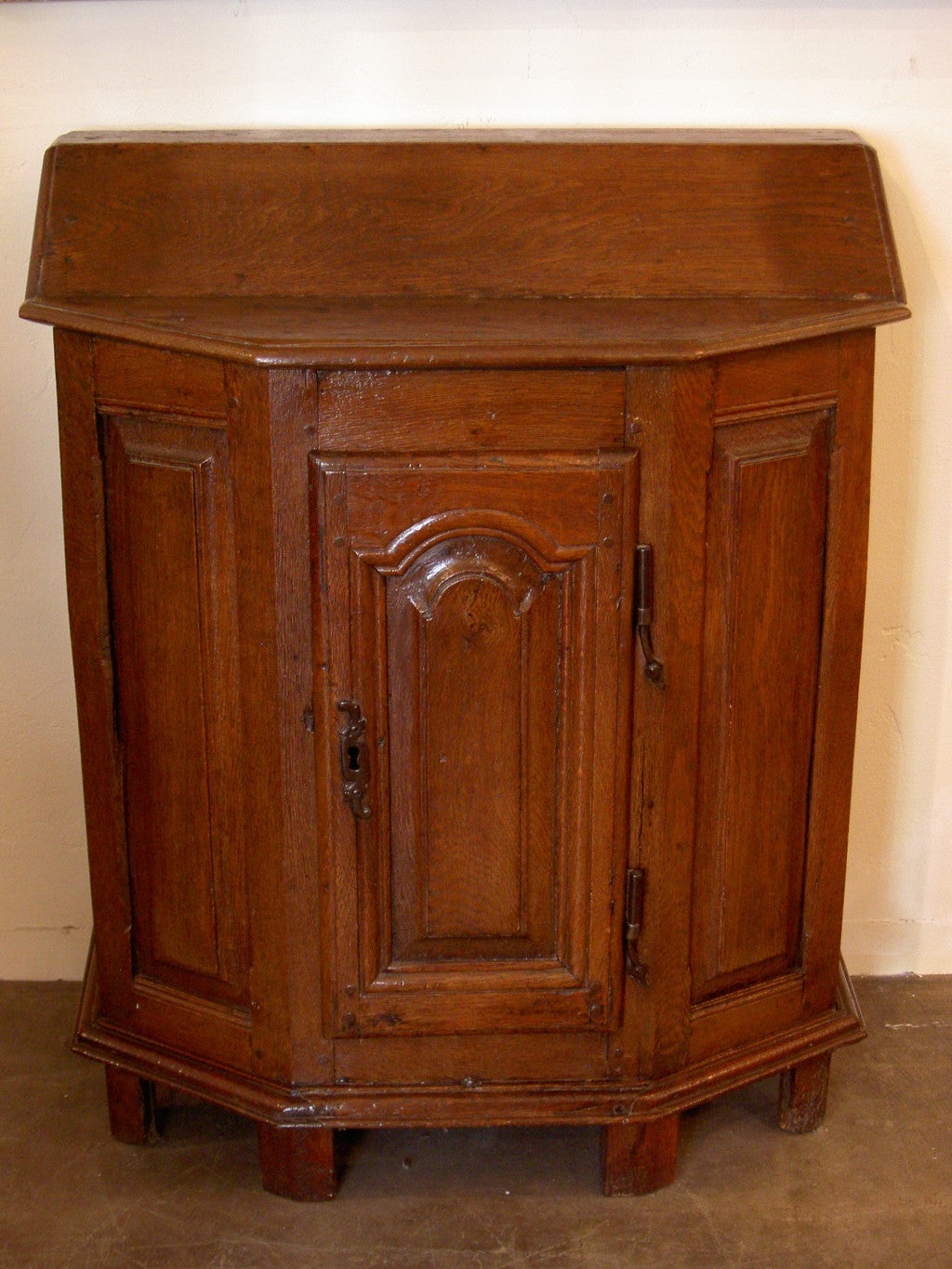
17th century French Oak Escritoire
Located in Los Angeles, CA
Simple decoration of paneling and rare 'rat tail' hinges, single paneled door opens to shelf
Category
Antique 18th Century and Earlier Desks
Materials
Iron
17th century French Oak Escritoire
Located in Los Angeles, CA
Simple decoration of paneling and rare 'rat tail' hinges, single paneled door opens to shelf
Iron
Unavailable
H 69.3 in W 42.13 in D 14.57 in
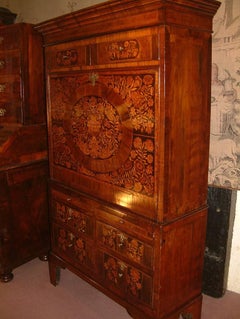
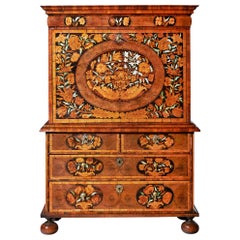
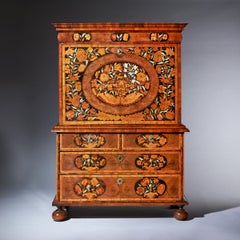
17th Century Walnut Marquetry Inlaid Escritoire Cabinet on Chest, circa 1690
Located in East Sussex, GB
An English late 17th century walnut, floral marquetry inlaid Escritore cabinet on chest dating from
Walnut
Sold
H 61.62 in W 42.52 in D 18.51 in
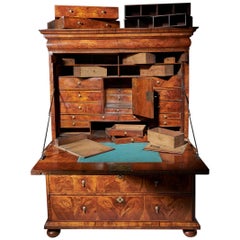
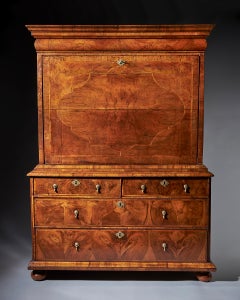
17th Century William and Mary Olive Oyster Marquetry Escritoire, circa 1680
By Thomas Pistor
Located in Oxfordshire, United Kingdom
A remarkable and extremly rare William and Mary olive oyster and floral marquetry escritoire
Walnut, Bone, Oak, Olive, Pine
Sold
H 65.36 in W 47.25 in D 20.08 in
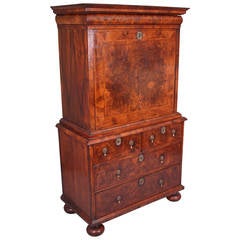
Fine William and Mary 18th Century Figured Walnut Escritoire, circa 1690
Located in Oxfordshire, United Kingdom
A fine William and Mary period figured walnut escritoire, concealing eight secret drawers, circa
Walnut

Sold
H 62 in W 36 in D 19 in
William and Mary Period Walnut Escritoire of Delightfully Small Proportions
Located in Cambridge, GB
This fine escritoire is veneered with finely-figured timber and decorated with inlaid chevron
Your antique, new or vintage secretary desk has become the (chic) saving grace of the "new normal" at home.
Simply put, a secretary desk is a multifunctional piece of furniture with a hinged writing surface that folds open or drops down. When the leaf is folded out, small inner storage compartments — pigeonholes, cubbies, recesses or drawers — are revealed.
Traditionally, a secretary is composed of two parts — a chest of drawers on the bottom and a cabinet with shelves on the top. Taking its name from the French word for the piece, secrétaire, the secretary desk dates back to the 18th century, when Paris-based cabinetmaker Jean-François Oeben, known for his exquisite marquetry and clever mechanical desks, is thought to have invented the secrétaire à abbattant, or drop-leaf desk.
While the defining drop-down feature of the secretary desk has remained constant, the materials used, as well as its configuration, size and style have evolved over time.
At first, secretaries were typically made from exotic woods, like rosewood, tulipwood and kingwood; later, hardwoods like cherry, maple, oak and mahogany were more common. The desks also became lighter, with space carved out of the lower half for the writer’s feet or with drawers replaced by legs — making them more table-like.
When open, the secretary is a dynamic, versatile Wunderkammer. When closed, it’s a sophisticated, space-saving piece of furniture.
“A fine secretary with a good provenance adds stature and credence to its owner — it is a cornerstone piece,” says antiques dealer Stanley Weiss, who specializes in 18th- and 19th-century English and American furniture. “In this disposable world, fine furniture is always passed on and speaks to who its owner is.”
No matter what style or period you choose, and no matter how you decide to use it, the timeless, flexible secretary desk is bound to become an indispensable part of your daily routine.
Browse a range of antique and vintage secretary desks on 1stDibs, including mid-century modern secretaires, Georgian secretaires and others.
Simple or sophisticated, equipped with console, cart or custom cabinetry, these stylish bar areas deserve a toast.
Whether you’re just moving in or ready to give your home a makeover, our guide will give you pointers on tables that are fitting for every room, nook and hallway.
The furniture equivalent of a Swiss Army knife, it's the multifunctional piece you didn't know you needed.
Italian studio DimoreMilano mustered great ingenuity when crafting these sculptural shelves, which are built without any screws.
Leaping into a design project, whether it's refreshing the bedroom or redoing the whole house, can be overwhelming. Luckily, we know more than a few interior designers. You asked questions on Instagram, and now they're answering.
Introduced nearly 500 years ago, curiosity cabinets are finding new fans among today's collectors and designers.
In the hands of New York Heartwoods cofounder Megan Offner, unwanted local trees become works of design art.
From Brooklyn townhouses to Maine campgrounds, Trattie Davies and Jonathan Toews relish a challenge, like transforming a former warehouse space into the new 1stdibs Gallery.