
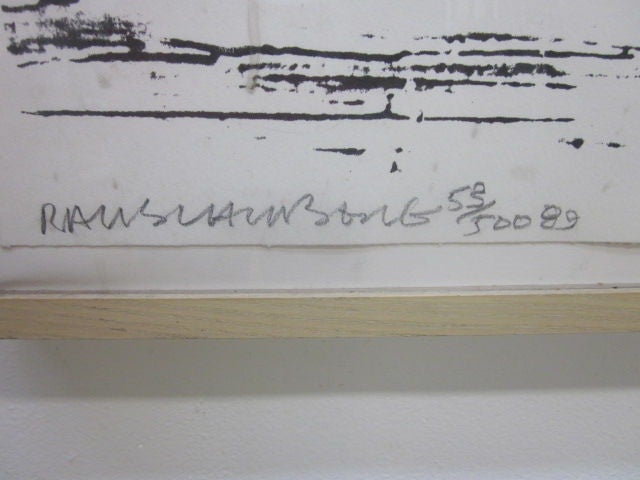
Robert Rauschenberg Untitled "Harp" Lithograph Limited Edition
By Robert Rauschenberg
Located in New York, NY
Robert Rauschenberg: Untitled "Harp." 1989 framed lithograph.
Category
Late 20th Century Modern Prints
Materials
Paper
Robert Rauschenberg Untitled "Harp" Lithograph Limited Edition
By Robert Rauschenberg
Located in New York, NY
Robert Rauschenberg: Untitled "Harp." 1989 framed lithograph.
Paper
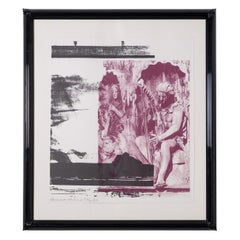
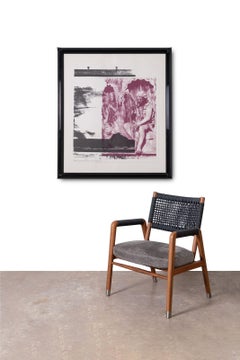
$5,800
H 51 in W 44.5 in D 2 in
Robert Rauschenberg "Broken Harp" Pencil Signed Lithograph 24/500 executed 1989
By Robert Rauschenberg
Located in Dallas, TX
Signed and numbered lithograph on woven paper designed by Robert Rauschenberg titled "Broken Harp". An early edition, number 24 of only 500 prints ever made.
Paper
Broken Harp
By Robert Rauschenberg
Located in New York, NY
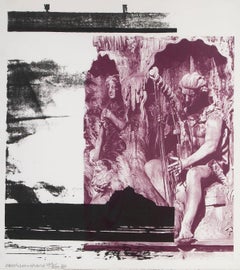
Robert Rauschenberg’s Broken Harp (1989) is a color lithograph on wove paper that blends neoclassical imagery with abstract elements, often featuring vivid, layered, and fragmented i...
Lithograph
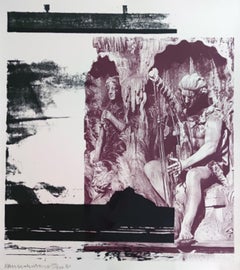
Harp
By Robert Rauschenberg
Located in Tbilisi, GE
Hand signed, numbered and dated in pencil
Lithograph
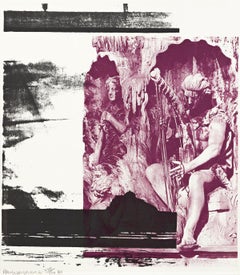
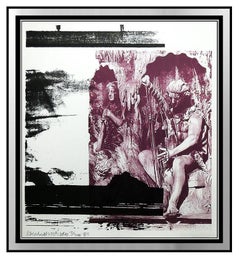
Broken Harp / Untitled (Harp)
By Robert Rauschenberg
Located in New York, NY
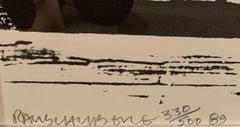
A very good impression of this color screenprint with strong colors on cream wove paper. Signed, dated and numbered 330/500 in pencil by Rauschenberg. Published by Dallas Cares/The A...
Color, Screen
Sold
H 38 in W 33.75 in
Robert Rauschenberg Large Color Lithograph Broken Harp Signed Modern Artwork SBO
By Robert Rauschenberg
Located in Bloomington, MN
Robert Rauschenberg Authentic, 38x34" Hand-Signed & Numbered Lithograph, Custom Framed and listed with the Submit Best Offer option Accepting Offers Now: Up for sale here we have a...
Lithograph
$1,600
H 16 in W 22.88 in
Untitled (One Cent Life) /// Joan Mitchell Female Artist Abstract Expressionism
By Joan Mitchell
Located in Saint Augustine, FL
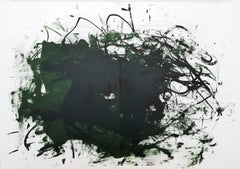
Artist: Joan Mitchell (American, 1925-1992) Title: "Untitled" (Page 92-93) Portfolio: One Cent Life *Unsigned edition Year: 1964 Medium: Original Lithograph on wove paper Limited edi...
Lithograph
$120Sale Price|20% Off
H 39.5 in W 26 in D 0.01 in
Robert Rauschenberg 'Night Shades + Urban Bourbons' 1995
By Robert Rauschenberg
Located in Brooklyn, NY
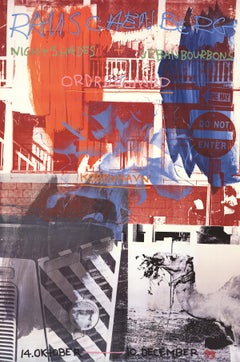
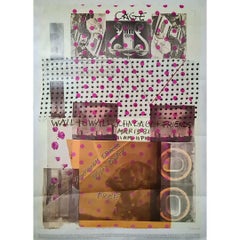
This exhibition poster commemorates Robert Rauschenberg's "Night Shades + Urban Bourbons" showcase, held in Denmark in 1995. Known for his groundbreaking work in mixed media and coll...
Offset
$933
H 42.13 in W 29.93 in
1982 Original poster created for an event at Symphony Space in New York
By Robert Rauschenberg
Located in PARIS, FR
Beautiful poster created for a twelve-hour event at Symphony Space in New York on March 13, 1982, from 11 am to 11 pm. Participants included John Cage, Robert Rauschenberg, Merce Cun...
Paper, Lithograph
Rio de Janeiro
By Robert Rauschenberg
Located in Brooklyn, NY
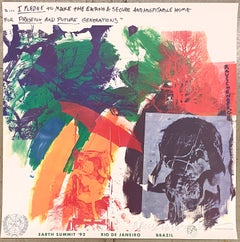
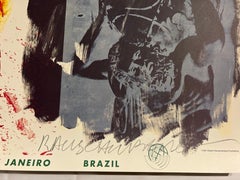
Rio de Janeiro is a colorful, bold, graphic, and visually compelling offset-lithograph by blue chip, pop artist Robert Rauschenberg. In 1991, he was involved with th...
Archival Ink, Archival Paper, Lithograph, Offset
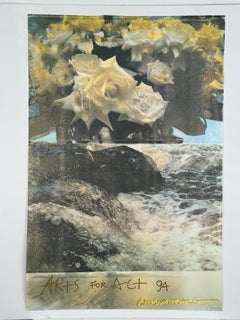
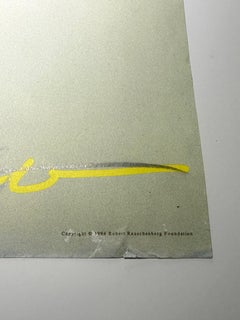
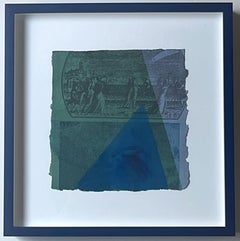
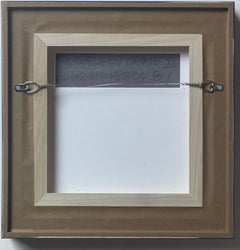
Arts for Act poster
By Robert Rauschenberg
Located in Wilton Manors, FL
Robert Rauschenberg (1925-2008). "Arts for Act (1994)." Original offset lithograph poster created for the "Arts for Act." 1994. Signed in the plate (Bold Yellow), Additionally si...
Offset
$28,000
H 7.75 in W 7.5 in
Robert Rauschenberg -Snowflake Crime XIX ACE Gallery Coll unique signed painting
By Robert Rauschenberg
Located in New York, NY
Historic, institutional quality unique Rauschenberg signed work on paper, with storied provenance: a real gem: Robert Rauschenberg 'Snowflake Crime XIX', from the ACE Gallery Collec...
Fabric, Mixed Media, Acrylic, Handmade Paper, Permanent Marker
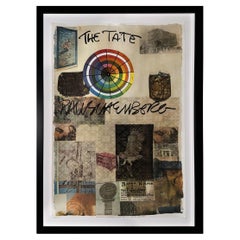
Robert Rauschenberg, Tate Gallery, 1981 (Exhibition Poster)
By Robert Rauschenberg
Located in New York, NY
Lithograph poster by Robert Rauschenberg for The Tate Gallery Publications Dept., printed in 1981 in Great Britain by the Hilingdon Press Uxbridge, Middlesex. Archivally-hinged, with...
Plexiglass, Paper
$9,000
H 34.5 in W 23.5 in
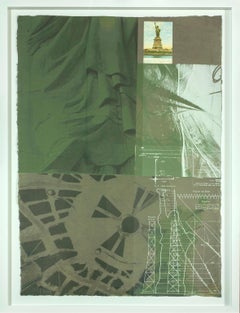
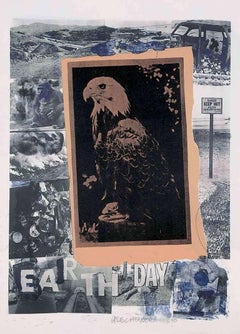
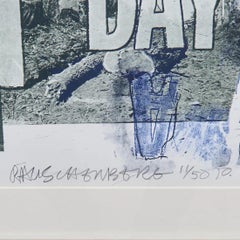
"Statue of Liberty" signed screen print and collage by Robert Rauschenberg
By Robert Rauschenberg
Located in Boca Raton, FL
"Statue of Liberty" screen print and collage by Robert Rauschenberg from the "New York, New York" portfolio published by the New York Graphic Society. Signed Rauschenberg, numbered 5...
Lithograph, Screen
$5,500
H 54 in W 40 in D 0.05 in
Robert Rauschenberg 'Earth Day' Limited Edition, Signed Lithograph Print
By Robert Rauschenberg
Located in San Rafael, CA
This listing is for the limited edition lithograph, not the mass produced poster. Robert Rauschenberg (American, 1925-2008) Earth Day, 1970 Lithograph with chine collé Signed, dated...
Lithograph
Shoot from the Main Stem
By Robert Rauschenberg
Located in New York, NY
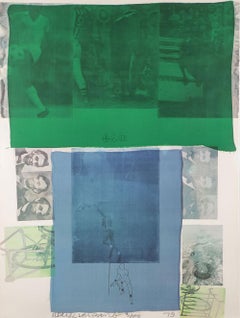
From the artist's Why You Can't Tell portfolio of nine screenprints, Shoot from the Main Stem was created in 1979 as a lithograph and screenprint in colors on wove paper. Hand-signed...
Lithograph, Screen
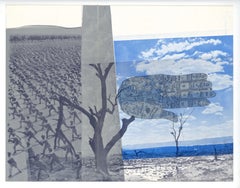
"Wart" original lithograph
By Robert Rauschenberg
Located in Henderson, NV
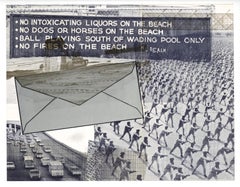
Medium: original offset lithograph. This work is also known as "Envelope". Rauschenberg executed this interesting Pop Art classic for Art In America in 1970. It consists of one compo...
Lithograph, Offset
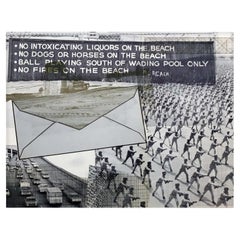
Vintage Robert Rauschenberg 'Envelope' Lithograph
By Robert Rauschenberg
Located in Brooklyn, NY
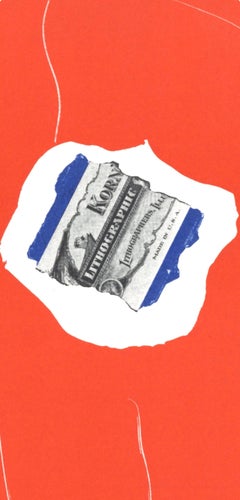
Vintage Robert Rauschenberg lithograph, 1970 Title: "Envelope" Photo: mechanical lithograph on laminated paper with a centre fold. Features double-sided, classic Rauschenberg collage...
Paper
$716Sale Price|20% Off
H 12.4 in W 9.65 in
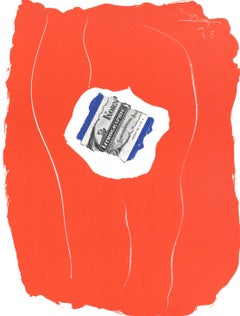
Robert Motherwell, Tricolor, from XXe Siecle, 1973
By Robert Motherwell
Located in Southampton, NY
This exquisite lithograph by Robert Motherwell (1915–1991), titled Tricolor, from the album XXe Siecle, Annee No. 40, Juin 1973, originates from the 1973 edition published by Societe...
Lithograph
Robert Rauschenberg was one of the preeminent American artists of the 20th century, occupying a singular position that straddled the Abstract Expressionist and Pop art movements, drawing on key elements of each. An artistic polymath equally adept at painting, collage and silkscreening, Rauschenberg is best known for for the complex assemblages of found objects he termed “combines.”
Rauschenberg was born in Port Arthur, Texas, in 1925. He first began to seriously consider a career in art in 1947, while serving in the U.S. Marines. After leaving the service, he briefly studied art in Paris with support from the G.I. Bill, then moved to North Carolina to attend Black Mountain College, home to a flourishing cross-disciplinary art community. Among his peers there were choreographer Merce Cunningham and composer John Cage, both of whom became friends and artistic collaborators.
Relocating to New York in the mid-1950s, Rauschenberg was initially put off by what he perceived as the self-seriousness of the adherents of Abstract Expressionism, then the dominant movement in the New York art world. Like Andy Warhol and Roy Lichtenstein, Rauschenberg was drawn to the visual landscape of popular culture and mined its imagery for inspiration. He used unorthodox materials like house paint and tried novel techniques in his studio like running paper over with a car whose wheels he had inked. Shortly after his inaugural solo exhibition at Leo Castelli Gallery, which featured paintings and drawings, he pivoted to a new format, creating his first found-object combines, which became his signature. The most famous of these is the 1959 Monogram in which a taxidermied goat is surrounded by a car tire, recalling the way a person’s initials are interwoven in the design referred to by the title.
Later in the 1960s, Rauschenberg turned his attention to silkscreening, creating prints that feature iconic figures of the day, very much in line with the style and content of Pop art. One such work, 1965's Core, which was created to commemorate the Congress of Racial Equality, combines photographs of President Kennedy, an unidentified Native American man, and a statue of a Civil War soldier with images of highways, amusement parks, street signs, and other features of the built environment. A circular color-test wheel sits at the composition’s formal core, reflecting the work’s commentary on race and ethnicity.
Throughout the 1960s and ‘70s, Rauschenberg experimented with printing on unusual materials, such as Plexiglas, clothing and aluminum. Venturing even further afield, he created performance works, such as his 1963 choreographed piece “Pelican” and the 1966 film Open Score. In 1998, the Guggenheim Museum presented a large and comprehensive retrospective of Rauschenberg’s work, highlighting his influence on American art in the second half of the 20th century.
Find original Robert Rauschenberg art for sale on 1stDibs.
Decorating with fine art prints — whether they’re figurative prints, abstract prints or another variety — has always been a practical way of bringing a space to life as well as bringing works by an artist you love into your home.
Pursued in the 1960s and ’70s, largely by Pop artists drawn to its associations with mass production, advertising, packaging and seriality, as well as those challenging the primacy of the Abstract Expressionist brushstroke, printmaking was embraced in the 1980s by painters and conceptual artists ranging from David Salle and Elizabeth Murray to Adrian Piper and Sherrie Levine.
Printmaking is the transfer of an image from one surface to another. An artist takes a material like stone, metal, wood or wax, carves, incises, draws or otherwise marks it with an image, inks or paints it and then transfers the image to a piece of paper or other material.
Fine art prints are frequently confused with their more commercial counterparts. After all, our closest connection to the printed image is through mass-produced newspapers, magazines and books, and many people don’t realize that even though prints are editions, they start with an original image created by an artist with the intent of reproducing it in a small batch. Fine art prints are created in strictly limited editions — 20 or 30 or maybe 50 — and are always based on an image created specifically to be made into an edition.
Many people think of revered Dutch artist Rembrandt as a painter but may not know that he was a printmaker as well. His prints have been preserved in time along with the work of other celebrated printmakers such as Pablo Picasso, Salvador Dalí and Andy Warhol. These fine art prints are still highly sought after by collectors.
“It’s another tool in the artist’s toolbox, just like painting or sculpture or anything else that an artist uses in the service of mark making or expressing him- or herself,” says International Fine Print Dealers Association (IFPDA) vice president Betsy Senior, of New York’s Betsy Senior Fine Art, Inc.
Because artist’s editions tend to be more affordable and available than his or her unique works, they’re more accessible and can be a great opportunity to bring a variety of colors, textures and shapes into a space.
For tight corners, select small fine art prints as opposed to the oversized bold piece you’ll hang as a focal point in the dining area. But be careful not to choose something that is too big for your space. And feel free to lean into it if need be — not every work needs picture-hanging hooks. Leaning a larger fine art print against the wall behind a bookcase can add a stylish installation-type dynamic to your living room. (Read more about how to arrange wall art here.)
Find fine art prints for sale on 1stDibs today.