Old Masters Art

OLD MASTERS

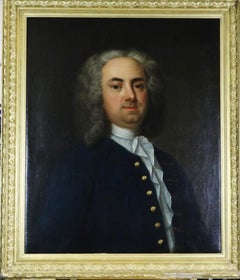
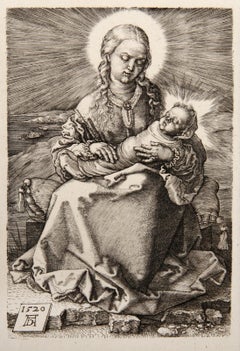
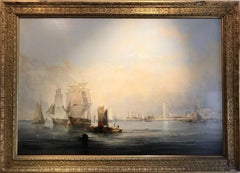
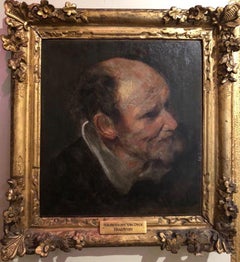
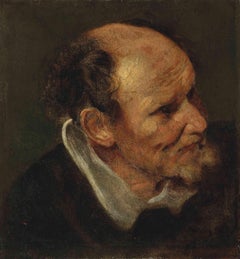
Encompassing centuries of change in Europe between 1300 and 1800, from booms of prosperity to bloody revolutions, Old Masters describes a wide range of artists. The informal term was derived from the title of an artist who trained in a guild long enough to become a master, such as Leonardo da Vinci, who studied in a Florence painters’ guild. However, Old Masters paintings, prints and other art is now used to refer to work made by any artist with a high level of skill in painting, drawing, sculpture or printmaking who worked during this era.

The 15th century’s expansive trade and commerce spread culture across borders. A vibrant period of art emerged, bolstered by studies of anatomy and nature that influenced a new visual realism. From Raphael and Michelangelo in the Renaissance to Rembrandt van Rijn and Johannes Vermeer in the Dutch Golden Age, artists expressed emotion, naturalism, color and light in new ways. El Greco and Paolo Veronese were leaders in the dramatic style of Mannerism, while Caravaggio and Peter Paul Rubens demonstrated the movement and meticulous detail of Baroque art.

Historically, most attention was concentrated on male artists, but recent research and exhibitions have elevated the impactful work of women such as Rachel Ruysch and Artemisia Gentileschi. In late-18th-century France, female artists like Adélaïde Labille-Guiard and Élisabeth Vigée Le Brun were prominent names. Nevertheless, access to the academies and guilds was highly restricted for women, and even those able to establish practices were expected to adhere to portraits and still lifes rather than the grand history paintings being created by men.

Find a collection of Old Masters prints, paintings, drawings and watercolors and other art on 1stDibs.

to
826
2,427
731
319
332
370
Overall Width
to
Overall Height
to
3,141
816
99
136
8
5
7
2
2
6
3
13
1
4
2,260
118,633
64,561
56,714
28,784
14,586
9,652
6,918
6,044
3,160
2,542
2,324
2,138
601
2,047
1,712
386
2,860
1,506
971
945
917
547
457
318
286
270
210
199
188
164
110
102
101
92
88
81
2,297
1,300
1,149
423
417
94
93
86
83
61
1,199
2,174
3,389
779
Style: Old Masters
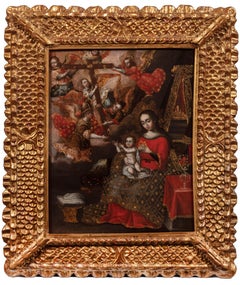
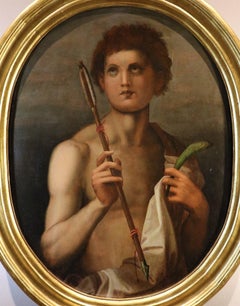
Escuela colonial mejicana siglo XVIII - San Antonio con el niño.

Escuela colonial mejicana siglo XVIII - San Antonio con el niño.

Located in Sant Celoni, ES

Escuela colonial mejicana; siglo XVIII. “San Antonio con el Niño”. Óleo sobre tabla. Medidas: 28 x 21 cm. Gran pieza para coleccionistas de arte religioso de calidad San Antonio de P...

Category

Early 18th Century Old Masters Art

Materials

Oil

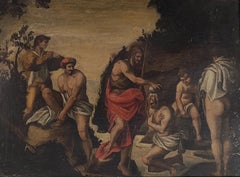
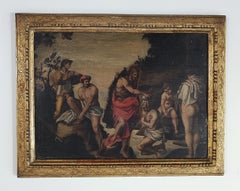
Escuela española (XVIII) El bautismo de San Jeronimo según Juan de Valdes Leal

Escuela española (XVIII) El bautismo de San Jeronimo según Juan de Valdes Leal

Located in Sant Celoni, ES

La obra no va firmada Se presenta sin enmarcar la pintura El estado de la obra se puede ver, es aceptable ya que en su momento se acondicionó debidamente Medidas de la obra: 38 x ...

Category

Mid-18th Century Old Masters Art

Materials

Oil

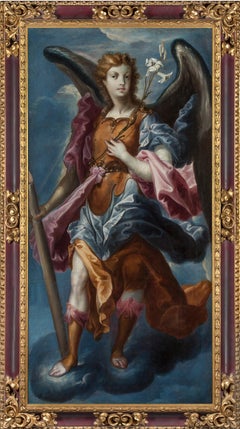
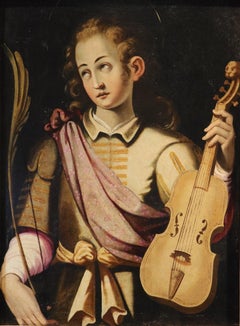
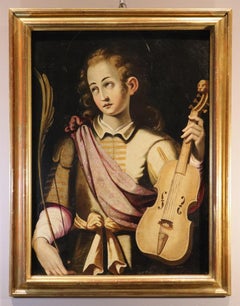
18th Century European Portrait of an Angel, Oil on Canvas

18th Century European Portrait of an Angel, Oil on Canvas

Located in SANTA FE, NM

18th Century European Portrait of an Angel, Oil on Canvas Unsigned 19 x 14 1/4 inches This lovely and sensitively painting has been examined by a professional restorer who was forme...

Category

18th Century Old Masters Art

Materials

Canvas, Oil

Madonna Maria Piola Paint Oil on canvas 17/18th Century Old master Religious

Madonna Maria Piola Paint Oil on canvas 17/18th Century Old master Religious

Located in Riva del Garda, IT

Anton Maria Piola (Genoa, 1654 - 1715) circle Madonna and Child Genoese school of the second half of the 17th century Oil on canvas 93 x 74 cm.- In antique frame 110 x 92 cm. (Work with expertise by Dr. Arabella Cifani) In the pleasing work proposed, depicting a classical Nativity scene, the Madonna is immortalised in adoration as she gently holds the sheet on which the Child is lying, with a gesture of protection and pride that facilitates an atmosphere of intimate recollection, in addition to the presence of three cherubs at the top. The stylistic analysis of the canvas can easily be traced back to a painter of the Genoese school and active during the 17th century, specifically with the devotional works from the workshop of Domenico Piola (Genoa, 1627-1703), an absolute protagonist of Genoese Baroque culture. Piola was the owner of the most important city painting workshop of the time, known as 'Casa Piola', where his sons Paolo Gerolamo and Anton Maria also collaborated. His production, which specialised in a type of highly decorative, profane and allegorical paintings, destined for the decoration of Genoese patrician palaces, also included a refined series of works of a religious nature. In particular, the style of our beautiful breast painting...

Category

17th Century Old Masters Art

Materials

Oil

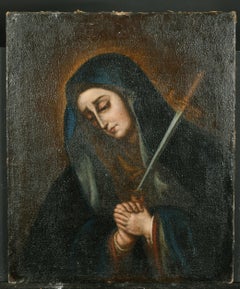
Escuela española (XVIII) - Óleo sobre cobre - Virgen orando

Escuela española (XVIII) - Óleo sobre cobre - Virgen orando

Located in Sant Celoni, ES

La pintura representa a la Virgen María por su iconografía tradicional. Viste un manto azul verdoso que cubre su cabeza y hombros, y una túnica rosada con detalles en tonos claros. S...

Category

Early 18th Century Old Masters Art

Materials

Oil

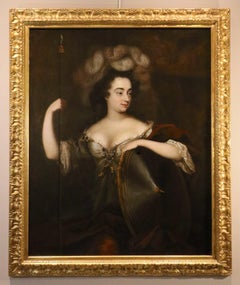
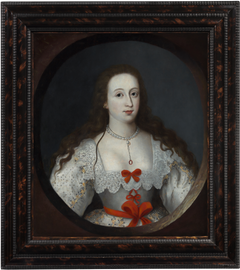
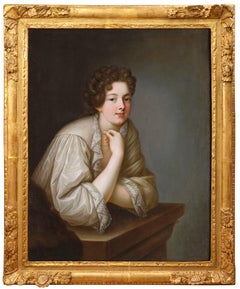
Portrait of Lady, Mary Hammond, Oil on Panel c.1618-22, Manor House Provenance

Portrait of Lady, Mary Hammond, Oil on Panel c.1618-22, Manor House Provenance

By Cornelius Johnson

Located in London, GB

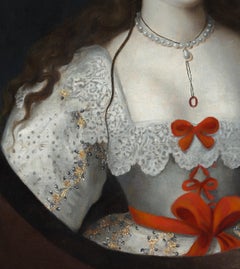
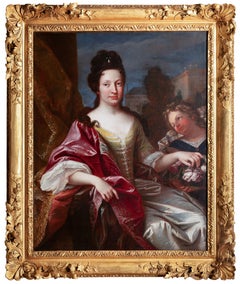
Portrait of Mary Hammond in Sumptuous Attire, Jewels and Lace c.1618-22 Circle of Cornelius Johnson (1593-1661) This portrait of a lady, presented by Titan Fine Art, is an exquisite example of early seventeenth-century portraiture, remarkable both for the lavishness of its subject’s attire and for the distinguished provenance that has accompanied it across four centuries that adds a rich layer of historical significance. It was once part of the notable collection of Sir William Temple, 1st Baronet (1628–1699) at Moor Park, a stately mansion in Hertfordshire. Temple was a diplomat, essayist, philosopher, and the patron of Jonathan Swift. He was a key participate at an important period in English history, helping not only to negotiate the Triple Alliance, but also the marriage between William of Orange and Princess Mary. His collection at Moor Park was well known in its day, reflecting both his cultivated taste in art and literature and his international connections. Its fabulous attire, rendered with almost microscopic attention, is not merely decorative but emblematic of a world in which visual display was a language of power. Its provenance, stretching from the English country house and Enlightenment scholarship to modernist circles, forms a microcosm of cultural exchange across four centuries. Thus, the portrait of Mary Hammond stands as both a masterpiece of early seventeenth-century craftsmanship and a witness to the grand narrative of collecting and connoisseurship—a testament to the enduring fascination of beauty, status, and history intertwined. By tradition the portrait depicts Mary Hammond (born c.1602), who was Sir William Temple’s mother, and the daughter of the royal physician who served James I, Dr John Hammond (c.1555–1617) and whose family owned Chertsey Abbey in Surrey. The woman appears between 18 and 25 years old, and Mary would be about 18–20 when the portrait was painted circa 1620, therefore this matches the apparent age of the sitter and the fashion perfectly. Mary stood at the intersection of learned/courtly and gentry worlds. On 22 June 1627 she married her first cousin (a common practice for consolidating family wealth and influence during that era.) Sir John Temple (1600-1677) at St Michael, Cornhill in the City of London. The couple resided nearby, at Blackfriars. Her marriage to Sir Temple placed her at the heart of the social and political circles that shaped British history. The couple had at least five children, and they became highly significant historical figures: The eldest son, Sir William Temple, 1st Baronet, became a distinguished diplomat, statesman, and essayist, famous for his role in the Triple Alliance and as a patron and mentor to the writer Jonathan Swift – our portrait was in his collection. Their daughter, Martha Temple, later Lady Giffard, was a notable figure in her own right. She became her brother William's first biographer and a respected letter-writer, providing a rare female perspective on the events and high society of the time. Another son, also named Sir John Temple, became Attorney General for Ireland and was involved in the turbulent politics surrounding the English Civil War and the Act of Settlement in Ireland. Mary died in November 1638 after giving birth to twins and was buried at Penshurst, Kent. The family's connection to Penshurst Place is a major point of interest as this historic manor was the seat of the Sidney family, a major aristocratic and literary dynasty. The portrait was in the collection of the Mary’s son, Sir William Temple. From there it descended to his daughter, and then to her nephew, the Reverend Nicholas Bacon of Spixworth Park, Norfolk (his mother was Dorothy Temple who died in 1758). Indeed, by this time, many Temple relics were in the collection at Spixworth including the engagement ring of the illustrious Dorothy Osborne, Lady Temple, wife of Sir William Temple. The portrait thus linked two prominent English families—the Temples and the Bacons—for generations. It is listed in a Spixworth Park inventory of 27 October 1910 by the local collector and art historian, Prince Duleep Singh. He described it with characteristic precision as: “No. 69. Lady Half Length, body and face turned towards the sinister, hazel eyes upwards to the dexter, red hair dressed low and over the ears, a jewelled coronet behind, pearl ear-rings tied with black strings. Dress: black, bodice cut low and square, with lace all round the opening and over shoulders, sleeves with double slashes showing red lining and lace under, falling thin pleated lace collar, black strings tied behind it, a jewel suspended on a black string round the neck, and a double row of agate and silver beads all round to the shoulders. M. In brown veined stone frame. Age 30. Date c.1620. It is called ‘Dutch portrait from Moor Park, mentioned by Nicholas Bacon of Coddenham and Shrubland as a very valuable painting.’ A few years later, when Robert Bacon Longe’s executors sold the contents of Spixworth Park (19–22 May 1912), the portrait appeared as lot 262, described as: “A very valuable half-length portrait on panel, ‘Dutch Lady, with deep lace collar and pearl and amethyst necklace, pendant, and ear-rings, and auburn hair, with coronet’ Early Dutch School 1620.” Following this sale the painting entered the collection of David and Constance Garnett, prominent literary figures of the early twentieth century, before being gifted to Andre Vladimervitch Tchernavin by 1949, and subsequently passed by him to the present owners in 1994. The two great houses associated with the painting, Moor Park and Spixworth Park, further underscore its pedigree. Moor Park, in Hertfordshire, was among the grandest country estates of seventeenth-century England—its gardens famously redesigned by Sir William Temple himself and later influencing landscape design across Europe. Sir William's Temple's secretary was Jonathan Swift, who lived at Moor Park between 1689 and 1699. Swift began to write "A Tale of the Tub" and "The Battle of the Books" at Moor Park. Spixworth Park, near Norwich, was an Elizabethan country house in Spixworth, Norfolk, located just north of the city of Norwich. It was home to successive generations of the Bacon family, one of Norfolk’s most distinguished dynasties (later, the Bacon Longe family), who were considerable land owners (owning Reymerston Hall, Norfolk, Hingham Hall, Norfolk, Dunston Hall, Norfolk, Abbot's Hall, Stowmarket, and Yelverton Hall, Norfolk). Spixworth Hall and the surrounding parkland remained in the Longe family for 257 years until 1952, when it was demolished. Rendered with meticulous precision and sumptuous detail, the painting depicts an elegantly dressed woman—her poise, costume, and jewels all communicating a message of wealth, refinement, and social rank. Every brushstroke conveys an artist deeply attuned to the textures of luxury and the nuances of feminine dignity. The sitter’s attire is nothing short of magnificent. Her bodice and sleeves are fashioned from the finest black silk or satin, the fabric absorbing and reflecting light in equal measure, suggesting both depth and lustre. Around her shoulders lies an opulent lace ruff—a deep, radiating lace collar worked in such intricate detail that it testifies to both the artist’s technical skill and the sitter’s extravagant taste. Lace of this quality, especially Venetian or Flemish bobbin lace, was one of the costliest materials available in early seventeenth-century Europe, its weight worth more than gold, and was a marker of prestige that rivalled jewels in value. The painter has taken great care to delineate every loop and scallop of the lace, achieving an almost tactile realism. Pale skin was also a desired beauty standard, sometimes accentuated with contrasting black ribbons or strings. Her jewels amplify this display of affluence. Matching earrings and a delicate coronet or jewelled hair ornament with a feather adorn her hair, which is styled in the modest yet fashionable manner of the time. These details are far from decorative excess—they serve as visual emblems of social standing, refinement, and lineage. Portraits of this kind were statements of both identity and aspiration, intended to project a family’s prosperity and moral virtue to posterity. The portrait was most likely painted in London around 1618-1622. The low-cut, décolletage-revealing neckline was fashionable in the courts of England and France during the late Elizabethan and Jacobean eras (c. 1590s-1610s), this style did not prevail in the public fashion of the Low Countries at this time. This style of lace ruff — delicate needle lace with geometric openwork — was fashionable from c.1615 to 1622, and the jewelled caul (hair net) and lace edging over a stiffened coif are consistent with high-status English women’s portraiture between 1610–1620. The puffed sleeve slash and the use of pink satin beneath black velvet belong squarely to the late Jacobean...

Category

17th Century Old Masters Art

Materials

Oil, Panel

Flowers Still-life Volo 17th Century Paint Oil on canvas Old master Italt

Flowers Still-life Volo 17th Century Paint Oil on canvas Old master Italt

Located in Riva del Garda, IT

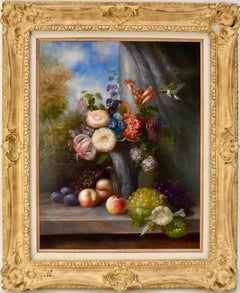
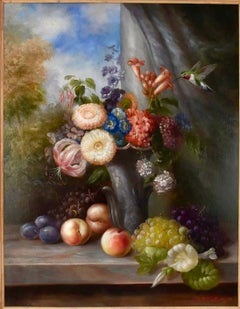
Francesca Volò Smiller, called Vincenzina (Milan, 1657 - 1700) attributed Floral composition overflowing from an embossed vase (LINK) Oil on canvas 79 x 61 cm. Framed 89 x 70 cm. T...

Category

17th Century Old Masters Art

Materials

Oil

Huge 18th Century Italian Old Master Oil Painting Still Life Fruit Flowers & Jug

Huge 18th Century Italian Old Master Oil Painting Still Life Fruit Flowers & Jug

Located in Cirencester, Gloucestershire

Classical Still Life of Fruit in Basket with other objects Italian artist, 18th century oil on canvas, unframed canvas: 24.5 x 33 inches provenance: private collection, UK condition:...

Category

18th Century Old Masters Art

Materials

Oil

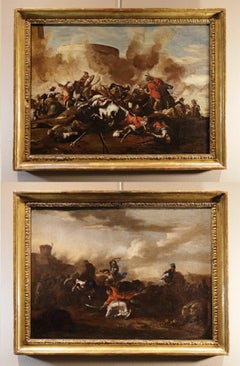
Two Arcadic Landscapes - J.F. Van Bloemen (follower of) - Oil on Canvas

Two Arcadic Landscapes - J.F. Van Bloemen (follower of) - Oil on Canvas

By Jan Frans van Bloemen (Orizzonte)

Located in Roma, IT

Two Arcadic Landscapes are a couple of original oil paintings by a follower of the Flemish artist, Jan Frans Van Bloemen (1662-1749). These old master's original paintings represen...

Category

Early 18th Century Old Masters Art

Materials

Oil

Armenti in front of the old waterfall in Tivoli Oil on Canvas with Frame

Armenti in front of the old waterfall in Tivoli Oil on Canvas with Frame

By Philipp Peter Roos (Rosa di Tivoli)

Located in Pistoia, IT

Philipp Peter Roos, known as Rosa da Tivoli (Sankt Goar, August 30, 1657 - Rome, January 17, 1706) Armenti in front of Tivoli's old waterfall Joining our collection is a beautiful...

Category

1680s Old Masters Art

Materials

Canvas, Oil

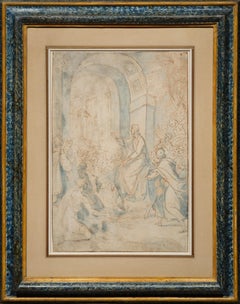
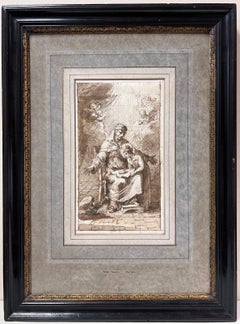
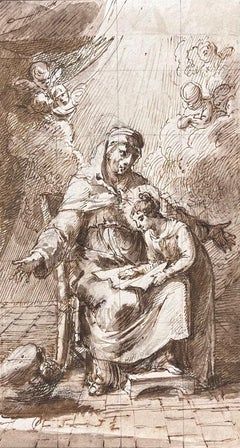
Fine 1700's Italian Old Master Ink & Wash Drawing Roman Allegorical Providenza

Fine 1700's Italian Old Master Ink & Wash Drawing Roman Allegorical Providenza

Located in Cirencester, Gloucestershire

'Providenza' Italian School, 18th century ink and wash drawing on paper, framed within a light oak wood frame (behind glass) image size: 10.5 x 7 inches overall framed: 17 x 13 inche...

Category

18th Century Old Masters Art

Materials

Ink, Watercolor, Archival Paper

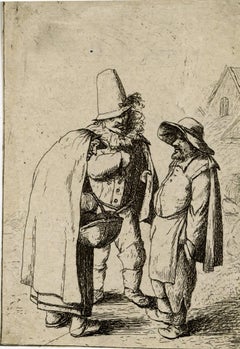
The Spectacle Seller

The Spectacle Seller

By Adriaen Jansz van Ostade

Located in Middletown, NY

Etching and drypoint on cream laid paper, 4 x 3 3/8 inches (102 x 86 mm), 1/4 inch margins. Signed in the plate, lower left corner. The 3rd state (of 6), after the rounding of the pl...

Category

Mid-17th Century Old Masters Art

Materials

Laid Paper, Drypoint, Etching

French school early 20th century, Portrait of a hunter, oil on canvas signed

French school early 20th century, Portrait of a hunter, oil on canvas signed

Located in Paris, FR

French school early 20th century, Portrait of a hunter signed lower right, the signature has not yet been deciphered oil on canvas 40 x 32.5 Framed : 47 x 39 cm In good condition, ...

Category

Early 20th Century Old Masters Art

Materials

Oil

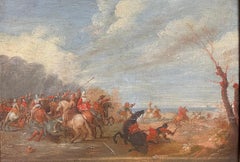
Mythological combat scene with Roman soldiers on horseback.

Mythological combat scene with Roman soldiers on horseback.

By Virgil Solis

Located in Middletown, NY

Pen and brownish black ink on grayish-cream laid paper, 6 1/2 x 8 inches (165 x 175 mm), irregular hexagonal sheet with margins. Some archival repairs along the top sheet edge, scatt...

Category

16th Century Old Masters Art

Materials

Ink, Laid Paper, Pen

La Nativite, Heliogravure by Albrecht Dürer

La Nativite, Heliogravure by Albrecht Dürer

By Albrecht Dürer

Located in Long Island City, NY

Albrecht Durer, After by Amand Durand, German (1471 - 1528) - La Nativite, Year: 1873, Medium: Heliogravure, Size: 8 x 5 in. (20.32 x 12.7 cm), Printer: Amand Durand, Description...

Category

Late 19th Century Old Masters Art

Materials

Etching

Penitent Magdalene Cambiaso Paint 17th Century Oil on canvas Old master Italy

Penitent Magdalene Cambiaso Paint 17th Century Oil on canvas Old master Italy

Located in Riva del Garda, IT

Luca Cambiaso (Moneglia, 1527 – Madrid, 1585), a member of the circle of or follower of The Penitent Magdalene Oil on canvas 102 x 84 cm. - Framed 123 x 104 cm. The protagon...

Category

17th Century Old Masters Art

Materials

Oil

Spanish school. Secretary of Pope Pius V, abbot of Husillos, bishop of Córdoba.

Spanish school. Secretary of Pope Pius V, abbot of Husillos, bishop of Córdoba.

Located in Firenze, IT

Portrait of Francisco de Reynoso y Baeza.   Secretary of Pope Pius V, abbot of Husillos and bishop of Córdoba. Francisci de Reynoso. Early 17th century. Small-format portrait from the late Renaissance period. Spanish school. Size: Cm 19 x Cm 13.5 Oil on wooden panel. On the back the fine tablet is strengthened (already in ancient times) by a sheet of parchment. About 1600-1610. As often in Mannerist / Late Renaissance portraits, the image of the character is accompanied by the writing that runs at the top, adding a celebratory, historicising touch to the effigy. Let's bring back the sentence here: DON FRANCISCO DE REINOSO. CAMARERO SECRETO IESCALCO PIO QUINTO OBISCOPO CORDOBA. 68 (? O 7?) (1534, Autillo de Campos, Spain - 1601, Córdoba) Francisco de Reynoso was a Spanish cleric, chief chamberlain, and secretary to Pope Pius V, abbot of Husillos, and bishop of Córdoba. He was the fourth of eleven children. His father was the seventh Lord of Autillo de Campos, and his mother was Juana de Baeza y de las Casas, daughter of Manuel de Baeza, a lawyer of the Royal Council and at the Court of Valladolid. Francisco de Reynoso was deeply devoted to the Virgin Mary and showed a strong inclination toward religion and piety from an early age. He studied Latin, arts, and theology at the University of Salamanca. In 1562, he traveled to Rome with his brothers Pedro and Luis. In January 1566, following the death of Pope Pius IV, Cardinal Antonio Michele Ghislieri was elected pope, becoming Pius V. From this period until Ghislieri's death in 1572, Francisco de Reynoso served as his chief chamberlain and secretary. After Pope Pius V died, Francisco de Reynoso returned to Spain and lived for several years in the city of Palencia, where his brother Manuel was a canon. He supported the Society of Jesus when it was established in Palencia, providing alms to the school's clergy and funding chairs of Letters and Theology at his own expense, as well as donating a significant number of books. During the brief outbreak of the Black Plague...

Category

17th Century Old Masters Art

Materials

Parchment Paper, Oil, Wood Panel

Untitled From: The Travels of Sir John Mandeville, printed by Johannes Prüss

Untitled From: The Travels of Sir John Mandeville, printed by Johannes Prüss

Located in Fairlawn, OH

Untitled From: The Travels of Sir John Mandeville, printed by Johannes Prüss Woodcut on 15th cen. laid paper, 1488 Unsigned (as issued) Woodcuts attributed to the "Master of the Berg...

Category

15th Century and Earlier Old Masters Art

Materials

Woodcut

Vestigie dell'Antico Ponte Trionfale - Etching by G. Vasi - 18th Century

Vestigie dell'Antico Ponte Trionfale - Etching by G. Vasi - 18th Century

By Giuseppe Vasi

Located in Roma, IT

Vestigie dell'antico Ponte Trionfale is an etching of the Late 18th century realized by Giuseppe Vasi. Signed and titled on plate lower margin. Good conditions except for consumed margins with some foxings. Giuseppe Vasi (Corleone,1710 - Rome, 1782) was an engraver, architect, and landscape artist. Between 1746 and 1761, Vasi published 10 volumes with 240 engravings of the monuments of Rome...

Category

Late 18th Century Old Masters Art

Materials

Etching

19thC. Figures Hunting Classical Ruins Mountainous Sunset Landscape North Africa

19thC. Figures Hunting Classical Ruins Mountainous Sunset Landscape North Africa

By Continental School

Located in Cirencester, Gloucestershire

Continental, 19th Century oil on canvas, framed Monogrammed 'WM' and dated '1868' lower right framed: 34 x 48.5 inches canvas : 29.5 x 44 inches Provenance: private collection, UK Co...

Category

19th Century Old Masters Art
Materials

Oil

1920 Cesare Ciani Credited Italian Macchiaiolo Portrait Painting

1920 Cesare Ciani Credited Italian Macchiaiolo Portrait Painting

By Cesare Ciani

Located in Roma, IT

1920 Cesare Ciani Credited Italian Macchiaiolo Portrait Painting A beautiful, intense painting, although it is not signed, is attributed to the great Macchiaioli painter Cesare Cian...

Category

1920s Old Masters Art

Materials

Oil, Wood Panel

19th century Oil portrait of a Hungarian Rabbi

19th century Oil portrait of a Hungarian Rabbi

Located in Woodbury, CT

This 19th-century oil on panel portrait depicts a Hungarian Rabbi, characterized by his traditional attire and solemn expression. The Rabbi is portrayed with a long, white beard and ...

Category

1890s Old Masters Art

Materials

Oil, Wood Panel

1910 Master Wood Engraving after Rembrandt with Cap, Signed

1910 Master Wood Engraving after Rembrandt with Cap, Signed

By Timothy Cole

Located in Soquel, CA

1910 Master Wood Engraving after Rembrandt with Cap, Signed Beautifully rendered print after Rembrandt by master engraver Timothy Cole (British/American b. 1852 d. 1931.) Rembrandt ...

Category

1910s Old Masters Art

Materials

Ink, Tissue Paper, Pencil, Engraving

Piazza del Popolo con Obelisco Egizio

Piazza del Popolo con Obelisco Egizio

By Giuseppe Vasi

Located in Fairlawn, OH

Piazza del Popolo con Obelisco Egizio Etching, 1752 Signed in the plate lower left (see photo) From: Della Magnificenze di Roma Antica e Moderna ( The Magnificense of Ancient and Modern Rome) , (1747-1761) Volume II, The Main Squares and Obelisks, columns and other ornaments, 1752, Plate No. 21 Della Magnificenze di Roma Antica e Moderna_ (1747-61), a collection of 238 plates that was published in ten volumes. Vasi recorded all types of architecture and organized these images of contemporary Rome by subject, with each volume representing a different category of architecture. This comprehensive project provides one of the most complete views of eighteenth-century Rome Condition: Excellent Image/Plate size: 8.25 x 12.63 inches Sheet size: 11 x 15 7/8 inches Vasi was Giovanni Battista Piranesi’s teacher. Piranesi (1720-1778) entered Vasi’s studio as an apprentice at age 20 c. 1740. Piranesi left Vasi’s employment after stabbing Vasi over the perception that Vasi was withholding secrets of the etching process. Giuseppe Vasi was an Italian engraver and painter born and trained in Sicily. He received a classical education in his hometown of Corleone and trained as a printmaker in nearby Palermo, perhaps under the tutelage of the etchers Antonino Bova and Francesco Cichè. He moved to Rome in 1736, already an established printmaker, and spent most of his career documenting the urban landscape of the city in engravings. Through his patron, the politically and culturally influential Cardinal Troiano Acquaviva d’Aragona, Vasi met other artists working in Rome, such as Sebastiano Conca, Ferdinando Fuga, and Luigi Vanvitelli. He was also influenced by his predecessors, including Giovanni Paolo Panini, Giovanni Battista Falda...

Category

1750s Old Masters Art

Materials

Etching

Escuela hispano-colonial (siglo xix) - Óleo sobre tela - La sagrada familia

Escuela hispano-colonial (siglo xix) - Óleo sobre tela - La sagrada familia

Located in Sant Celoni, ES

Sin firmar, es de autor anónimo Se presenta enmarcada la obra con un marco del siglo xviii (el marco presenta algunas leves faltas) Medidas obra: 104 cm. de altura x 80 cm. de anch...

Category

Mid-19th Century Old Masters Art
Materials

Oil

École italienne (XVIII) - Vierge et Enfant

École italienne (XVIII) - Vierge et Enfant

Located in Sant Celoni, ES

La obra no va firmada Se presenta enmarcada la obra con un marco en madera dorada del siglo xix (el marco presenta algunas ligeras faltas sin importancia) Medidas obra: 20 x 17 cm....

Category

Late 18th Century Old Masters Art
Materials

Oil

Allegory Of Europe Solimena 18th Century Paint Oil on canvas Old master Italy

Allegory Of Europe Solimena 18th Century Paint Oil on canvas Old master Italy

Located in Riva del Garda, IT

Francesco Solimena (Canale di Serino 1657 - Barra 1747) workshop/circle The Allegory of Europe oil on canvas 102 x 76 cm. - with frame: 119 x 92 cm. The work, which can be placed ...

Category

18th Century Old Masters Art
Materials

Oil

Old Masters art for sale on 1stDibs.
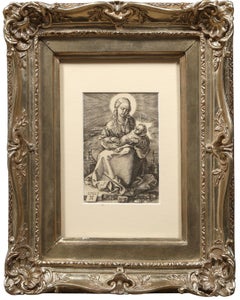
Find a wide variety of authentic Old Masters art available for sale on 1stDibs. Works in this style were very popular during the 21st Century and Contemporary, but contemporary artists have continued to produce works inspired by this movement. If you’re looking to add art created in this style to introduce contrast in an otherwise neutral space in your home, the works available on 1stDibs include elements of orange, yellow, blue and other colors. Many Pop art paintings were created by popular artists on 1stDibs, including Charles Amand Durand, Giuseppe Vasi, Thomas Holloway, and Vincenzo Campana. Frequently made by artists working with Etching, and Paint and other materials, all of these pieces for sale are unique and have attracted attention over the years. Not every interior allows for large Old Masters art, so small editions measuring 0.4 inches across are also available. Prices for art made by famous or emerging artists can differ depending on medium, time period and other attributes. On 1stDibs, the price for these items starts at $11 and tops out at $1,495,000, while the average work sells for $546.