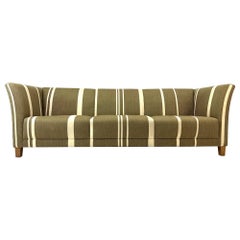
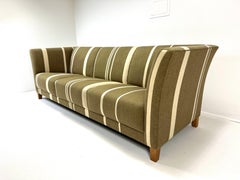
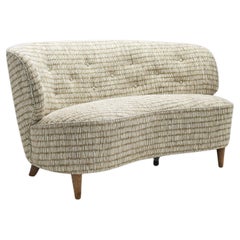
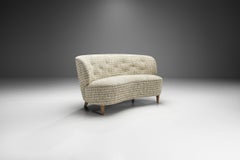
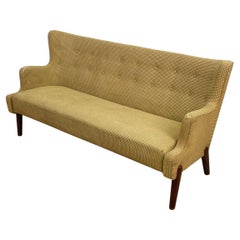
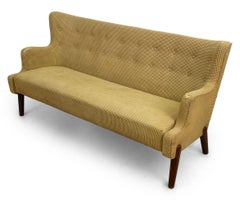
1950’s Danish Sofa
By Fritz Heningsen
Located in Turners Falls, MA
Very well crafted Danish cabinet maker sofa. Stripped wool upholstery with oak legs. Denmark. 1950
Category
20th Century Danish Scandinavian Modern Sofas
Materials
Upholstery, Oak
1950’s Danish Sofa
By Fritz Heningsen
Located in Turners Falls, MA
Very well crafted Danish cabinet maker sofa. Stripped wool upholstery with oak legs. Denmark. 1950
Upholstery, Oak
$4,667
H 29.93 in W 70.08 in D 28.75 in
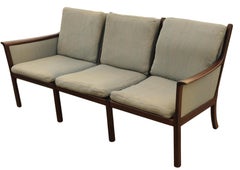
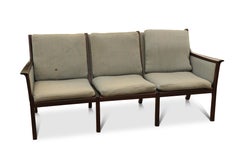
Ole Wanscher Designed Scandinavian Modern Upholstered Three Seater Sofa 1950's
By Poul Jeppesen, Ole Wanscher
Located in Reading, Berkshire
Ole Wanscher Mid-Century Three Seat Mahogany Frame Sofa In Original Upholstery by Poul Jeppesens
Steel
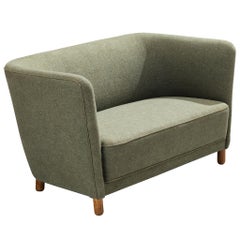
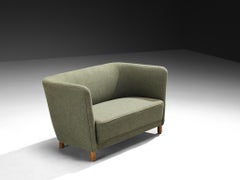
1950s Scandinavian Modern Sofa in Muted Green Wool
Located in Waalwijk, NL
Sofa, wool, beech, Scandinavia, 1950s This Scandinavian-modern sofa from the 1950s embodies a
Wool, Beech
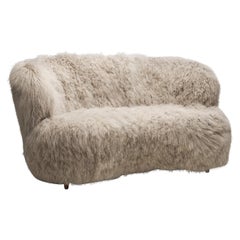
Scandinavian Cabinetmaker Mid-Century Sofa, Scandinavia 1950s
Located in Utrecht, NL
This beautiful Scandinavian two-seater sofa recalls the peak of Nordic Mid-Century Modern design
Sheepskin, Wood
Mid-Century Scandinavian Cabinetmaker Sofa, Scandinavia 1950s
Located in Utrecht, NL
This beautiful Scandinavian two-seater sofa recalls the peak of Nordic Mid-Century Modern design
Fabric, Wood
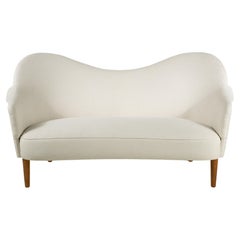
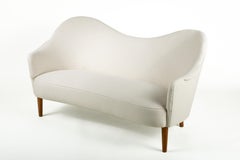
Swedish Modern Samspel Sofa by Carl Malmsten 1950's
By O.H. Sjögren, Carl Malmsten
Located in Uccle, BE
This Samspel 2 seaters sofa has been reupholstered in a cotton blend-Villa Nova Bari fabric
Cotton, Beech
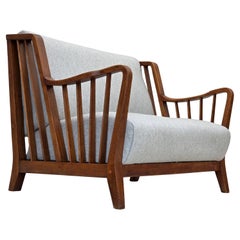
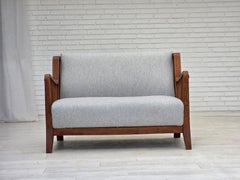
$2,706
H 31.5 in W 46.86 in D 30.32 in
1950s, Scandinavian 2-seater sofa, reupholstered, furniture wool, oak.
Located in Tarm, 82
1950s, Scandinavian 2-seater sofa. Reupholstered in quality furniture wool. Renewed oak, brass
Wool, Oak
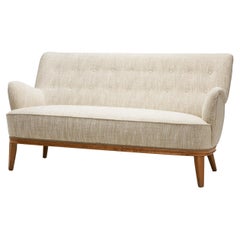
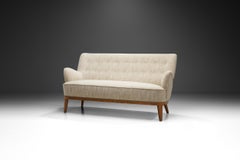
$9,950
H 32.49 in W 60.63 in D 32.29 in
Scandinavian Mid-Century Modern Three-Seater Sofa, Scandinavia 1950s
Located in Utrecht, NL
countries. This sofa possesses design elements that define Scandinavian mid-century modernism, including
Fabric, Wood
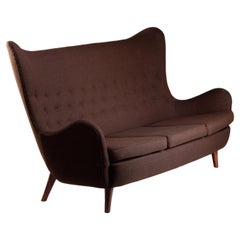
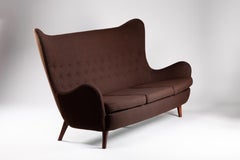
Runar Engblom, 1950's sofa for Hotel Vaakuna
By Boman OY, Runar Engblom
Located in Turku, Varsinais-Suomi
Immerse yourself in true Scandinavian vintage elegance with the Runar Engblom 1950's sofa
Upholstery
$9,000
H 31.5 in W 66.93 in D 34.65 in
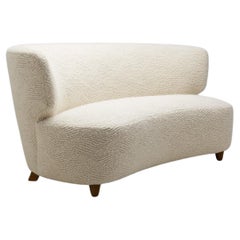
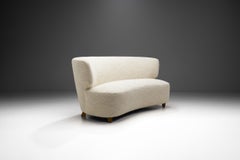
Scandinavian Mid-Century Modern Sofa Upholstered in Bouclé, Scandinavia ca 1950s
Located in Utrecht, NL
One of the most significant contributions of the Scandinavian countries to the European fine arts
Bouclé, Wood
$11,000
H 26.38 in W 76.78 in D 39.38 in
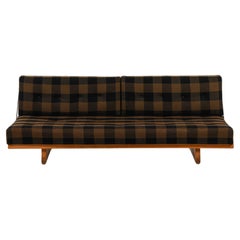
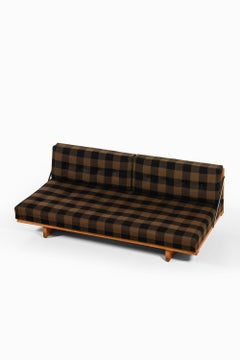
Sofa / Daybed in Oak, Brass and Original Fabric by Børge Mogensen, 1950's
By Børge Mogensen
Located in Limhamn, Skåne län
Sofa / Daybed in Oak, Brass and Original Fabric by Børge Mogensen, 1950's Additional Information
Brass
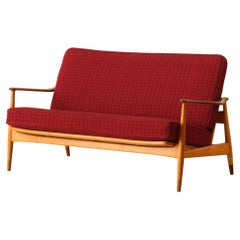
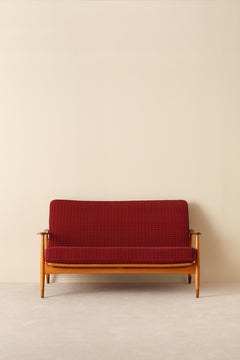
Arne Vodder Sofa, Denmark, 1950s
By Arne Vodder
Located in Stockholm, SE
Produced by France & Daverkosen in Denmark, 1950s. Beech, teak and fabric. 2 adjustable
Beech
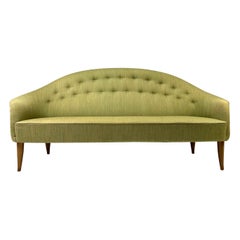
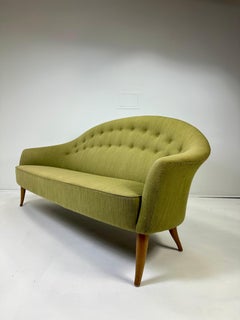
1950s Sofa by Kerstin Horlin-Holmquist
By Kerstin Horlin Holmquist
Located in Turners Falls, MA
Sofa designed by Kerstin Horlin-Holmquist. Manufactured by Nordiska Kompaniet. Birch legs with
Upholstery, Birch
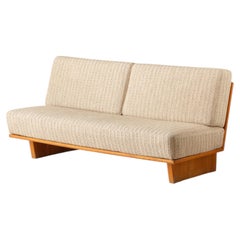
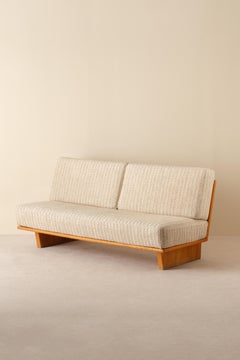
Sofa by G.A. Berg, Sweden, 1950s
By G.A. Berg
Located in Stockholm, SE
Rare Swedish pine sofa produced by Gustav-Axel Berg, Sweden, 1950s. Newly upholstered.
Pine
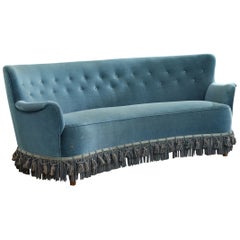
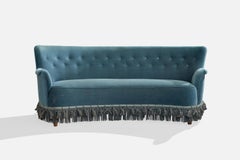
Danish Designer, Sofa, Velvet, Wood, Denmark, 1950s
Located in High Point, NC
A blue velvet, fabric string and wood sofa designed and produced in Denmark, c. 1950s. Tassels
Velvet, Wood
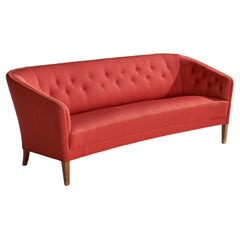
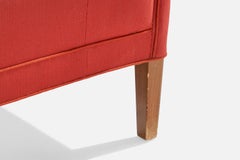
Ludvig Pontoppidan, Sofa, Wood, Fabric, Denmark, 1950s
By Ludvig Pontoppidan
Located in High Point, NC
A red fabric and wood sofa designed and produced by Ludvig Pontoppidan, Denmark, c. 1950s
Fabric, Wood
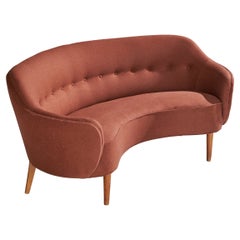
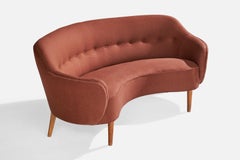
Danish Designer, Sofa, Fabric, Wood, Denmark, 1950s
Located in High Point, NC
A curved wood and red fabric sofa designed and produced in Denmark, c. 1950s. Dimensions: 33.5” H
Fabric, Wood
$6,470
H 28.35 in W 69.3 in D 29.53 in
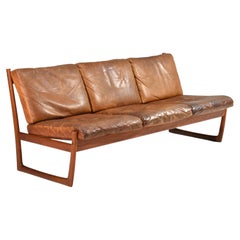
Peter Hvidt & Orla Mølgaard FD130 Teak sofa in Cognac Leather - Denmark, 1950's
By Peter Hvidt, Hvidt & Mølgaard, France & Søn
Located in Pijnacker, Zuid-Holland
Amazing minimalistic solid Teak and Cognac leather sofa model FD130 by Peter Hvidt & Orla Mølgaard
Leather, Teak
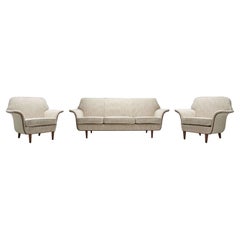
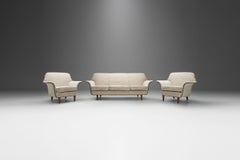
Swedish Cabinetmaker Sofa and Armchairs, Sweden, 1950s
Located in Utrecht, NL
rendering of a sort of essentialized “Swedishness” embedded in objects, such as this sofa and armchairs
Fabric, Wood
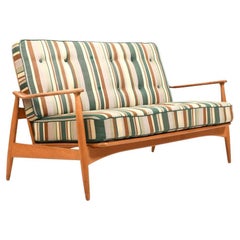
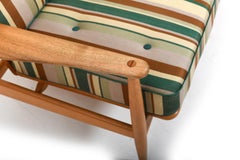
1950s Arne Vodder Sofa FD161 France & Daverkosen
By Arne Vodder
Located in Handewitt, DE
Arne Vodder Sofa, model FD161 for France & Daverkosen Denmark, c.1950. 2-seater. On the armrests
Fabric, Beech, Teak
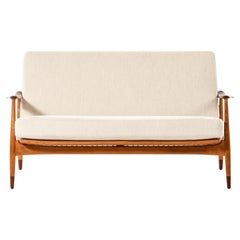
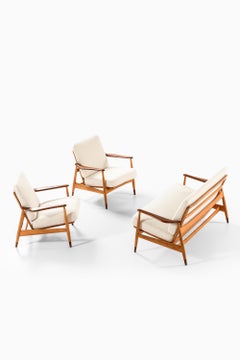
Sofa in Beech and Fabric by Arne Vodder, 1950s
By Arne Vodder
Located in Limhamn, Skåne län
in the 1950s, exemplifies key elements of Scandinavian modern design through its use of natural
Fabric, Beech, Wool, Teak
$4,000Sale Price|20% Off
H 30 in W 70 in D 30 in
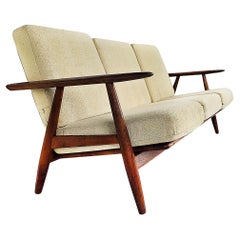
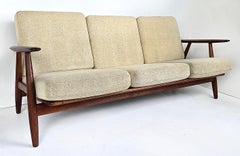
Danish Mid-century Modern Hans Wegner "Cigar" Oak Sofa by GETAMA circa 1950's
By GETAMA, Hans J. Wegner
Located in Miami, FL
Danish Mid-century Hans Wegner GETAMA Oak Cigar Sofa 1950s Offered for sale is a Danish mid
Metal
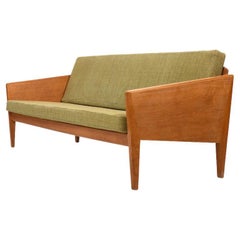
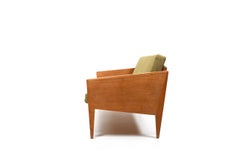
Rare Illum Wikkelsø Sofa in Oak early 1950s.
By Illum Wikkelsø
Located in Handewitt, DE
Rare oak sofa by Illum Wikkelsø for Søren Willadsen’s Møbelfabrik, early 1950s. Dismountable frame
Oak
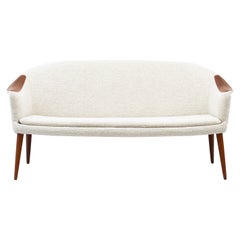
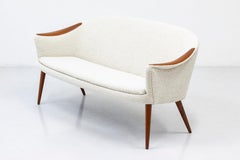
Rare Sofa Attributed to Gerhard Berg, Norway, 1950s
Located in Hägersten, SE
Rare sofa produced in Norway. Attributed to Norwegian designer Gerhard Berg. Most likely produced
Bouclé, Teak
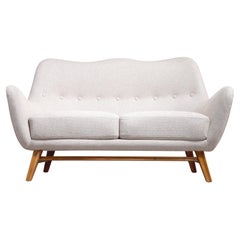
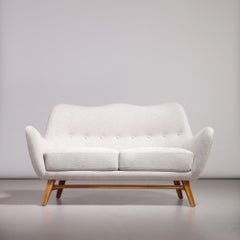
Swedish Modern Two-Seater Sofa in Light Fabric, 1950s
Located in Prague, New Town
Swedish Modern two-seater sofa, made by a Swedish cabinetmaker in the 1950s. Legs in stained wood
Fabric, Wood
$2,823
H 20.48 in W 20.48 in D 20.48 in
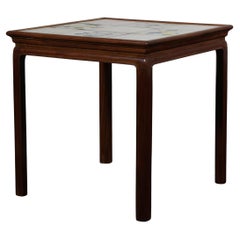
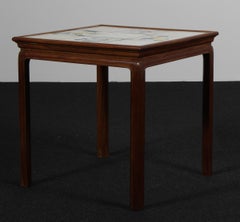
Frits Henningsen & Kähler Sofa Table in mahogany, Denmark, 1950s
By Jens Thirslund, Frits Henningsen, Kähler
Located in Esbjerg, DK
Frits Henningsen sofa table in mahogany with Kähler tiles made by Jens Thirslund Made by Frits
Ceramic, Mahogany
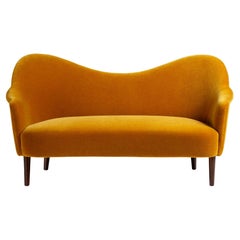
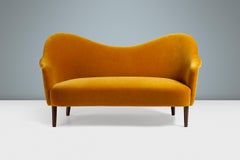
Carl Malmsten Vintage Samspel Sofa in Mohair Velvet 1950s
By Carl Malmsten
Located in London, England
Scandinavian Modern sofa design and remains in high demand with collectors due to its' instantly recognisable
Mohair, Velvet, Beech
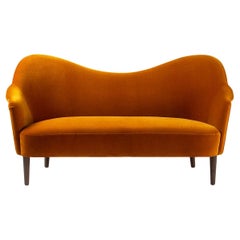
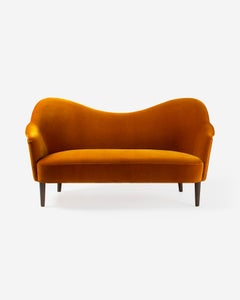
Carl Malmsten Vintage Samspel Sofa in Mohair Velvet 1950s
By Carl Malmsten
Located in London, England
Carl Malmsten - Samspel Sofa, 1956 The Samspel sofa was designed in 1956 and first produced by AB
Mohair, Velvet, Beech
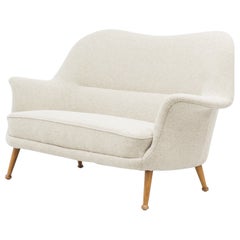
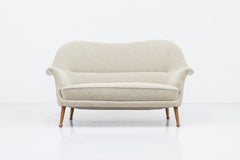
"Divina" sofa by Arne Norell, Westbergs möbler, Sweden, 1950s
By Arne Norell
Located in Hägersten, SE
"Divina" two seater sofa attributed to Arne Norell. Produced in Sweden by Westbergs Möbler during
Wool, Beech
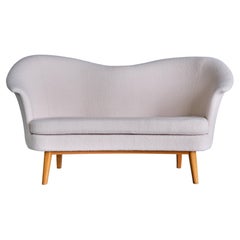
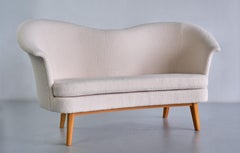
$13,530
H 32.29 in W 59.06 in D 29.14 in
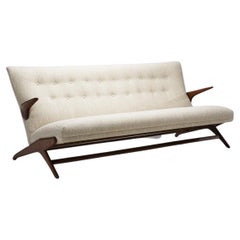
Olof Ottelin 'Duetto' Sofa, Keravan Puusepäntehdas Stockmann, Finland, 1950s
By Olof Ottelin, Oy Stockmann AB
Located in The Hague, NL
This rare sofa was designed by Olof Ottelin and produced by Keravan Puusepäntehdas for the
Fabric, Beech

$11,000
H 29.93 in W 72.45 in D 33.86 in
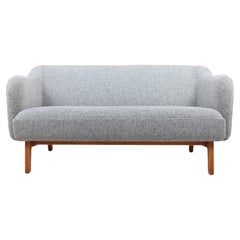
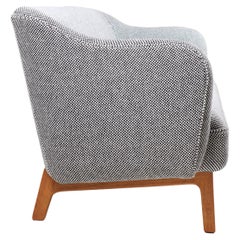
Danish Mid-Century Sofa by Schiller Polstermøbelfabrik, Denmark 1950s
Located in Utrecht, NL
process, Scandinavian designers still valued craft over industrialization. This sculptural sofa is a
Fabric, Wood
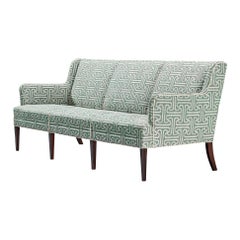
Rare Midcentury Sofa by Tove & Edvard Kindt Larsen, 1950s
By Tove & Edvard Kindt-Larsen, Thorald Madsens Snedkeri
Located in Lejre, DK
Sofa designed by Tove & Edvard Kindt-Larsen for cabinetmaker Thorald Madsen. Made in Denmark, Great
Fabric, Oak
$7,450
H 31.7 in W 74.41 in D 31.89 in
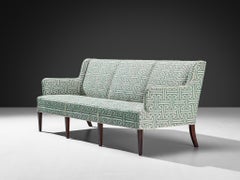
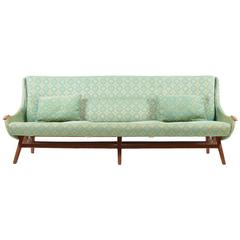
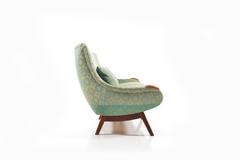
Elegant Danish Modern 1950s Sofa in Light Green Patterned Upholstery
Located in Waalwijk, NL
Sofa, wood, fabric, Denmark, 1950s This classic Danish sofa showcases clean, understated lines
Fabric, Wood
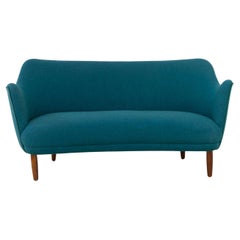
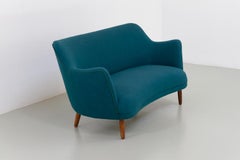
Danish Modern Sofa in Teal Blue, 1950s.
By Jacob Kjaer, Finn Juhl
Located in Asaa, DK
Danish Modern Sofa in Teal Blue, 1950s. Elegant Scandinavian Mid-Century Modern sofa/love seat in
Wool
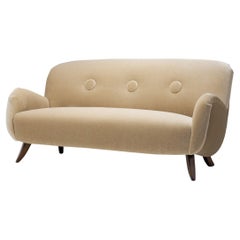
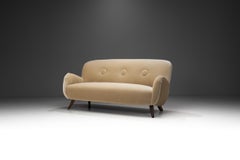
Swedish Modern Sofa with Cherry Wood Legs, Sweden 1950s
Located in Utrecht, NL
Designed in the early phase of what we know today as mid-century modern, this charming sofa is a
Wood, Fabric
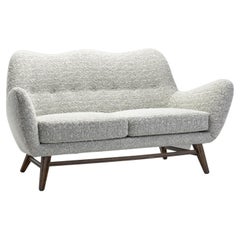
Nordic Mid-Century Two-Seater Sofa, Scandinavia ca 1950s
Located in Utrecht, NL
the iconic Scandinavian sofas - think about Finn Juhl’s “46” sofa -, this model is also a “body for
Fabric, Wood
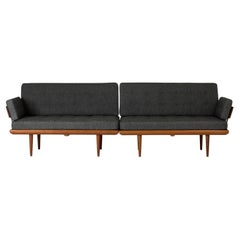
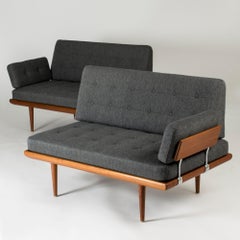
"Minerva" Sofa by Peter Hvidt & Orla Møllgaard, Denmark, 1950s
By France & Søn, Hvidt & Mølgaard
Located in Östermalm, Stockholms län
“Minerva” sofa by Peter Hvidt and Orla Møllgaard, made up from two sections. Can be easily switched
Teak
$7,059 / item
H 32.68 in W 59.06 in D 31.5 in
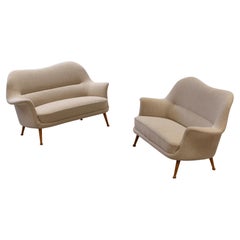
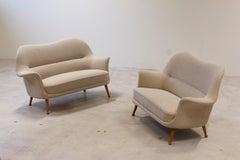
"Divina" loveseat sofa by Arne Norell, Westbergs möbler, Sweden, 1950s
By Arne Norell
Located in Hägersten, SE
Pair of loveseat sofas model "Divina" produced in Sweden by Westbergs möbler. Made during the 1950s
Wool, Beech
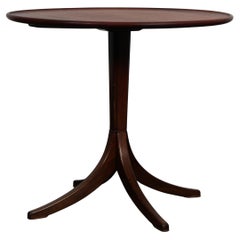
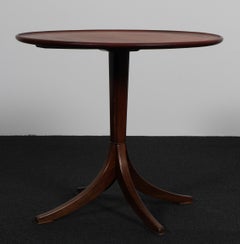
Frits Henningsen round Sofa Table in solid mahogany, Denmark, 1950s
By Frits Henningsen
Located in Esbjerg, DK
Frits Henningsen round table in solid mahogany. Made by Frits Henningsen in the 1950s.
Mahogany
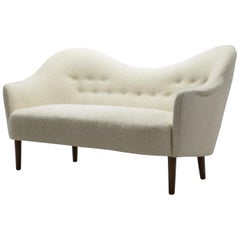
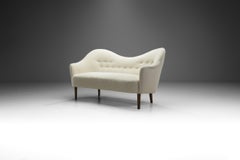
Carl Malmsten "Samspel" Sofa for Ab Record, Sweden 1950s
By Carl Malmsten
Located in Utrecht, NL
This model “Samspel” sofa was first introduced at the exhibition at Röhsska Museet (the Swedish
Wool, Wood
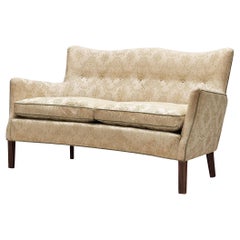
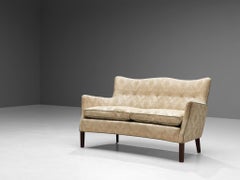
1950s Danish Sofa in Off-White Decorative Upholstery and Wood
Located in Waalwijk, NL
Sofa, fabric, wood, Denmark, 1950s. This sofa has all the flair and vitality of a typical Danish
Fabric, Wood
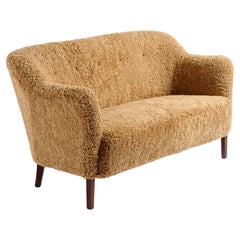
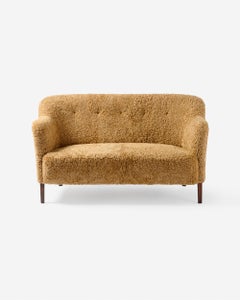
1950s Danish Sheepskin Sofa by Alfred Christensen
By Slagelse Mobelvaerk
Located in London, England
and produced in the 1950s at his own company: Slagelse Mobelvaerk in Denmark. The sofa has been
Sheepskin
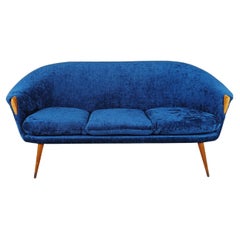
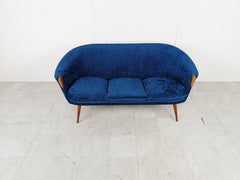
Midcentury Sofa Attributed to Nanna Ditzel, 1950s
By Nanna Ditzel
Located in Leuven, Vlaams Gewest
wooden legs. The sofa has been reupholstered in blue fabric. 1950s - Denmark Perfect condition Dimensions
Fabric
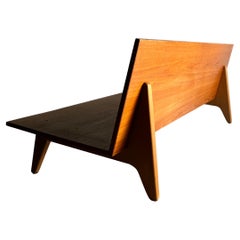
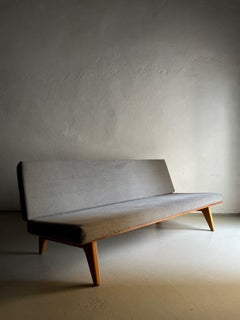
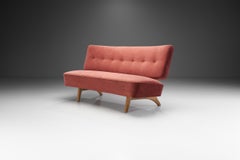
Teak Daybed Sofa by Gustaf Hiort Af Ornäs, Finland 1950s
By Carl Gustaf Hiort af Ornäs
Located in Rīga, LV
This minimalist sofa is made of two teak boards on solid beech wood legs. Zipped cushions are
Fabric, Oak, Teak
$7,700
H 32.49 in W 63.78 in D 24.61 in
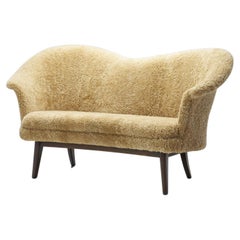
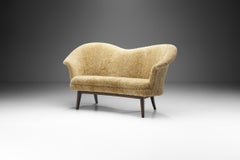
"Susanna" Sofa by Aake Antilla for Lahden Lepokalusto, Finland 1950s
Located in Utrecht, NL
This wonderful commemoration of Finnish mid-century design is the Susanna sofa created by Lahti
Fabric
$14,000
H 34.26 in W 60.24 in D 29.53 in
Olof Ottelin "Duetto" Sofa for Kervo Snickerifabrik Stockmann, Finland, 1950s
By Olof Ottelin
Located in Utrecht, NL
This lovely “Duetto” loveseat was designed back in the 1950s to bring the sitters closer together
Sheepskin, Wood
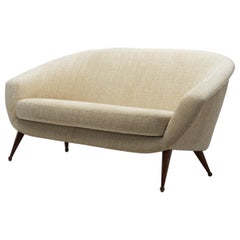
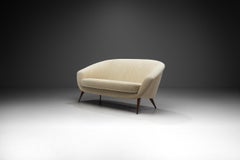
"Tellus" Sofa by Folke Jansson for SM Wincrantz, Sweden 1950s
By Folke Jansson, SM Wincrantz 1
Located in Utrecht, NL
geometric shapes superimposed on them. This “Tellus” sofa is a beautiful example of this combination, with a
Fabric, Wood
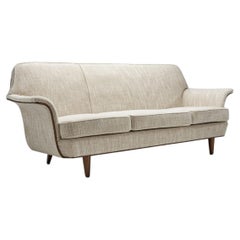
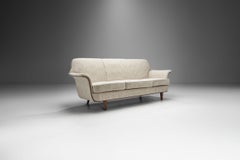
Swedish Mid-Century Cabinetmaker Sofa, Sweden 1950s
Located in Utrecht, NL
rendering of a sort of essentialized “Swedishness” embedded in objects, such as this sofa. Rounded out
Fabric, Wood
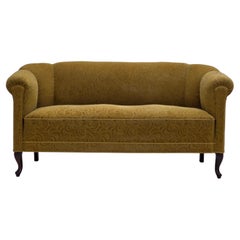
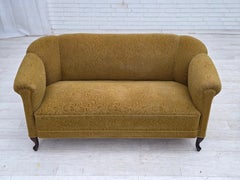
1950s, Danish 2-seater sofa, original green furniture wool.
Located in Tarm, 82
furniture maker in about 1950-55s. Original Scandinavian vintage design directly from Denmark. The sofa was
Wool, Ash
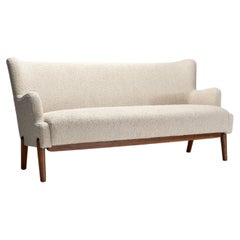
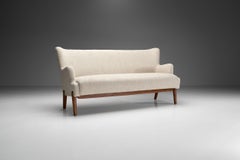
$9,900
H 33.86 in W 69.69 in D 30.12 in
Eva and Nils Koppel Three-Seater Sofa "Koppel", Denmark, 1950s
By Eva & Niles Koppell
Located in Utrecht, NL
This three-seater sofa has the best characteristics of Danish mid-century modern design. Its
Bouclé, Wood
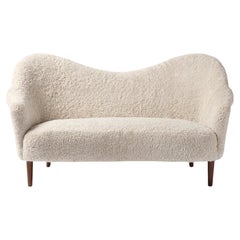
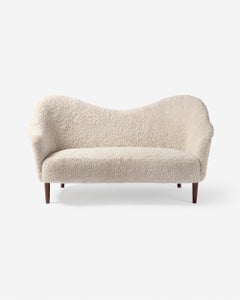
1950s Swedish Sheepskin Samspel Sofa by Carl Malmsten
By Carl Malmsten
Located in London, England
Carl Malmsten 'Samspel' Sofa, circa 1950s First designed in 1956 and produced by AB Record in
Beech, Sheepskin
$8,000
H 28.35 in W 74.81 in D 28.35 in
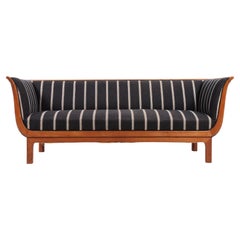
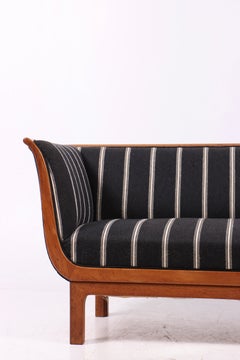
1950s Danish Cabinetmaker Sofa in Oak with Wool, Attributed to Frits Henningsen
By Frits Henningsen
Located in Lejre, DK
Elegant cabinetmaker sofa crafted in solid oak and upholstered in wool fabric with classic stripes
Wool, Oak
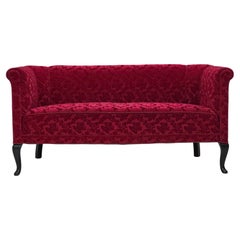
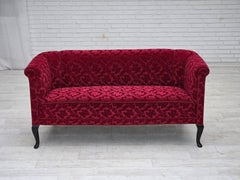
1950s, Danish 2-seater sofa, cherry-red furniture velour.
Located in Tarm, 82
1950s, Danish 2-seater sofa. Cherry-red furniture velour, ash wood legs, springs in the seat. Sofa
Velvet, Ash
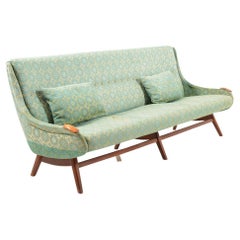
$8,118
H 33.08 in W 85.04 in D 27.56 in
1950s Prototype Sofa by the Danish Designer & Furniture Maker Svend Skipper
By Svend Skipper
Located in Handewitt, DE
Unique four-seat sofa by the Danish designer and furniture maker Svend Skipper. This prototype has
Brocade, Teak
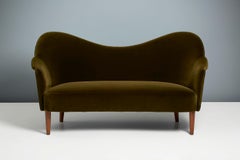
1950s Swedish Velvet Samspel Sofa by Carl Malmsten
By Carl Malmsten
Located in London, England
Carl Malmsten 'Samspel' Sofa, circa 1950s First designed in 1956 and produced by AB Record in
Wool, Cotton, Beech
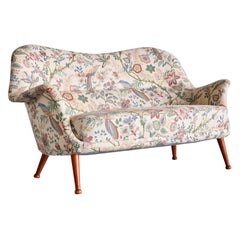
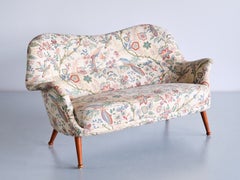
$7,647
H 31.5 in W 58.67 in D 31.11 in
Arne Norell 'Divina' Two Seat Sofa, Westbergs Möbler AB, Sweden, 1950s
By Arne Norell
Located in The Hague, NL
This rare two seat sofa was designed by Arne Norell in the late 1950s. The model is called 'Divina
Fabric, Cotton, Upholstery, Wood, Beech
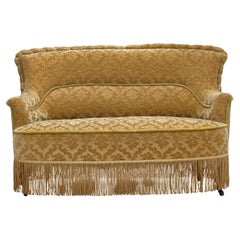
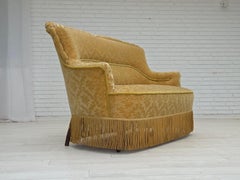
1950s, Danish 2-seater sofa, green/honing furniture velour.
Located in Tarm, 82
1950s, Danish 2-seater sofa. Green/honing furniture velour, beech wood legs, brass wheels on the
Velvet, Beech
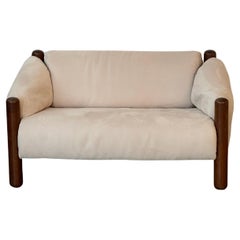
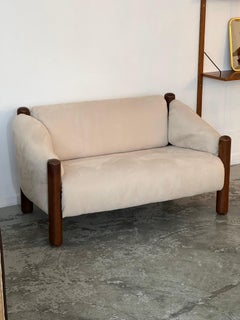
Scandinavian sofa 1950s
Located in PARIS, FR
This small Scandinavian sofa dates back to the 1950s. Its designer is unknown. It embodies the
Fabric, Wood
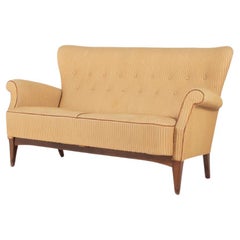
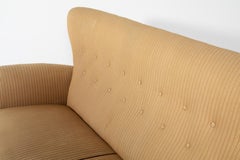
Georg Kofoed sofa from 1950’s, Denmark
By Georg Kofoed
Located in TOLLEBEEK, NL
Danish modern sofa designed by Georg Kofoed in 1940’s/50’s. Classic construction with a mahogany
Leather, Fabric, Upholstery, Wood
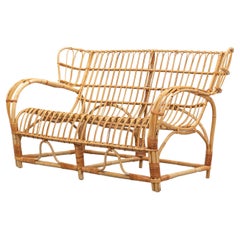
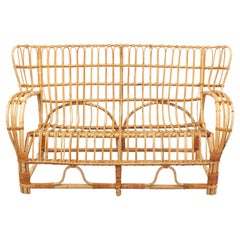
Viggo Boesen, Rattan Sofa, 1950s
By Viggo Boesen
Located in Los Gatos, CA
Rattan and Cane sofa designed by Viggo Boesen-see other listing with matching chair.
Rattan
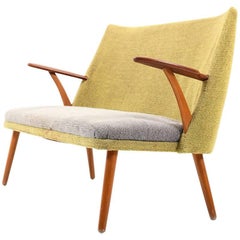
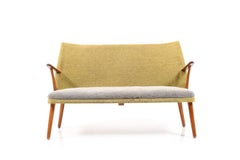
Early Danish Two-Seat Sofa, 1950s
Located in Handewitt, DE
Early 1950s two-seat sofa. Upholstered in original green and grey fabric. Legs and armrests in teak
Teak
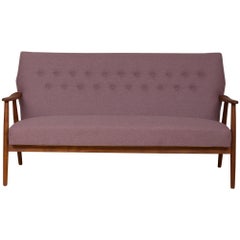
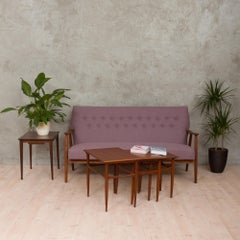
Danish Teak Sofa from 1950s with New Wool Upholstery
Located in Warsaw, PL
Danish midcentury sofa that features a frame in solid teak and was reupholstered in a light lilac
Wool, Teak
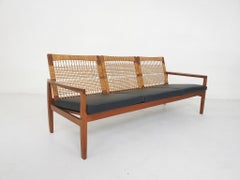
Unavailable
H 28.35 in W 72.05 in D 25.6 in
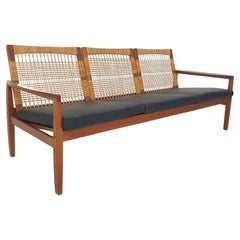
Teak and Cane Sofa by Hans Olsen for Juul Kristensen, Denmark, 1950s
By Juul Kristensen, Hans Olsen
Located in Amsterdam, NL
produced by Juul Kristensen. This exquisite piece from the 1950's seamlessly blends mid-century charm with
Leather, Cane, Teak
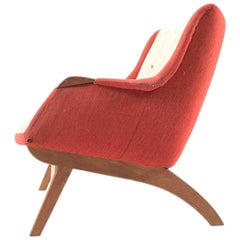

Early and Rare Danish 2.5-Seat Sofa, 1950s
Located in Handewitt, DE
Early 1950s 2.5-seat sofa. Upholstered in original red and grey fabric. Oak base and teak armrest
Fabric, Teak
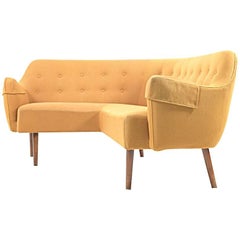
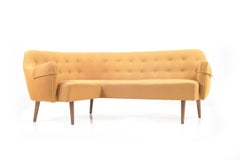
Rare and Early Danish Corner Sofa 1940-1950s
Located in Handewitt, DE
Mid century dansih corner sofa. Early production. Upholstery in original yellow frabric. Around
Fabric
Unavailable
H 33.08 in W 85.04 in D 27.56 in
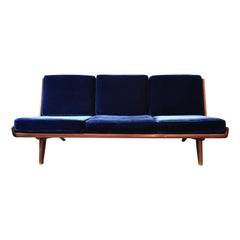
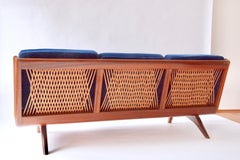
Prototype Sofa by the Danish Designer & Furniture Maker Svend Skipper, 1950s
Located in Handewitt, DE
Unique four-seat sofa by the Danish designer and furniture maker Svend Skipper. This prototype has
Brocade, Teak
Unavailable
H 29.14 in W 70.87 in D 30.71 in
Sofa by Carl Gustav Hiort af Ornäs for Puunveisto OY, Finland, 1950s
By Carl Gustaf Hiort af Ornäs
Located in Dusseldorf, DE
This beautiful sofa is manufactured to be seen from each side. It is very elegant, made of
Leather, Wool, Hardwood
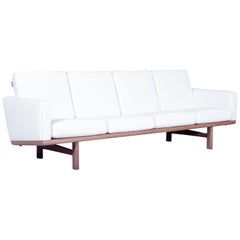
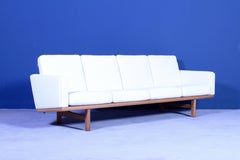
Unavailable
H 30.71 in W 92.92 in D 31.5 in
Hans J Wegner GE 236-4 Oak Four Seat Sofa by GETAMA, 1950s
By Hans J. Wegner, GETAMA
Located in Malmo, SE
A midcentury oak sofa designed by Hans J Wegner in the 1950s. The sofa has its original cushions
Bouclé, Oak
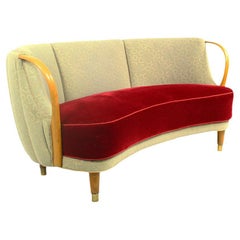
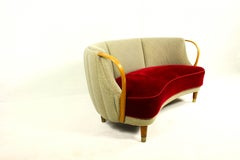
Danish Velor Cabinetmaker Sofa by N.a. Jørgensen, 1950s
By N.A. Jørgensens, Viggo Boesen
Located in ŚWINOUJŚCIE, 32
Unique curved or banana shaped loveseat or settee with open armrests designed and made as Model 96 by N.A. Jørgensens Møbelfabrik in 1954/55. N.A. Jørgensen is better known under ...
Fabric, Wood

Unavailable
H 31.5 in W 70.87 in D 32.29 in
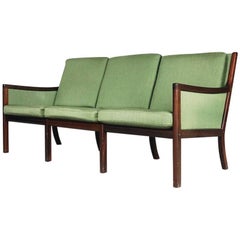
Danish Modern Sofa by Ole Wanscher for Poul Jeppesen Møbelfabrik, 1950s
By Ole Wanscher, Poul Jeppesen
Located in Warsaw, PL
Møbelfabrik A/S during the 1950s. This three-seat couch has a mahogany frame, fitted with loose cushions
Wool, Mahogany

Unavailable
H 31.5 in W 70.87 in D 32.29 in
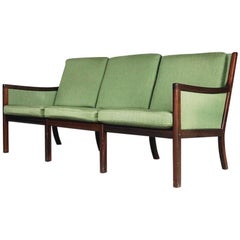
Danish Modern Sofa by Ole Wanscher for Poul Jeppesen Møbelfabrik, 1950s
By Ole Wanscher, Poul Jeppesen
Located in Warsaw, PL
Møbelfabrik A/S during the 1950s. This three-seat couch has a mahogany frame, fitted with loose cushions
Wool, Mahogany
Unavailable
H 28.35 in W 81.89 in D 29.93 in
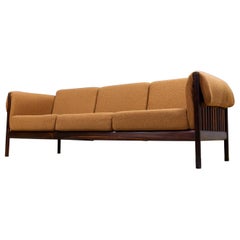
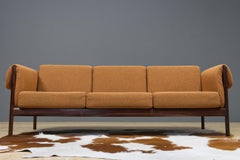
Mid-Century Modern Sofa with Slat Back by Johannes Andersen, 1950s, Denmark
By CFC Silkeborg, Johannes Andersen
Located in Beek en Donk, NL
An elegant and refined piece of Scandinavian Modern design, robust yet elegant, a rectangular sofa
Fabric
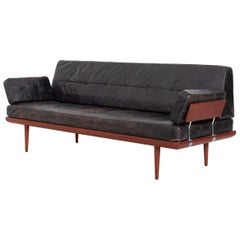
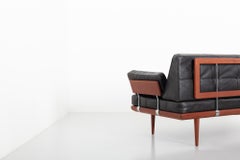
Unavailable
H 31.5 in W 80.71 in D 30.32 in
Minerva Sofa by Peter Hvidt & Orla Mølgaard-Nielsen for France & Søn, 1950s
By Hvidt & Mølgaard, France & Søn
Located in Kastrup, DK
Minerva sofa by Peter Hvidt & Orla Mølgaard-Nielsen for France & Søn, Denmark, 1950s. Original
Teak, Leather
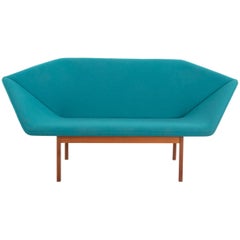
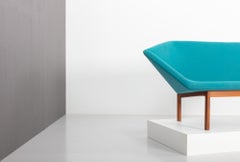
Unavailable
H 31.5 in W 68.9 in D 27.56 in
Prisma Sofa by Tove & Edvard Kindt-Larsen by Ludvig Pontoppidan, Denmark, 1950s
By Tove & Edvard Kindt-Larsen, Ludvig Pontoppidan
Located in Kastrup, DK
Prisma sofa by Tove & Edvard Kindt-Larsen by Cabinetmaker Ludvig Pontoppidan, Denmark, 1960s
Fabric, Teak

Unavailable
H 29.53 in W 74.81 in D 28.35 in
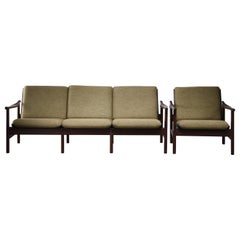
Teak and Plywood Seating Group with Green Cushions, Denmark, 1950s
By Søborg Møbelfabrik, Kai Lyngfeldt Larsen
Located in Maastricht, NL
A seating group with a sofa and chair, attributed to Kai Lyngfeldt Larsen for Søborg Møbelfabrik
Teak, Plywood

Unavailable
H 28.35 in W 44.49 in D 23.63 in
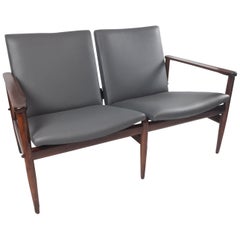
Midcentury Grey Wood Scandinavian Style Loveseat Sofa Made in Italy, 1950s
Located in Cassina de'Pecchi, IT
An elegant and Minimalist two-seat sofa made in Italy at the end of 1950s, with a Scandinavian
Faux Leather, Wood
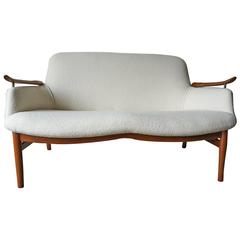
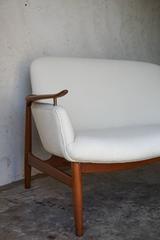
Finn Juhl NV53 Sofa for Niels Vodder, 1950s
By Niels Vodder, Finn Juhl
Located in Berkeley, CA
Rare NV53 settee designed by Finn Juhl for Niels Vodder, circa 1950s. Beautiful sculpted teak arms
Brass
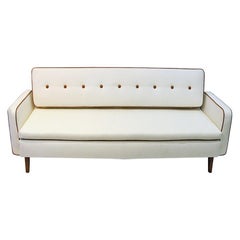
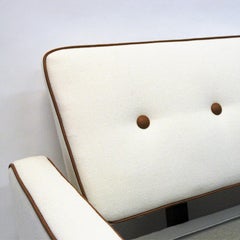
Unavailable
H 31.5 in W 81.5 in D 28.35 in
Lovely Sofa and Daybed of White Wool by Ire Möbler, 1950s, Sweden
By Ire Mobel 1
Located in Stockholm, SE
the 1950s, Sweden. The back is removable in which makes this a perfect extra bed as well. The sofa is
Leather, Wool, Birch
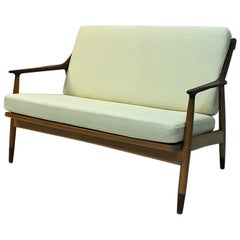
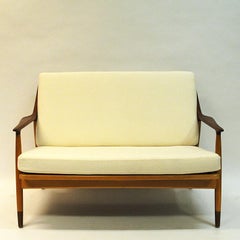
Unavailable
H 33.86 in W 48.82 in D 32.29 in
Danish 2-Seated Loveseat Sofa by Kurt Østervig for Jason Møbler, 1950s
By Kurt Østervig, Jason Møbler
Located in Stockholm, SE
from Gudbrandsdalen Uldvarefabrikk. This 2-seater sofa is designed by Kurt Østervig for Jason Møbler in
Fabric, Teak, Beech
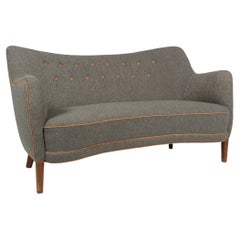

Sold
H 32.68 in W 59.06 in D 30.71 in
Curved 1950s Scandinavian Sofa or Loveseat, Slagelse, Denmark, 1950s
By Finn Juhl, Slagelse Mobelvaerk
Located in Esbjerg, DK
buttons. Legs of stained beech. This sofa is made in the 1950s and is made in the style of Finn Juhl.
Leather, Bouclé, Beech
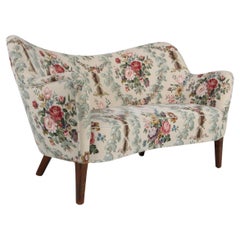

Sold
H 38.19 in W 57.88 in D 31.5 in
Curved 1950s Scandinavian Sofa or Loveseat, Model 185, Slagelse, Denmark, 1950s
By Finn Juhl, Slagelse Mobelvaerk
Located in Esbjerg, DK
sofa is made in the 1950s and is made in the style of Finn Juhl.
Beech, Fabric
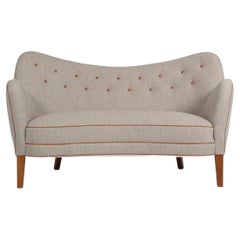
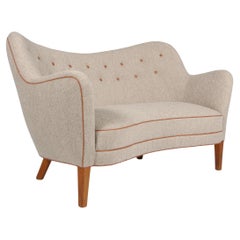
Sold
H 34.65 in W 57.88 in D 31.5 in
Curved 1950s Scandinavian Sofa or Loveseat, Model 185, Slagelse, Denmark, 1950s
By Finn Juhl, Slagelse Mobelvaerk
Located in Esbjerg, DK
buttons. Legs of stained beech. This sofa is made in the 1950s and is made in the style of Finn
Leather, Bouclé, Beech
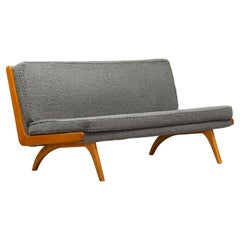

Finnish Scandinavian Modern Sofa, 1950s/1960s
Located in Helsinki, Uusimaa
Finnish Scandinavian Modern Sofa from the 1950s-1960s. Birch frame, re-upholstered with quality
Fabric, Birch
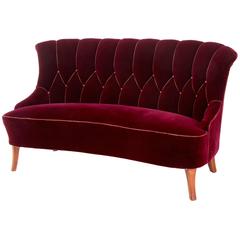
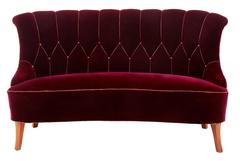
1950s Scandinavian Plush Velvet Shaped Sofa
Located in Debenham, Suffolk
1950s red velvet sofa. Good quality velvet sofa, button backed with leather piping. Inverted
Velvet
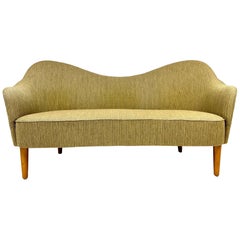
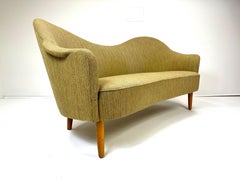
1950’s Swedish “Samspel” Sofa by Carl Malmsten
By Carl Malmsten
Located in Turners Falls, MA
1950’s “Samspel” Sofa designed by renowned Swedish designer Carl Malmsten. Beautiful organic design
Upholstery, Beech
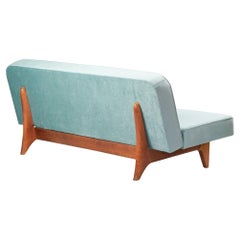
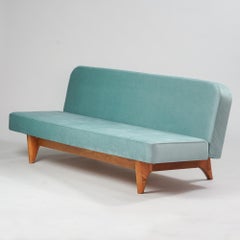
Scandinavian Modern Sofa Bed, Finland, 1940/1950s
Located in Helsinki, Uusimaa
Reclining sofa, manufactured in Finland, 1940/1950s. Stained birch frame, reupholstered with
Fabric, Birch
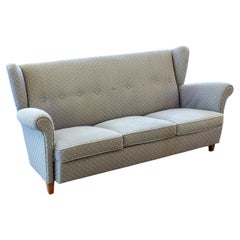
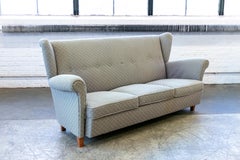
Danish Modern Highback or Wingback Sofa 1950's
By Fritz Hansen
Located in Bridgeport, CT
Very charming high back or wingback 1950s sofa from Denmark. The sofa is very reminiscent of Fritz
Beech, Wool

Sold
H 83 in W 63 in D 30.7 in
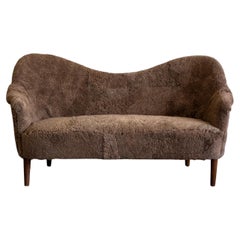
Scandinavian Modern Shearling/Sheepskin Sofa by Carl Malmsten, Sweden, 1950s
By Carl Malmsten
Located in Stockholm, SE
This exquisite sofa is a prime example of Scandinavian Modern design. Named "Samspel," it was
Sheepskin

Sold
H 33.08 in W 63 in D 31.89 in
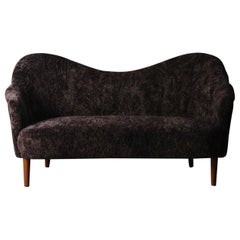
Scandinavian modern sheepskin sofa 'Samspel' by Carl Malmsten, Sweden, 1950s
By Carl Malmsten
Located in Eskilstuna, SE
A classic piece by Carl Malmsten, the Samspel sofa was designed in 1956 and manufactured by AB
Sheepskin, Beech

Sold
H 33.08 in W 63 in D 31.89 in
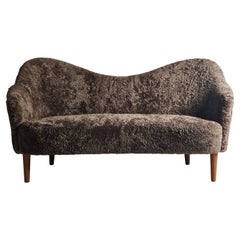
Scandinavian modern sheepskin sofa 'Samspel' by Carl Malmsten, Sweden, 1950s
By Carl Malmsten
Located in Eskilstuna, SE
Carl Malmstens classic 'Samspel' sofa. Designed in 1956 and produced by AB Record, Bollnäs, Sweden
Sheepskin, Beech
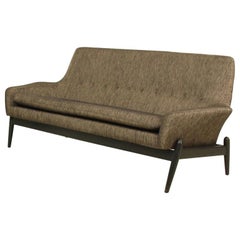
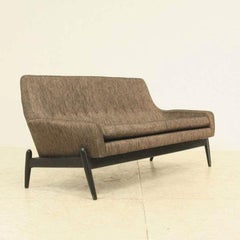
Sold
H 30.32 in W 80.71 in D 32.29 in
1950s Scandinavian Kofod Larsen Sofa Upholstered in Black and Gold Linen
Located in London, GB
Danish 1950s three-seat sofa by Kofod Larsen with a modernist look. This 20th century sofa is
Linen
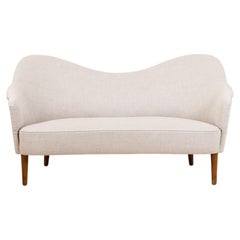

Swedish Modern Samspel Sofa by Carl Malmsten 1950's
By Carl Malmsten
Located in Uccle, BE
This Samspel 2 seaters sofa has been reupholstered. It was created by Carl Malmsten, one of
Fabric, Cotton, Wood, Beech
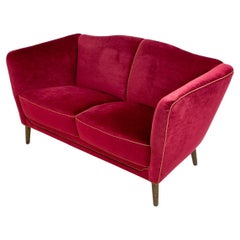
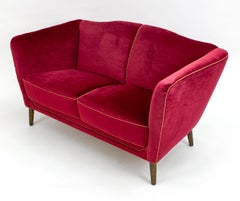
Swedish Mid-Century Beech & Red Mohair Sofa, c. 1950's
Located in Norwalk, CT
& Red Mohair Sofa. A sublime ode to the 1950s, this piece flawlessly embodies the spirit and artistry of
Beech
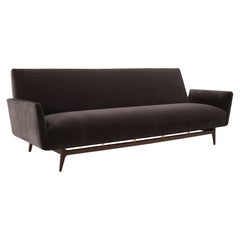
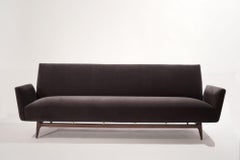
Brass-Accented Scandinavian Modern Sofa in Mohair, C. 1950s
Located in Westport, CT
A rarely seen sofa featuring brass risers and sculptural walnut base, original from Denmark, circa
Brass

Sold
H 29.53 in W 70.87 in D 29.53 in
Vintage Danish Midcentury Modern Scandinavian Brown Leather 3-Seater Sofa, 1950s
Located in Warszawa, Mazowieckie
This three-seater Mid-Century Modern vintage sofa was made in Denmark during the 1950s. The sofa is
Leather, Wood
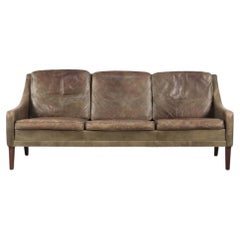
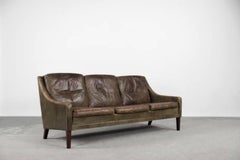
Sold
H 29.53 in W 70.87 in D 29.53 in
Vintage Danish Midcentury Modern Scandinavian Brown Leather 3-Seater Sofa, 1950s
Located in Warszawa, Mazowieckie
This three-seater Mid-Century Modern vintage sofa was made in Denmark during the 1950s. The sofa is
Leather, Wood
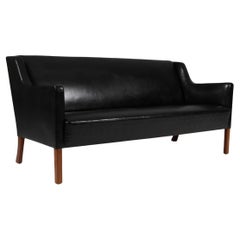
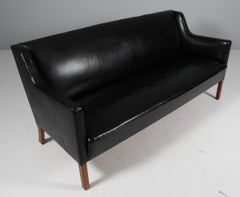
Sold
H 31.5 in W 70.87 in D 31.5 in
Børge Mogensen three seat sofa, model 4712. Original leather, 1950's Denmark
By Børge Mogensen, FDB Møbler
Located in Esbjerg, DK
Børge Mogensen three seat sofa with original patinated black leather upholstery. Legs of oak
Leather, Oak
Sold
H 33.5 in W 70 in D 29 in
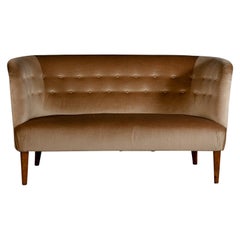
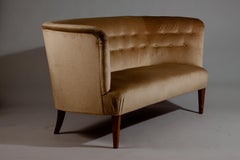
Mid-Century Sofa by Eva and Nils Koppel for Slagelse Møbelværk, Denmark, 1950’s
By Slagelse Mobelvaerk, Eva & Niels Koppel
Located in Norwalk, CT
tactile delight that invites hours of relaxation and intimate conversations. Born in the 1950's, an era
Mahogany
Werner West, Finnish 1950's sofa "Royal" for Stockman Oy, Finland
By Werner West, Oy Stockmann AB
Located in Turku, Varsinais-Suomi
Introducing the Werner West Royal Bent Sofa, a stunning addition to any vintage furniture
Fabric, Upholstery
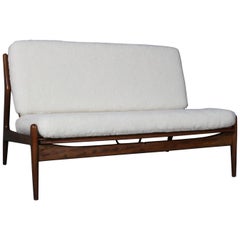
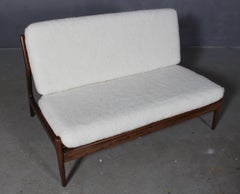
Danish Cabinetmaker, Sofa Lambswool, 1950s
Located in Esbjerg, DK
Danish cabinetmaker sofa new upholstered with lambswool Frame of stained beech. Made in the
Sheepskin, Beech
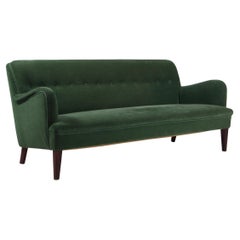

Danish Cabinetmaker three seat Sofa Velvet Sofa, 1950s
Located in Esbjerg, DK
Danish cabinetmaker three seat sofa upholstered with green velvet. Legs of stained beech
Velvet, Beech
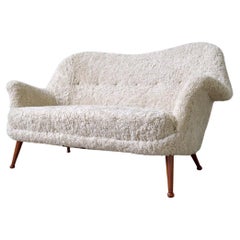

Sold
H 31.5 in W 59.06 in D 31.5 in
Scandinavian Mid-Century Sofa "Divina" in Shearling Sheepskin Arne Norell, 1950s
By Arne Norell
Located in Hillringsberg, SE
The “Divina” 2 seater sofa model is a perfect example of the Swedish designer Arne Norell’s use of
Sheepskin, Wood
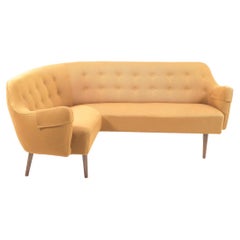
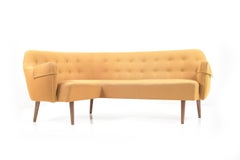
Early 1950s Rare Danish Corner Sofa
Located in Handewitt, DE
Mid century dansih corner sofa. Early production. Upholstery in original yellow frabric. Around
Fabric, Wood


Very Comfortable Midcentury Sofa in Velvet, 1950s
Located in Lejre, DK
Very comfortable sofa in velvet, designed and made in Denmark. Original condition.
Fabric
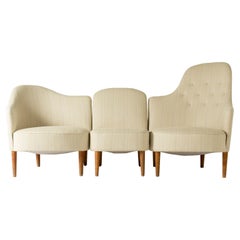

Modular Sofa by Carl Malmsten, Sweden, 1950s
By Carl Malmsten
Located in Östermalm, Stockholms län
Rare modular sofa by Carl Malmsten, made with three sections, each with a different form. Neat
Wood
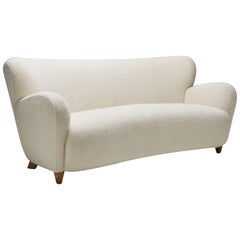

Midcentury Finnish Cabinetmaker Sofa, Finland, circa 1950s
Located in Utrecht, NL
. This three-seat sofa is immensely elegant, while also keeping the warmth and cosiness that is often
Fabric
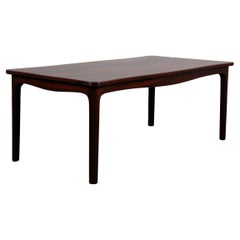
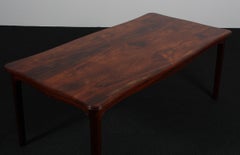
Frits Henningsen Sofa Table in rosewood, Denmark, 1950s
By Frits Henningsen
Located in Esbjerg, DK
Frits Henningsen sofa table in rosewood. Made by Frits Henningsen in the 1950s.
Rosewood
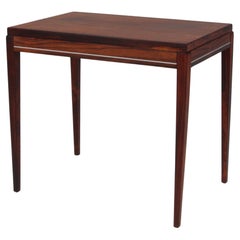

Frits Henningsen Sofa Table in rosewood, Denmark, 1950s
By Frits Henningsen
Located in Esbjerg, DK
Frits Henningsen sofa table in rosewood, with aluminium details. Made by Frits Henningsen in the
Aluminum
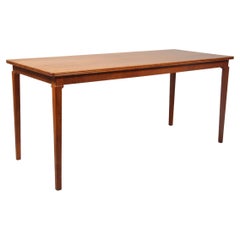

Frits Henningsen Sofa Table in Oak, Denmark, 1950s
By Frits Henningsen
Located in Esbjerg, DK
Frits Henningsen sofa table in solid oak with great details in the craftmanship. Made by Frits
Oak
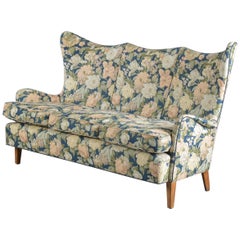
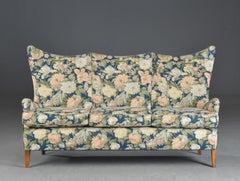
Danish Midcentury Highback or Wingback Sofa, circa 1950s
By Carl Malmsten
Located in Bridgeport, CT
Very charming high back or wingback 1950s sofa from Denmark upholstered in a floral fabric. Sturdy
Beech
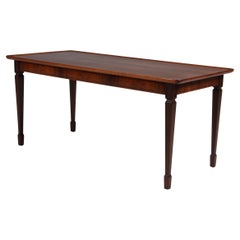

Frits Henningsen Sofa Table in rosewood, Denmark, 1950s
By Frits Henningsen
Located in Esbjerg, DK
Frits Henningsen sofa table in rosewood. Made by Frits Henningsen in the 1950s.
Aluminum
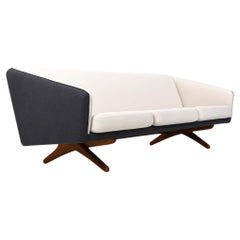

ML90 Sofa by Illum Wikkelsø 1950s / New Upholstered
By A. Mikael Laursen, Illum Wikkelsø
Located in Handewitt, DE
Illum Wikkelsø for A. Mikael Laursen, organic shaped three seater sofa, model ML90. New upholstered
Fabric, Oak
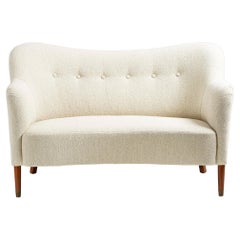
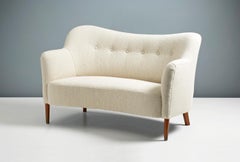
Danish Cabinetmaker 1950s Boucle Love Seat Sofa
Located in London, England
Danish Cabinetmaker Curved Loveseat, c1950s Two person love-seat sofa in the manner of Finn
Wool, Cotton, Beech
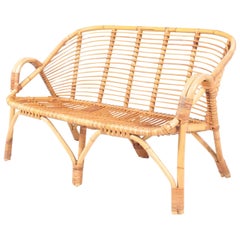

Midcentury Sofa in Bamboo, Made in Denmark, 1950s
Located in Lejre, DK
Great looking bamboo sofa. Designed and made in Denmark. Great original condition.
Bamboo
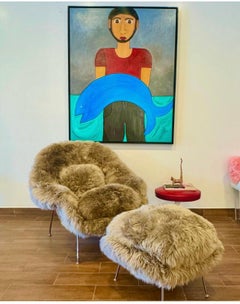
$13,500 / set
H 36 in W 43 in D 30 in
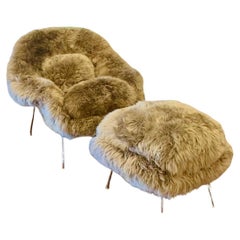
Eero Saarinen Womb Chair and Ottoman in New Zealand Taupe Sheepskin
By Eero Saarinen
Located in Saint Louis, US
Relax and unwind in this beautifully comfortable original Eero Saarinen Womb Chair and ottoman set. The chair is accompanied by an ottoman of which both are fully reupholstered in hi...
Steel
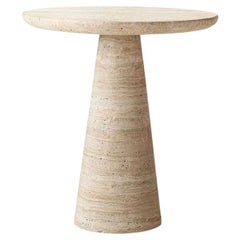
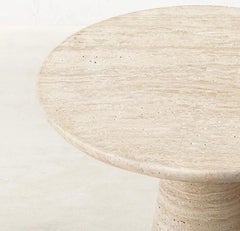
$990 / item
H 18.5 in Dm 17.7 in
IDE Travertine Stone Side Table, 17.7Ø"x18.5"H - Accent, End Table, Coffee Table
Located in St Petersburg, US
IDE Table: a stunning piece that embodies the natural elegance of travertine stone. This table is crafted with precision and attention to detail, making it a unique addition to any ...
Travertine, Stone
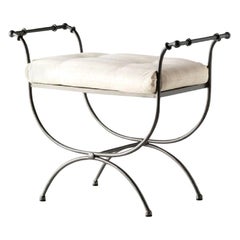
$950 / item
H 25.6 in W 32.67 in D 13.78 in
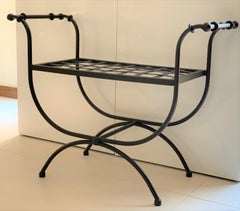
New Black Wrought Iron Curule Bench with Cushion, Savonarola, Throne
Located in Miami, FL
New black wrought iron curule bench with cushion, Savonarola, Throne. Cushion included.
Iron
$1,529 / set
H 9.85 in W 5.91 in D 3.94 in
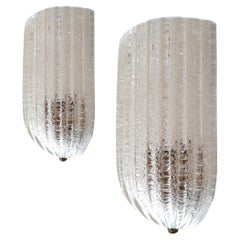
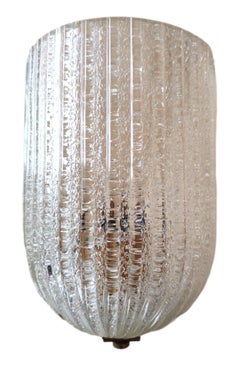
pair of wall lamps sconces barovier&toso 1950s - barovier & toso
By Barovier&Toso
Located in taranto, IT
pair of murano glass wall sconces in white color machined, 1950s Barovier&Toso production, with brass construction elements, brass wall bracket. Made with the "dew" technique, that ...
Brass
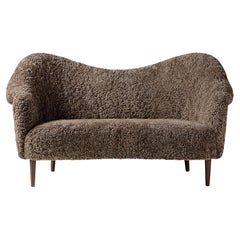
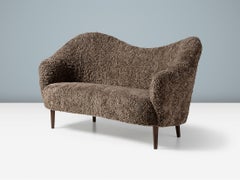
Sheepskin Samspel Sofa by Carl Malmsten
By Carl Malmsten
Located in London, England
Carl Malmsten - Samspel Sofa This iconic piece of Swedish furniture was designed in 1956 by master-designer Carl Malmsten. It was originally produced by AB Record in Bollnas, Sweden...
Sheepskin, Beech
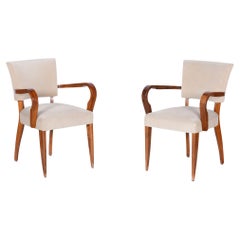
$1,941 / set
H 33.08 in W 24.02 in D 25.2 in
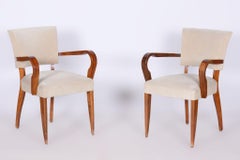
Set of Two Restored Art Deco Armchairs, by Jules Leleu, Beech, France, 1930s
By Jules Leleu
Located in Brandys nad Labem, Středočeský kraj
Designer: Jules Leleu Source: France Period: 1930-1939 It has been re-polished with polyutherane piano lacquer by our professional refurbishing team in Czechia according to the orig...
Wood, Fabric, Upholstery, Beech, Lacquer
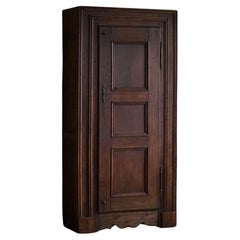
$3,800
H 81.3 in W 39.38 in D 18.31 in
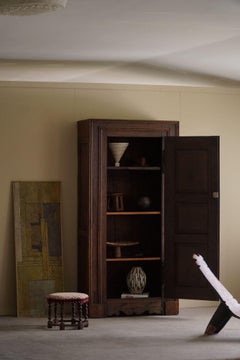
Antique Tall Oak Cabinet, Made by a French Cabinetmaker, Late 19th Century
Located in Odense, DK
This is a late 19th-century antique tall oak cabinet, crafted by a skilled French cabinetmaker. The cabinet features a sturdy, classic design typical of the period, with a rich oak f...
Wood, Oak
$434 / item
H 3.54 in W 4.92 in D 5.51 in
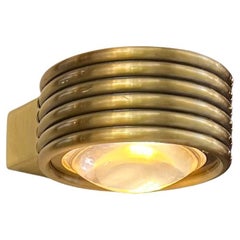
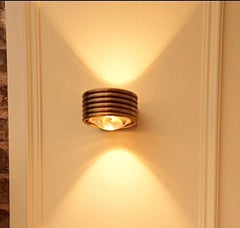
Galupa Art Deco Wall Sconce, Optical Glass & Aluminum, Up/Down Lighting
Located in İstiklal, TR
GALUPA Art Deco Wall Sconce, a masterpiece of design that effortlessly combines elegance and functionality. This stunning wall sconce is crafted in the timeless Art Deco style, featu...
Aluminum
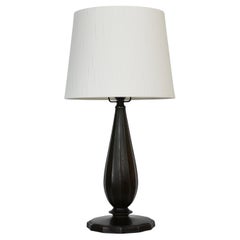
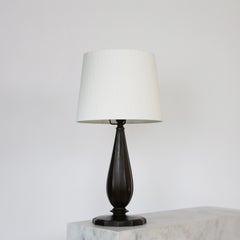
Tall Diskometal Table Lamp by Just Andersen, 1940s, Denmark
By Just Andersen
Located in Værløse, DK
Tall Diskometal Table Lamp designed by Just Andersen in 1940. An elegant piece for a beautiful place. * Bottle-shaped diskometal desk lamp with vertical lines and a white fabric sha...
Metal
$4,800 / set
H 29.53 in W 27.96 in D 39.38 in
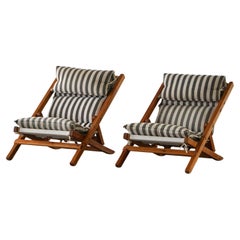
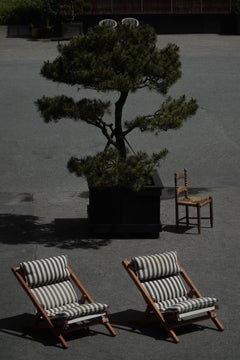
Mid Century Lounge/Sun Chairs in Pine and Striped Cotton Canvas, Denmark, 1970s
Located in Odense, DK
A refined pair of sun deck lounge chairs crafted from solid pine, featuring strong leather strap detailing and built for lasting comfort. The seats are made with high-quality, stripe...
Leather, Canvas, Pine
$28,198 / set
H 29.93 in W 25.6 in D 25.6 in
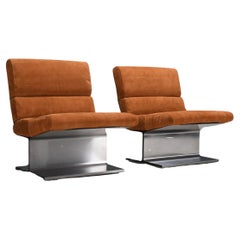
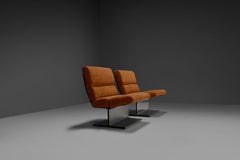
Very Rare Pair of Leather and steel Lounge Chairs by Paul Geoffroy for Uginox
By Uginox, Paul Geoffroy
Located in Echt, NL
Iconic pair of lounge chairs in excellent condition. Deigned by Paul Geoffroy and manufactured by Uginox in the 1970s in France. Striking design composed of curved stainless steel ...
Steel, Stainless Steel
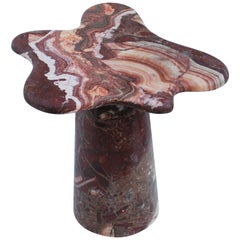
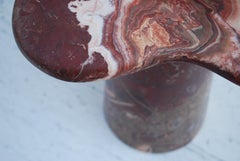
Ondamarmo Vulcano Onyx Matte Polished Side Table
Located in AVENZA CARRARA, IT
The Ondamarmo series by Federica Elmo includes 6 objects: The extra large dining table, two smaller size tables, three shelves, and a tray designed as an evolution of the shapes of t...
Onyx


$2,232 / item
H 37.41 in Dm 25.6 in
1 of 4 Stunning Murano Pendant Light Designed by Carlo Nason for Kalmar, 1970s
By Kalmar Lighting, Carlo Nason
Located in Aachen, NRW
Wonderful floral pendant light with four hand-made clear and smoked Murano glass petals which are supported by a metal frame, designed by Carlo Nason for Kalmar, in the 1970s Heavy ...
Murano Glass
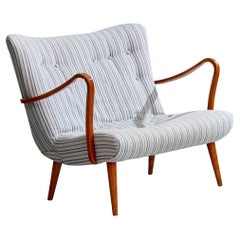
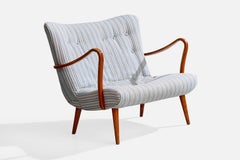
Carl Gustaf Hiort Af Ornäs, Sofa, Wood, Fabric, Finland, 1950s
By Carl Gustaf Hiort af Ornäs
Located in High Point, NC
A wood and blue fabric sofa or settee attributed to Carl Gustaf Hiort af Ornäs, Finland, c. 1950s. For reference study model "Mikki" for Puunveisto Oy - Träsnideri Ab, Finland. We...
Fabric, Wood
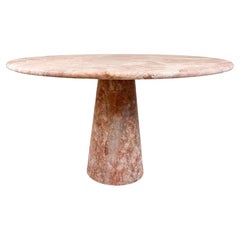
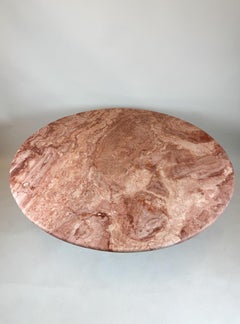
Mid-Century Modern Travertin Gueridon
Located in Brussels, BE
Mid-Century Modern Travertin Gueridon
Travertine
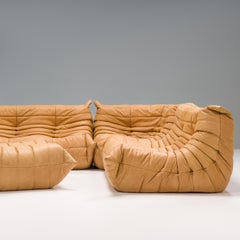
$16,812 / set
H 27.56 in W 125.99 in D 108.67 in
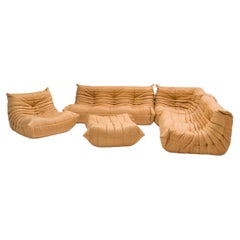
Ligne Roset by Michel Ducaroy Camel Brown Leather Togo Sofas, Set of Five
By Michel Ducaroy, Ligne Roset
Located in Basildon, London
The iconic Togo sofa, originally designed by Michel Ducaroy for Ligne Roset in 1973 has become a design Classic. This five-piece modular set is incredibly versatile and can be config...
Leather, Foam
Scandinavian modernism is perhaps the warmest and most organic iteration of modernist design. The work of the designers associated with vintage Scandinavian modern furniture was founded on centuries-old beliefs in both quality craftsmanship and the ideal that beauty should enhance even the humblest accessories of daily life.
ORIGINS OF SCANDINAVIAN MODERN FURNITURE DESIGN
CHARACTERISTICS OF SCANDINAVIAN MODERN FURNITURE DESIGN
SCANDINAVIAN MODERN FURNITURE DESIGNERS TO KNOW
ICONIC SCANDINAVIAN MODERN FURNITURE DESIGNS
VINTAGE SCANDINAVIAN MODERN FURNITURE ON 1STDIBS
The gentle, organic contours that are typical of Scandinavian design appear in the furnishings and decor created by Danish, Finnish and Swedish designers not as a stylistic gesture, but rather as a practical, ergonomic — and, as importantly, elegant — response to the human form.
Each nation produced exceptional talents in all areas of the applied arts, yet each had its forté. Sweden was home to Greta Magnusson Grossman and Bruno Mathsson — creators of the classic Grasshopper lighting series and Berlin daybed, respectively — but the country excelled most notably at ceramics. In the 1920s at the great Gustavsberg porcelain manufactory, Wilhelm Kåge introduced pieces in the Scandinavian style based on influences from folklore to Cubism; his skills were passed on to his versatile and inspired pupils Berndt Friberg and Stig Lindberg.
Likewise, Finland produced a truly ingenious Scandinavian modern furniture designer in the architect Alvar Aalto, a master at melding function and artistic form in works like the Paimio chair, created in collaboration with his first wife, Aino. Yet Finnish glassware was pre-eminent, crafted in expressive, sculptural designs by Tapio Wirkkala and Timo Sarpaneva.
The Danes excelled at chairs. Hans Wegner and Arne Jacobsen were exemplars of the country’s facility with wood, particularly teak.
Wegner created such iconic pieces as the Round chair and the Wishbone chair; Jacobsen — while the revolutionary architect and furniture innovator produced the best-selling plywood Ant chair — designed two classic upholstered pieces of the 1950s: the Swan chair and Egg chair. The list of great Danes could go on and on, including Finn Juhl, a stylistic maverick and maker of the bold Chieftain chair; Poul Kjaerholm, with his lean metal-and-rattan aesthetic; and Verner Panton, who introduced a vibrant Pop note into international design.
Today, decades after their heyday, the prolific, ever-evolving Scandinavian modernists continue to amaze and delight, and interior designers all over the world use their pieces to bring warmth to any given space.
On 1stDibs, you will note both instantly recognizable vintage Scandinavian modern chairs, sofas, rugs and tables — those that have earned iconic status over time — and many new discoveries.
Black leather, silk velvet cushions, breathable bouclé fabric — when shopping for antique or vintage sofas, today’s couch connoisseurs have much to choose from in terms of style and shape. But it wasn’t always thus.
The sofa is typically defined as a long upholstered seat that features a back and arms and is intended for two or more people. While the term “couch” comes from the Old French couche, meaning to lie down, and sofa has Eastern origins, both are forms of divan, a Turkish word that means an elongated cushioned seat. Bench-like seating in Ancient Greece, which was padded with soft blankets, was called klinai. No matter how you spell it, sofa just means comfort, at least it does today.
In the early days of sofa design, upholstery consisted of horsehair or dried moss. Sofas that originated in countries such as France during the 17th century were more integral to decor than they were to comfort. Like most Baroque furnishings from the region, they frequently comprised heavy, gilded mahogany frames and were upholstered in floral Beauvais tapestry. Today, options abound when it comes to style and material, with authentic leather offerings and classy steel settees. Plush, velvet chesterfields represent the platonic ideal of coziness.
Vladimir Kagan’s iconic sofa designs, such as the Crescent and the Serpentine — which, like the sectional sofas of the 1960s created by furniture makers such as Harvey Probber, are quite popular among mid-century modern furniture enthusiasts — showcase the spectrum of style available to modern consumers. Those looking to make a statement can turn to Studio 65’s lip-shaped Bocca sofa, which was inspired by the work of Salvador Dalí. Elsewhere, the furniture of the 1970s evokes an era when experimentation ruled, or at least provided a reason to break the rules. Just about every area of society felt a sudden urge to be wayward, to push boundaries — and buttons. Vintage leather sofas of that decade are characterized by a rare blending of the showy and organic.
With so many options, it’s important to explore and find the perfect furniture for your space. Paying attention to the lines of the cushions as well as the flow from the backrest into the arms is crucial to identifying a cohesive new piece for your home or office.
Fortunately, with styles from every era — and even round sofas — there’s a luxurious piece for every space. Deck out your living room with an Art Deco lounge or go retro with a nostalgic '80s design. No matter your sitting vision, the right piece is waiting for you in the expansive collection of unique sofas on 1stDibs.
You know the designs, now get the stories about how they came to be.
If anyone is brave, humble and adept enough to recolor these mid-century masterpieces, it’s Ilse Crawford. Here, she gives us the details on her five earthy paint choices and tells us how she feels about design collaborations.
In an innovative display, the Designmuseum Danmark is permanently exhibiting the 20th century's most iconic seats.
Our feed is filled with the world's most beautiful spaces. See the 10 our followers have deemed the best of the best this month.