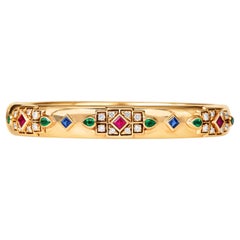
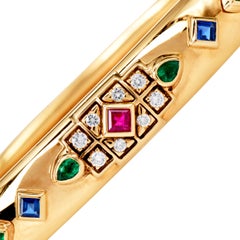
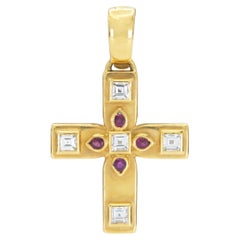
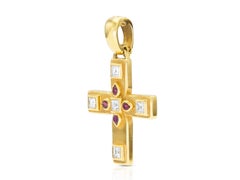
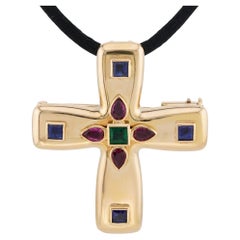
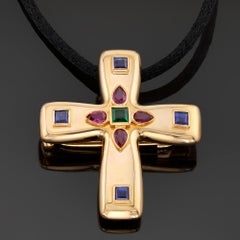
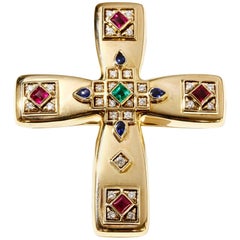
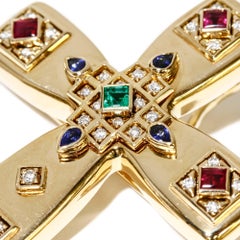
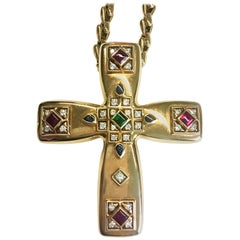
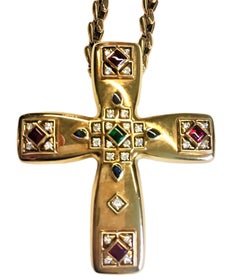
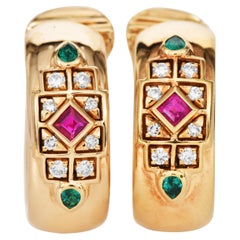
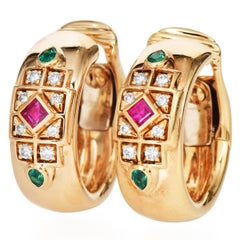
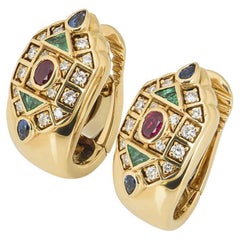
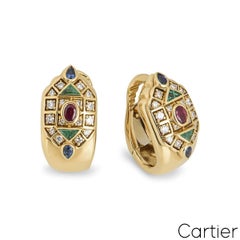
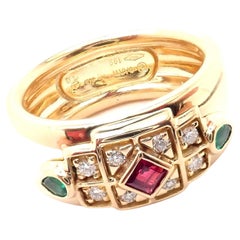
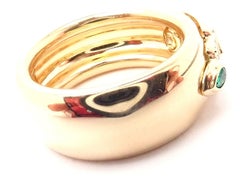
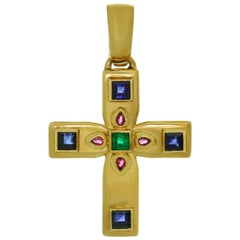
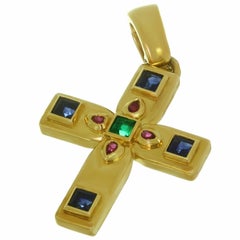
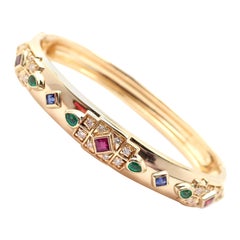
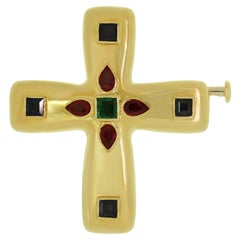
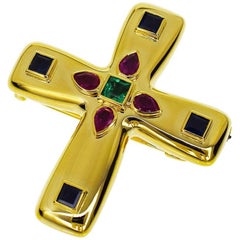
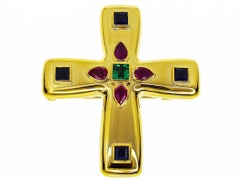
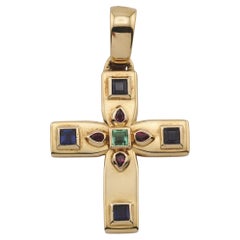
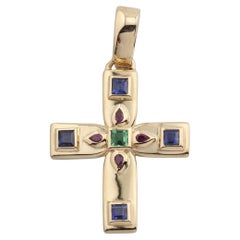
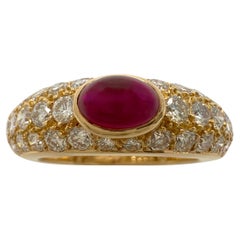
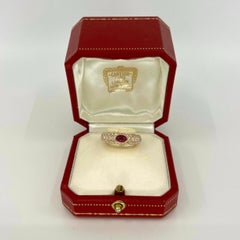
Cartier Byzantine For Sale on 1stDibs
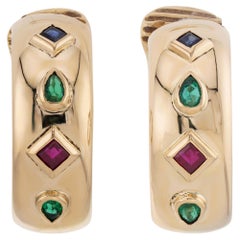
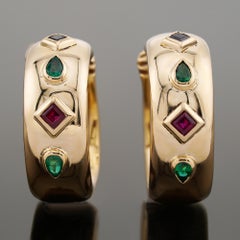
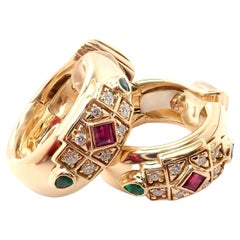
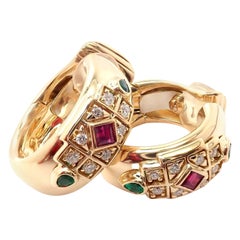
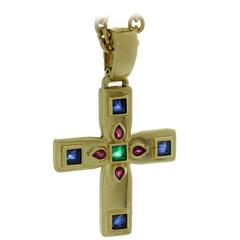
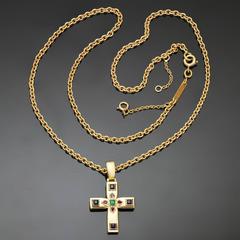
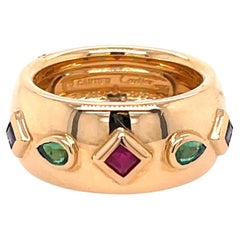
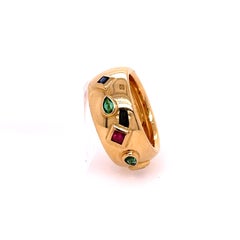
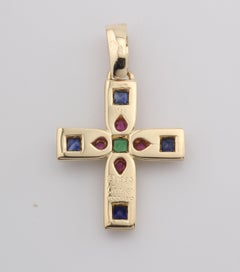
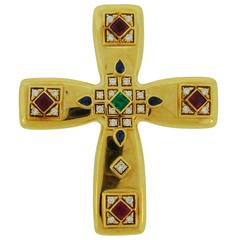
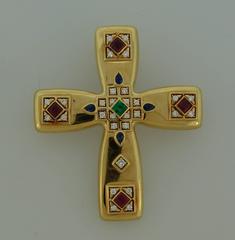
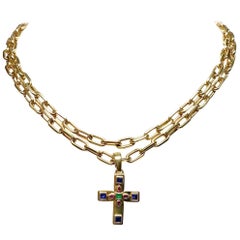
You are likely to find exactly the cartier byzantine you’re looking for on 1stDibs, as there is a broad range for sale. Frequently made of
Gold,
Yellow Gold and
18k Gold, this item was constructed with great care. In our selection of items, you can find a vintage example as well as a contemporary version. Finding the perfect cartier byzantine may mean sifting through those created during different time periods — you can find an early version that dates to the 20th Century and a newer variation that were made as recently as the 21st Century. A cartier byzantine can be a stylish choice for most occasions, but
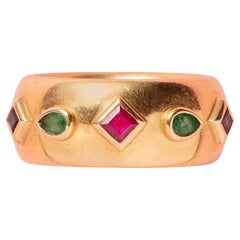
Ruby rings, from our inventory of 10, can add a particularly distinctive touch to your look, day or night. A
brilliant cut version of this piece has appeal, but there are also
princess cut and
round cut versions for sale. There aren’t many items for
men if you’re seeking a cartier byzantine, as most of the options available are for
women and unisex.
How Much is a Cartier Byzantine?
On average, a cartier byzantine at 1stDibs sells for $7,750, while they’re typically $2,500 on the low end and $18,000 for the highest priced versions of this item.
Cartier for sale on 1stDibs
For its extraordinary range of bracelets, watches, rings and other adornments, French luxury house Cartier is undeniably one of the most well known and internationally revered jewelers in the world among clients both existing and aspirational.
Perhaps 1847 was not the ideal time to open a new watchmaking and jewelry business, as the French Revolution was not kind to the aristocracy who could afford such luxuries. Nevertheless, it was the year Louis-François Cartier (1819–1904) — who was born into poverty — founded his eponymous empire, assuming control of the workshop of watchmaker Adolphe Picard, under whom he had previously been employed as an assistant. Of course, in the beginning, it was a relatively modest affair, but by the late 1850s, Cartier had its first royal client, Princess Mathilde Bonaparte, niece of Napoleon Bonaparte, who commissioned the jeweler to design brooches, earrings and other accessories.
Under the leadership of Louis-François’s son, Alfred, who took over in 1874, business boomed. Royalty around the world wore Cartier pieces, including Tsar Nicholas II of Russia, the Maharaja of Patiala and King Edward VII, who had 27 tiaras made by the jewelry house for his coronation in 1902 and issued Cartier a royal warrant in 1904. (Today, the British royal family still dons Cartier pieces; Kate Middleton, Duchess of Cambridge, regularly sports a Ballon Bleu de Cartier watch.)
Cartier’s golden years, however, began when Alfred introduced his three sons, Louis, Pierre and Jacques, to the business. The brothers expanded Cartier globally: Louis reigned in Paris, Pierre in New York and Jacques in London, ensuring their brand’s consistency at their branches across the world. The trio also brought in such talents as Charles Jacqueau and Jeanne Toussaint.
One of Cartier’s earliest major successes was the Santos de Cartier watch — one of the world's first modern wristwatches for men. (Previously, a large number of people were using only pocket watches.) Louis designed the timepiece in 1904 for his friend, popular Brazilian aviator Alberto Santos-Dumont, who wanted to be able to check the time more easily while flying.
Cartier’s other famous timepieces include the Tank watch, which was inspired by the linear form of military tanks during World War I, and the so-called mystery clocks. Invented by watchmaker and magician Jean-Eugène Robert-Houdin and later crafted exclusively for Cartier in the house’s workshop by watchmaker Maurice Couët, the mystery clocks were so named because the integration of glass dials on which the clocks’ hands would seemingly float as well as structures that are hidden away within the base give the illusion that they operate without machinery.
On the jewelry side of the business, Cartier’s internationally renowned offerings include the Tutti Frutti collection, which featured colorful carved gemstones inspired by Jacques’s trip to India and grew in popularity during the Art Deco years; the panthère motif, which has been incorporated into everything from brooches to rings; and the Love bracelet, a minimal, modernist locking bangle inspired by medieval chastity belts that transformed fine jewelry.
While the Cartier family sold the business following the death of Pierre in 1964, the brand continues to innovate today, renewing old hits and creating new masterpieces.
Find contemporary and vintage Cartier watches, engagement rings, necklaces and other accessories on 1stDibs.
Why Gold Shines in Jewelry Craftsmanship
Gold is the feel-good metal, the serotonin of jewelry. Wear vintage and antique gold necklaces, watches, gold bracelets or gold rings and you feel happy, you feel dressed, you feel, well, yourself.
Gold, especially yellow gold, with its rich patina and ancient pedigree going back thousands of years, is the steady standby, the well-mannered metal of choice. Any discussion of this lustrous metal comes down to a basic truth: Gold is elementary, my dear. Gold jewelry that couples the mystique of the metal with superb design and craftsmanship achieves the status of an enduring classic. Many luxury houses have given us some of our most treasured and lasting examples of gold jewelry over the years.
Since its founding, in 1837, Tiffany & Co. has built its reputation on its company jewelry as well as its coterie of boutique designers, which has included Jean Schlumberger, Donald Claflin, Angela Cummings and Elsa Peretti. There are numerous gold Tiffany classics worth citing. Some are accented with gemstones, but all stand out for their design and the workmanship displayed.
For the woman who prefers a minimalist look, the Tiffany & Co. twist bangle (thin, slightly ovoid) is stylishly simple. For Cummings devotees, signature pieces feature hard stone inlay, such as her pairs of gold ear clips inlaid with black jade (a play on the classic Chanel black and tan), or bangles whose design recalls ocean waves, with undulating lines of lapis lazuli and mother-of-pearl. And just about any design by the great Jean Schlumberger is by definition a classic.
Even had he eschewed stones and diamonds, Southern-born David Webb would be hailed for the vast arsenal of heavy gold jewelry he designed. Gold, usually hammered or textured in some manner, defines great David Webb jewelry. The self-taught jeweler made very au courant pieces while drawing inspiration from ancient and out-of-the-way sources — East meets West in the commanding gold necklaces made by Webb in the early 1970s. The same could be said for his endlessly varied gold cuffs.
In Europe, many houses have given us gold jewelry that sets the highest standard for excellence, pieces that were highly sought after when they were made and continue to be so.
Numerous designs from Cartier are homages to gold. There are the classic Trinity rings, necklaces and bracelets — trifectas of yellow, white and rose gold. As a testament to the power of love, consider the endurance of the Cartier Love bracelet.
Aldo Cipullo, Cartier’s top in-house designer from the late 1960s into the early ’70s, made history in 1969 with the Love bracelet. Cipullo frequently said that the Love bracelet was born of a sleepless night contemplating a love affair gone wrong and his realization that “the only remnants he possessed of the romance were memories.” He distilled the urge to keep a loved one close into a slim 18-karat gold bangle.
BVLGARI and its coin jewelry, gemme nummarie, hit the jackpot when the line launched in the 1960s. The line has been perennially popular. BVLGARI coin jewelry features ancient Greek and Roman coins embedded in striking gold mounts, usually hung on thick link necklaces of varying lengths. In the 1970s, BVLGARI introduced the Tubogas line, most often made in yellow gold. The Tubogas watches are classics, and then there is the Serpenti, the house's outstanding snake-themed watches and bracelets.
A collection called Monete that incorporated the gold coins is one of several iconic BVLGARI lines that debuted in the 1970s and ’80s, catering to a new generation of empowered women. Just as designers like Halston and Yves Saint Laurent were popularizing fuss-free ready-to-wear fashion for women on the go, BVLGARI offered jewels to be lived in.
Since Van Cleef & Arpels opened its Place Vendôme doors in 1906, collection after collection of jewelry classics have enchanted the public. As predominantly expressed in a honeycomb of gold, there is the Ludo watch and accessories, circa the 1920s, and the golden Zip necklace, 1951, whose ingenious transformation of the traditional zipper was originally proposed by the Duchess of Windsor. Van Cleef's Alhambra, with its Moroccan motif, was introduced in 1968 and from the start its popularity pivoted on royalty and celebrity status. It remains one of VCA’s most popular and collected styles.
Mention must be made of Buccellati, whose name is synonymous with gold so finely spun that it suggests tapestry. The house’s many gold bracelets, typically embellished with a few or many diamonds, signified taste and distinction and are always in favor on the secondary market. Other important mid-20th-century houses known for their gold-themed jewelry include Hermès and Ilias Lalaounis.
Find a stunning collection of vintage and antique gold jewelry on 1stDibs.
The Legacy of Ruby in Jewelry Design
This deep red gem is the color of heat and passion — vintage and antique ruby jewelry is perfect for those born in the middle of summer.
Rubies are one of the few gemstones that can give diamonds a run for their money. Just consider the Van Cleef & Arpels “scarf” necklace the Duke of Windsor presented to the Duchess on her 40th birthday, in 1936 — set with diamonds and dripping with rubies, a testament to the deep-red gemstone’s power — or the slippers encrusted with 4,600 rubies that Harry Winston made to commemorate The Wizard of Oz’s golden anniversary. July babies have permission to adorn themselves with this beautiful red stone even when it’s not their birthday.
Rubies are considered precious stones — along with diamonds, sapphires and emeralds — and have a hardness of 9.0 on the Mohs Scale, surpassed only by Moissanite and diamonds. They are composed of corundum, a colorless mineral that is also the basic material of sapphires. In the July birthstone, the red of the gemstone — and the various hues seen in sapphires — are produced by the presence of trace elements. In the case of a ruby, this element is chromium. Rubies range in color from vermilion to a violet red. They are also pleochroic, which means that a stone’s hue can vary depending on the direction of viewing. The most sought-after color is pigeon’s blood: pure red with a hint of blue.
Rubies that are hosted in dolomite marble are the most prized: Because the marble is low in iron, so are the rubies, resulting in a more intense color. Rubies found in basalt, which has a higher iron content, are generally darker and less intense.
When shopping for antique and vintage ruby jewelry, remember that the 4Cs of selecting the perfect diamond — color, clarity, cut and carat — also apply to rubies.
According to the Gemological Institute of America, the color of the July birthstone should be a vibrant to slightly purplish red, and the stone should be clear and inclusion-free. Accordingly, the cut should show off its color and clarity. As for the last criterion, fine rubies more than a carat in weight are rare. Often, large rubies are more expensive than diamonds of comparable weights.
Find a collection of ruby necklaces, ruby rings and other accessories on 1stDibs.