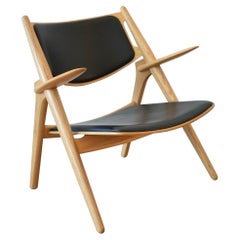
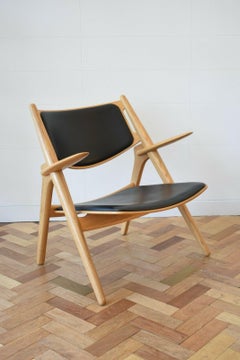
Wegner Ch28p Chair For Sale on 1stDibs
At 1stDibs, there are many versions of the ideal wegner ch28p chair for your home. Each wegner ch28p chair for sale was constructed with extraordinary care, often using
wood,
animal skin and
leather. If you’re shopping for a wegner ch28p chair, we have 40 options in-stock, while there are 2 modern editions to choose from as well. There are many kinds of the wegner ch28p chair you’re looking for, from those produced as long ago as the 20th Century to those made as recently as the 21st Century. A wegner ch28p chair made by
Scandinavian Modern designers — as well as those associated with
Mid-Century Modern — is very popular.
How Much is a Wegner Ch28p Chair?
A wegner ch28p chair can differ in price owing to various characteristics — the average selling price 1stDibs is $5,827, while the lowest priced sells for $960 and the highest can go for as much as $15,000.
Carl Hansen for sale on 1stDibs
In 1908, cabinetmaker Carl Hansen opened his first small workshop near Odense, Denmark, where he created furniture by hand in the preferred Victorian style of the times. Later, Carl Hansen & Søn would become one of the most prestigious furniture manufacturers in Denmark. The firm has produced timeless masterpieces of Scandinavian modernism by iconic designers Hans Wegner, Arne Jacobsen, Børge Mogensen and others.
Hansen expanded his operations by 1915 due to high demand. The larger factory allowed room for more modern machinery and a staff of many journeymen who produced a small series of their most popular pieces, including coffee tables, cabinets and sculptural, inviting armchairs. The firm became known for marrying the finest handmade craftsmanship with efficient production processes.
The Great Depression of the 1930s saw worldwide furniture sales plummet, and many furniture manufacturers were forced to shutter their workshops. At the age of 23, furniture maker Carl Hansen’s youngest son, Holger, took control of his father’s factory and piloted it through the era’s uncertain waters.
Holger Hansen’s youthful enthusiasm, innovative spirit, and intuitive business savvy kept their company afloat. He believed in the quality of the firm’s work and the cutting-edge designs that were produced at its factory, which emerged from modest beginnings to become a pivotal piece of the history of Danish furniture.
Owing to Holger’s leadership, Carl Hansen & Søn emerged from the Great Depression and entered into creative alliances with many acclaimed Danish masters of mid-century design, including Kaare Klint, Børge Mogensen, Arne Jacobsen, Ole Wanscher, Frits Henningsen and Poul Kjærholm.
None of these partnerships proved as prolific as their relationship with Hans Wegner, however. In 1949, the cabinetmaker moved to Denmark’s Funen Island and was staying in Holger’s family home, as the then-Carl Hansen CEO had commissioned Wegner to create a chair for the company that was similar to his popular China chair of 1944.
Wegner began to work closely with the company’s craftsmen and devised a streamlined chair with a Y-shaped back and woven paper-cord seat. The legendary Wishbone chair, which still involves nearly 100 processes and takes weeks to make, has been in continuous production since its 1950 debut.
Family-owned since its inception, Carl Hansen & Søn has manufactured some of the most extraordinary chairs, sofas and lounge chairs for living room relaxation in the history of design. Their dining room tables and chairs run the gamut in style and functionality, from everyday comfort to elegant entertaining. The company’s impressive roster of contemporary designers includes renowned Japanese architect Tadao Ando, the Vienna-based design firm EOOS and celebrated American industrial designer Brad Ascalon. They remain the world’s largest producer of Wegner’s furniture and still enjoy a collaborative relationship with the Hans J. Wegner Studio.
On 1stDibs, find vintage Carl Hansen chairs, case pieces and other furniture.
A Close Look at Mid-century-modern Furniture
Organically shaped, clean-lined and elegantly simple are three terms that well describe vintage mid-century modern furniture. The style, which emerged primarily in the years following World War II, is characterized by pieces that were conceived and made in an energetic, optimistic spirit by creators who believed that good design was an essential part of good living.
ORIGINS OF MID-CENTURY MODERN FURNITURE DESIGN
CHARACTERISTICS OF MID-CENTURY MODERN FURNITURE DESIGN
MID-CENTURY MODERN FURNITURE DESIGNERS TO KNOW
ICONIC MID-CENTURY MODERN FURNITURE DESIGNS
VINTAGE MID-CENTURY MODERN FURNITURE ON 1STDIBS
The mid-century modern era saw leagues of postwar American architects and designers animated by new ideas and new technology. The lean, functionalist International-style architecture of Le Corbusier and Bauhaus eminences Ludwig Mies van der Rohe and Walter Gropius had been promoted in the United States during the 1930s by Philip Johnson and others. New building techniques, such as “post-and-beam” construction, allowed the International-style schemes to be realized on a small scale in open-plan houses with long walls of glass.
Materials developed for wartime use became available for domestic goods and were incorporated into mid-century modern furniture designs. Charles and Ray Eames and Eero Saarinen, who had experimented extensively with molded plywood, eagerly embraced fiberglass for pieces such as the La Chaise and the Womb chair, respectively.
Architect, writer and designer George Nelson created with his team shades for the Bubble lamp using a new translucent polymer skin and, as design director at Herman Miller, recruited the Eameses, Alexander Girard and others for projects at the legendary Michigan furniture manufacturer.
Harry Bertoia and Isamu Noguchi devised chairs and tables built of wire mesh and wire struts. Materials were repurposed too: The Danish-born designer Jens Risom created a line of chairs using surplus parachute straps for webbed seats and backrests.
The Risom lounge chair was among the first pieces of furniture commissioned and produced by celebrated manufacturer Knoll, a chief influencer in the rise of modern design in the United States, thanks to the work of Florence Knoll, the pioneering architect and designer who made the firm a leader in its field. The seating that Knoll created for office spaces — as well as pieces designed by Florence initially for commercial clients — soon became desirable for the home.
As the demand for casual, uncluttered furnishings grew, more mid-century furniture designers caught the spirit.
Classically oriented creators such as Edward Wormley, house designer for Dunbar Inc., offered such pieces as the sinuous Listen to Me chaise; the British expatriate T.H. Robsjohn-Gibbings switched gears, creating items such as the tiered, biomorphic Mesa table. There were Young Turks such as Paul McCobb, who designed holistic groups of sleek, blond wood furniture, and Milo Baughman, who espoused a West Coast aesthetic in minimalist teak dining tables and lushly upholstered chairs and sofas with angular steel frames.
Generations turn over, and mid-century modern remains arguably the most popular style going. As the collection of vintage mid-century modern chairs, dressers, coffee tables and other furniture for the living room, dining room, bedroom and elsewhere on 1stDibs demonstrates, this period saw one of the most delightful and dramatic flowerings of creativity in design history.
Finding the Right Chairs for You
Chairs are an indispensable component of your home and office. Can you imagine your life without the vintage, new or antique chairs you love?
With the exception of rocking chairs, the majority of the seating in our homes today — Windsor chairs, chaise longues, wingback chairs — originated in either England or France. Art Nouveau chairs, the style of which also originated in those regions, embraced the inherent magnificence of the natural world with decorative flourishes and refined designs that blended both curved and geometric contour lines. While craftsmanship and styles have evolved in the past century, chairs have had a singular significance in our lives, no matter what your favorite chair looks like.
“The chair is the piece of furniture that is closest to human beings,” said Hans Wegner. The revered Danish cabinetmaker and furniture designer was prolific, having designed nearly 500 chairs over the course of his lifetime. His beloved designs include the Wishbone chair, the wingback Papa Bear chair and many more.
Other designers of Scandinavian modernist chairs introduced new dynamics to this staple with sculptural flowing lines, curvaceous shapes and efficient functionality. The Paimio armchair, Swan chair and Panton chair are vintage works of Finnish and Danish seating that left an indelible mark on the history of good furniture design.
“What works good is better than what looks good, because what works good lasts,” said Ray Eames.
Visionary polymaths Ray and Charles Eames experimented with bent plywood and fiberglass with the goal of producing affordable furniture for a mass market. Like other celebrated mid-century modern furniture designers of elegant low-profile furnishings — among them Ludwig Mies van der Rohe and Finn Juhl — the Eameses considered ergonomic support, durability and cost, all of which should be top of mind when shopping for the perfect chair. The mid-century years yielded many popular chairs.
The Eameses introduced numerous icons for manufacturer Herman Miller, such as the Eames lounge chair and ottoman, molded plywood dining chairs the DCM and DCW (which can be artfully mismatched around your dining table) and a wealth of other treasured pieces for the home and office.
A good chair anchors us to a place and can become an object of timeless appeal. Take a seat and browse the rich variety of vintage, new and antique chairs on 1stDibs today.