19th Century Sculptures

to
46
248
119
156
77
50
Overall Width
to
Overall Height
to
217
3,870
17,498
82
44
125
138
71
174
274
386
561
523
78
8
5
4
3
2
1
498
346
345
301
287
176
132
71
62
47
36
25
23
18
16
14
14
14
13
12
437
419
138
123
62
31
16
11
7
7
421
228
Period: 19th Century
Bisque Porcelain and Gilt Candelabras w/ Putti
Located in Beachwood, OH
Bisque Porcelain and Gilt Candelabras Figures of putti supporting the arms, porcelain floral candle cups. 24 x 11.5 inches
Category

19th Century Sculptures

Materials

Porcelain

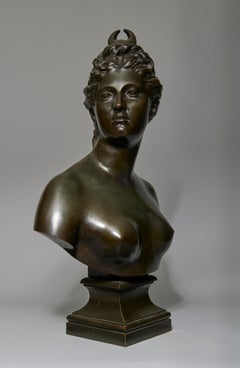
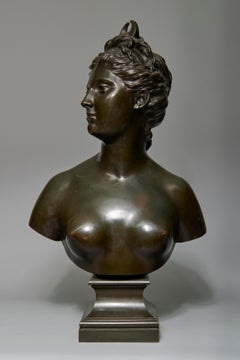
Large French Bronze Bust of Diana the Huntress
By Jean-Antoine Houdon
Located in Beachwood, OH
After Jean-Antoine Houdon (French, 1741-1828) Bust of Diana Bronze Signed on side, Susse Frères foundry stamp on base 28.5 x 16.25 inches Jean-Antoine Houdon's bust of Diana is an 1...
Category

19th Century Sculptures

Materials

Bronze

White Alabaster Marble Sculpture Psyche Revived by Cupid's Kiss After A. Canova
Located in Roma, IT
A scale version grand tour size carved in white alabaster of Psyche Revived by Cupid's Kiss, carved in Italy probably in Florence in the 19th century. The original Psyche Revived by ...
Category

Other Art Style 19th Century Sculptures

Materials

Alabaster

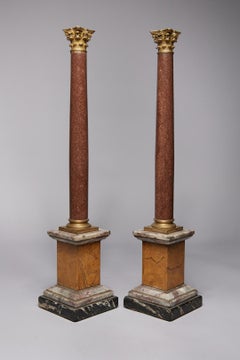
Pair of Porphyry Marble Columns with Gilt Bronze Capitals, 19th Century
Located in Beachwood, OH
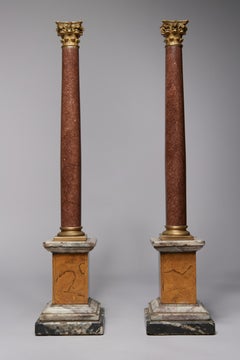
Pair of Porphyry Marble Columns with Gilt Bronze Capitals, 19th Century Porphyry marble & gilt bronze 20 x 4.25 x 4.25 inches Porphyry is an igneous rock, not marble, known for its...
Category

19th Century Sculptures

Materials

Marble, Bronze

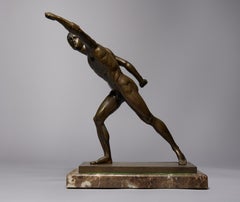
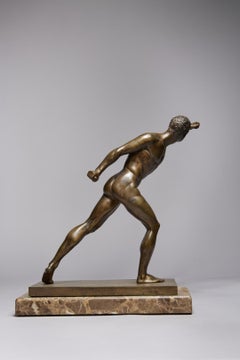
19th Century Bronze of the Borghese Gladiator Sculpture
Located in Beachwood, OH
The Borghese Gladiator, 19th Century Bronze on marble base Musée du Louvre signed on base 15 x 12 x 8 inches Since its discovery in the early seventeenth century, the Borghese Gladi...
Category

19th Century Sculptures

Materials

Marble, Bronze

White Alabster Marble Sculpture Dancing Satyr Grand Tour Italian 19th Classical
Located in Roma, IT
The sculpture, is a Grand Tour scale, derived from the splendid marble that once belonged to the collection of the Roman prelate Eurialo Silvestri. After a brief stay at Villa Giulia...
Category

19th Century Sculptures

Materials

Alabaster

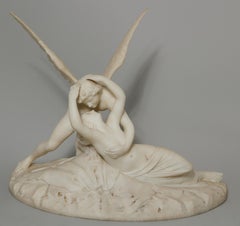
Psyche Revived by Cupid's Kiss, Large Marble Sculpture after Canova, 19th C.
Located in Beachwood, OH
After Antonio Canova (Italian, 1757-1822) Psyche Revived by Cupid's Kiss Marble 24 x 19 x 16 inches 135 lb. The love affair between Cupid and Psyche is one of the best known classic...
Category

19th Century Sculptures

Materials

Marble

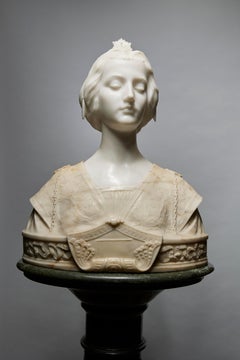
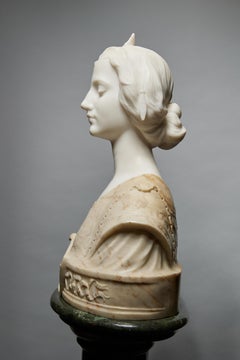
Late 19th Century Italian Finely Finished Bust of Renaissance Lady w/ Pedestal
Located in Beachwood, OH
Italian, Late 19th Century Finely Finished Bust of Renaissance Lady White marble, garment in veined buff colored marble on fitted green marble pedestal Bust: 22 x 18 x 9 inches Pedes...
Category

19th Century Sculptures

Materials

Marble

French Polychrome and Gilded Statue of The Virgin Mary
Located in Cotignac, FR
A polychrome and gilt plaster statue of the Blessed Virgin Mary. The quality of the original gilding and the handling of the folds in the clothing are exceptional. A wonderful statu...
Category

Renaissance 19th Century Sculptures

Materials

Gold Leaf

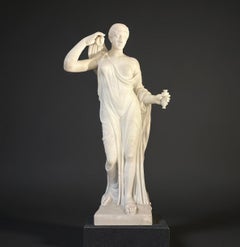
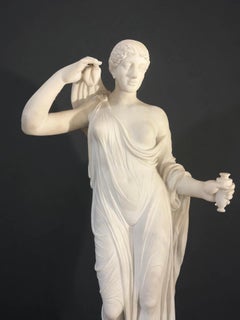
Antonio Canova Ebe Aprés Ebe White Marble Sculpture 19th Century Italian
Located in Roma, IT
An important grand tour Antonio Canova Ebe (Aprés), carved in white marble by an Italian sculptor artist in the 19th century from a block of white marble. The work depicts the go...
Category

Other Art Style 19th Century Sculptures

Materials

Marble

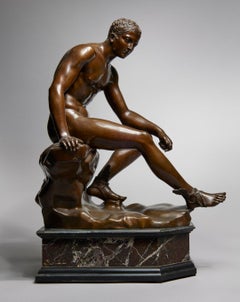
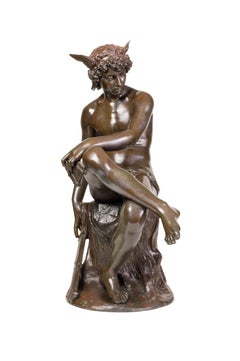
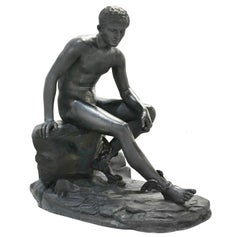
Grand Tour Bronze Figure of Seated Hermes, Early 19th Century After the Antique
Located in Beachwood, OH
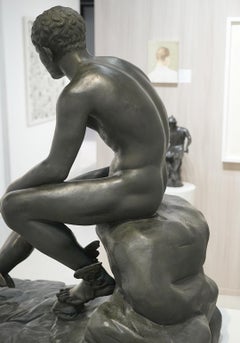
Large Figure of Seated Hermes, Grand Tour Bronze, Early 19th Century 19th Century Continental School After the Antique The large size figure well cast, with brownish green patination...
Category

19th Century Sculptures

Materials

Marble, Bronze

Antonio Canova (After) Marble Sculpture Of Venus Italica On Marble Base
Located in Roma, IT
a superb scale size of the Venere italica, the famous and notable sculpture carved by Antonio Canova in the 19th century standing on circular Carrara marble base. At the top of his ...
Category

Other Art Style 19th Century Sculptures

Materials

Marble

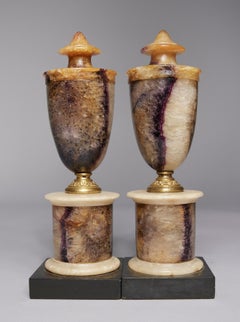
Pair of English Regency Blue John (Derbyshire Spar) Urns, 19th Century
Located in Beachwood, OH
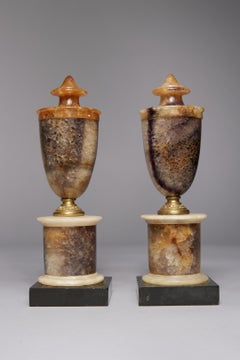
Pair of English Regency Blue John (Derbyshire Spar) Urns, 19th Century 9.5 x 3 x 3 inches Obtained from the Derbyshire England, Blue John is a semi-precious mineral, a rare form of ...
Category

19th Century Sculptures

Materials

Marble

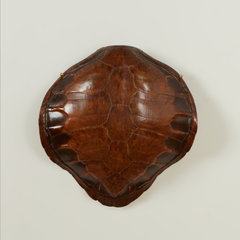
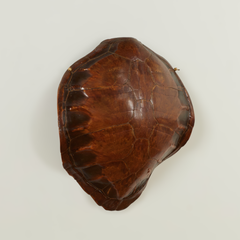
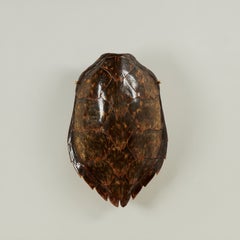
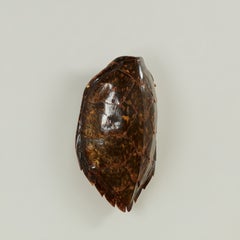
Large Antique Turtle Shell
Located in Palm Beach, FL
Large lofty wall hanging 19th century turtle shell with its iconic form and alluring organic variegated color scheme.
Category

Victorian 19th Century Sculptures

Materials

Organic Material

Sleeping Ariadne, Large Bronze & Marble Sculpture of Greek Mythology, 19th C.
Located in Beachwood, OH
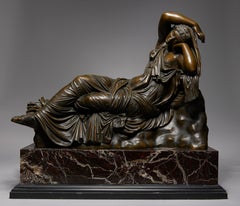
Pietro Chiapparelli (Italian, 19th Century) Sleeping Ariadne, c. 1865 Bronze on marble base Inscribed 'P. Chiapparelli F.I. Roma' 22 x 24 x 10.5 inches 136 lb. (34 lb. bottom marble,...
Category

19th Century Sculptures

Materials

Marble, Bronze

Antique Bronze Dog "Whippet with a Butterfly" Arthur Waagen (1833-1898) 1 of 2
Located in SANTA FE, NM
Antique Bronze Dog Portrait “La Levrette au Papillon” or “Whippet (Greyhound) with a Butterfly”   Arthur Waagen (Germany, France 1833-1898) Circa 1860’s 11 x 8 x 4  inches (1 of 2. ...
Category

Academic 19th Century Sculptures

Materials

Bronze

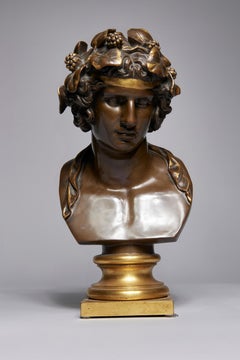
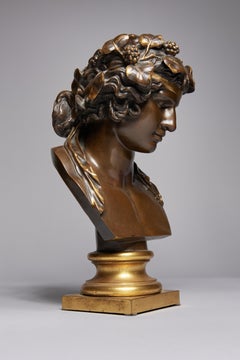
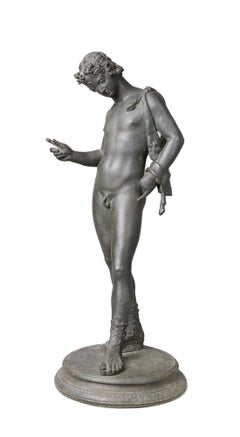
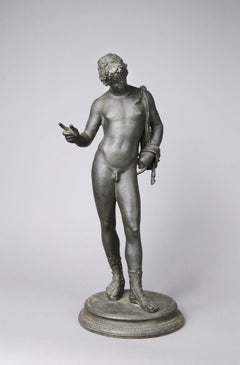
Grand Tour Bronze Sculpture of Dionysus, 19th Century Italian School
Located in Beachwood, OH
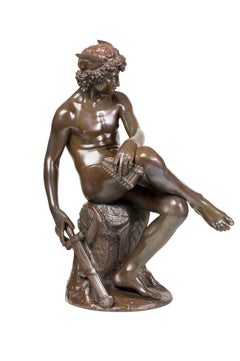
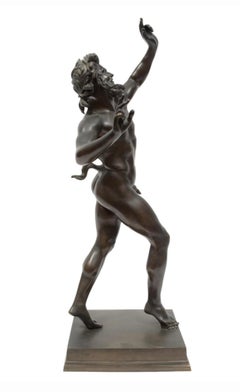
19th Century Italian School Grand Tour Bronze Sculpture of Dionysus, 19th Century Bronze with black-green patination 24 x 10 x 10 inches Dionysus, in Greco-Roman religion, a nature ...
Category

Italian School 19th Century Sculptures

Materials

Bronze

Antique Horse Bronze Trotting Stallion Isidore Jules Bonheur (France, 1827-1901)
Located in SANTA FE, NM
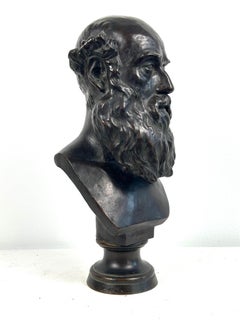
Antique Horse Bronze Portrait of a Trotting Stallion Isidore Jules Bonheur (France, 1827-1901) Cast bronze mounted on a rectangular plinth with dark brown patina, Signed: I. BONHEUR 17 x 11 3/4 A brilliant exploration of a stallion in full trot. The patina is a deep, warm walnut brown with honey-colored tones. Isidore Bonheur was best known and the most distinguished of the 19th century French animalier sculptors. Isidore, the younger brother of Rosa Bonheur and older brother of Auguste, began his studies of painting initially with his father, who was friends with Francisco Goya. By 1848 he debuted at the Paris Salon having discontinued animal and landscape painting to concentrate on creating sculptures and in 1849, Bonheur enrolled at the Ecole des Beaux Arts. He won medals at the Paris Salon in 1859 and did so again in 1865 and in 1869. After entering the Exposition Universelle 1855, he won the Gold Medal in 1889. In the 1870s exhibited in the London at the Royal Academy of Arts where he earned great prestige and won the coveted Medaille d’Or. After winning numerous other medals and prizes, Bonheur was awarded the Legion d' Honneur in 1895 and he was Knighted in Portugal, Spain and France. Bonheur continued exhibiting at the Paris Salon until 1899. Many of his bronzes were fabricated at the foundry owned by Hippolyte Peyrol, Bonheur's brother-in-law by marriage to Isidore’s youngest sister Juliette Bonheur. The Peyrol casts for both Rosa and Isidore are exceptionally well executed which suggests a strong working relationship between the founder and sculptor. There is little doubt that Isidore Bonheur was an acute observer of nature; his animals were not anthropomorphized but modelled to catch movement or posture characteristics of the particular species he was sculpting. He achieved this most successfully with his sculptures of horses which are usually depicted as relaxed rather than spirited. These figures are among his most renowned works and his equestrian models became very popular, particularly among the British aristocracy. An acute observer of nature, his sculptures reflect his commitment to the Realist school - with precise detailing of the movements of animals in their natural habitats. Ultimately, His naturalistic studies of animals are now some of the most highly sought after works by any of the animalier. He was possibly inspired by his many visits to the Buffalo Bill Wild West Show...
Category

Realist 19th Century Sculptures
Materials

Bronze

Couple Proposing, Baroque Porcelain Clock by Richard Klemm
Located in Long Island City, NY
Richard Klemm, German (1852 - 1916) - Couple Proposing, Medium: Porcelain Clock, maker's mark stamp verso, Size: 39 x 12 x 6.5 in. (99.06 x 30.48 x 16.51 cm)
Category

Baroque 19th Century Sculptures

Materials

Porcelain

Antique Bronze Dog "Whippet with a Butterfly" Arthur Waagen (1833-1898) 2 of 2
Located in SANTA FE, NM
Antique Bronze Dog Portrait “La Levrette au Papillon” or “Whippet (Greyhound) with a Butterfly”   Arthur Waagen (Germany, France 1833-1898) Circa 1860’s 11 x 8 x 4  inches (2of 2. No...
Category

Academic 19th Century Sculptures

Materials

Bronze

Horse Playing with a Dog (The Good Companions) Pierre-Jules Mene (1810-1879)
Located in SANTA FE, NM
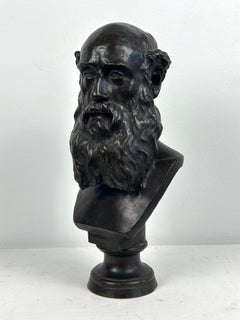
Antique Horse Bronze  "Horse  in the Stable Playing with a Dog (The Good Companions)" Jument à l'écurie jouant avec un chien Pierre-Jules Mene (French, 1810-1879) Bronze 19 x 10 inc...
Category

Realist 19th Century Sculptures
Materials

Bronze

Frine (Phryne), 19th Century Large Marble Sculpture of Nude Woman
Located in Beachwood, OH
Ercole Rosa (Italian, 1846 - 1893) Frine (Phryne) Marble Signed 'E. Rosa, Studio O. Andreoni, Roma' on back 34.5 x 12 x 10 inches 80 lb. Phryne was a 4th century BC famous Greek ...
Category

Italian School 19th Century Sculptures

Materials

Marble

Child's Winsdor Chair, antique, ca. 1880, American (Maine), original red wash
Located in Bryn Mawr, PA
Rare child's Windsor chair, ca. 1880s. American antique, crafted in Maine. Original red wash. Seat is 22" from the floor. Originally made for a child. (Does not conform to today's sa...
Category

Folk Art 19th Century Sculptures

Materials

Wood

Early 19th century Romantic marble sculpture - Kiss figures
Located in Varmo, IT
White marble sculpture - The Kiss. ​​19th century. 15 x 20 x h 20 cm including base, 12 x 17 x h 18 cm excluding base. Entirely in white marble, some small breaks and repairs. - ...
Category

Romantic 19th Century Sculptures

Materials

Marble

Early 19th century Empire figure bronze sculpture - woman's bust
Located in Varmo, IT
Small bronze ornament - Bust of a woman. Italy, early 19th century. 8 x 8 x h 29 cm, without base h 23 cm. Made entirely of patinated and gilded bronze. Depicting a female figure i...
Category

Old Masters 19th Century Sculptures

Materials

Marble, Bronze

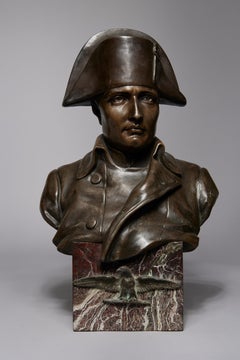
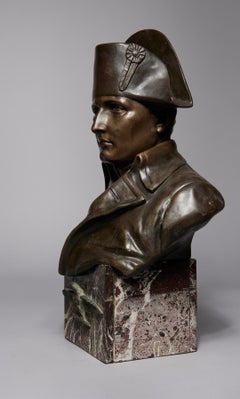
Late 19th Century Bronze Bust of Napoleon Sculpture, Italian Artist
Located in Beachwood, OH
Raphaël Nannini (Italian, 1852-1925) Napoleon Bust, Late 19th Century Bronze on marble base Signed on back 17 x 11 x 8 inches Raphael Nannini was born in Florence. He exhibited at t...
Category

19th Century Sculptures

Materials

Marble, Bronze

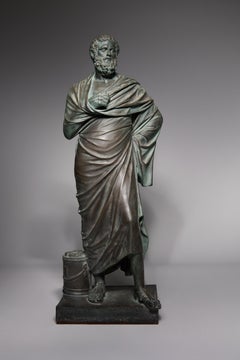
19th Century Grand Tour Figure of Sophocles after the Antique, F. Barbidienne
Located in Beachwood, OH
19th Century Grand Tour after the Antique Figure of Sophocles Bronze with green patination Signed F. Barbidienne, Fondeur 25 x 8.5 x 6.5 inches Standing figure of the Greek poet, we...
Category

19th Century Sculptures

Materials

Bronze

French Art Nouveau Bronze
Located in Berlin, DE
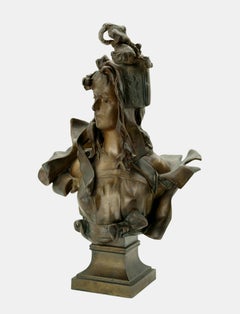
Bronze 72 cm signed Height: 72 cm. Base diameter: approx. 22 cm. Signed "E. Drouot". Stamped "BD Fondeur, Paris". Plaque engraved "Hebe Par Drouot (Hors Concours)". Bronze, cast, ...
Category

Art Nouveau 19th Century Sculptures

Materials

Bronze

Antique, 19th C. Peugeot Frères Brevetés French Coffee Grinder Table Sculpture
Located in Surfside, FL
This is being sold as a piece of (functional?) decorator table sculpture for a kitchen or restaurant. I do not know if or how it works. the wheel and gears turn. It might be missing a cover on the handle. It is a lovely antique piece. Made in France. A halfcentury before they produced their first car, the Peugeot brothers were making coffee grinders, continuing to do so for over 100years. In 1840 the Peugeots produced their first moulin a cafe out of a combination of metal and wood. The beans were inserted into the metal hopper up top; metal gears were turned by a woodenknob-capped metal...
Category

Modern 19th Century Sculptures

Materials

Metal, Brass

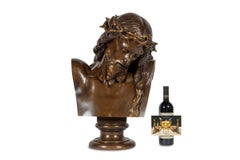
A Monumental Patinated Bronze Bust of Jesus Christ by Clesinger and Barbedienne
Located in Queens, NY
A Monumental and Truly Exceptional French Patinated Bronze Bust of Jesus Christ, Circa 1858, Signed J. Clesinger, Rome 1858 & F. Barbedienne Fondeur This monumental and extraord...
Category

19th Century Sculptures

Materials

Bronze

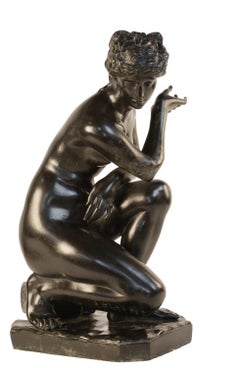
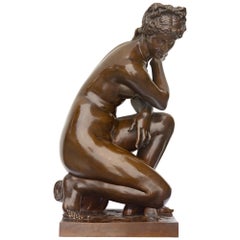
19th Century Bronze Figure of Crouching Venus or Naked Aphrodite
Located in Beachwood, OH
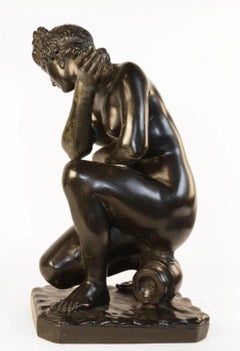
19th Century Bronze Figure of Crouching Venus or Naked Aphrodite Bronze with dark patination 22.5 x 13 x 11 inches The Crouching Venus is a Hellenisti...
Category

19th Century Sculptures

Materials

Bronze

Amazone
Located in Berlin, DE
ALBERT-ERNEST CARRIER-BELLEUSE French 1824 - 1887 signed: A. CARRIER Bronze Marmor Albert-Ernest Carrier-Belleuse (1824–1887) was a prominent French sculptor of the 19th centur...
Category

Art Nouveau 19th Century Sculptures

Materials

Bronze

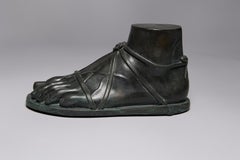
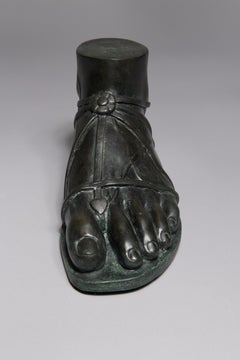
Grand Tour Sandaled Foot of an Antiquity, 19th Century Italian
Located in Beachwood, OH
Grand Tour Italian, 19th Century Sandaled Foot of an Antiquity Bronze 5.5 x 12 x 5 inches
Category

19th Century Sculptures

Materials

Bronze

Antique Silvered Bronze Rooster, France circa 19th Century
Located in SANTA FE, NM
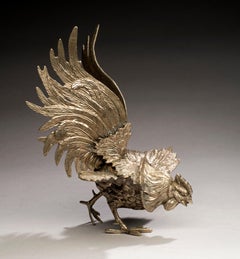
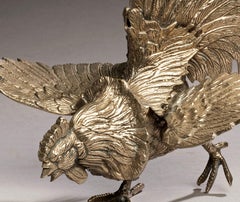
Antique Silvered Bronze Rooster France, circa 1900 10 1/4 x 9 1/2 (H x D) inches A very fine and lively bronze statuette of a preening Rooster. Nicely cast and well-carved and in ex...
Category

French School 19th Century Sculptures

Materials

Silver, Bronze

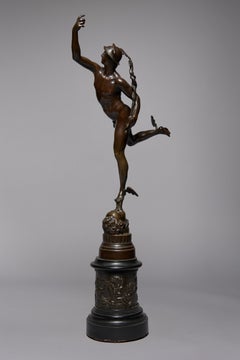
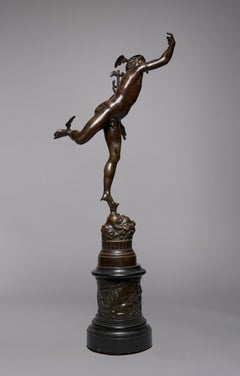
Mercury Standing on the Breath of Zeus, Antique Grand Tour
Located in Beachwood, OH
After Giambologna (Italian, 1529-1608) Mercury Standing on the Breath of Zeus Bronze 27.5 x 14.25 x 5.5 inches The sculpture depicts Mercury wearing his winged helmet and sandals and holding a caduceus. Created after one of Giambologna's most celebrated sculptures in the Renaissance, Mercury, was designed as part of a fountain for the Villa Medici in Rome.The head on which Mercury steps symbolizes the figure being “exhaled, purified, unburdened.” When the Giambologna sculpture...
Category

19th Century Sculptures

Materials

Bronze

Diana the Huntress, 1890 Classical Bronze Sculpture of Nude Woman
Located in Beachwood, OH
Frederick William MacMonnies (American, 1863-1937) Diana, 1890 Bronze with green verdigris patina Signed and dated Copyright 1894 with Jaboeuf & Rouard, Paris foundry mark 31 x 21 x 17 inches A sculptor of classical figures, American-born Frederick MacMonnies...
Category

19th Century Sculptures

Materials

Bronze

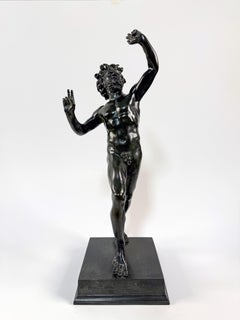
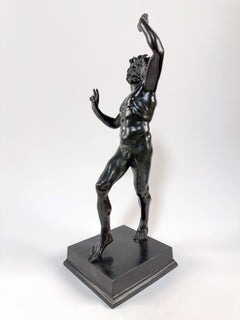
Satyr with Cymbals and Kroupezion, Grand Tour after the Antique, 19th century
Located in Beachwood, OH
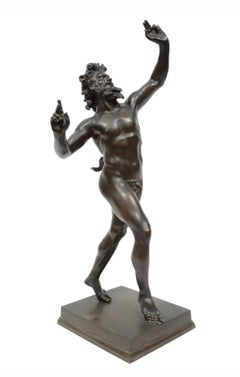
19TH CENTURY CONTINENTAL SCHOOL Satyr with Cymbals and Kroupezion, Grand Tour after the Antique Bronze with marble base 26 in. h. x 15 in. w. x 10 in. d. This dancing faun is now mo...
Category

19th Century Sculptures

Materials

Marble, Bronze

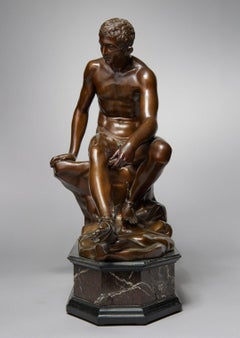
Seated Mercury, or Hermes - God of Speed
Located in New York, NY
This Mercury by Montagne has lovely patina and surface and is a pleasingly different depiction of Winged speed as he is seated! It is an arresting pose and elegant and covers all fa...
Category

Academic 19th Century Sculptures

Materials

Bronze

19th Century Bronze & Marble of Boy w/ Lizard and Column
Located in Beachwood, OH
Louis Kley (French, 1833-1911) The Lizard, 19th Century Gilt bronze and marble Signed to base 6.25 x 4.5 x 3 inches In Greco-Roman times, the lizard represented good fortune and reg...
Category

19th Century Sculptures

Materials

Marble, Bronze

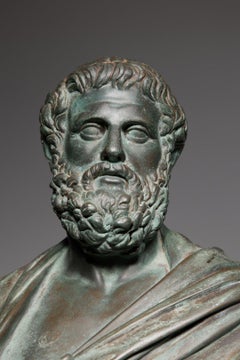
A Monumental French Patinated Bronze Bust of William Shakespeare, after Houdon
Located in Queens, NY
A Monumental French Patinated Bronze Bust of William Shakespeare, after Houdon, by F. Barbedienne Foundry, circa 1870. Masterfully and realistically sculpted in solid bronze, this b...
Category

19th Century Sculptures

Materials

Bronze

“Diana”
Located in Southampton, NY
Beautiful golden brown patina bronze of Diana, the goddess of the moon by the French sculptor, Emmanuel Villanis. Signed on her shoulder. Impressed foundry stamp on base, “Society de...
Category

Academic 19th Century Sculptures

Materials

Bronze

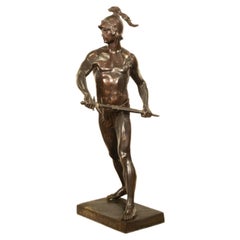
The Blacksmith of Solingen / - The Double-edged Sword -
Located in Berlin, DE
Wilhelm Albermann (1835 Werden an der Ruhr - 1913 Cologne), The Blacksmith of Solingen, after 1895. Bronze-color patinated zinc cast on plinth, 47 cm (height) x 20 cm (width) x 16 cm (depth), weight 5.5 kg. Signed “Albermann.” on the plinth and identified as a cast by “AKT.[TIEN] GES.[ELLSCHAFT] GLADENBECK BERLIN”. Dedication on the front: “Mr. Ing. F. Kuhlmann to the wedding. Management and officials of the Hannoversche Waggonfabrik. Aircraft construction department". - The zinc showing through in spots, the patina somewhat stained, the right upper arm under the sleeve retouched in black. - The Double-edged Sword - The figure is a reduction of Wilhelm Albermann's 1895 fountain figure of the armourer of Solingen, who has always been identified with the historical blacksmith Peter Hahn. In 1839, Karl Simrock wrote the poem “The Blacksmith of Solingen" and thus coined the legendary figure. The first and penultimate verses read: A blacksmith spoke to Solingen With every bayonet, That came to his diligence: "Oh, that Fritz had it!" The war took its course, Many battles were fought, Which often made him fearful and anxious In his soul. The blacksmith had given up his trade to fight for Frederick the Great. Not least because of his strength and will to fight, the battles were won. With his fountain sculpture, Albermann has given the legendary blacksmith a figurative form and at the same time created a landmark for the city of Solingen, which was once famous for the art of sword forging and today still stands for the production of high-quality knives. During the bombing raid in November 1944, the fountain was destroyed along with the entire old town of Solingen. Only the head remained. The broad-shouldered blacksmith stands securely behind his anvil, his leather apron tied around him, and has just finished a sword blade with his own "weapon" - the blacksmith's hammer. His entire body shows the strength with which he wields the hammer, but also the strain of this activity, as evidenced by the wide open shirt, the somewhat 'untidy' apron, and especially the furrowed face. However, the blacksmith does not look at the finished work, but resolutely and at the same time thoughtfully into the distance, in line with the quoted verse from Simrock's poem that the battles "often made him fearful and anxious in his soul". There is certainly something melancholy in his gaze, fed by the knowledge of the necessity of forging swords and taking up arms and their deadly use - experiences Albermann had to make during his own war missions. The flowing full beard gives his gaze into the distance an almost prophetic character. In keeping with the craft of the perfectly formed art of blacksmithing, the detailed casting reproduces the respective materials depicted in perfect form: the leather apron convincingly conveys the impression of leather and lies - also in the back view - like a second formed layer over the body, while the shirt and trousers illustrate their own textile qualities. Due to its masterful execution and profound content, the “Blacksmith of Solingen”, which has survived in its cast reproductions, remains Albermann's most famous work to this day. About the artist The son of a carpenter, Wilhelm Albermann began an apprenticeship as a joiner, but then followed his artistic calling and trained as a sculptor in Elberfeld. In 1855, at the age of twenty, he was drafted into the army in Berlin, where he served until 1857. Albermann attended the Berlin Art Academy on the side and began regular studies after his service. While still a student, he completed commissioned works for his teachers August Fischer and Hugo Hagen. His first independent commissions followed, enabling him to establish a flourishing sculpture studio in Cologne in 1865. His artistic activities were repeatedly interrupted by military service, and he took part in the German-Danish War in 1864, the war against Austria in 1866, and the Franco-Prussian War in 1870/71. After his last war service, Albermann, already a respected artist, founded a commercial drawing school at the request of the city government, where he taught the modeling class and served as director until 1896. In 1890 he also worked for the "Society for the Promotion of Sculpture in the Rhineland and Westphalia". Albermann was one of the most prolific sculptors in Cologne in the second half of the 19th century. He created numerous monuments, fountains, tomb sculptures, architectural ornaments, and domestic statues. At its peak, his workshop employed up to thirty sculptors and stonemasons at a time. GERMAN VERSION Wilhelm Albermann (1835 Werden an der Ruhr - 1913 Köln), Der Schmied von Solingen, nach 1895. Bronzefarben patinierter Zinkguss auf gegossener Plinthe, 47 cm (Höhe) x 20 cm (Breite) x 16 cm (Tiefe), Gewicht 5,5 kg. Auf der Plinthe mit „Albermann.“ signiert und als Guss der „AKT.[TIEN] GES.[ELLSCHAFT] GLADENBECK BERLIN“ ausgewiesen. Schauseitige Widmung: „Herrn Ing. F. Kuhlmann zur Vermählung. Direktion und Beamte der Hannoverschen Waggonfabrik. Abt. Flugzeugbau“. - Punktuelles Durchscheinen des Zinks, Patina etwas fleckig, der rechte Oberarm unter dem Ärmel schwarz retuschiert. - Die Zweischneidigkeit des Schwertes - Die Figur ist eine Reduktion von Wilhelm Albermanns 1895 geschaffener Brunnenfigur des Waffenschmieds von Solingen, der seit jeher mit dem historischen Schmied Peter Hahn identifiziert wurde. 1839 hatte Karl Simrock das Gedicht „Der Schmied von Solingen“ verfasst und damit die legendäre Figur geprägt. Die erste und die vorletzte Strophe lauten: Zu Solingen sprach ein Schmied Bei jedem Bajonette, Das seinem Fleiß geriet: »Ach, daß der Fritz es hätte!« Der Krieg ging seinen Gang, Man schlug noch viele Schlachten, Die oft ihm angst und bang' In seiner Seele machten. Der Schmied hatte sein Handwerk ruhen lassen, um selbst für Friedrich den Großen zu kämpfen. Nicht zuletzt durch seine Kraft und seinen Kampfeswillen verliefen die Schlachten siegreich. Dem legendären Schmied verlieht Albermann mit seiner Brunnenskulptur eine bildliche Gestalt und schuf damit zugleich ein Wahrzeichen der Stadt Solingen, die einst für die Kunst des Schwerterschmiedens berühmt war und bis heute für die Herstellung qualitätvoller Messer einsteht. Beim Bombenangriff im November 1944 wurde mit der gesamten Solinger Altstadt auch der Brunnen zerstört. Einzig der Kopf blieb erhalten. Mit sicherem Stand und umgebundener Lederschürze steht der breitschultrige Schmied hinter seinem Amboss und hat gerade mit seiner eigenen ‚Waffe‘ – dem Schmiedehammer – eine Schwertklinge fertiggestellt. Seinem gesamten Körper ist die Kraft abzulesen, mit der er den Hammer führt, aber auch die Anstrengung dieser Tätigkeit, wovon das weit geöffnete Hemd, die etwas ‚unordentlich‘ arrangierte Schürze und vor allem das zerfurchte Gesicht zeugen. Der Schmied schaut aber nicht auf das vollendete Werk, sondern entschlossen und zugleich sinnierend in die Ferne, entsprechend der zitierten Zeile von Simrocks Gedicht, dass die Schlachten „oft ihm angst und bang‘ in seiner Seele machten“. Der Blick hat durchaus etwas Melancholisches, dass sich aus dem Wissen um die Notwendigkeit, Schwerter zu schmieden und zu den Waffen zu greifen und deren tödlichem Einsatz speist – Erfahrungen, die Albermann bei seinen eigenen Kriegseinsätze machen musste. Der wallende Vollbart verleiht dem in die Ferne schauenden Blick einen beinahe prophetischen Charakter. Dem Handwerk der formvollendenden Schmiedekunst entsprechend, gibt der detaillierte Guss die jeweils dargestellten Materialien in vollendeter Ausformung wieder: Die Lederschürze vermittelt überzeugend den Eindruck des Leders und liegt – auch in der Rückenansicht – wie eine zweite ausgeformte Schicht über dem Körper, während das Hemd und die Hose...
Category

Realist 19th Century Sculptures
Materials

Metal

Antique Sculpture Female Moor Venice 19th Century Gold Italy
Located in Riva del Garda, IT
Antique sculpture of a female Moor with flowering cornucopia Venice, 19th century Carved, lacquered and gilded/silvered wood Total height 202 cm (column base 82 cm, figure 120 cm) ...
Category

Old Masters 19th Century Sculptures

Materials

Gold

Cheval Libre (Free Horse)
Located in San Francisco, CA
Artist: After Pierre Jules Mene (French, 1810-1879) Title: Cheval Libre (Free Horse) Year: 1868 Medium: Cast bronze sculpture with dark brown patina Edition: Unknown Size: Inclu...
Category

Realist 19th Century Sculptures
Materials

Bronze

Why Born a Slave (Replica after the original work)
Located in Paris, Île-de-France
Jean-Baptiste Carpeaux (1827-1875) Why Born a Slave (Replica after the original work) Tinted terracotta or plaster, 60 cm in height, base 18 x 20 cm Provenance: Private collection ...
Category

Romantic 19th Century Sculptures

Materials

Terracotta, Plaster

Neoclassical Style Cast Iron Window Surround
Located in Brooklyn, NY
A fabulous mid-to-late 19th-century cast iron window surround of exceptional scale—standing nearly six feet tall—now offered with the potential to be elegantly converted into a mirro...
Category

French School 19th Century Sculptures

Materials

Iron

Figure of Crouching Venus/Naked Aphrodite, 19th Century Italian School Sculpture
Located in Beachwood, OH
Bronze Figure of Crouching Venus, or The Naked Aphrodite, 19th Century Italian School Bronze raised on a marble base 21 in. h. x 10 in. w. x 7 in. d., overall 18 in. h. x 8.5 in. w....
Category

19th Century Sculptures

Materials

Marble, Bronze

Pair of Italian "Alabaster Stone Lions" after Antonio Canova; Mid 19th Century
Located in SANTA FE, NM
"Pair Recumbent Stone Lions" after Antonio Canova (1757-1822) Italian (possibly Florence) Mid 19th Century Alabaster, marble 6 x 9 x 4 inches This is an exquisite pair of Italian alabaster lions on marble bases based on the monumental lions carved by Antonio Canova (1757-1822), the greatest Italian neoclassical sculptor. Canova sculpted the marble lions for the monumental tomb of Pope Clement XIII in St. Peter’s, Rome in 1792 Canova Lions refers to the pair of copies of lion sculptures by Antonio Canova. When Canova created the sculptures in 1792, he installed them on the tomb of Pope Clement XIII. The marble sculptures are some of the most prominent features in St. Peter's Basilica in Rome. Given the intricacies of creating the original Canova lions, some artists created molds and replicated them. A good example is the pair of lion sculptures...
Category

Italian School 19th Century Sculptures

Materials

Alabaster, Marble

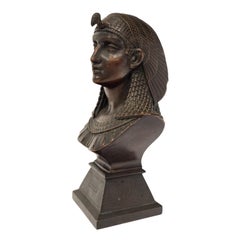
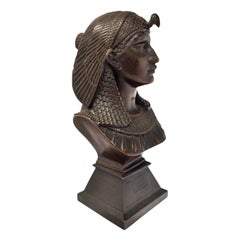
Antique French Egyptian Revival Bronze Bust Sculpture Statue "Queen of Babylon"
Located in Portland, OR
A good antique cast bronze sculpture an Egyptian Revival bust "The Queen of Babylon", by the 19th century French sculptor Paul Auguste Gagne, circa 1875. This rare & unusual bronze b...
Category

French School 19th Century Sculptures

Materials

Bronze

The Victorious David / - The melancholy of the radiant hero -
Located in Berlin, DE
Henri Honoré Plé (1853 Paris - 1922 Paris), The Victorious David, around1890. Red-brown and brown patinated bronze with terrain plinth mounted on a round base. 42 cm (total height) x...
Category

Realist 19th Century Sculptures
Materials

Bronze

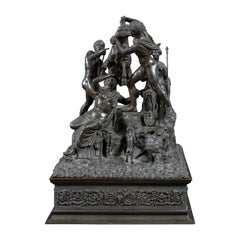
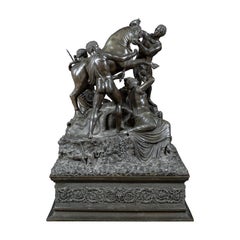
Large Grand Tour Bronze Greco-Roman Uffizi Wrestlers Ferdinand Barbedienne
Located in Rochester, NY
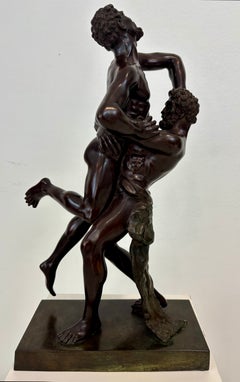
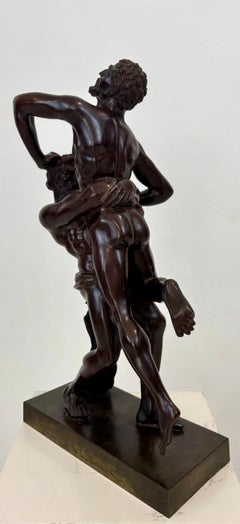
Grand tour circa 1860s bronze of the Wrestlers. Rich fine dark brown patina. Marked "F. Barbedienne Fondeur." The Wrestlers also known as The Two Wrestlers, The Uffizi Wrestlers...
Category

19th Century Sculptures

Materials

Metal, Bronze

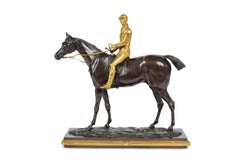
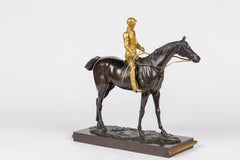
Antique French 19th Bronze Equestrian Group Horses Jockeys Statue Sculpture 1895
Located in Portland, OR
A fine late 19th century antique French bronze sculpture group, of a pair of race horses & jockeys, by Paul Louis Emile Loiseau-Rousseau, Paris (1861-1927). The bronze circa 1895 de...
Category

French School 19th Century Sculptures

Materials

Bronze

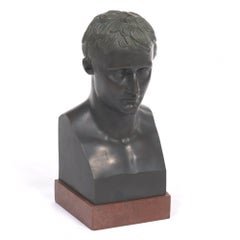
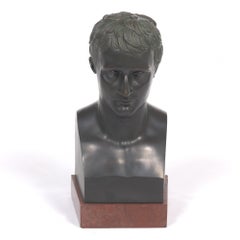
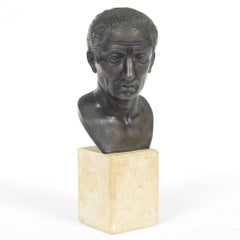
19th Century Bronze Bust of Young Napoleon as Caesar
Located in Beachwood, OH
After Antonio Canova (Italian, 1757-1822) Bust of Young Napoleon as Caesar, 19th Century Hallow cast bronze with verdigris patina, attached to rouge...
Category

19th Century Sculptures

Materials

Marble, Bronze

Antique Bronze Portrait Draft Horse by Isidore Jules Bonheur (France, 1827-1901)
Located in SANTA FE, NM
Antique Bronze Portrait of a Draft Horse Isidore Jules Bonheur (France, 1827-1901) Circa 1840s Cast bronze mounted on a rectangular plinth atop a marble s...
Category

Realist 19th Century Sculptures
Materials

Bronze

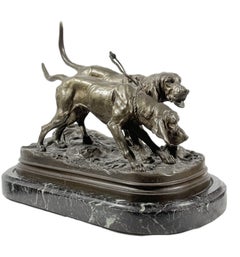
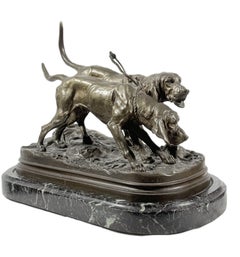
Alfred Dubucand (1828-1894): Two hunting dogs
Located in Berlin, DE
Dubucand Alfred 1828-1894 Two Hunting Dogs, Bronze on a Marble Base The Bronze with the monogram 'E.V.' and the number '2958' Two Hunting Dogs, Group Signed Alfred Dubucand, Fren...
Category

Realist 19th Century Sculptures
Materials

Bronze

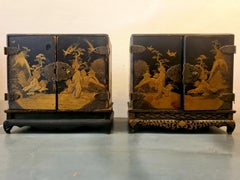
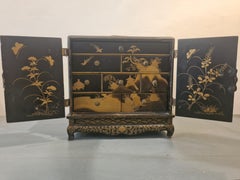
Pair Japanese Lacquered Maki-e Meiji Period Cabinets 漆器 蒔絵 塗物 漆塗
Located in Cotignac, FR
A pair of Meiji period, late 19th Century Lacquerware (漆器, shikki) miniature cabinets on stands. The decorative panels are of very fine quality. The cabinets are a 'true pair' that i...
Category

Edo 19th Century Sculptures

Materials

Wood, Lacquer

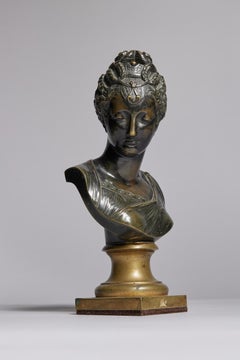
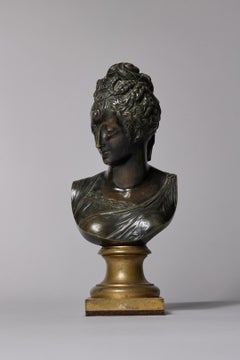
Bust of Diane de Poitiers, Bronze sculpture of French Noblewoman
Located in Beachwood, OH
After Jean Goujon (French, 1510-1568) Bust of Diane de Poitiers Bronze with gilt socle base 9 x 3.75 x 2.75 inches Provenance: Removed from a private residence at the Pierre Hotel Di...
Category

19th Century Sculptures

Materials

Bronze

Bronze French Bulldog by Rembrandt Bugatti(1884 - 1916)
Located in Gent, VOV
Bronze French bulldog In 1905, Rembrandt Bugatti took his mother's French Bulldog as a model and created this living sculpture, the dog bending its head and seeming to question the ...
Category

Naturalistic 19th Century Sculptures

Materials

Bronze

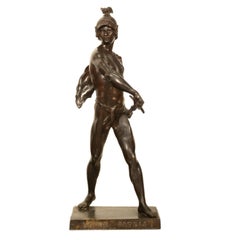
Dancer, bronze, 40x46x12 cm
Located in Riga, LV
Ferdinand Preiss(1882-1943)
Category

Realist 19th Century Sculptures
Materials

Marble, Bronze

Equestrian Joan of Arc
Located in PARIS, FR
Equestrian Joan of Arc by Emmanuel FREMIET (1824-1910) A very fine bronze equestrian group with a greenish dark brown patina signed " Fremiet " on the base cast by " F. Barbedienne...
Category

French School 19th Century Sculptures
Materials

Bronze

Read More

At Hosfelt Gallery, Bertoia Masterworks Complement Dynamic Contemporary Art

For nearly three decades, San Francisco–based Todd Hosfelt has curated against the grain — with a show on the legendary modernist Harry Bertoia the latest case in point.

This Weathered-Steel Sculpture Distills a Form of Protest into a Minimalist Monument

Part of Alejandro Vega Beuvrin’s “Barricada” series, the work is a subversive tribute to the street smarts of citizen activists.

How the Chunky, Funky Ceramics of 5 Mid-Century American Artists Balanced Out Slick Modernism

Get to know the innovators behind the pottery countercultural revolution.

Art Brings the Drama in These Intriguing 1stDibs 50 Spaces

The world’s top designers explain how they display art to elicit the natural (and supernatural) energy of home interiors.

Chryssa’s 1962 Neon Sculpture Was Way ahead of the Art-World Curve

By working with lettering, neon and Pop imagery, Chryssa pioneered several postmodern themes at a time when most male artists detested commercial mediums.

How to Spot a Fake KAWS Figure

KAWS art toys have developed an avid audience in recent decades, and as in any robust collectible market, counterfeiters have followed the mania. Of course, you don’t have to worry about that on 1stDibs, where all our sellers are highly vetted.

A Giant Wedding Cake Has Us Looking at Portuguese Tiles in a New Light

At Waddesdon Manor, artist Joana Vasconcelos has installed a three-tiered patisserie inspired by the narrative tile work of her homeland. We take a look at the cake sculpture and how Portuguese tiles have been used in architecture from the 17th century to today.

These Soft Sculptures Are Childhood Imaginary Friends Come to Life
Miami artist and designer Gabriela Noelle’s fantastical creations appeal to the Peter Pan in all of us.
Still Thinking About These?

All Recently Viewed