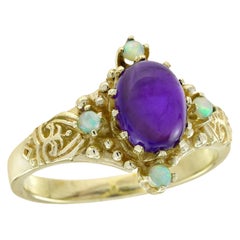
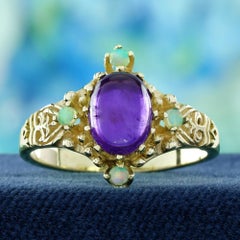
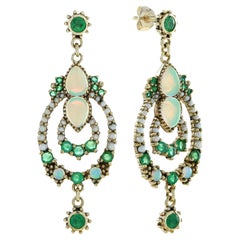
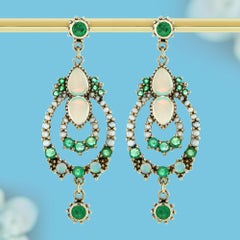
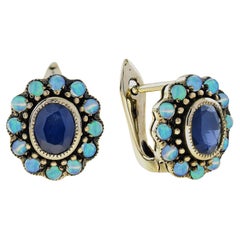
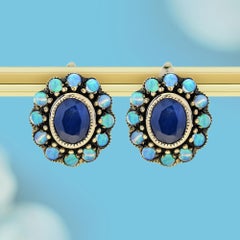
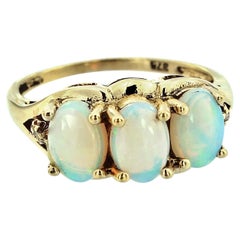
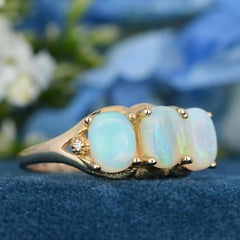
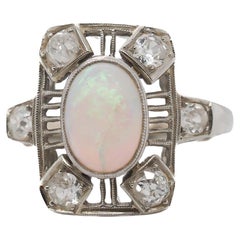
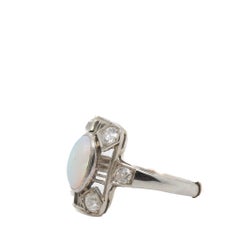
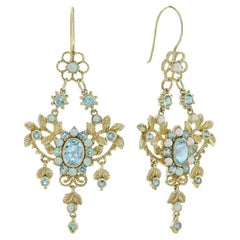
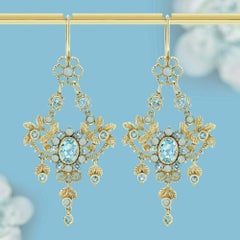
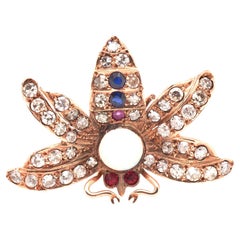
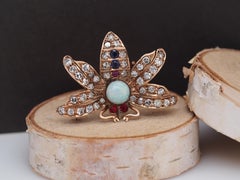
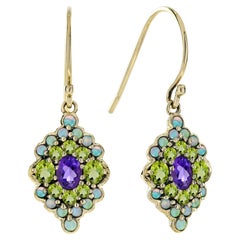
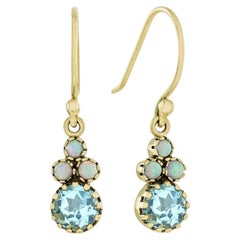
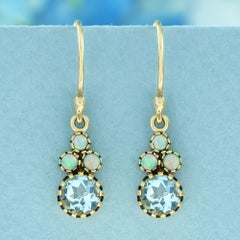
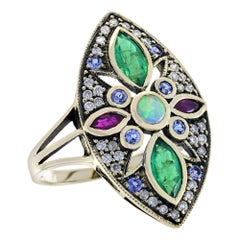
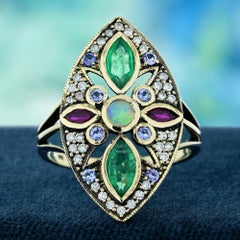
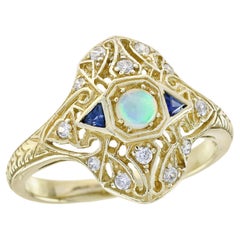
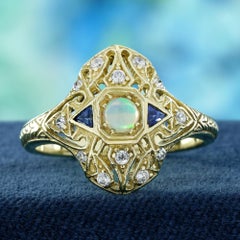
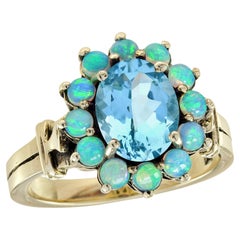
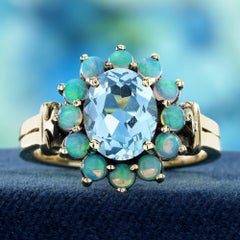
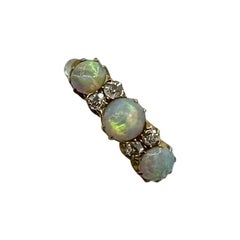
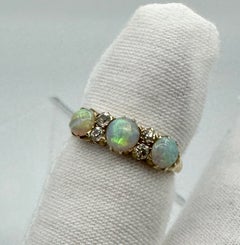
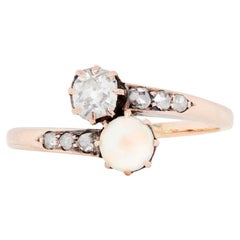
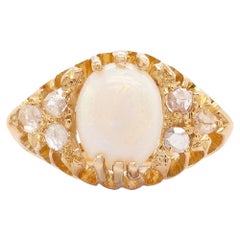
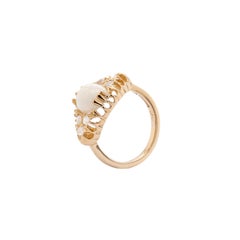
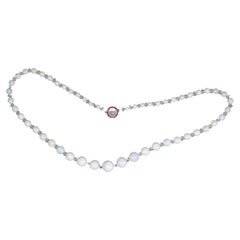
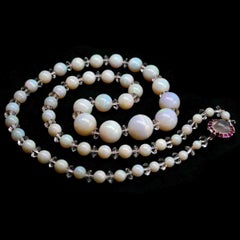
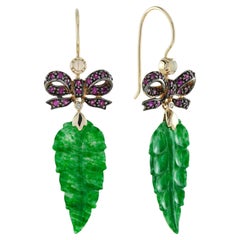
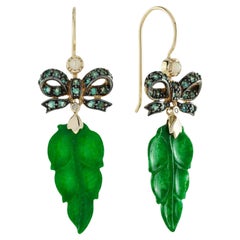
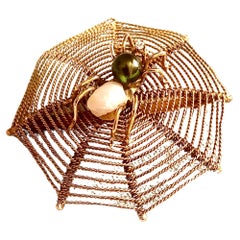
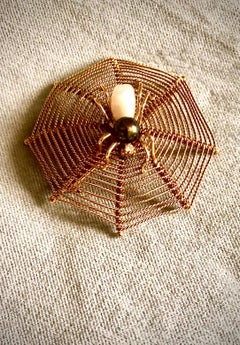
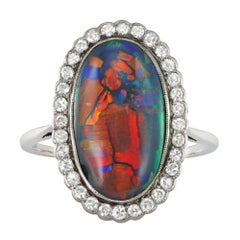
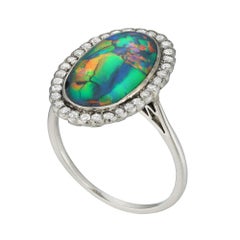
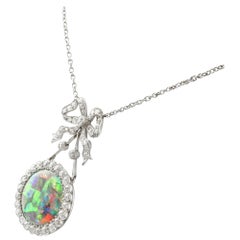
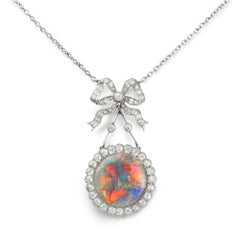
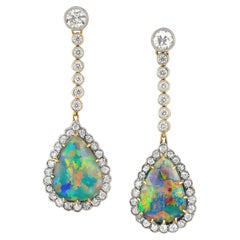
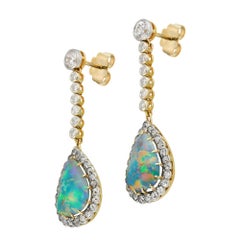
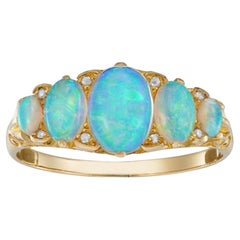
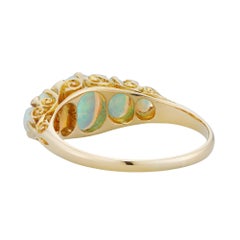
On 1stDibs, you can find the most appropriate edwardian opal for your needs in our varied inventory. Every item for sale was constructed with extraordinary care, often using
Gold,
18k Gold and
Platinum. In our selection of items, you can find a vintage example as well as a contemporary version. If you’re looking for a edwardian opal from a specific time period, our collection is diverse and broad-ranging, and you’ll find at least one that dates back to the 19th Century while another version may have been produced as recently as the 21st Century. Creating a edwardian opal has been a part of the legacy of many jewelers, but those produced by
Tiffany & Co.,
Bailey, Banks & Biddle and
Fabergé are consistently popular. See these pages for a
cabochon iteration of this accessory, while there are also
oval cut cut and
round cut cut versions available here, too. There aren’t many items for
men if you’re seeking a edwardian opal, as most of the options available are for
women and unisex.
Antique Edwardian jewelry is named for King Edward VII of Great Britain, who ruled from 1901 until 1910. Classic Edwardian necklaces, engagement rings, earrings and other jewelry are often overshadowed by the more popular style of the era, Art Nouveau, which is a shame. At its best, Edwardian jewelry was all about the exquisite diamond, platinum and pearl creations made by such famous names as Cartier and Boucheron.
Edward introduced incredibly formal Buckingham Palace court presentations, balls and soirées, resulting in a huge demand for diamond jewels starting with his coronation in 1902. Dozens of tiaras and formal jewels in an updated 18th-century style were purchased from French jewelers Boucheron and Chaumet and from Russia’s Fabergé. The court jewelers Asprey, Garrard, Carrington and the newly opened London branch of Cartier were all overwhelmed with orders for sumptuous diamond jewelry to be worn at the king’s elaborate coronation.
During the Edwardian era, pearls were more valuable than diamonds. The pear-shaped pearl La Peregrina, for example, belonged to some of the most fabulous and strongest women in history and bounced among royal courts in Spain, France and Russia for several centuries. So while today the scale and clarity of a diamond ring matters, back then the size and quantity of your pearls was more important a declaration of wealth. And just as Victorian notions of propriety and femininity began to change after Queen Victoria died in 1901, jewelry design also evolved but there was some overlap with late Victorian styles.
Women of the Edwardian period sported bejeweled headpieces like tiaras and bandeaus with feathered aigrettes. Another popular piece of jewelry that is said to have been directly inspired by Queen Alexandra were colliers de chien, or dog collars — today's choker necklaces — which consisted of either a ribbon decorated with a brooch, a gemstone or several strands of pearls strung closely together.
Two major jewelry houses, Cartier and Boucheron, were founded in the mid-1850s, and by the beginning of the 20th century, the wealthy considered them household names. The Cartier brand became even more desirable once the house became the official jewelry supplier to King Edward VII. Cartier took this title seriously and designed some of the most innovative jewelry of its day, since it was willing to experiment with new materials like platinum and because it was mindful of fashion trends. Filigree settings also became popular. This saw-piercing technique was decorative and at the same time created a sense of lightness.
Perhaps even more important than Cartier’s use of platinum was the founding of De Beers Consolidated Mines Limited in 1888. The discovery of new diamond mines made the stone more affordable and prompted the introduction of new gemstone cuts. It is not uncommon to see Edwardian jewels with baguette or briolette diamonds.
Find antique Edwardian rings, bracelets, watches and other jewelry on 1stDibs.
Gold is the feel-good metal, the serotonin of jewelry. Wear vintage and antique gold necklaces, watches, gold bracelets or gold rings and you feel happy, you feel dressed, you feel, well, yourself.
Gold, especially yellow gold, with its rich patina and ancient pedigree going back thousands of years, is the steady standby, the well-mannered metal of choice. Any discussion of this lustrous metal comes down to a basic truth: Gold is elementary, my dear. Gold jewelry that couples the mystique of the metal with superb design and craftsmanship achieves the status of an enduring classic. Many luxury houses have given us some of our most treasured and lasting examples of gold jewelry over the years.
Since its founding, in 1837, Tiffany & Co. has built its reputation on its company jewelry as well as its coterie of boutique designers, which has included Jean Schlumberger, Donald Claflin, Angela Cummings and Elsa Peretti. There are numerous gold Tiffany classics worth citing. Some are accented with gemstones, but all stand out for their design and the workmanship displayed.
For the woman who prefers a minimalist look, the Tiffany & Co. twist bangle (thin, slightly ovoid) is stylishly simple. For Cummings devotees, signature pieces feature hard stone inlay, such as her pairs of gold ear clips inlaid with black jade (a play on the classic Chanel black and tan), or bangles whose design recalls ocean waves, with undulating lines of lapis lazuli and mother-of-pearl. And just about any design by the great Jean Schlumberger is by definition a classic.
Even had he eschewed stones and diamonds, Southern-born David Webb would be hailed for the vast arsenal of heavy gold jewelry he designed. Gold, usually hammered or textured in some manner, defines great David Webb jewelry. The self-taught jeweler made very au courant pieces while drawing inspiration from ancient and out-of-the-way sources — East meets West in the commanding gold necklaces made by Webb in the early 1970s. The same could be said for his endlessly varied gold cuffs.
In Europe, many houses have given us gold jewelry that sets the highest standard for excellence, pieces that were highly sought after when they were made and continue to be so.
Numerous designs from Cartier are homages to gold. There are the classic Trinity rings, necklaces and bracelets — trifectas of yellow, white and rose gold. As a testament to the power of love, consider the endurance of the Cartier Love bracelet.
Aldo Cipullo, Cartier’s top in-house designer from the late 1960s into the early ’70s, made history in 1969 with the Love bracelet. Cipullo frequently said that the Love bracelet was born of a sleepless night contemplating a love affair gone wrong and his realization that “the only remnants he possessed of the romance were memories.” He distilled the urge to keep a loved one close into a slim 18-karat gold bangle.
BVLGARI and its coin jewelry, gemme nummarie, hit the jackpot when the line launched in the 1960s. The line has been perennially popular. BVLGARI coin jewelry features ancient Greek and Roman coins embedded in striking gold mounts, usually hung on thick link necklaces of varying lengths. In the 1970s, BVLGARI introduced the Tubogas line, most often made in yellow gold. The Tubogas watches are classics, and then there is the Serpenti, the house's outstanding snake-themed watches and bracelets.
A collection called Monete that incorporated the gold coins is one of several iconic BVLGARI lines that debuted in the 1970s and ’80s, catering to a new generation of empowered women. Just as designers like Halston and Yves Saint Laurent were popularizing fuss-free ready-to-wear fashion for women on the go, BVLGARI offered jewels to be lived in.
Since Van Cleef & Arpels opened its Place Vendôme doors in 1906, collection after collection of jewelry classics have enchanted the public. As predominantly expressed in a honeycomb of gold, there is the Ludo watch and accessories, circa the 1920s, and the golden Zip necklace, 1951, whose ingenious transformation of the traditional zipper was originally proposed by the Duchess of Windsor. Van Cleef's Alhambra, with its Moroccan motif, was introduced in 1968 and from the start its popularity pivoted on royalty and celebrity status. It remains one of VCA’s most popular and collected styles.
Mention must be made of Buccellati, whose name is synonymous with gold so finely spun that it suggests tapestry. The house’s many gold bracelets, typically embellished with a few or many diamonds, signified taste and distinction and are always in favor on the secondary market. Other important mid-20th-century houses known for their gold-themed jewelry include Hermès and Ilias Lalaounis.
Find a stunning collection of vintage and antique gold jewelry on 1stDibs.
Opals were discovered in 400 BC, and since then five types have been found throughout the world. Before you start shopping for mysteriously beautiful vintage opal rings and other opal jewelry, learn about the different varieties of the gem — and find out which historical figure was reportedly willing to trade his kingdom for a single stone.
Here is a little riddle for you: the month of October has two birthstones, but only one of them encompasses the colors of other birthstones. If you guessed opal, you’re right! (The other gemstone associated with the month of October is tourmaline.)
Opals are such unusual gemstones that there are too many old-wives tales associated with them, like if you’re a blond, wearing an opal necklace will protect your locks from losing color. Opals were also very fashionable in the early 19th century, up until the publication of Sir Walter Scott’s novel Anne of Geierstein in 1829. The title heroine wears an opal and succumbs to an untimely death. However, the British monarchy, and in particular Queen Victoria, did not let this story get in their way, and they frequently gifted opals to friends and family members. October babies should disregard the noise and proudly wear their opals!
There are five types of precious opals: boulder opal, fire opal, crystal/water opal, black opal, and white/light opal. Each variety is distinguished by its color.
So, where does the name come from? The word opal is thought to originate from the Roman opalus or from the Sanskrit úpala (“precious stone”) or from the Greek opallios (“to see a color change”). So while there have been many names for the stones, opals were first discovered in 400 BC in Ethiopia. But the early reference that comes up most often in history books is from the Roman philosopher Pliny the Elder, who wrote about it in 75 AD. In his text he refers to it as opali. The Romans were big fans of opal, Mark Antony was so enamored by it that, as the story goes, he was willing to trade a portion of his kingdom for a single opal.
There's a wide variety of antique and vintage opal jewelry on 1stDibs (and you won't have to trade your kingdom for it).