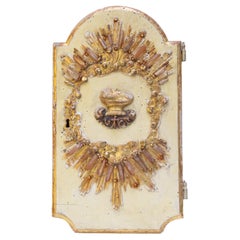
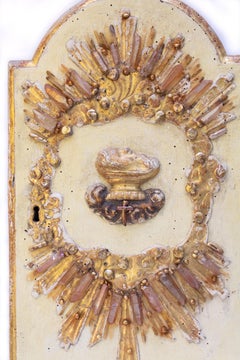
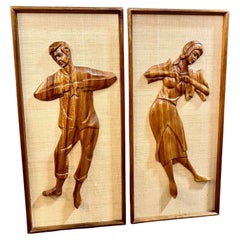
Carved Wall Decorations

to
227
1,108
613
1,618
148
25
Height
to
Width
to
94
84
80
68
68
61
43
40
33
25
23
19
17
11
11
8
6
3
299
697
622
173
197
215
64
30
11
19
23
13
27
35
17
12
8
1,550
396
329
291
281
1,284
409
363
168
151
1,791
1,702
1,762
33
18
18
8
8
Technique: Carved
MidCentury Modern Italian Set of 4, Art Deco Style Large Alabaster Wall Sconces
Located in Lisse, NL
Last 4 of an original set of 16 wall fixtures. Set of four really large and great looking, half-moon shape, easy to mount and beautifully handcrafted alabaster wall lights. In all ...
Category

Mid-20th Century Italian Art Deco Carved Wall Decorations

Materials

Alabaster, Metal

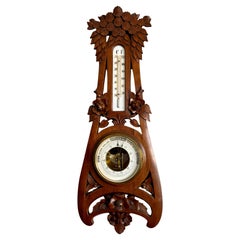
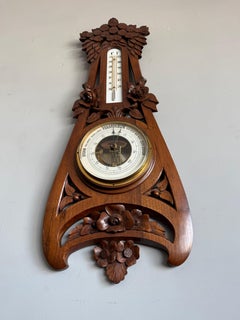
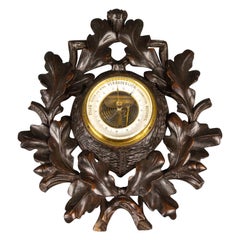
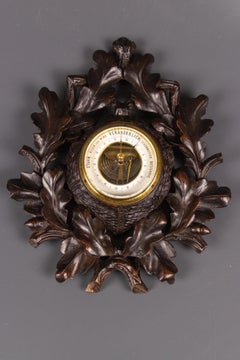
Antique German Barometer with Hand-Carved Oak Leaves and Acorns, 1920s
Located in Barntrup, DE
German Black Forest style barometer with fine hand-carved oak branches, leaves, and acorns. Dimensions: height 30 cm / 11.81 in; width 24 cm / 9.44 in; depth 5 cm / 1.96 in. In good ...
Category

1920s German Black Forest Vintage Carved Wall Decorations

Materials

Metal

19th Century Framed Italian Cameos
Located in Atlanta, GA
This exquisite 19th Century framed collection of Italian cameos is a true testament to fine craftsmanship and artistic heritage. Each cameo is intricate...
Category

19th Century Italian Neoclassical Antique Carved Wall Decorations

Materials

Stone

19th Century French Carved Walnut Royal Coat-of-Arms of the City of Paris
Located in Dallas, TX
Decorate an office or a study with this elegant antique "Blason" or coat of arms. Created in France circa 1870, the hand carved sculpture depicts the coat of arms of the city of Paris. The wall mounted Medieval style crest is in excellent condition commensurate with age and use and adorns a rich walnut patina. The coat of arms of the city of Paris shows a silver sailing ship...
Category

19th Century French Medieval Antique Carved Wall Decorations

Materials

Walnut

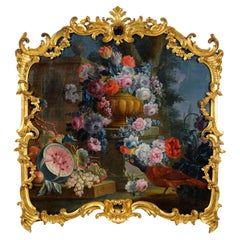
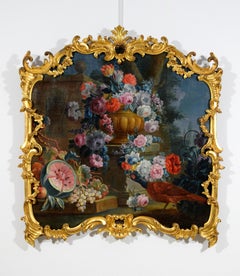
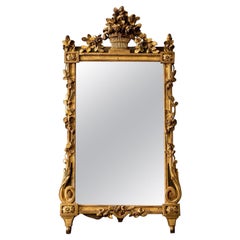
Carved Wood and Polychromed Gold Gilded Mirror, 18th Century, Rococo
Located in North Miami, FL
A Palatial and Museum quality Italian 18th century Florentine Rococo gilt wood carved mirror frame. The ornately carved frame with scrolls and a...
Category

18th Century Rococo Antique Carved Wall Decorations

Materials

Gold Leaf

Olive Green Chinoiserie George III Hanging Corner Cupboard
Located in Houston, TX
Olive green Chinoiserie George III hanging corner cupboard dating to the late 18th century. In excellent condition. Original dark, olive green painted finish embellished with painted...
Category

Late 18th Century English Chinoiserie Antique Carved Wall Decorations

Materials

Brass, Gold Leaf

19th Century a Pair of Hand Carved Wooden Sicilian Cornucopias
Located in Catania, Sicilia
Two hand-carved wooden cornucopias manufactured in Sicily in the second part to 19th century, which were certainly part of a very large piece of furn...
Category

Mid-19th Century Sicilian Baroque Revival Antique Carved Wall Decorations

Materials

Fruitwood

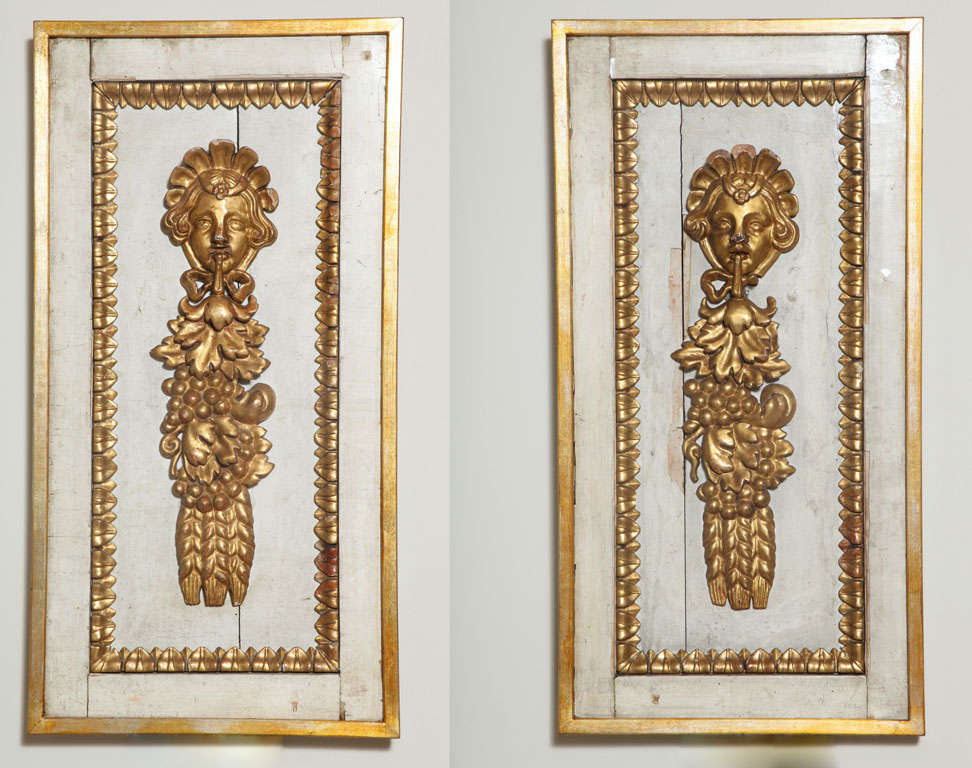
Pair of Italian Gilt Carved Panels
Located in New York, NY
Pair of Italian gilt carved panels. Pair Neoclassical carved gilt wood open work panels with alternating square and round paterae with acanthus and further egg and dart borders in or...
Category

Late 18th Century Italian Neoclassical Antique Carved Wall Decorations

Materials

Giltwood

Art Nouveau Fruitwood Bat Plaque by Gabriel Viardot
Located in Palm Beach, FL
Note: We highly recommend shipping through 1stDibs for its cost effectiveness, full insurance coverage, and reliable handling. While standard parcel services are an option, the defau...
Category

Early 1900s French Art Nouveau Antique Carved Wall Decorations

Materials

Fruitwood

American Equestrian Oil on Board Signed Louis Nadler, Early 20th Century
Located in Atlanta, GA
A finely rendered equestrian portrait, this early 20th-century American oil on board captures the striking presence of a chestnut racehorse standing in its stable. The animal is pres...
Category

Early 20th Century American Carved Wall Decorations

Materials

Wood, Giltwood

18th Century Hand Carved Stone Coat of Arm Wall Mount Art Overdoor Crest Antique
Located in West Hollywood, CA
18th Century Hand Carved Stone Coat of Arm Wall Mount Art Overdoor Crest Antique . Rare 18th century Blason Armorial Armoirie Coat of Arms with finely hand carved scrolls around an oval medallion. Great to wall mount this historic sculpture...
Category

18th Century French Antique Carved Wall Decorations

Materials

Stone, Limestone

Unique Fine Table Altar Crucifix with Bronze Sculptures of Christ, Mary and John
Located in Lisse, NL
Large and exceptional work of religious art. If you are a collector of truly exceptional church artefacts then this early 20th century altar piece could be perfect for you. With church related antiques as one of our specialties we know that you will rarely find a better quality altar crucifix...
Category

Early 20th Century Belgian Gothic Carved Wall Decorations

Materials

Brass, Bronze

19th Century Oil on Canvas Bacchante Group Attributed to Leopold Schmutzler
Located in Los Angeles, CA
A large 19th century oil on canvas Bacchante group depicting two allegorical young semi-nude maidens dancing with pan, attributed to Leopold Schmutzler...
Category

Early 20th Century German Greco Roman Carved Wall Decorations

Materials

Canvas, Giltwood
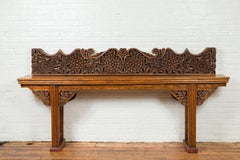
Pair of Mid-Century French Vertical Landscapes Oil Paintings Barbizon Style
Located in Dallas, TX
Decorate a traditional or eclectic interior with this elegant pair of mid-century French oil on canvas landscapes. Each tall vertical composition depicts a romantic riverside scene w...
Category

Mid-20th Century French Barbizon School Carved Wall Decorations

Materials

Giltwood

English Oil on Canvas Horse Portrait in Burl Walnut Gilt Frame, Signed. C. 1866
Located in Charleston, SC
English oil on canvas horse portrait in burl walnut giltwood and beaded molded edge frame. Signed & Dated by Artist "J. Brown Coventry 1866"
Category

1860s English William IV Antique Carved Wall Decorations

Materials

Canvas, Wood, Giltwood, Paint

Pair of Framed Neoclassical Engravings, Late 18th Early 19th century
Located in MARSEILLE, FR
Pair of framed neoclassical engravings, after works painted by Jean Jacques François Le Barbier (1738 - 1826) and engraved by Jean-Jacques Avril (1744-1831), dated 1789 for the paint...
Category

Late 18th Century French Neoclassical Antique Carved Wall Decorations

Materials

Wood, Paper

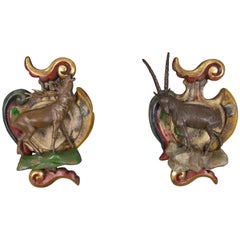
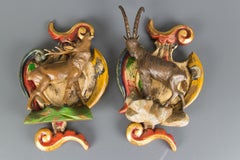
Black Forest Style Wall Shelves Featuring Stag Heads and Acorns
Located in Essex, MA
Pair of Black Forest Stag Wall shelves decorated with vines, leaves and acorns. 11.0" W x 8.5" H x 6.0" D
Category

20th Century Unknown Black Forest Carved Wall Decorations

Materials

Wood

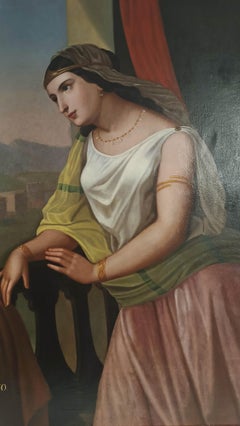
French Oil Painting c1700's Biblical Story of Rebekah and Abraham's Servant
Located in Chicago, IL
Our French Oil Painting is from the 1700's depicts the Biblical Story of Rebekah and Abraham's Servant, Rebekah is seen offering water to the servant and his camels as a true test of...
Category

1750s French Rococo Antique Carved Wall Decorations

Materials

Canvas, Wood, Paint

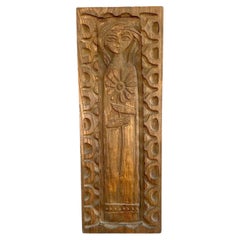
Primitive Toraja Carved Wooden Panel – Colorful M Size
Located in Saint-Ouen, FR
This primitive Toraja carved wooden panel in colorful M size is a unique architectural fragment from traditional houses in South Sulawesi, Indonesia. Handcrafted by skilled artisans,...
Category

20th Century Indonesian Rustic Carved Wall Decorations

Materials

Hardwood

Early 20th Century Flemish Spaniel Pyrography Panel
Located in Chicago, IL
This early 20th-century Flemish low-relief panel showcases the exquisite artistry of pyrography, a technique where designs are burned into wood using a heated tool. Here, two hunting spaniels adorned with studded collars and leashes are meticulously rendered, their lively expressions captured with remarkable detail. Surrounding them is an intricately carved Art Nouveau style frame, adding an extra layer of elegance to the composition. During the latter part of the 19th and early 20th centuries, pyrography experienced a surge in popularity, particularly in Europe and America. Its appeal lay in the ability to create intricate designs with depth and texture, resembling fine etchings or engravings. Pyrography was often employed to decorate furniture, household items, and decorative panels like this one, serving as both functional art and a testament to the skill of the craftsman. Today, pieces like this Flemish panel...
Category

Early 20th Century Belgian Art Nouveau Carved Wall Decorations

Materials

Wood

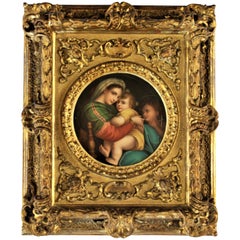
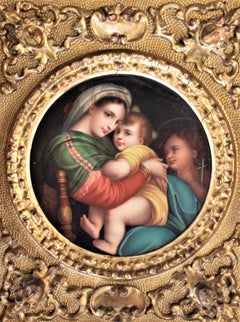
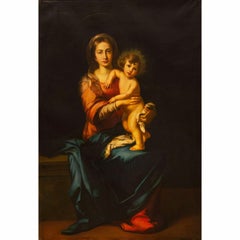
After Raffaello Sanzio 1483-1520 Raphael La Madonna della Seggiola Oil on Canvas
Located in Los Angeles, CA
A Fine Italian 19th Century Oil Painting on Canvas "La Madonna della Seggiola" after Raphael (Raffaello Sanzio da Urbino 1483-1520). The circular painted canvas depicting a seated Madonna holding an infant Jesus Christ next to a child Saint John the Baptist, all within a massive carved gilt wood and gesso frame, which is identical to the frame on Raphael's original artwork. This painting is a 19th Century copy of Raphael's Madonna della Seggiola painted in 1514 and currently exhibited and part of the permanent collection at the Palazzo Pitti, Galleria Palatina, Florence, Italy. The bodies of the Virgin, Christ, and the boy Baptist fill the whole picture. The tender, natural looking embrace of the Mother and Child, and the harmonious grouping of the figures in the round, have made this one of Raphael's most popular Madonnas. The isolated chair leg is reminiscent of papal furniture, which has led to the assumption that Leo X himself commissioned the painting. A retailer's label reads " Fred K/ Keer's Sons - Framers and Fine Art Dealers - 917 Broad St. Newark, N.J." - Another label from the gilder reads "Carlo Bartolini - Doratore e Verniciatori - Via Maggio 1924 - Firenze". Circa: 1890-1900. Subject: Religious painting Canvas diameter: 28 inches (71.1 cm) Frame height: 54 inches (137.2 cm) Frame width: 42 1/2 inches (108 cm) Frame depth: 5 1/2 inches (14 cm) Raffaello Sanzio da Urbino (Italian, March 28 or April 6, 1483 - April 6, 1520), known as Raphael, was an Italian painter and architect of the High Renaissance. His work is admired for its clarity of form, ease of composition, and visual achievement of the Neoplatonic ideal of human grandeur. Together with Michelangelo and Leonardo da Vinci, he forms the traditional trinity of great masters of that period. Raphael was enormously productive, running an unusually large workshop and, despite his death at 37, leaving a large body of work. Many of his works are found in the Vatican Palace, where the frescoed Raphael Rooms were the central, and the largest, work of his career. The best known work is The School of Athens in the Vatican Stanza della Segnatura. After his early years in Rome much of his work was executed by his workshop from his drawings, with considerable loss of quality. He was extremely influential in his lifetime, though outside Rome his work was mostly known from his collaborative printmaking. After his death, the influence of his great rival Michelangelo was more widespread until the 18th and 19th centuries, when Raphael's more serene and harmonious qualities were again regarded as the highest models. His career falls naturally into three phases and three styles, first described by Giorgio Vasari: his early years in Umbria, then a period of about four years (1504–1508) absorbing the artistic traditions of Florence, followed by his last hectic and triumphant twelve years in Rome, working for two Popes and their close associates. Raphael was born in the small but artistically significant central Italian city of Urbino in the Marche region, where his father Giovanni Santi was court painter to the Duke. The reputation of the court had been established by Federico III da Montefeltro, a highly successful condottiere who had been created Duke of Urbino by the Pope - Urbino formed part of the Papal States - and who died the year before Raphael was born. The emphasis of Federico's court was rather more literary than artistic, but Giovanni Santi was a poet of sorts as well as a painter, and had written a rhymed chronicle of the life of Federico, and both wrote the texts and produced the decor for masque-like court entertainments. His poem to Federico shows him as keen to show awareness of the most advanced North Italian painters, and Early Netherlandish artists as well. In the very small court of Urbino he was probably more integrated into the central circle of the ruling family than most court painters. Federico was succeeded by his son Guidobaldo da Montefeltro, who married Elisabetta Gonzaga, daughter of the ruler of Mantua, the most brilliant of the smaller Italian courts for both music and the visual arts. Under them, the court continued as a centre for literary culture. Growing up in the circle of this small court gave Raphael the excellent manners and social skills stressed by Vasari. Court life in Urbino at just after this period was to become set as the model of the virtues of the Italian humanist court through Baldassare Castiglione's depiction of it in his classic work The Book of the Courtier, published in 1528. Castiglione moved to Urbino in 1504, when Raphael was no longer based there but frequently visited, and they became good friends. He became close to other regular visitors to the court: Pietro Bibbiena and Pietro Bembo, both later cardinals, were already becoming well known as writers, and would be in Rome during Raphael's period there. Raphael mixed easily in the highest circles throughout his life, one of the factors that tended to give a misleading impression of effortlessness to his career. He did not receive a full humanistic education however; it is unclear how easily he read Latin. Early Life and Works His mother Màgia died in 1491 when Raphael was eight, followed on August 1, 1494 by his father, who had already remarried. Raphael was thus orphaned at eleven; his formal guardian became his only paternal uncle Bartolomeo, a priest, who subsequently engaged in litigation with his stepmother. He probably continued to live with his stepmother when not staying as an apprentice with a master. He had already shown talent, according to Vasari, who says that Raphael had been "a great help to his father". A self-portrait drawing from his teenage years shows his precocity. His father's workshop continued and, probably together with his stepmother, Raphael evidently played a part in managing it from a very early age. In Urbino, he came into contact with the works of Paolo Uccello, previously the court painter (d. 1475), and Luca Signorelli, who until 1498 was based in nearby Città di Castello. According to Vasari, his father placed him in the workshop of the Umbrian master Pietro Perugino as an apprentice "despite the tears of his mother". The evidence of an apprenticeship comes only from Vasari and another source, and has been disputed—eight was very early for an apprenticeship to begin. An alternative theory is that he received at least some training from Timoteo Viti, who acted as court painter in Urbino from 1495.Most modern historians agree that Raphael at least worked as an assistant to Perugino from around 1500; the influence of Perugino on Raphael's early work is very clear: "probably no other pupil of genius has ever absorbed so much of his master's teaching as Raphael did", according to Wölfflin. Vasari wrote that it was impossible to distinguish between their hands at this period, but many modern art historians claim to do better and detect his hand in specific areas of works by Perugino or his workshop. Apart from stylistic closeness, their techniques are very similar as well, for example having paint applied thickly, using an oil varnish medium, in shadows and darker garments, but very thinly on flesh areas. An excess of resin in the varnish often causes cracking of areas of paint in the works of both masters. The Perugino workshop was active in both Perugia and Florence, perhaps maintaining two permanent branches. Raphael is described as a "master", that is to say fully trained, in December 1500. His first documented work was the Baronci altarpiece for the church of Saint Nicholas of Tolentino in Città di Castello, a town halfway between Perugia and Urbino. Evangelista da Pian di Meleto, who had worked for his father, was also named in the commission. It was commissioned in 1500 and finished in 1501; now only some cut sections and a preparatory drawing remain. In the following years he painted works for other churches there, including the Mond Crucifixion (about 1503) and the Brera Wedding of the Virgin (1504), and for Perugia, such as the Oddi Altarpiece. He very probably also visited Florence in this period. These are large works, some in fresco, where Raphael confidently marshals his compositions in the somewhat static style of Perugino. He also painted many small and exquisite cabinet paintings in these years, probably mostly for the connoisseurs in the Urbino court, like the Three Graces and St. Michael, and he began to paint Madonnas and portraits. In 1502 he went to Siena at the invitation of another pupil of Perugino, Pinturicchio, "being a friend of Raphael and knowing him to be a draughtsman of the highest quality" to help with the cartoons, and very likely the designs, for a fresco series in the Piccolomini Library in Siena Cathedral. He was evidently already much in demand even at this early stage in his career. Influence of Florence Raphael led a "nomadic" life, working in various centres in Northern Italy, but spent a good deal of time in Florence, perhaps from about 1504. Although there is traditional reference to a "Florentine period...
Category

Early 1900s Italian Baroque Antique Carved Wall Decorations

Materials

Canvas, Giltwood
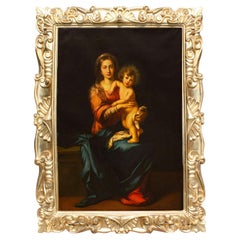
20th Century European Statuario Marble Relief of Euterpe - Antique Wall Panel
Located in West Palm Beach, FL
An antique elongated wall relief in white Statuario marble featuring Euterpe the Greek Goddess of muse of lyric poetry, in good condition. Minor fading, scratches due to age. Wear co...
Category

Early 20th Century European Carved Wall Decorations

Materials

Statuary Marble

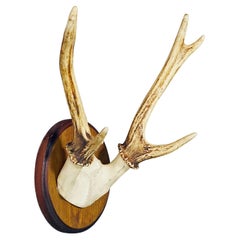
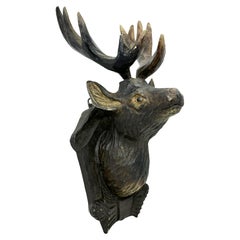
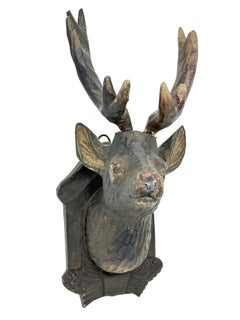
Black Forest 10 Pointer Red Deer Trophy on Wooden Plaque ca. 1900s
Located in Berghuelen, DE
Black Forest 10 Pointer Red Deer Trophy on Wooden Plaque ca. 1900s An antique 10-pointer red deer trophy (Cervus elaphus) from the Black Forest. The trophy was shot around 1900. The...
Category

Early 20th Century German Black Forest Carved Wall Decorations

Materials

Wood, Antler

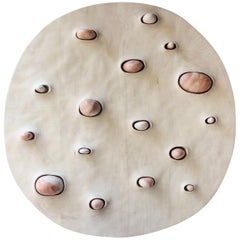
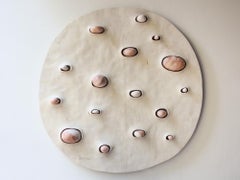
Julian Watts "Moon" Alabaster and Maple Wood Wall Sculpture
By Julian Watts
Located in Brooklyn, NY
Stunning hand carved wall sculpture by Oregon-based artist Julian Watts made of bleached maple with inlayed pink alabaster reliefs. Currently on view ...
Category

2010s American Carved Wall Decorations

Materials

Alabaster

Antique Carved Wooden Panel with Traces of Color
Located in Alessandria, Piemonte
Hand carved wooden Indian panel with flowers. Perhaps it was once painted because it still bears traces of color in the carving of the flowers. Teak wood is not woodworm. ref. M/214.
Category

Late 19th Century Indian Agra Antique Carved Wall Decorations

Materials

Hardwood

Large and Striking Antique French Oval Nature Morte Floral Oil Painting, C. 1850
Located in Dallas, TX
A master-level painting surrounded by a thick and detailed gold leaf frame, this large oval oil on canvas has an impressive scale for a nature morte (still-life) painting. The painting, which dates to circa 1850, is by an unknown, yet extremely talented French artist. In stark contrast to the dark gray background, the subject of the painting is a brightly colored floral bouquet. The vibrant flowers (blue, red, yellow, pink, and white) reside in a brown woven basket that sits atop a stone baluster railing. A cluster of darkly colored grapes is strewn across the top of the railing, next to the basket, as two butterflies flutter above the bouquet. If you look closely, you will even see a third butterfly perched on one of the large green leaves that accompany the irises, carnations, and sunflowers. The equally impressive original frame is adorned with rings of beading, foliate rinceaux, and spiral fluting, with a deep convex molding carved with additional fluting. In 19th-century France, an entire school devoted to floral still-life paintings emerged, located in Lyon, which was the capital of floral design. Although originally still-life art was classified as unimportant, acceptance by art historians of the 20th century elevated the public opinion of nature mortes. A painting such as our large and striking oval floral...
Category

Mid-19th Century French Antique Carved Wall Decorations

Materials

Textile, Canvas, Wood, Giltwood, Paint

Italian Antique Grand Tour Micro Mosaic Spaniel After the Hunt
Located in Newark, England
Mounted in an Oval Ebonised Frame From our collectables we are delighted to offer this Italian Grand Tour Micro Mosaic Spaniel ‘After the Hunt’ after Antonio Aguatti and Gioacchino ...
Category

Early 19th Century Italian Grand Tour Antique Carved Wall Decorations

Materials

Glass, Wood

Pair Late 19th C. English Neoclassic Carved Oak & Silverplated Wall Shelves
Located in West Palm Beach, FL
Pair of Late 19th Century English Neoclassical Oak and Silvered Metal Wall Shelves / Brackets A refined pair of late 19th-century English neoclassical wall brackets, exquisitely cra...
Category

Late 19th Century English Neoclassical Antique Carved Wall Decorations

Materials

Bronze

Italian 17th Century Still Life Painting in Period Carved Gilt Frame
Located in Vero Beach, FL
Italian 17th century still life painting in period carved gilt frame Italian school still life painting from the workshop of a great master. The 17th century Baroque painting in oil...
Category

17th Century Italian Baroque Antique Carved Wall Decorations

Materials

Canvas, Giltwood
17th - 18th Century Portuguese Pair of Antique Baroque Pinewood Wall Reliefs
Located in West Palm Beach, FL
An antique pair of Portuguese Baroque hand carved Pinewood architectural wall reliefs with richly ornate detailed scrolls, Acanthus leaves and masks, in good condition. Original pain...
Category

Late 17th Century Portuguese Baroque Antique Carved Wall Decorations

Materials

Pine

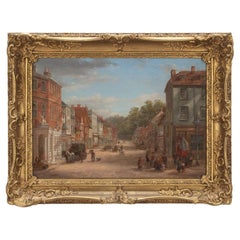
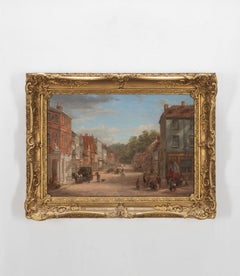
19th Century Italian Oil on Panel Landscape Painting Florence View Black Frame
Located in Firenze, IT
This late 19th century oil on wooden panel offers a captivating glimpse of historic Florence, expertly rendered with meticulous architectural detail and atmospheric quality typical o...
Category

19th Century Italian Romantic Antique Carved Wall Decorations

Materials

Wood, Lacquer

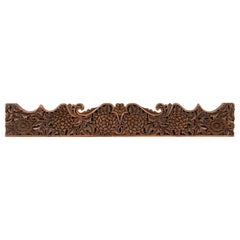
Chinese Pearl of Wisdom Valance, c. 1850
Located in Chicago, IL
This architectural valance from the 19th century is beautifully carved in multiple dimensions with lotus, flora, and fruits on the vine and centered with a pearl of wisdom. It beauti...
Category

Mid-19th Century Chinese Qing Antique Carved Wall Decorations

Materials

Elm

19 th C English Oil on Canvas Painting of Horse and Jockey
Located in Atlanta, GA
An English 19 th century oil on canvas of horse and jockey painting in carved gilt wood frame. This 19th c English oil on canvas is a 19 th c...
Category

19th Century English Federal Antique Carved Wall Decorations

Materials

Canvas, Giltwood, Paint

Antique Black Forest Wall Reliefs with Hunting Motifs, a pair
Located in Pearland, TX
A pair of antique 19th century Black Forest hunting trophies, finely carved, featuring partridges, powder horns, rope, acorns and oak lea...
Category

Mid-19th Century Swiss Black Forest Antique Carved Wall Decorations

Materials

Wood

Pair Hand Crafted Corkwork Dioramas with Scenes of English Castles Circa 1840
Located in Katonah, NY
This pair of mid-19th century English corkworks showcases the intricate cutting and piercing of the cork demonstrating the artist's excellent craftsmanship. Each diorama features a ...
Category

Mid-19th Century English Romantic Antique Carved Wall Decorations

Materials

Cork

Antique Danish Wooden Mangle Board Wedding Love Gift with Horse Dated 1814
Located in Silkeborg, Silkeborg
Danish mangle board (clothing and bedding press) dated 1814. It is made from oak wood which is hand carved and richly decorated abstract geometric flowers and branches with leaves a...
Category

1810s Scandinavian Folk Art Antique Carved Wall Decorations

Materials

Wood

Chinese Carved and Lacquered Wood Framed Mirrored-Back Etagere
Located in Germantown, MD
A rare Chinese Carved and Lacquered Wood Framed Mirrored-Back Etagere. Measures 37.25" in width, 5" in depth and 27.25" in heigth.
Category

20th Century Hong Kong Chinese Export Carved Wall Decorations

Materials

Mirror, Wood

Butterfly Crystals Wall Decoration
Located in Paris, FR
Wall Decoration Butterfly Crystals with frame polished stainless steel. With swordfish artwork on plexiglass with Swarovski carved crystals inserts.
Category

21st Century and Contemporary Italian Carved Wall Decorations

Materials

Crystal, Stainless Steel

Dutch Carved Oak Angel Cherub Head Wall Mounted Plate Display Rack Shelf
Located in Clifton Forge, VA
This is the sweetest carved oak plate display rack with a beautiful cherub face surrounded by intricate wings in the center bottom and circles on either end and center of the slats w...
Category

Late 19th Century Dutch Country Antique Carved Wall Decorations

Materials

Oak

19th Century Antique Portrait Painting of a German Baron in Military Uniform
Located in Sakskøbing, DK
This elegant 19th-century oil portrait presents Adam Franz Bernhard, Baron von Hirschberg (1783–1864), Lord of Ebnath and Schwarzenreuth and Royal Bavarian Lieutenant Colonel. He is...
Category

19th Century German Biedermeier Antique Carved Wall Decorations

Materials

Canvas, Paint, Hardwood

Decorative Hand Carved Wood-Sculpture, Midcentury, Danish Cabinetmaker, 1970s
Located in Odense, DK
A fine unique wooden sculptural wall decoration. Hand Carved motifs, made by a Danish Cabinetmaker in the 1970s. Nice texture and dimensions in this vintage piece, it can be used as ...
Category

Mid-20th Century French Organic Modern Carved Wall Decorations

Materials

Wood, Pine

Pair of 1880s Italian Carved Wooden Wall Carvings Depicting Pomegranates
Located in Atlanta, GA
A pair of Italian carved wooden wall carvings from the late 19th century, depicting pomegranates. Created in Italy during the last quarter of the 1...
Category

Late 19th Century Italian Antique Carved Wall Decorations

Materials

Wood

Italian 19th Century Oil on Canvas Still Life Painting Depicting Fruits
Located in Atlanta, GA
An Italian oil on canvas still life painting from the 19th century depicting fruits in front of a column and an open sky, in giltwood frame. Created in Italy during the 19th century,...
Category

19th Century Italian Antique Carved Wall Decorations

Materials

Canvas, Giltwood, Paint

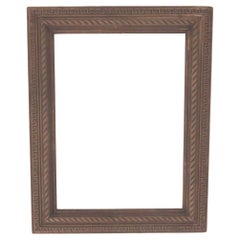
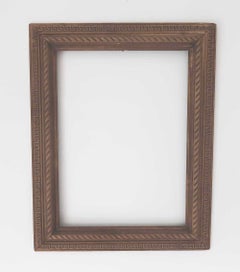
17th Picture Frame, Flame Strip Frame Netherlands Around 1650 Old Master Frame
Located in Epfach, DE
besonders schöner und originaler Flammleistenrahemn aus dem 17.Jhdt, Niederlande für Altmeistergemälde Feine ausgearbeitete Leiste in hoher Qualität Particularly beautiful flame...
Category

Mid-17th Century Dutch Antique Carved Wall Decorations

Materials

Wood

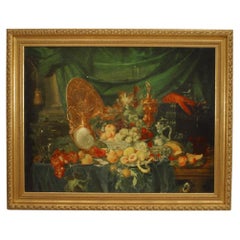
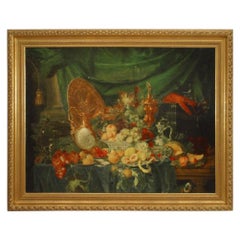
A Large imposing Edwardian still life Oil Painting in original Mahogany frame
Located in London, GB
This is a beautiful, elegant and striking still life oil painting of a Lobster with fruit on an overflowing laid table with silverware, basket or fruit, foliage an upturned crab and ...
Category

Early 1900s European Edwardian Antique Carved Wall Decorations

Materials

Canvas, Mahogany, Giltwood, Paint

19th - 20th Century Turkish Byzantine Style Warrior Sandstone Wall Relief, Panel
Located in West Palm Beach, FL
An antique hand carved wall relief, panel in sandstone in the Byzantine style, in good condition. Minor fading, due to age. Wear consistent with age and use. Circa late 19th - 20th C...
Category

Late 19th Century Turkish Antique Carved Wall Decorations

Materials

Sandstone

French Regency Style Relief Carved Wood Panel
Located in Franklin Park, IL
French Regency Style Relief Carved Wood Panel This wood panel measures: 39.25 wide x 2.5 deep x 31.5 inches high We take our photos in a controlled lighting studio to show as much ...
Category

Early 2000s American Modern Carved Wall Decorations

Materials

Wood

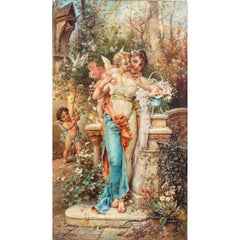
Hans Zatzka 'Austrian, 1859-1945' a Very Fine Oil on Canvas "Spring Beauties"
Located in Los Angeles, CA
Hans Zatzka (Austrian, 1859-1945) a very fine and charming oil on canvas "Spring Beauties", depicting three young maidens picking flowers by a lake. The three young girls sitting, kneeling and laying on a grassy area of the forest, her wicker basket filled with the freshly picked flowers, the middle one wearing a bonnet and a straw-hat laying on the ground behind with butterflies flying by, within a gilt-wood and gesso carved frame. Signed (l/r): H. Zatzka. Circa: 1890-1900's, Hans Zatzka (Austrian, 1859-1945) was a well known and regarded Austrian fantasy artist whose most popular and valuable works depicted figures of young maidens with angels, floral and other cheerful and warm scenes, including Orientalist themes. In the past thirty years alone, the high quality and detail of his beautiful paintings has caught the attention of International collectors and art dealers alike, creating a highly sought after market and demand for his instantly recognizable body of work. In the late 19th and early 20th century, many of Zazka's charming works were photographed for commercial and collectable postcards. Though no information about his works being exhibited in museums is currently available, most of Zatzka's paintings are in private collections and, in the past century, very few of them have become available on the open market. At the young age of eighteen Zatzka joined Austria's Academy of Fine Arts under the leadership of Professor Blaas. For his fine early works, in 1880 he received The Golden Fügermedal award. Zatzka, like many other artists of the era, traveled around Europe working and selling his art and, in one of his many trips to Italy, he developed a special interest in Religious themes, decorating churches with frescos as well as painting several religious scenes of Madonna's and Child, Saints, Angels and others. In 1885 Zatzka was commissioned to paint "The Naiad of Baden" a ceiling fresco at Kurhaus Baden. Most of Zatzka's income came from his work in religious art and special church commissions. Numerous leading art dealers from around the world that specialize in late 19th and early 20th century European genre paintings have come to the conclusion that the painter signing his works Bernard Zatzka, Joseph Bernard or J. Bernard is almost certainly the artist Hans Zatzka. The consensus seems quite plausible when comparing works known to have been executed by Hans Zatzka together with similar works displaying the signature; Joseph Bernard, J. Bernard or Bernard Zatzka. Lohengrin refers to the knight of the swan, hero of German versions of a legend widely known in variant forms from the European Middle Ages onward. It seems to bear some relation to the northern European folktale of “The Seven Swans,” but its actual origin is uncertain. It is also a character in German Arthurian literature. The son of Parzival (Percival), he is a knight of the Holy Grail sent in a boat pulled by swans...
Category

Late 19th Century Austrian Belle Époque Antique Carved Wall Decorations

Materials

Canvas, Giltwood
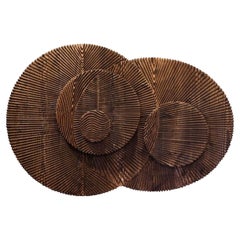
Pair of Louis XVI Style Carved Gilt Accent Neoclassical Wall Panels
Located in Swedesboro, NJ
Dimensions - H: 57 1/2 in W: 24 3/4 in D: 1 in Elevate your interior with this stunning pair of 20th-century Louis XVI style carved wood and gilt accent wall panels, exquisitely cr...
Category

20th Century Unknown Louis XVI Carved Wall Decorations

Materials

Wood

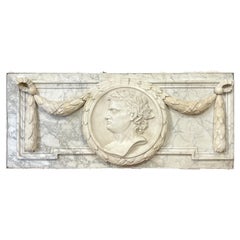
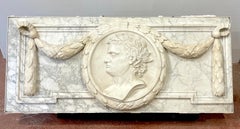
19th Century Italian Carved Marble Architectural Frieze Sculpture of Caesar
Located in West Palm Beach, FL
19th Century Italian carved marble Architectural Frieze Sculpture of Caesar, Of rectangular form the finely carved Carrera Marble 50" x 20" slab w...
Category

Late 19th Century Italian Classical Roman Antique Carved Wall Decorations

Materials

Carrara Marble, Statuary Marble, Steel

Peter Keil, Black & White Portrait Facing Left, Oil on Board, Signed, 12” x 36”
Located in West Palm Beach, FL
Peter Keil, Black & White Portrait Facing Left, Oil on Board, Signed, 12” x 36” Striking black and white oil portrait by German artist Peter Keil (b. 1942), known for his bold, expr...
Category

Late 20th Century German Modern Carved Wall Decorations

Materials

Glass, Wood

French 20th Century Large Landscape Painting
Located in Baton Rouge, LA
A wonderfully large and vibrant landscape painting from France. Signed in the bottom right corner by the artist. Protected behind antique rolled glass...
Category

20th Century French French Provincial Carved Wall Decorations

Materials

Canvas, Wood, Giltwood, Paint

John Baldwin Nude Couple in Bed Unique Hand Carved Sculptural Wooden Plaque
Located in Bishop's Stortford, Hertfordshire
A rare, unique and very unusual sculptural hand carved wooden plaque depicting a nude couple in bed signed John Baldwin (b. London, 1937) and dated 1985. ...
Category

1980s English Modern Vintage Carved Wall Decorations

Materials

Wood

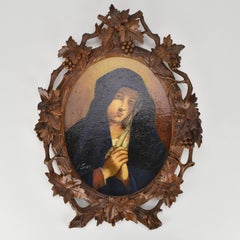
Late 19th Century American Victorian Oil Painting Portrait of a Lady
Located in Queens, NY
American Victorian oval oil painting portrait of lady in black with cameo in gilt filigree carved frame.  
Category

Late 19th Century American Victorian Antique Carved Wall Decorations

Materials

Canvas

20th Century European Three Graces Statuario Marble Relief - Vintage Wall Panel
Located in West Palm Beach, FL
An antique wall relief in white Statuario marble of rectangular shape, depicting the Three Graces, in good condition. They were goddesses originate...
Category

Early 20th Century European Carved Wall Decorations

Materials

Statuary Marble

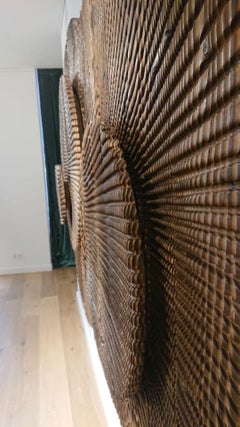
Contemporary burned soft wood Ukiyo 032 wall piece by Katrien Doms
Located in 1204, CH
The loss of craft at its purist form due to economic circumstances of the last centuries. Going back to basics in a chaotic world where social media takes over. Where expectations an...
Category

2010s Carved Wall Decorations

Materials

Softwood

French Still Life Floral Painting by Charles Franzini d'Issoncourt
Located in Miami, FL
Magnificent French Floral Oil Painting from Paris Universal Exposition in 1900. This captivating 19th-century still life oil painting by the award-winning French artist Charles Henr...
Category

Early 1900s French Baroque Antique Carved Wall Decorations

Materials

Canvas, Paint, Giltwood
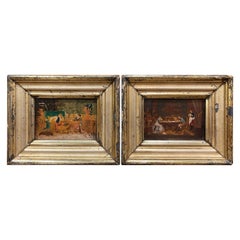
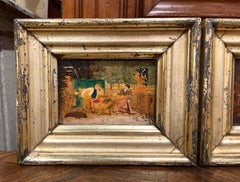
Rococo Oil Painting Signed Bruno Blatter Around 1890
Located in Berlin, DE
Rococo oil painting signed Bruno Blätter around 1890 Oil on canvas painting. Rococo scene. Three gentlemen seated at the table, playing cards a...
Category

1890s German Rococo Revival Antique Carved Wall Decorations

Materials

Canvas, Wood

17th - 18th Century Portuguese Pair of Antique Baroque Pine Wall Reliefs, Panels
Located in West Palm Beach, FL
An antique pair of Portuguese Baroque hand carved architectural wall reliefs, enhanced by richly ornate detailed scrolls, in good condition. Original painted patina with partial gilt...
Category

Late 17th Century Portuguese Baroque Antique Carved Wall Decorations

Materials

Pine

After Raffaello Sanzio 1483-1520 Raphael La Madonna della Seggiola Oil on Canvas
Located in Los Angeles, CA
A fine Italian 19th century oil painting on canvas "La Madonna della Seggiola" after Raphael (Raffaello Sanzio da Urbino 1483-1520) The circular canvas depicting a seated Madonna holding an infant Jesus Christ next to a child Saint John the Baptist, all within a massive carved gilt wood and gesso frame (all high quality gilt is original) which is identical to the frame on Raphael's original artwork. This painting is a 19th Century copy of Raphael's Madonna della Seggiola painted in 1514 and currently exhibited and part of the permanent collection at the Palazzo Pitti, Galleria Palatina, Florence, Italy. The bodies of the Virgin, Christ, and the boy Baptist fill the whole picture. The tender, natural looking embrace of the Mother and Child, and the harmonious grouping of the figures in the round, have made this one of Raphael's most popular Madonnas. The isolated chair leg is reminiscent of papal furniture, which has led to the assumption that Leo X himself commissioned the painting, circa 1890-1900. Subject: Religious painting Measures: Canvas height: 29 1/4 inches (74.3 cm) Canvas width: 29 1/4 inches (74.3 cm) Painting diameter: 28 1/4 inches (71.8 cm) Frame height: 57 7/8 inches (147 cm) Frame width: 45 1/2 inches (115.6 cm) Frame depth: 5 1/8 inches (13 cm).   Raffaello Sanzio da Urbino (Italian, March 28 or April 6, 1483 - April 6, 1520), known as Raphael, was an Italian painter and architect of the High Renaissance. His work is admired for its clarity of form, ease of composition, and visual achievement of the Neoplatonic ideal of human grandeur. Together with Michelangelo and Leonardo da Vinci, he forms the traditional trinity of great masters of that period. Raphael was enormously productive, running an unusually large workshop and, despite his death at 37, leaving a large body of work. Many of his works are found in the Vatican Palace, where the frescoed Raphael Rooms were the central, and the largest, work of his career. The best known work is The School of Athens in the Vatican Stanza della Segnatura. After his early years in Rome much of his work was executed by his workshop from his drawings, with considerable loss of quality. He was extremely influential in his lifetime, though outside Rome his work was mostly known from his collaborative printmaking. After his death, the influence of his great rival Michelangelo was more widespread until the 18th and 19th centuries, when Raphael's more serene and harmonious qualities were again regarded as the highest models. His career falls naturally into three phases and three styles, first described by Giorgio Vasari: his early years in Umbria, then a period of about four years (1504–1508) absorbing the artistic traditions of Florence, followed by his last hectic and triumphant twelve years in Rome, working for two Popes and their close associates. Raphael was born in the small but artistically significant central Italian city of Urbino in the Marche region, where his father Giovanni Santi was court painter to the Duke. The reputation of the court had been established by Federico III da Montefeltro, a highly successful condottiere who had been created Duke of Urbino by the Pope - Urbino formed part of the Papal States - and who died the year before Raphael was born. The emphasis of Federico's court was rather more literary than artistic, but Giovanni Santi was a poet of sorts as well as a painter, and had written a rhymed chronicle of the life of Federico, and both wrote the texts and produced the decor for masque-like court entertainments. His poem to Federico shows him as keen to show awareness of the most advanced North Italian painters, and Early Netherlandish artists as well. In the very small court of Urbino he was probably more integrated into the central circle of the ruling family than most court painters. Federico was succeeded by his son Guidobaldo da Montefeltro, who married Elisabetta Gonzaga, daughter of the ruler of Mantua, the most brilliant of the smaller Italian courts for both music and the visual arts. Under them, the court continued as a centre for literary culture. Growing up in the circle of this small court gave Raphael the excellent manners and social skills stressed by Vasari. Court life in Urbino at just after this period was to become set as the model of the virtues of the Italian humanist court through Baldassare Castiglione's depiction of it in his classic work The Book of the Courtier, published in 1528. Castiglione moved to Urbino in 1504, when Raphael was no longer based there but frequently visited, and they became good friends. He became close to other regular visitors to the court: Pietro Bibbiena and Pietro Bembo, both later cardinals, were already becoming well known as writers, and would be in Rome during Raphael's period there. Raphael mixed easily in the highest circles throughout his life, one of the factors that tended to give a misleading impression of effortlessness to his career. He did not receive a full humanistic education however; it is unclear how easily he read Latin. Early Life and Works His mother Màgia died in 1491 when Raphael was eight, followed on August 1, 1494 by his father, who had already remarried. Raphael was thus orphaned at eleven; his formal guardian became his only paternal uncle Bartolomeo, a priest, who subsequently engaged in litigation with his stepmother. He probably continued to live with his stepmother when not staying as an apprentice with a master. He had already shown talent, according to Vasari, who says that Raphael had been "a great help to his father". A self-portrait drawing from his teenage years shows his precocity. His father's workshop continued and, probably together with his stepmother, Raphael evidently played a part in managing it from a very early age. In Urbino, he came into contact with the works of Paolo Uccello, previously the court painter (d. 1475), and Luca Signorelli, who until 1498 was based in nearby Città di Castello. According to Vasari, his father placed him in the workshop of the Umbrian master Pietro Perugino as an apprentice "despite the tears of his mother". The evidence of an apprenticeship comes only from Vasari and another source, and has been disputed—eight was very early for an apprenticeship to begin. An alternative theory is that he received at least some training from Timoteo Viti, who acted as court painter in Urbino from 1495.Most modern historians agree that Raphael at least worked as an assistant to Perugino from around 1500; the influence of Perugino on Raphael's early work is very clear: "probably no other pupil of genius has ever absorbed so much of his master's teaching as Raphael did", according to Wölfflin. Vasari wrote that it was impossible to distinguish between their hands at this period, but many modern art historians claim to do better and detect his hand in specific areas of works by Perugino or his workshop. Apart from stylistic closeness, their techniques are very similar as well, for example having paint applied thickly, using an oil varnish medium, in shadows and darker garments, but very thinly on flesh areas. An excess of resin in the varnish often causes cracking of areas of paint in the works of both masters. The Perugino workshop was active in both Perugia and Florence, perhaps maintaining two permanent branches. Raphael is described as a "master", that is to say fully trained, in December 1500. His first documented work was the Baronci altarpiece for the church of Saint Nicholas of Tolentino in Città di Castello, a town halfway between Perugia and Urbino. Evangelista da Pian di Meleto, who had worked for his father, was also named in the commission. It was commissioned in 1500 and finished in 1501; now only some cut sections and a preparatory drawing remain. In the following years he painted works for other churches there, including the Mond Crucifixion (about 1503) and the Brera Wedding of the Virgin (1504), and for Perugia, such as the Oddi Altarpiece. He very probably also visited Florence in this period. These are large works, some in fresco, where Raphael confidently marshals his compositions in the somewhat static style of Perugino. He also painted many small and exquisite cabinet paintings in these years, probably mostly for the connoisseurs in the Urbino court, like the Three Graces and St. Michael, and he began to paint Madonnas and portraits. In 1502 he went to Siena at the invitation of another pupil of Perugino, Pinturicchio, "being a friend of Raphael and knowing him to be a draughtsman of the highest quality" to help with the cartoons, and very likely the designs, for a fresco series in the Piccolomini Library in Siena Cathedral. He was evidently already much in demand even at this early stage in his career. Influence of Florence Raphael led a "nomadic" life, working in various centres in Northern Italy, but spent a good deal of time in Florence, perhaps from about 1504. Although there is traditional reference to a "Florentine period...
Category

19th Century Italian Baroque Antique Carved Wall Decorations

Materials

Gesso, Canvas, Wood
Read More
Punk Rock and Rebellion Animate London’s Hit Yoshitomo Nara Show

The exhibition includes his portraits of wide-eyed kids with mayhem on their minds, as well as some of the artist’s personal belongings.

Whether Painted or Papered, Muraled Walls Make Bold Statements in the Home

The ancient practice of covering walls in artistic scenery is back.

In Francks Deceus’s ‘Mumbo Jumbo #5,’ the Black Experience Is . . . Complicated

Despite the obstacles, the piece’s protagonist navigates the chaos without losing his humanity.

12 Floral-Accented Rooms with a Handmade, Folkloric Feel

Who needs a flower garden? Just use your imagination — and some beautifully patterned wallpaper or fabric — to bring the outdoors in.

This Wolf Kahn Pastel Is the Epitome of Beauty at Its Most Essential

A longtime admirer of Kahn’s work, 1stDibs editorial director Anthony Barzilay Freund explores why it’s relevant now more than ever.

Why Jules Chéret Was the King of the Modern Poster

The streets of fin-de-siècle Paris were set aglow with colorful poster ads, thanks to the printing techniques invented by Jules Chéret. Now, the Milwaukee Art Museum is celebrating this undersung talent in America's first solo show dedicated his exuberant works.

Anna Condo’s Multifaceted Career Spans Film, Photography and NFTs

From her historic Manhattan townhouse, the talented creator and curator of 1stDibs' latest NFT exhibition tells us about the art in her home and how she got involved with cryptoart.

How Keith Rivers Went from NFL Linebacker to Blue-Chip Art Aficionado

The former football player is as serious about becoming a great contemporary-art patron as he once was about making tackles. Here, Rivers tells us how he got the collecting bug and how his tastes have evolved over the years.

Still Thinking About These?

All Recently Viewed